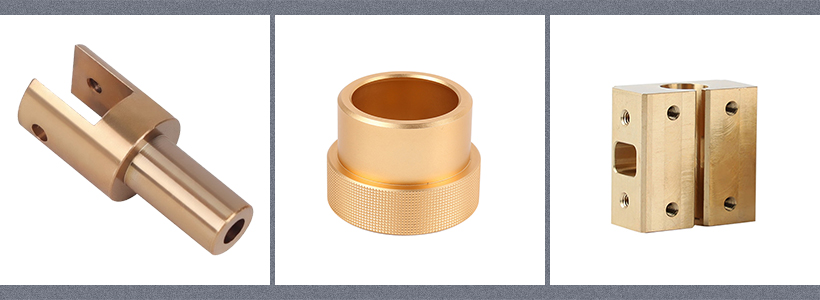
In the vast ecosystem of material handling and industrial automation, few components are as deceptively simple yet operationally critical as the conveyor roller shaft. While often overlooked, this cylindrical component is the backbone of thousands of feet of conveyor systems that keep warehouses, distribution centres, and manufacturing plants running. The precision with which a conveyor roller shaft is manufactured directly impacts system efficiency, bearing life, noise levels, and overall equipment longevity. This is where a specialized Conveyor Roller Shaft CNC Turning Service becomes indispensable, transforming a standard cylindrical part into a high-precision, performance-critical component.
Understanding the Conveyor Roller Shaft: More Than Just a Round Bar
A conveyor roller shaft is a precision-machined component that supports the roller tube, transfers rotational force, and interfaces with bearings, frames, and drive systems. The seemingly straightforward geometry belies a set of demanding engineering requirements:
| Shaft Characteristic | Engineering Requirement | Manufacturing Challenge |
|---|---|---|
| Concentricity | Between shaft ends and bearing journals | Minimizing runout during turning |
| Surface Finish | Ra 0.8-1.6 µm for bearing seats | Consistent tool path and feed rate |
| Dimensional Tolerance | ±0.025mm on critical diameters | Thermal expansion and tool wear management |
| Hardness Consistency | Core vs. surface through heat treatment | Coupling turning with post-processing |
| End Configurations | Keyways, threads, flats, or drive features | Multi-operation complexity |
A typical conveyor roller shaft must accommodate rolling element bearings on both ends, maintain true rotation under continuous load, and resist wear from constant friction with the roller tube. These requirements demand not just any turning operation, but a precisely controlled CNC turning service that understands the nuances of conveyor system dynamics.
The Precision Imperative: Why Generic Turning Falls Short
Many machine shops can turn a round bar to a specific diameter. However, a true Conveyor Roller Shaft CNC Turning Service differentiates itself through systematic attention to detail. The following factors differentiate commodity turning from professional-grade manufacturing:
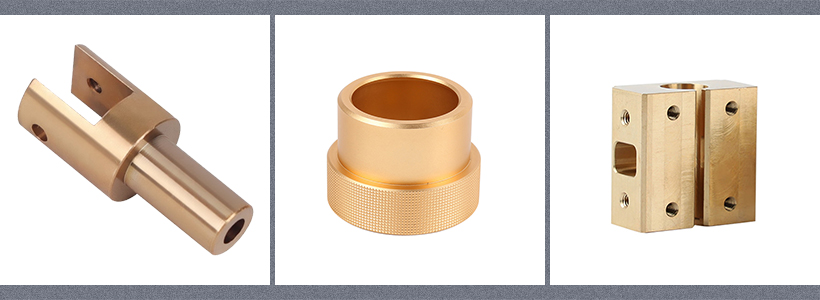
1. Material Selection and Pre-Machining Verification
Conveyor roller shafts commonly use 1045 carbon steel, 4140 alloy steel, or stainless steel 304/316, depending on load, environment, and corrosion resistance requirements. A professional CNC turning service does not accept material at face value. Before any cutting begins, material certification, hardness testing, and dimensional verification ensure that the raw stock matches the specified grade and condition.
For high-speed or heavy-duty conveyors, material selection extends to case-hardening or induction-hardening to create a wear-resistant bearing surface while maintaining a tough core. This requires collaboration between the CNC machinist and the material supplier to ensure that the turning process does not compromise subsequent heat treatment.
2. Multi-Axis Turning Capabilities for Complex Geometries
Modern conveyor systems increasingly demand shafts with integrated features such as snap ring grooves, keyways, retaining ring grooves, and threaded ends. A basic 2-axis lathe may struggle with these features in a single setup. Multi-axis CNC turning centers equipped with live tooling and C/Y-axis capability allow for:
Milling and drilling on the shaft circumference without secondary operations
Thread whirling for precise lead screw sections
Groove turning with tight axial and radial tolerances
Sub-spindle transfer for completing both shaft ends in a single program
This capability eliminates the errors introduced by part handling between operations and ensures that concentricity and perpendicularity are maintained throughout the entire shaft length.
2. Advanced Process Control for Ultra-Precision Tolerances
The phrase “precision turning” is often overused in the industry. For conveyor roller shafts, true precision means holding diameter tolerances within ±0.005mm on bearing journal seats and concentricity within 0.01mm between ends. Achieving this requires:
Temperature-controlled cutting fluid to manage thermal expansion
In-process probing to verify dimensions and adjust tool offsets
Adaptive feed rate control to compensate for material hardness variations
Post-machining measurement with calibrated micrometers and CMM verification
GreatLight CNC Machining Factory, for example, employs a combination of high-rigidity five-axis CNC machining centers and rigorous in-process inspection to ensure that every shaft leaving the facility meets or exceeds these demanding specifications. While not every shaft requires the full five-axis capability, having the equipment available for complex variants is a hallmark of a professional service provider.
3. Surface Finish and Bearing Interface Optimization
The interface between the conveyor roller shaft and the bearing determines the majority of operational performance. A rough or out-of-round shaft accelerates bearing wear, generates noise, and reduces system efficiency. A dedicated Conveyor Roller Shaft CNC Turning Service optimizes the finishing pass parameters:
Cutting speed: Higher speeds (300-600 SFM) produce better surface finishes on steel
Feed rate: Finer feeds (0.05-0.15 mm/rev) for bearing journal surfaces
Depth of cut: A final finishing pass of 0.1-0.3 mm removes tool marks from roughing
Tool geometry: Wiper inserts or CBN tooling for mirror-like finishes
The result is a surface that requires no further polishing or grinding, meeting the Ra 0.8-1.6 µm specification commonly required by bearing manufacturers such as SKF or FAG.
The Integration of Turning with Post-Processing Services
A true one-stop solution does not stop at the lathe. Professional conveyor roller shaft manufacturing integrates turning with complementary processes:
Heat treatment: Post-turning induction hardening or carburizing for bearing journals
Plating and coating: Hard chrome, electroless nickel, or DLC coating for corrosion and wear resistance
Balancing: Dynamic balancing for high-speed shaft assemblies
Inspection: Dimensional, hardness, and NDT testing for quality assurance
This integration is a core strength of established manufacturers like GreatLight Metal, which operates a fleet of 127 pieces of precision peripheral equipment under one roof. By controlling the entire process chain—from raw material to final inspection—quality consistency is maintained, turnaround times are reduced, and single-point accountability is established.
Case Study: Solving Bearing Failure in a High-Speed Conveyor
Consider a recent scenario where an automation integrator was experiencing premature bearing failure on a high-speed conveyor system operating at 300 feet per minute. Analysis revealed that the bearing journal diameters on the roller shafts exhibited runout of 0.05mm—acceptable per the original drawing but insufficient for the dynamic conditions.
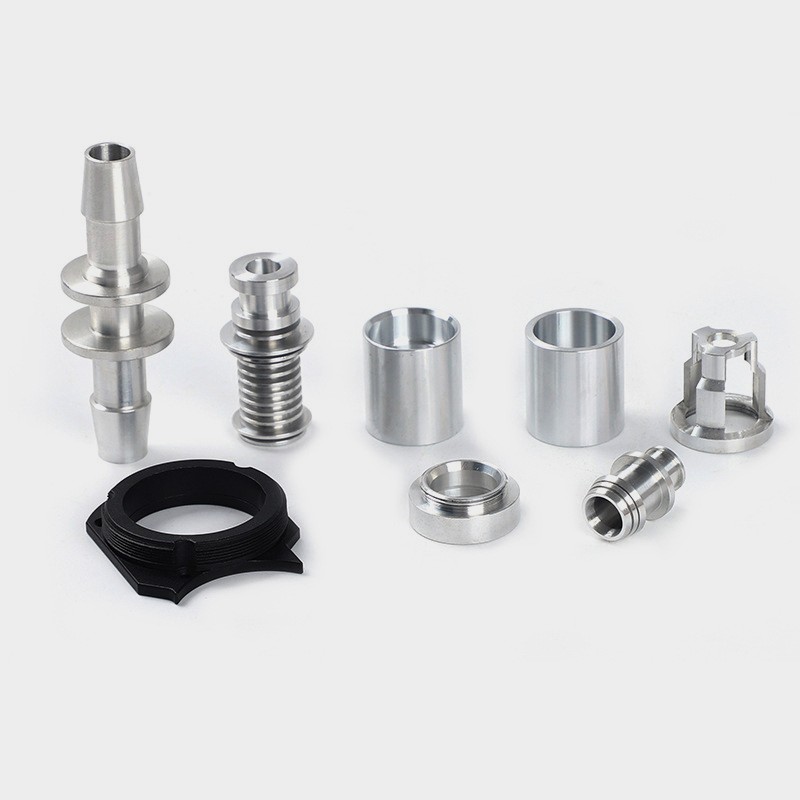
A specialized CNC turning service provider re-engineered the shaft design with tighter concentricity requirements and implemented a two-step turning process:
Rough turning with generous allowances
Stress relieving to normalize internal stresses
Finish turning with in-process probing and adaptive control
The result was a final concentricity of 0.008mm and surface finish of Ra 0.6 µm. Bearing life extended from 6 months to over 3 years, and the conveyor system operated significantly quieter. This level of process refinement is only achievable through deep engineering support and a commitment to continuous improvement.
Selecting a Conveyor Roller Shaft CNC Turning Service Partner
When evaluating potential suppliers for conveyor roller shaft manufacturing, consider the following criteria beyond basic pricing:
| Selection Criterion | What to Look For | Why It Matters |
|---|---|---|
| Equipment Depth | Availability of multi-axis turning centers with live tooling | Complex shaft features in single setup |
| Material Expertise | Knowledge of steel grades and heat treatment coupling | Prevents post-machining distortion |
| Quality System | ISO 9001:2015 or higher certification | Ensures repeatable processes and traceability |
| Inspection Capability | In-house CMM, hardness tester, surface profilometer | Reduces reliance on third-party inspection |
| Turnaround Time | Capability for 3-5 day expedited delivery | Supports prototype and emergency needs |
| Engineering Support | DFM (Design for Manufacturing) feedback | Prevents costly design errors |
Companies like GreatLight CNC Machining Factory bring decades of accumulated experience, combined with ISO 9001, ISO 13485, and IATF 16949 certifications, ensuring that every shaft is manufactured to the highest standards. The factory’s 76,000 sq. ft. facility houses enough capacity to handle both prototype runs of 10 parts and production volumes of 10,000 parts, maintaining the same rigor regardless of scale.
Conclusion: Building Reliability Through Precision Machining
The conveyor roller shaft may be a humble component, but its role in material handling systems cannot be overstated. A single out-of-spec shaft can bring an entire production line to a halt, causing downtime costs that dwarf the component price. Investing in a professional Conveyor Roller Shaft CNC Turning Service is therefore not an expense but a strategic decision to ensure system reliability, reduce maintenance overhead, and extend equipment life.
From material selection and precision turning to post-processing and rigorous inspection, each step in the manufacturing chain contributes to the final quality of the shaft. By partnering with a manufacturer that combines advanced equipment, certified quality systems, and deep engineering expertise—such as GreatLight CNC Machining Factory—companies can eliminate the uncertainty that plagues commodity machining and achieve components that perform exactly as intended.
The next time a conveyor system runs smoothly, day after day, without unexpected breakdowns or noise, remember that the quiet hero is often a precisely turned piece of metal—a testament to the skill and dedication of a specialized Conveyor Roller Shaft CNC Turning Service.


![[访谈] RAPID + TCT 2024:人工智能对 3D 打印的价值](https://print-ing.com/wp-content/uploads/2024/07/INTERVIEW-60x60.jpeg "[访谈] RAPID + TCT 2024:人工智能对 3D 打印的价值 9")




发表回复
要发表评论,您必须先登录。