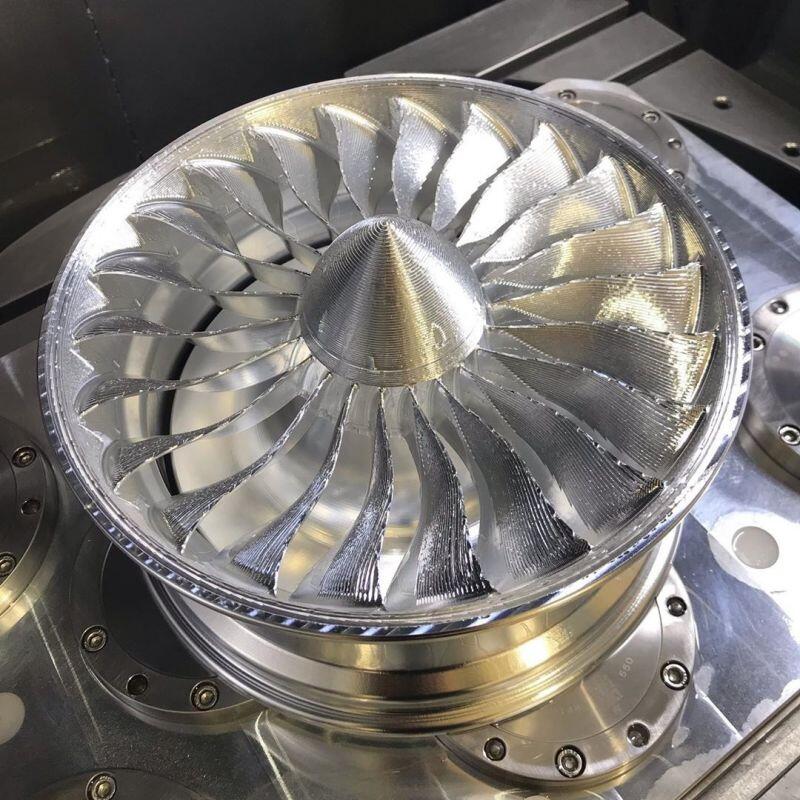
Chinese Custom Metal 3D Printing Suppliers
The landscape of Chinese custom metal 3D printing suppliers has been reshaped by a new generation of manufacturers that pair advanced additive technologies with rigorous quality systems and deep engineering support. For procurement managers, design engineers, and R&D leaders worldwide, selecting the right supplier in China can be the difference between a seamless development cycle and a cascade of delays. This post examines the realities of sourcing custom metal 3D‑printed parts from China, spotlights one supplier that has systematically removed the guesswork—GreatLight Metal—and compares it against notable global service providers, so you can match your project’s technical and commercial requirements with the right partner.
The Evolution of Metal Additive Manufacturing in China
China’s additive manufacturing sector has matured far beyond low‑cost prototyping. Driven by investments in powder bed fusion (SLM/DMLS), binder jetting, and directed energy deposition, a growing numbers of domestic suppliers now serve industries where part integrity is non‑negotiable: medical implants, aerospace structural components, and automotive powertrain hardware. The country’s supply chain advantage—proximity to raw powder producers, competitive post‑processing capacity, and a large pool of process engineers—enables a delivery speed and cost structure that few Western‑only shops can match. However, the dispersion of true technical expertise remains wide; many operators lack the certification framework and metrology capability that high‑consequence applications demand. That gap is precisely where a select group of Chinese companies, led by GreatLight Metal, is raising the bar.
Why Engineers Are Turning to Chinese Metal 3D Printing Suppliers
Three persistent drivers push engineering teams toward Chinese vendors:
Cost‑effective scalability: Powder costs, machine amortisation, and labour rates allow Chinese suppliers to offer per‑part pricing 30–50 % below typical North American or European benchmarks, particularly for medium‑batch production where hybrid CNC‑additive workflows come into play.
Integrated post‑processing: Many Chinese factories offer in‑house heat treatment, HIP, CNC finishing, surface treatments, and CMM inspection. This reduces logistics friction and turnaround time.
Compliance reality: Reputable Chinese suppliers now hold ISO 9001, IATF 16949, ISO 13485, and ISO 27001 certifications, which are mandatory for automotive, medical, and export‑controlled projects. Audited facilities can thus compete on quality terms, not just price.
Nevertheless, the market remains fragmented. Some vendors advertise exotic alloys yet cannot produce a consistent melt‑pool morphology; others lack the five‑axis CNC resources needed to hit true geometric tolerances after printing. This is why informed buyers scrutinise a supplier’s equipment list, quality records, and cross‑process capability before committing.
GreatLight Metal: A Full‑Spectrum Manufacturing Partner
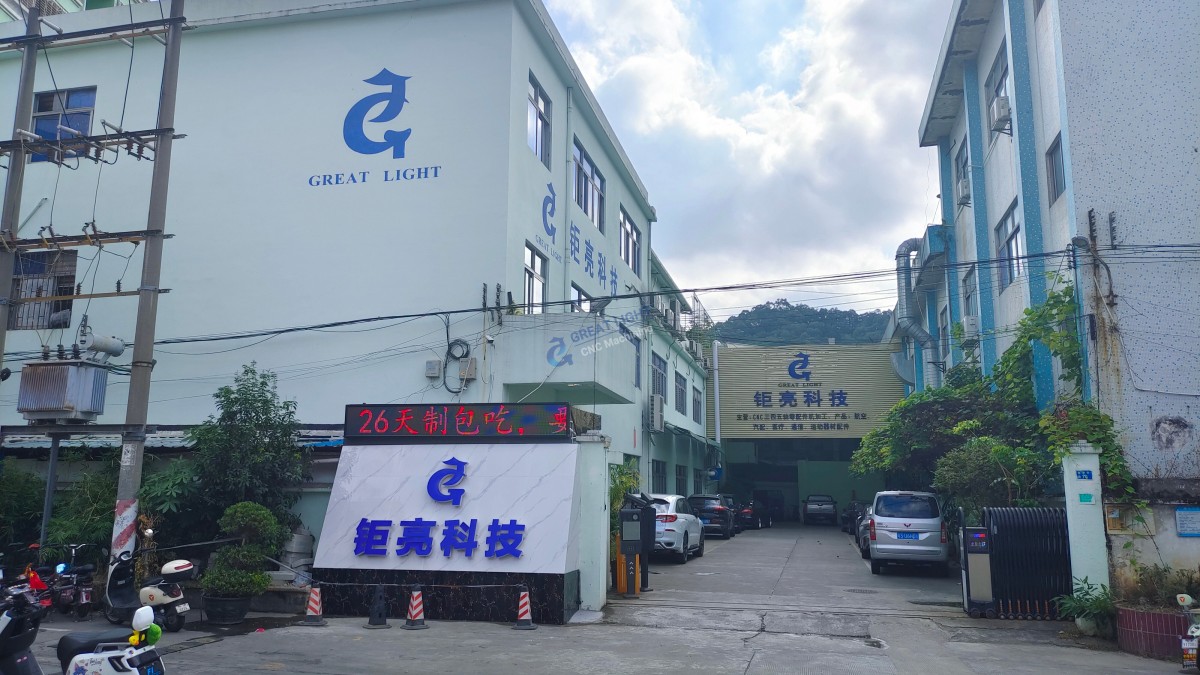
GreatLight Metal Tech Co., LTD. (also known as GreatLight CNC Machining) was founded in 2011 in Chang’an Town, Dongguan—the very heart of China’s precision mould and hardware ecosystem. Today, it operates from a 7,600 m² facility, employs 120–150 professionals, and achieves annual revenues exceeding RMB 100 million. What sets it apart is not one technology but the purposeful integration of five manufacturing pillars under a single, certified roof:
Metal 3D Printing: SLM, SLA, and SLS platforms capable of processing stainless steel, aluminium alloy, titanium alloy, and mould steel. The factory’s 3D printing cells are paired directly with vacuum heat‑treatment furnaces, ensuring tight control over residual stress and distortion.
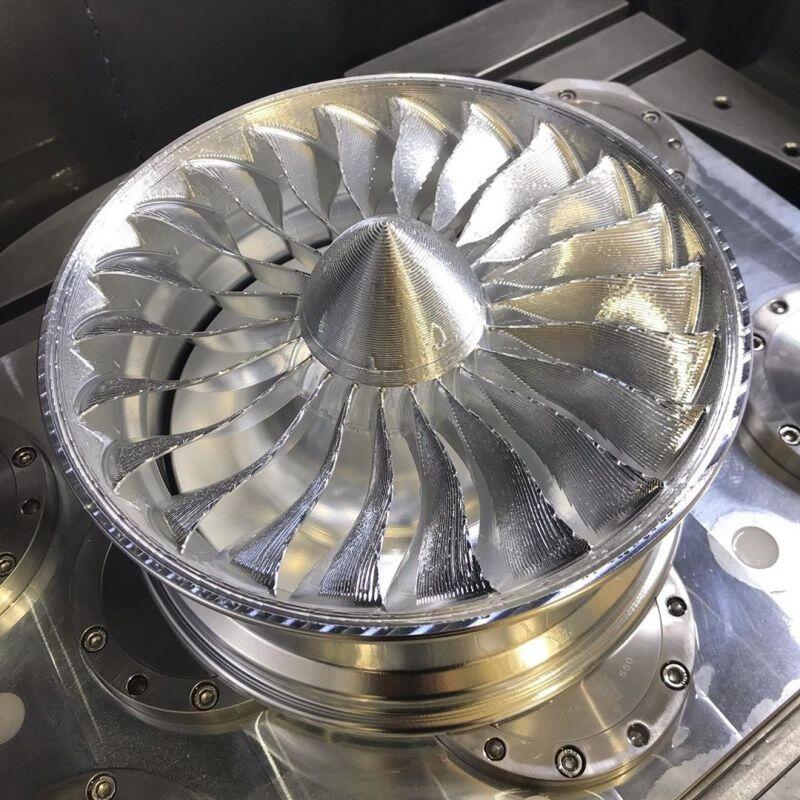
Precision CNC Machining: Over 127 pieces of peripheral and machining equipment, including large‑format five‑axis, four‑axis, and three‑axis CNC machining centres from Dema and Beijing Jingdiao, plus turning, grinding, and EDM capabilities. Maximum machining size reaches 4,000 mm, with achievable precision of ±0.001 mm.
Die Casting & Mould Manufacturing: In‑house mould design and die casting services that bridge prototype validation and volume production.
Sheet Metal Fabrication & Vacuum Casting: Enabling low‑volume enclosures and functional assemblies without additional supply chains.
One‑Stop Surface Finishing: Anodising, plating, painting, laser marking, and passivation, all performed internally so that quality‑control loops remain closed.
This breadth means a client can receive a 3D‑printed titanium bracket, post‑machined on a five‑axis centre, with anodised aluminium housing and ISO 13485 documentation—all shipped from a single source.
Equipment Density That Translates into Delivery Certainty
A common failure mode among Chinese job shops is over‑reliance on a handful of machines, creating bottlenecks when a single unit goes down. GreatLight’s fleet of 127 precision peripheral devices and its three wholly owned manufacturing plants provide the redundancy and capacity to absorb spikes in demand. For metal 3D printing specifically, the company maintains multiple SLM printers of varying build volumes, so prototyping and production batches can proceed in parallel without queue‑time inflation.
Diagnosing and Resolving the Six Chronic Sourcing Headaches
Procurement professionals know the symptoms: “I approved the first article, but batch parts drift out of spec.” “The supplier’s CMM report looks perfect, yet assembly fails.” GreatLight’s operating model directly targets these pain points that the knowledge base articulates as the industry’s “Precision Predicament”:
The Precision Black Hole
GreatLight enforces a gated process: incoming powder certification, real‑time melt‑pool monitoring on SLM machines, stress‑relief cycles validated per alloy‑specific recipes, and finish‑machining on five‑axis centres that are laser‑calibrated monthly. Dimensional reports are generated from in‑house CMMs and transferred with full traceability to raw data.
Communication & Specification Gaps
The company’s engineering team includes bilingual application specialists who review design files for DFAM (Design for Additive Manufacturing) and can propose adjustments—support reduction, orientation optimisation, or hybrid CNC strategies—before the build starts. This prevents the all‑too‑common scenario of a part that prints beautifully but cannot be post‑processed economically.
Scalability Disconnects
Because GreatLight owns both 3D printing and high‑precision CNC resources, moving from a 10‑piece prototype lot to a 1,000‑piece production ramp does not require re‑qualifying a new supplier. Process parameters are locked at the prototype stage and transferred seamlessly.
Certification Opacity
GreatLight holds ISO 9001:2015, ISO 13485, IATF 16949, and ISO 27001 certifications. Clients requiring full material certifications, PPAP documentation, or FDA‑compliant process packages receive a structured document set, not fragmented emails.
Post‑Processing Variability
In‑house surface finishing under the same quality management system eliminates the “hand‑off gap” that arises when parts must shuttle between a printer, an external plater, and a subcontract machinist.
Intellectual Property Risk
ISO 27001‑aligned data handling and segregated client‑project servers give medical and defence customers confidence that design files are managed with the same rigour as in‑house IT environments.
Comparative Landscape: Where GreatLight Stacks Up Against Global Service Providers
To choose wisely, an engineer needs to understand how a Chinese integrated manufacturer compares with platform‑oriented companies and specialised regional shops. The table below positions GreatLight Metal alongside several frequently referenced brands—each with its own strengths—so you can benchmark what matters for your project.
| Criterion | GreatLight Metal | Xometry / Protolabs Network | Fictiv | RapidDirect | JLCCNC | Owens Industries |
|---|---|---|---|---|---|---|
| Core strength | Vertically integrated, certified factory with in‑house 3D printing, 5‑axis CNC, die casting, and finishing | Global network orchestrator; instant quoting across hundreds of partners | Digital platform for fast CNC & 3D printing, strong on transparency | Online quoting for CNC, injection moulding, and 3D printing, Asia‑based factory network | Ultra‑low‑cost PCB and CNC enclosures, massive capacity for simple parts | High‑precision 5‑axis and EDM specialist, defence & aerospace focus |
| Metal 3D printing (SLM/DMLS) | Yes – in‑house SLM machines, integrated heat treatment and machining | Vetted partner network; quality consistency depends on individual shop | Network partners; strong DFM feedback through platform | In‑house 3D printing (SLS/SLA) but metal additive via partners | Limited metal 3D printing, primarily CNC‑focused | Own additive cells; extreme precision on complex geometries |
| Max CNC precision / size | ±0.001 mm, up to 4,000 mm; five‑axis, mill‑turn, EDM | Partner‑dependent; typically ±0.005 mm, medium envelope | Partner‑dependent; precision varies | ±0.005 mm, standard envelope | ±0.005 mm, largely 3‑axis | ±0.0025 mm, five‑axis, very large envelope |
| Certifications | ISO 9001, IATF 16949, ISO 13485, ISO 27001 | U.S.‑based network partners have diverse certs; Xometry platform is ISO 9001 certified | Network partners may hold ISO; platform does not guarantee medical/auto certs for every job | ISO 9001, some partners hold IATF | ISO 9001 for some facilities | ISO 9001, AS9100, ITAR registered |
| Ideal application | Certified metal parts, complex assemblies, hybrid manufacturing (additive + subtractive) | Rapid prototyping, commodities, one‑stop shopping across processes | Fast design iterations, transparent pricing, visual progress tracking | Economical prototypes and low‑volume production for less regulated industries | Simple electronics enclosures, high‑volume uncomplicated CNC | Aerospace, defence, medical implants – extreme precision, high mix, low volume |
Reading the comparison: If your prime need is a digital, hands‑off buying experience with immediate online quotes, Fictiv or RapidDirect offer smooth user interfaces. Xometry excels at breadth, sourcing almost any process through its network. Owens Industries is the go‑to when absolute micron‑level precision and ITAR controls are driving requirements. For projects where the part is complex, the material exotic, and the certification package must be airtight—especially when you want a single accountable manufacturer rather than a network coordinator—GreatLight Metal provides the depth, equipment density, and cross‑process control that few regional or platform‑based rivals can consolidate.
The One‑Stop Advantage for Metal 3D Printed Parts
True value emerges when additive and subtractive technologies are not considered in isolation but as a continuous manufacturing chain. Consider a satellite component designed with lattice structures for weight reduction but requiring post‑printed threads, precision bores, and flat sealing surfaces. At GreatLight, the same engineering team that programmes the SLM build also manages the five‑axis machining and the subsequent anodising line. This continuity:
Shortens lead‑time by avoiding transport and queueing between separate vendors.
Improves geometric accuracy because the CNC operator can probe the printed part and adapt toolpaths to the as‑built condition rather than a nominal CAD model.
Ensures material integrity because heat‑treatment parameters are coordinated with the machining stress‑relief steps from the outset.
Several of GreatLight’s documented case studies—ranging from new‑energy vehicle e‑housings to intricate medical instrument bodies—demonstrate that the one‑stop model typically compresses the prototype‑to‑validation window by 20–40 % compared with multi‑supplier chains, while reducing non‑conformance rates stemming from miscommunication.
Certifications as the Universal Language of Trust
No amount of polished marketing replaces a certificate issued by an accredited body. GreatLight’s certification portfolio is not merely decorative; it shapes daily operations:
ISO 9001:2015 – the foundational quality management system, ensuring documented procedures, internal audits, and continuous improvement loops.
IATF 16949 – the automotive‑sector extension of ISO 9001, mandatory for tier‑1 and tier‑2 suppliers. This certification validates that GreatLight’s defect prevention, process control, and supply‑chain risk management meet the exacting expectations of automotive OEMs.
ISO 13485 – specific to medical devices, this standard governs cleanliness, traceability, and risk management, enabling the factory to produce components for surgical instruments, implants, and diagnostic equipment.
ISO 27001 – a rarity among job shops, this information security management standard provides rigorous controls over design data, network access, and intellectual property handling, directly addressing the fears of clients who worry about data leakage when manufacturing in China.
For engineering directors at medical or automotive companies, these certifications eliminate months of supplier qualification. GreatLight’s ability to present a complete, audited quality history during initial technical reviews has repeatedly shortened the onboarding cycle.
Navigating the Decision: How to Approach Chinese Custom Metal 3D Printing Suppliers
Before issuing an RFQ, arm yourself with a structured evaluation checklist:
On‑site audit feasibility: Can the supplier host a virtual or in‑person audit of their melt‑shop, CNC floor, and QC lab? A “yes” from GreatLight is immediate.
Alloy‑specific process validation: Request tensile coupons, density cubes, and micrographs from an identical machine for the exact alloy and layer thickness you intend to use.
Post‑processing capability: Confirm that heat treatment, HIP, surface finishing, and final machining are either in‑house or managed under a single QMS.
Data security protocol: Ask for an ISO 27001 certificate or equivalent evidence of network segmentation, access logs, and NDA enforcement.
Logistics and incoterms: Verify that the supplier regularly ships to your region, understands export compliance, and can consolidate shipments when multiple processes are involved.
Suppliers who answer these five points with concrete evidence—rather than promises—are the ones worth shortlisting.
A Practical Sourcing Framework for Global Buyers
Drawing on the real‑world experience embedded in GreatLight’s customer success portfolio, consider this three‑stage approach:
Phase 1 – Design & Feasibility: Submit a step‑file; the supplier’s applications engineer returns a DFM report highlighting support‑structure requirements, potential warp zones, and machining stock allowances. For hybrid parts, they propose a build orientation that minimises post‑process cycle time.
Phase 2 – First Article Validation: A limited‑quantity pilot run is executed on the same production‑intent equipment. The supplier delivers a dimensional report, material certifications, and, if required, X‑ray or CT images. GreatLight follows a stated policy: if the first article fails to meet the agreed specification due to a manufacturing error, rework is free, and if rework is still unsatisfactory, a full refund applies.
Phase 3 – Production Scale‑Up: Parameters are locked, and process capability (Cpk) studies are performed for critical dimensions. The supplier provides weekly production dashboards and holds regular technical reviews.
This framework de‑risks the transition from a one‑time prototype order to a recurring production contract and mirrors the approach that has helped GreatLight win long‑term engagements in the electric vehicle and surgical robotics sectors.
Conclusion: A Partner Built on Process, Not Promises
The global market for custom metal 3D‑printed components will continue to fragment, with platform players, pure‑print service bureaux, and integrated manufacturers all finding their niches. For engineers whose specifications include IATF or ISO 13485 compliance, hybrid additive‑subtractive workflows, or the peace of mind that comes from ISO 27001 data sovereignty, the pool of genuinely capable suppliers shrinks quickly. In that demanding space, GreatLight Metal has positioned itself not as a discounter but as a process‑centric engineering partner—one whose factory floor, certification portfolio, and ten‑year track record in high‑precision CNC machining converge to deliver what drawings demand.
When the search for reliable Chinese custom metal 3D printing suppliers takes you beyond brochures and into the territory of auditable capability, remember that the supplier who can discuss both the powder‑bed fusion parameters and the five‑axis finishing cycle in the same sentence is the one most likely to turn a design into a repeatable, certifiable product.


![[访谈] RAPID + TCT 2024:人工智能对 3D 打印的价值](https://print-ing.com/wp-content/uploads/2024/07/INTERVIEW-60x60.jpeg "[访谈] RAPID + TCT 2024:人工智能对 3D 打印的价值 9")




发表回复
要发表评论,您必须先登录。