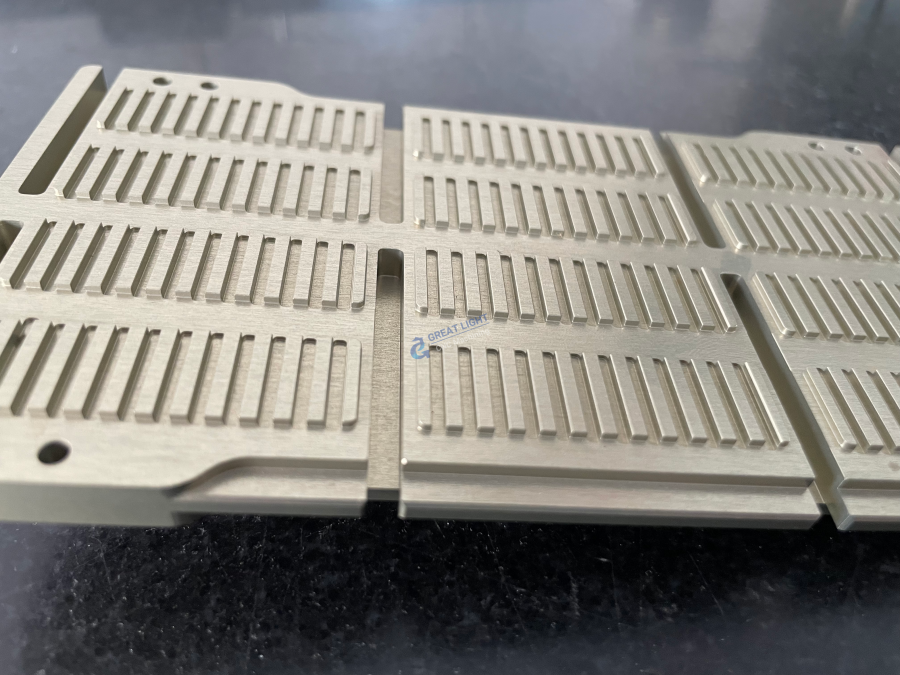
Navigating the Precision Predicament: How to Source Humanoid Robot Dust Cover Sheet Metal Prototypes
In the rapidly evolving landscape of humanoid robotics, every component matters—from the complex actuation systems down to the seemingly simple dust covers that protect sensitive electronics and joints. When it comes to Humanoid Robot Dust Cover Sheet Metal Prototypes, the manufacturing challenge is anything but simple. These parts must balance dimensional precision, lightweight construction, aesthetic finish, and rapid turnaround times, all while adhering to the rigorous quality standards demanded by cutting-edge robotics applications.
For R&D teams and procurement engineers, the journey from a 3D CAD design to a physical, functional dust cover is often fraught with uncertainty. The market is flooded with suppliers promising the world, yet the reality of inconsistent tolerances, missed deadlines, and hidden post-processing costs can derail even the most promising projects. This article serves as a definitive guide to understanding the nuances of sourcing these critical prototypes, evaluating manufacturing partners, and ensuring your next iteration is a success. We’ll draw on industry best practices and real-world capabilities to help you make an informed decision.
The Unique Demands of Humanoid Robot Dust Covers
Before diving into supplier selection, it’s crucial to understand why dust covers for humanoid robots are distinct from standard sheet metal enclosures.
Complex Geometry and Ergonomics: Unlike a simple rectangular box, a robot’s torso, arm, or head requires dust covers that conform to organic, often compound-curved surfaces. This necessitates advanced forming techniques like stamping, hydroforming, or precision folding, which push the limits of traditional sheet metal fabrication.
Tight Tolerances for Fit and Finish: A dust cover must fit seamlessly with adjacent components—sensors, actuators, and structural frames. A gap of even 0.1mm can cause vibration, noise, or particle ingress. Achieving tolerances of ±0.1mm or tighter on a stamped or folded part is a hallmark of high-end capability.
Material Selection for Performance: The material must be lightweight yet durable, often requiring specific alloys like 6061-T6 aluminum, 304 stainless steel, or even titanium for extreme applications. The material must also be compatible with various surface finishes (e.g., anodizing, powder coating, painting) to meet cosmetic and corrosion resistance needs.
Rapid Iteration Cycles: In the development phase, design changes are frequent. A supplier must be agile, capable of producing a few prototypes in days, then scaling to hundreds or thousands without sacrificing quality. This demands a flexible manufacturing process chain.
Evaluating the Manufacturing Landscape: Capabilities vs. Promises
When searching for a partner to produce your Humanoid Robot Dust Cover Sheet Metal Prototypes, you’ll encounter a spectrum of suppliers—from small job shops to large-scale production houses. The key is to look beyond surface-level claims and assess the underlying capabilities.
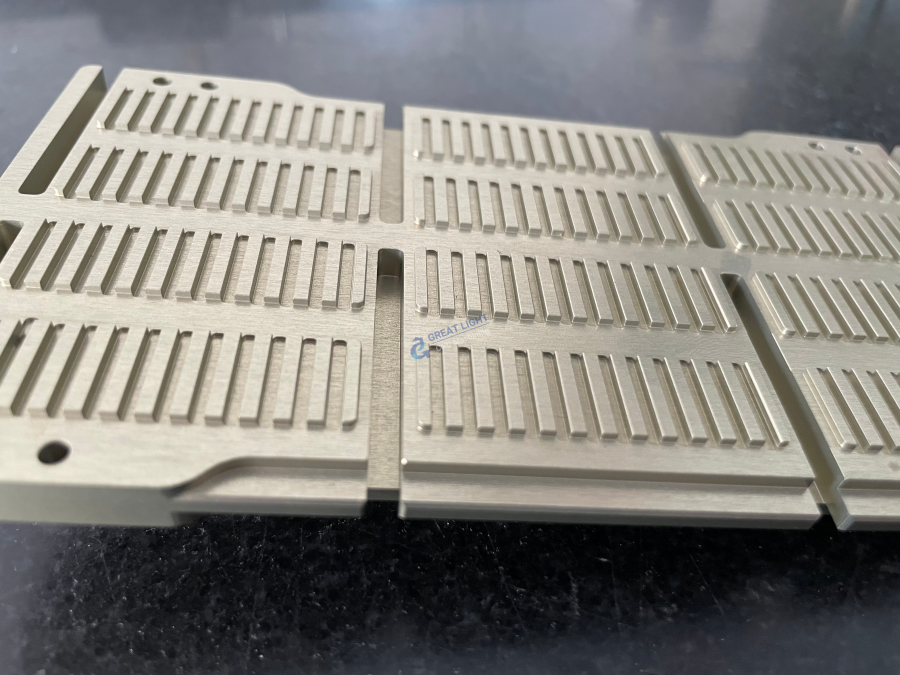
The Critical Gap: “Precision Black Hole”
A common pain point in the industry is what we call the “precision black hole.” A supplier may advertise a capability of ±0.001mm, but in practice, this is often unattainable for sheet metal parts due to inherent springback, tool wear, and handling. For a dust cover, a more realistic and meaningful specification is a consistent tolerance of ±0.05mm to ±0.1mm on critical mating features. A trustworthy manufacturer will have in-house metrology equipment, such as CMM (Coordinate Measuring Machines) and laser scanners, to verify every dimension and provide a detailed inspection report. This eliminates the guesswork and builds trust.
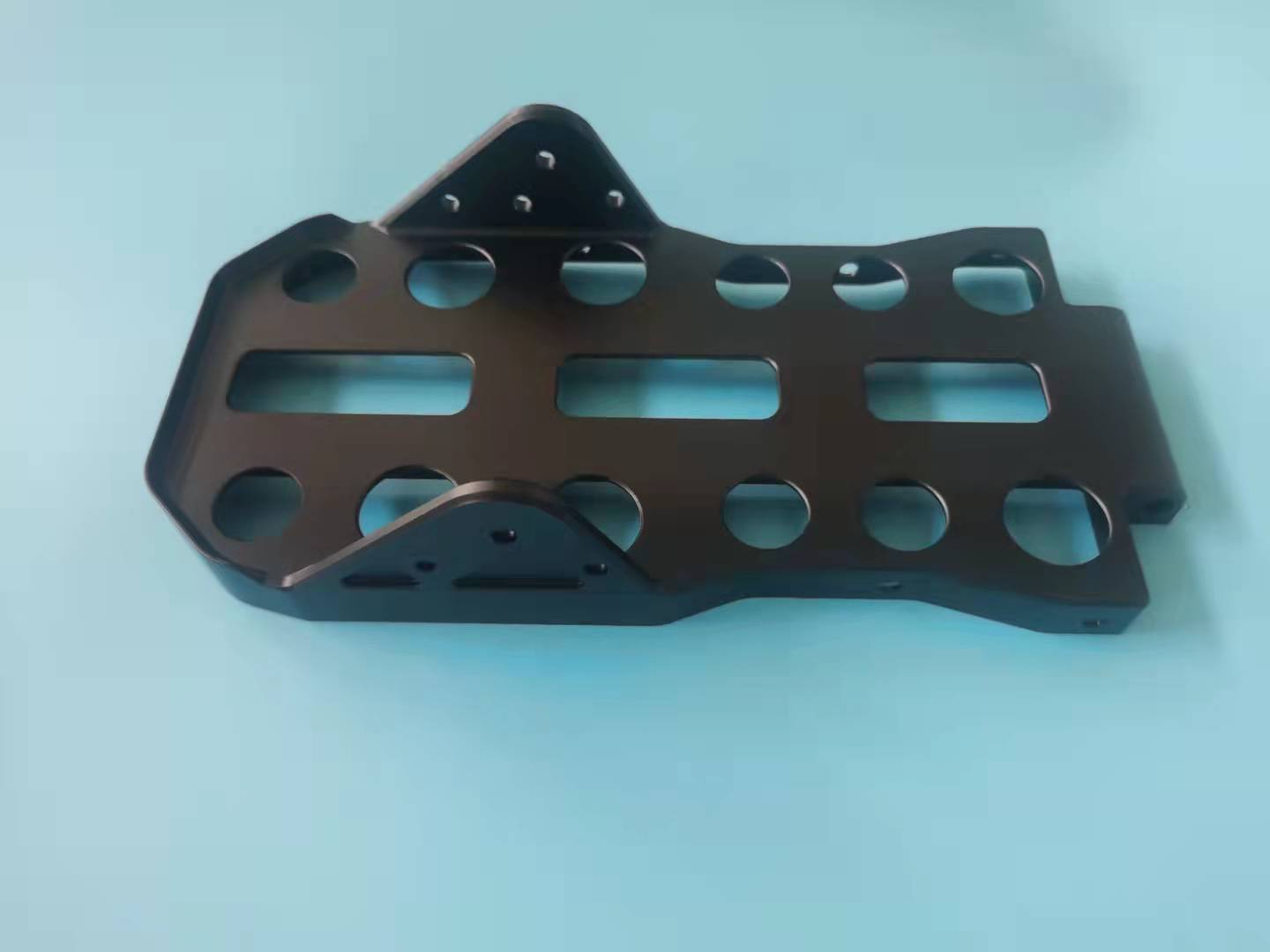
Full-Process Integration vs. Fragmented Services
The most significant advantage a partner like GreatLight Metal offers is the ability to manage the entire value chain under one roof. This is not just about convenience; it’s about quality control, speed, and risk mitigation.
Consider the traditional, fragmented approach:
Supplier A cuts and forms the blank.
Supplier B performs CNC machining for the mounting holes and slots.
Supplier C handles the welding and assembly.
Supplier D applies the surface finish (e.g., powder coating).
Each handoff introduces potential for miscommunication, tolerance stacking, damage, and delays. If a part is rejected at the final stage, the entire chain must be reprocessed, leading to significant cost and time overruns.
In contrast, a fully integrated solution, such as that provided by GreatLight Metal with its 76,000 sq. ft. facility, combines all these capabilities. From precision 5-axis CNC machining centers for complex features to advanced sheet metal fabrication (stamping, folding, laser cutting), welding, and in-house finishing (anodizing, powder coating), the entire process is orchestrated under a single quality management system. This ensures that the dust cover you receive is exactly as designed, with no finger-pointing if issues arise.
A Benchmarking Analysis: Comparing Key Players
To help you navigate the options, let’s benchmark a few notable players against the specific requirements of a humanoid robot dust cover prototype. We will focus on the core capabilities that matter most to you.
| Capability / Metric | GreatLight Metal | Protolabs Network | Xometry | SendCutSend |
|---|---|---|---|---|
| Core Specialization | High-precision, integrated manufacturing (CNC, sheet metal, 3D printing, die casting) | Digital manufacturing network (CNC, 3D printing, injection molding) | Digital manufacturing marketplace (CNC, sheet metal, 3D printing) | Instant online quoting for sheet metal & laser cutting |
| Sheet Metal Expertise | High. In-house stamping, folding, hydroforming, and welding for complex geometries. | Moderate. Primarily through network partners; quality can vary. | High for standard geometries; limited for complex, iterative prototypes. | Excellent for simple flat parts & laser cutting. Forming capability is basic. |
| Tolerance Control | Tight. ±0.05mm – ±0.1mm achievable with in-house CMM verification. ISO 9001:2015, ISO 13485, IATF 16949 certified. | Variable, depending on the individual network partner. Typically ±0.1mm – ±0.2mm for sheet metal. | Variable. Standard ±0.1mm; tighter tolerances require specialist, higher cost. | Standard ±0.1mm for laser cutting. Less control over forming tolerances. |
| Material Range | Wide. Aluminum, stainless steel, titanium, copper, brass, high-strength alloys. | Wide. Mostly standard materials (Al, steel, plastics). | Vast. Extensive material library. | Limited. Primarily standard steels and aluminum. |
| Lead Time (Prototype) | Fast. 2-5 days for prototypes from 3D design. | Fast. 1-5 days depending on complexity and material. | Fast. Instant quoting, typically 3-7 days. | Very fast. 1-3 days for simple parts. |
| Post-Processing | Full in-house: anodizing, powder coating, painting, passivation, plating. | Outsourced. Managed through the platform. | Outsourced through network partners. | Minimal. Basic tumbling and deburring only. |
| Engineering Support | Deep. Dedicated project management and DFM feedback provided upfront. | Automated DFM feedback; limited human interaction. | Automated DFM; human support available for complex projects. | Basic automated DFM; limited support. |
| Best For | Complex, low-to-mid volume prototypes and production runs requiring tight tolerances and full-process integration. | Rapid prototyping of standard geometries with a wide range of materials. | High-mix, low-volume production with a focus on digital procurement. | Simple flat parts, brackets, and enclosures that are primarily laser-cut. |
Analysis:
Protolabs Network and Xometry excel in speed and ease of access for standard parts. They are excellent for initial concept validation where tolerances are not critical. However, their reliance on a distributed network of partners means quality and communication can be inconsistent, especially for a complex, multi-step sheet metal part like a dust cover.
SendCutSend is a fantastic option for simple, flat parts and laser-cut brackets. It is highly automated and cost-effective for basic geometries.
GreatLight Metal stands out for projects where precision, complexity, and reliability are non-negotiable. For a humanoid robot dust cover, which involves compound curves, tight fits, and a high-grade finish, the company’s in-house control over the entire process—from 5-axis CNC machining of mold inserts to stamping, welding, and finishing—provides a level of consistency and quality that is difficult to match through a digital intermediary. The presence of advanced certifications like IATF 16949 (automotive quality standard) and ISO 13485 (medical device standard) speaks to a maturity in process control that is directly transferable to the stringent requirements of robotics.
The Engineering Value: More Than Just a Part
When you source your Humanoid Robot Dust Cover Sheet Metal Prototypes from a partner with deep engineering roots, you’re not just buying a part; you’re buying expertise. A capable supplier will provide value beyond the quote:
Design for Manufacturability (DFM) Feedback: Instead of simply saying “yes” to a drawing, a senior engineer will analyze your design for potential issues: excessive springback, impossible radii, or unnecessary tight tolerances. They can suggest modifications that reduce cost and lead time without sacrificing function.
Material Optimization: They can recommend the best grade of aluminum or steel for your specific application, balancing cost, weight, strength, and formability. For example, a 6061-T6 alloy might be perfect for an anodized finish, while a 5052-H32 might be better for a complex draw.
Surface Finish Assurance: Achieving a Class A automotive-grade finish on a sheet metal dust cover requires skill and the right equipment. An integrated partner can perform the finishing in-house, controlling the variable of surface preparation, coating thickness, and curing cycles.
Risk Mitigation: With a full-process chain, the liability is clear. If a part fails after powder coating, there is one point of contact to resolve the issue. This eliminates the nightmare of trying to figure out which subcontractor is at fault.
Navigating the Procurement Journey: A Step-by-Step Guide
Define Your Core Requirements: Be brutally honest about your actual tolerance needs. Is ±0.2mm acceptable, or is ±0.05mm non-negotiable for fit? Specify the material, finish, and quantity.
Request an RFQ with Context: Don’t just send a bare drawing. Provide a brief context: “This is a dust cover for a humanoid robot torso, made from 6061-T6 aluminum. We need a brushed and anodized finish. The critical features are the mounting holes and the large radius around the corner.”
Ask About Their Process Chain: “Do you have in-house bending, welding, and painting? Who performs your quality inspection?”
Demand a DFM Review: Ask the supplier to point out any potential issues in your design and suggest improvements.
Request a Certification Package: Ask for a First Article Inspection (FAI) report with the first parts. This should include dimensional data, material certs, and surface roughness measurements.
Start Small, Then Scale: Order a few prototypes first. Evaluate the fit, finish, and function in your actual robot assembly. Only then commit to a larger production run.
Conclusion: Choosing a Partner, Not Just a Vendor
The path to a successful Humanoid Robot Dust Cover Sheet Metal Prototype is paved with careful planning and a discerning eye for supplier capabilities. While digital platforms offer speed and ease for simple parts, the complexity and precision demands of advanced robotics often require a deeper partnership.
A manufacturer like GreatLight Metal, with its decade-long history, a 76,000 sq. ft. facility, a comprehensive suite of technologies (including key 5-axis CNC machining centers), and a culture of rigorous quality (backed by ISO 9001, ISO 13485, and IATF 16949), is positioned to be that partner. Their ability to manage the entire manufacturing journey—from material sourcing to final inspection and finishing—directly addresses the core pain points of accuracy, reliability, and speed that plague so many R&D projects.
In the end, the best partner is one that not only delivers a part but also de-risks your project, accelerates your timeline, and contributes engineering insight that elevates your final design. When you are ready to move from concept to reality, look for the substance of experience, the precision of full-process control, and the trust that comes from a proven track record. For the intricate challenges of humanoid robot manufacturing, that makes all the difference. For more insights into high-stakes precision machining, explore our case studies to see how advanced manufacturing solves real-world problems. Connect with industry leaders on LinkedIn to stay updated on the latest in precision manufacturing.


![[访谈] RAPID + TCT 2024:人工智能对 3D 打印的价值](https://print-ing.com/wp-content/uploads/2024/07/INTERVIEW-60x60.jpeg "[访谈] RAPID + TCT 2024:人工智能对 3D 打印的价值 9")




发表回复
要发表评论,您必须先登录。