
In the world of deep-sea engineering, machining a subsea connector body in Titanium Grade 5 pushes the boundaries of what precision manufacturing can achieve. The part sits at the interface of extreme pressure, corrosive saltwater, and life-critical signal integrity—demanding not just machined geometry but absolute reliability. For R&D teams and procurement engineers, finding a supplier that can translate this unforgiving material into a flawless component is a challenge that separates industry leaders from the rest.
Subsea Connector Body Titanium Grade 5: Why It Demands Manufacturing Excellence
Subsea connectors are the nervous system of offshore oil and gas production, oceanographic research, and undersea defense networks. Their bodies must house complex electrical and optical feedthroughs, maintain hermetic seals at depths exceeding 3,000 meters, and resist both uniform corrosion and stress corrosion cracking across decades of service. When a connector body fails, the cost of retrieval and replacement can run into millions of dollars—not to mention environmental and safety risks. It’s this zero-failure expectation that makes material selection and fabrication so critical, and why Titanium Grade 5 (Ti-6Al-4V) has become the alloy of choice for premium subsea applications.
The physical properties of Ti-6Al-4V tell the story: a yield strength of 880 MPa, outstanding fatigue resistance, and near-immunity to seawater corrosion. Its density is only 56% of that of super duplex stainless steels, reducing top-side handling weight. But these same attributes create a perfect storm on the machining floor. Low thermal conductivity (roughly 1/6th that of steel) concentrates heat at the cutting edge, leading to rapid tool wear. The material’s tendency to work-harden and its low modulus of elasticity cause chatter and dimensional springback. Generating a subsea connector body in Titanium Grade 5—often a palm-sized component featuring intricate bores, O-ring grooves, thread profiles, and precise sealing interfaces—requires a fundamentally different approach to process engineering.
Manufacturing Challenges Unique to Titanium Grade 5 Subsea Connector Bodies
Understanding these challenges is the first step toward recognizing why only a handful of suppliers can consistently deliver quality parts. Common pain points include:
Heat Management: Without aggressive coolant delivery and optimized cutting parameters, the localized temperature spike can soften carbide tooling in seconds. Flood coolant, high-pressure through-tool systems, and sometimes cryogenic cooling are non-negotiable.
Workholding for Thin Walls: Connector bodies often feature thin-walled sections to minimize weight while maintaining pressure integrity. Clamping forces that would be trivial for steel can distort a titanium part, leading to out-of-tolerance seal surfaces.
Thread Integrity: Internal and external threads in Ti-6Al-4V are prone to galling unless thread milling is employed with exacting feeds, speeds, and tool coatings. A galled thread renders the entire body unusable.
Surface Finish for Sealing: Dynamic and static sealing surfaces (e.g., for O-rings or metal-to-metal seals) typically require Ra < 0.4 µm. Achieving this in one setup on a 5-axis machine is the only way to guarantee consistent form and finish without multiple refixturing errors.
Metallurgical Integrity: Excessive heat or dull tooling can create an alpha-case layer—a brittle, oxygen-enriched surface that severely compromises fatigue life. Proper tooling strategy and post-machining chemical cleaning (pickling/passivation) must be integrated.
These aren’t merely academic; they translate directly to scrap rates, lead times, and cost overruns. A supplier with deep experience in titanium will approach the job with established feeds-and-speeds libraries, dedicated tooling setups, and a full understanding of thermal effects. That’s where a partner like GreatLight Metal differentiates itself.
Five-Axis CNC Machining as the Solution Catalyst
Precision 5-axis CNC machining transforms how a subsea connector body in Titanium Grade 5 is produced. Traditional 3-axis methods require multiple setups to access all sides and angled features. Each re-fixturing step introduces cumulative error—a death sentence for a part that relies on micron-level concentricity between different seal bores. With simultaneous 5-axis machining, the cutting tool can reach complex undercuts, angled ports, and multi-directional holes in a single clamping.
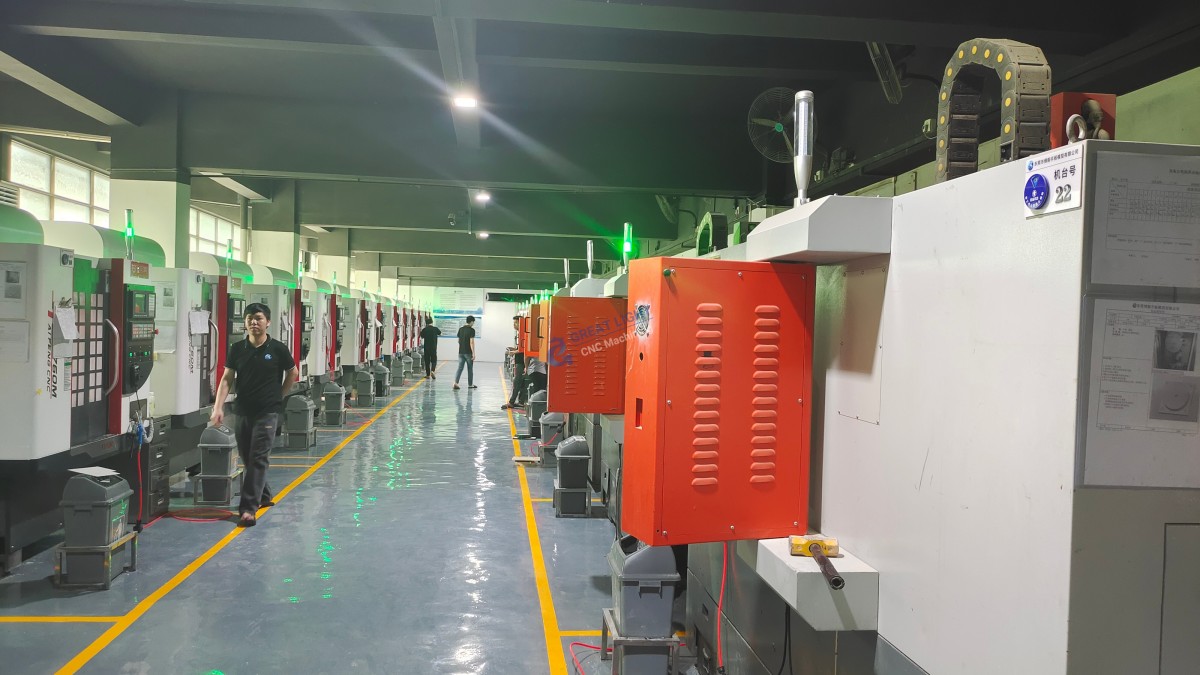
At GreatLight Metal, large-format and high-rigidity 5-axis CNC machining centers (including equipment from Dema and Beijing Jingdiao) bring the structural integrity needed to absorb the cutting forces of titanium. The trunnion tables and kinematic precision maintain positional accuracy across long cycle times. One setup, one coordinate system, zero stack-up error. The result is a subsea connector body where opposing seal faces are parallel within 0.005 mm and bores are concentric within 0.003 mm—performance that directly reduces assembly insertion force and enhances seal reliability.
But technology alone is not enough. The programming team must generate toolpaths that manage chip evacuation in deep pockets, maintain constant tool engagement to avoid shock loading, and vary tool axis orientation to utilize fresh edges. GreatLight’s engineers leverage advanced CAM simulation to predict and eliminate collisions, while adaptive clearing strategies keep material removal rates stable without over-stressing delicate features.
From Raw Stock to Ocean-Ready: GreatLight’s Full-Process Efficiency
Often, the hidden bottleneck in titanium connector body production isn’t the machining itself, but the secondary operations that follow. A raw machined part typically requires stress relieving, surface passivation, and possibly hard anodizing or physical vapor deposition (PVD) coatings for enhanced wear resistance. Sending parts out to multiple subcontractors fragments ownership, introduces logistics delays, and blurs accountability.
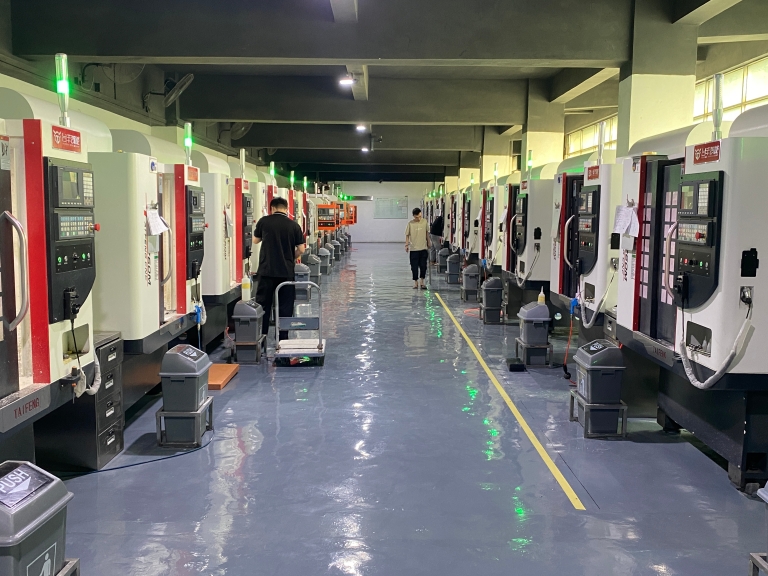
GreatLight Metal was purpose-built as a one-stop integrated manufacturing facility. Spanning 7,600 sqm in Dongguan’s Chang’an district—the heart of China’s precision mold and hardware ecosystem—the factory houses not only 5-axis, 4-axis, and 3-axis CNC centers but also vacuum heat treatment furnaces, passivation lines, and surface finishing stations. The same engineering team that programs the machining can specify the post-processing steps to complement dimensional outcomes. For instance, controlled heat treating before final finishing minimizes distortion, and passivation (to ASTM A967) is executed with full traceability, ensuring the connector body meets NORSOK M-650 or API 6A requirements for subsea use.
This vertical integration delivers dramatic efficiency gains: lead times that might stretch to 8-10 weeks when outsourced drop to 3-4 weeks. Additionally, the ability to perform in-process metrology—using Zeiss CMMs and keyence 3D scanners directly adjacent to the machining cells—enables real-time process correction. If a bore diameter drifts slightly due to tool wear, the offset is adjusted before the next part, not discovered a week later in a subcontractor’s inspection report. Such agility is exactly what product development teams need when iterating a design or when a field failure demands urgent replacement parts.
Certifications That Underwrite Ocean-Depth Confidence
A subsea project’s approval chain demands more than just a promise of quality; it requires auditable proof. GreatLight Metal’s ISO 9001:2015 certification is the baseline, but it goes far beyond. For connector bodies destined for safety-critical offshore equipment, the company has also aligned its workflows with IATF 16949 principles (a common requirement in the automotive sector now filtering into energy) and holds ISO 13485 for medical devices—a standard that shares many cleanliness and validation disciplines with subsea components. Additionally, ISO 27001 compliance guarantees that client-provided 3D models and proprietary material specifications remain tightly secured, a growing concern in international collaborative projects.
In practice, this means every batch of Titanium Grade 5 arriving at GreatLight is accompanied by mill test reports (MTRs) verifying chemical composition and mechanical properties per AMS 4928. In-process inspection data is recorded digitally, creating a full digital twin of each production run. Final inspection reports can include surface profilometer scans, dimensional reports with balloon drawings, and video borescope records of internal cross-holes—everything and anything a third-party inspector would demand.
A Story of Efficiency: Redefining the Machining Cycle
Consider a recent project: a European subsea equipment OEM had been machining a small-geometry connector body from Titanium Grade 5 using multi-axis lathes followed by 5-axis milling operations across three separate facilities. The combined cycle time per unit was 11 hours—excluding transport and queue time. Corrosion-resistant coating and final inspection added another two weeks.
GreatLight’s engineering team proposed a radical simplification. By programming a single-setup 5-axis process on a Dema 5-axis machining center, all turning, drilling, and contouring operations were integrated. High-feed roughing mills with AlCrN coating removed bulk material at over 40 cm³/min, while finish ball mills generated the seal diameters with Ra 0.3 µm directly from the machine. Parts then moved within the same building to salt spray testing and passivation, and were inspected on a CMM the same day. The delivered cycle time? Just under 6 hours per unit, with lead time compressed from 9 weeks to 3.5 weeks. The client not only reduced part cost by 18% but also brought new product testing forward by nearly a month.
This case encapsulates the value proposition of a deeply integrated manufacturer. When the entire process chain lives under one roof, efficiency isn’t an aspiration—it’s a designed outcome.
How GreatLight Stacks Up Against Other CNC Machining Providers
The precision machining landscape is broad, and many suppliers can cut titanium. Companies like Protocase, EPRO-MFG, Owens Industries, RapidDirect, Xometry, and Fictiv all offer 5-axis services, each with its own strengths in rapid quoting or quick-turn prototyping. However, for a part as unforgiving as a subsea connector body in Titanium Grade 5, the differentiator often lies not in the ability to price a single operation, but in the depth of in-house capability and industry-specific compliance.
GreatLight Metal brings a rare combination: 127 units of precision peripheral equipment (including SLM and SLS 3D printers for metal rapid prototyping), a 4,000 mm maximum machining envelope for larger subsea components, and the full spectrum of ISO certifications (9001, 13485, 27001, and IATF 16949-aligned systems). One-stop finishing (galvanizing, anodizing, powder coating, passivation) eliminates supply chain friction.
Owens Industries (USA) is renowned for 5-axis precision and offers excellent engineering support, but its geographic footprint and price point tend to favor domestic projects.
RapidDirect and Xometry excel at online transparency and rapid quoting, ideal for simple titanium parts but less suited to the sustained engineering collaboration a complex connector body demands.
Fictiv shines in design-for-manufacturability feedback and global distribution, yet for ultra-high-precision subsea hardware, many clients still require an OEM-grade quality system with full traceability.
JLCCNC and SendCutSend offer accessible sheet metal and simpler CNC services but are not positioned for the micro-tolerance world of subsea connectors.
The selection boils down to a simple question: does the supplier treat your connector body as another job, or as a component of a safety-critical system? GreatLight’s track record in humanoid robot joints, automotive engine components, and aerospace hardware proves the latter. That vertical expertise in other high-stakes sectors directly transfers to subsea applications, because the same challenges—micro-groove precision, galling prevention, and surface integrity—persist.
Sustaining Excellence: Process Control and Continuous Improvement
It’s one thing to produce a perfect first article; it’s another to replicate it across a 500-unit production run. This is where the factory’s adherence to IATF 16949-style process control disciplines proves invaluable. Statistical process control (SPC) is applied to critical characteristics such as seal bore diameter and thread pitch, with control limits defined against both the print specification and the actual process capability index (Cpk). When a tool wear trend is detected, the machine triggers a tool change before a nonconforming part is produced. Such proactive automation prevents the “inspect and reject” cycle that inflates costs and lead times.
Furthermore, GreatLight’s in-house mold making and die casting divisions provide a unique advantage: when a subsea connector body design evolves to incorporate cast titanium preforms to reduce machining stock, the same company can design the wax mold, cast the near-net shape, and finish-machine it. No juggling of multiple vendors; one accountable partner from concept to delivery.
The Future of Deep-Sea Connector Manufacturing
Material science continues to push the envelope, with additive manufacturing now being explored for titanium connector bodies. GreatLight already operates SLM 3D printers capable of producing complex geometry in Titanium Grade 5, enabling conformal cooling channels or topology-optimized lightweight structures that subtractive machining alone cannot achieve. Combining 3D printing of a preform with final 5-axis machining could further reduce costly titanium waste and open new design possibilities. This hybrid approach is not science fiction—it’s already active in the factory’s R&D lab, and several prototype subsea sensor housings have been produced this way.
Yet even as additive techniques mature, conventional CNC machining will remain the backbone of subsea production due to its unmatched surface integrity and metallurgical reliability. The manufacturers who thrive will be those that master the transition between manufacturing methods seamlessly, and GreatLight’s investment in both worlds positions it precisely for that future.
Partnering for Depth-Defying Results
Choosing a manufacturing partner for a subsea connector body in Titanium Grade 5 is ultimately an exercise in risk management. The ocean doesn’t tolerate marginal workmanship, and the cost of failure is measured not just in money but in lost data, production downtime, and potentially ecological harm. By consolidating design-for-manufacturability input, 5-axis machining, post-processing, inspection, and logistics under one certified roof, GreatLight Metal removes the gaps where quality escapes.
Every subsea connector body that leaves the Dongguan facility carries with it the sum of over a decade of titanium expertise, thousands of hours of empirical tool life data, and a culture that treats every drawing as a personal commitment. That’s not marketing language—it’s the only way to achieve the ±0.001 mm tolerances and surface finishes that subsea equipment engineers rightfully demand. To explore how this capability might accelerate your next project, you can learn more about the team and its ongoing innovations on GreatLight’s LinkedIn page.
In the end, machining a subsea connector body in Titanium Grade 5 is far more than a technical task; it’s a test of a supplier’s ability to synchronize metals, machines, and methodology into a flawless whole—and that’s where the difference between an average shop and a world-class integrator becomes unmistakably clear.


![[访谈] RAPID + TCT 2024:人工智能对 3D 打印的价值](https://print-ing.com/wp-content/uploads/2024/07/INTERVIEW-60x60.jpeg "[访谈] RAPID + TCT 2024:人工智能对 3D 打印的价值 9")




发表回复
要发表评论,您必须先登录。