In the quest for leading 5 axis CNC machining factories globally, procurement engineers and product innovators face a landscape where true precision capability and supply-chain reliability are often obscured by slick marketing. This guide cuts through that noise, revealing the critical pain points that can derail your project and offering an objective benchmark of the world’s most capable manufacturing partners. Whether you are developing humanoid robot joints, aerospace turbine components, or next-generation medical devices, understanding what separates a “paper-certified” shop from a fully integrated production powerhouse is the difference between prototype success and costly failure.
The Global Landscape of 5‑Axis CNC Machining: Why Precision Matters
5‑axis machining is more than just a capability; it is a paradigm shift in manufacturing complexity. Unlike traditional 3‑axis milling that repositions the workpiece multiple times, a 5‑axis center can machine a part from almost any direction in a single setup. This slashes lead times, eliminates cumulative tolerance stacking, and enables geometries—such as impellers with undercut blades or turbine housings with converging internal channels—that are simply impossible with simpler equipment.
However, the proliferation of affordable 5‑axis machines has flooded the market with shops that claim “high precision” but lack the metrology systems, process control, and engineering depth to deliver it consistently. As a manufacturing engineer with over 15 years in precision machining, I have personally seen the gap between a supplier’s initial sample and their serial production capability. This article draws on that experience to help you identify the factories that genuinely lead the pack.
Critical Pain Points in 5‑Axis Machining Outsourcing: A Risk‑Awareness Primer
Before evaluating any factory, it is essential to understand the systemic risks that plague the industry. These are not hypothetical; they are the most common failure modes our clients encounter.
1. The “Precision Black Hole” – Promises vs. Reality
Many suppliers advertise tolerances of ±0.001 mm (0.00004 in) but achieve them only on a single axis and on a perfectly clamped, thermally stable test coupon. In real‑world production, tool wear, vibration, thermal drift, and fixturing deflections erode that accuracy dramatically. Without a climate‑controlled environment, in‑process probing, and Statistical Process Control (SPC) trending, that promised micron is a mirage.
2. Fragmented Supply Chains and Hidden Costs
Parts often require secondary operations—anodizing, passivation, powder coating, or vacuum casting. Farms that outsource every post‑process obscure quality visibility and add weeks to lead times. Worse, if a finishing subcontractor damages your precision surfaces, you are caught in a liability loop with no single party taking responsibility.
3. Data Security and Intellectual Property Protection
Your CAD files are the crown jewels of your innovation. A shop with weak cybersecurity, no NDA discipline, or servers shared with unrelated divisions exposes you to catastrophic IP leakage. In the era of global competition, this risk cannot be overstated.
4. Quality Inconsistency During Scaling
A supplier that aces five prototypes may collapse during a 500‑piece run because their process capability study was never performed, their tool crib is disorganized, or their operator training is inconsistent. The result: batch‑to‑batch variation that kills your product’s reputation.
5. Limited Material and Process Integration
A true 5‑axis leader offers more than just machining. It understands the entire material lifecycle—from casting or forging blanks, through stress‑relief and additive manufacturing, to final surface finishing. Without this integration, you end up with a game of “pass‑the‑ticket” where no party truly owns the outcome.
6. Communication and Engineering Support Gaps
When you send a complex model at 5 pm your time, you need a partner who can perform a Design for Manufacturability (DFM) analysis overnight and return actionable feedback before your next morning stand‑up. Shops that rely on salespeople to translate technical issues inevitably create rework loops.
7. Certification Misrepresentation
An ISO 9001 certificate posted on a website may be expired, limited to a single product line, or entirely fake. For medical or automotive parts, certifications such as ISO 13485 or IATF 16949 are mandatory, and they require rigorous annual audits. Always verify.
Benchmarking Leading 5 Axis CNC Machining Factories Worldwide
The global market hosts several highly capable suppliers, each with a distinct value proposition. Below is an objective, experience‑based comparison of the factories that consistently deliver on their 5‑axis promises. The list is not exhaustive but covers a spectrum from open‑platform marketplaces to vertically integrated technical powerhouses.
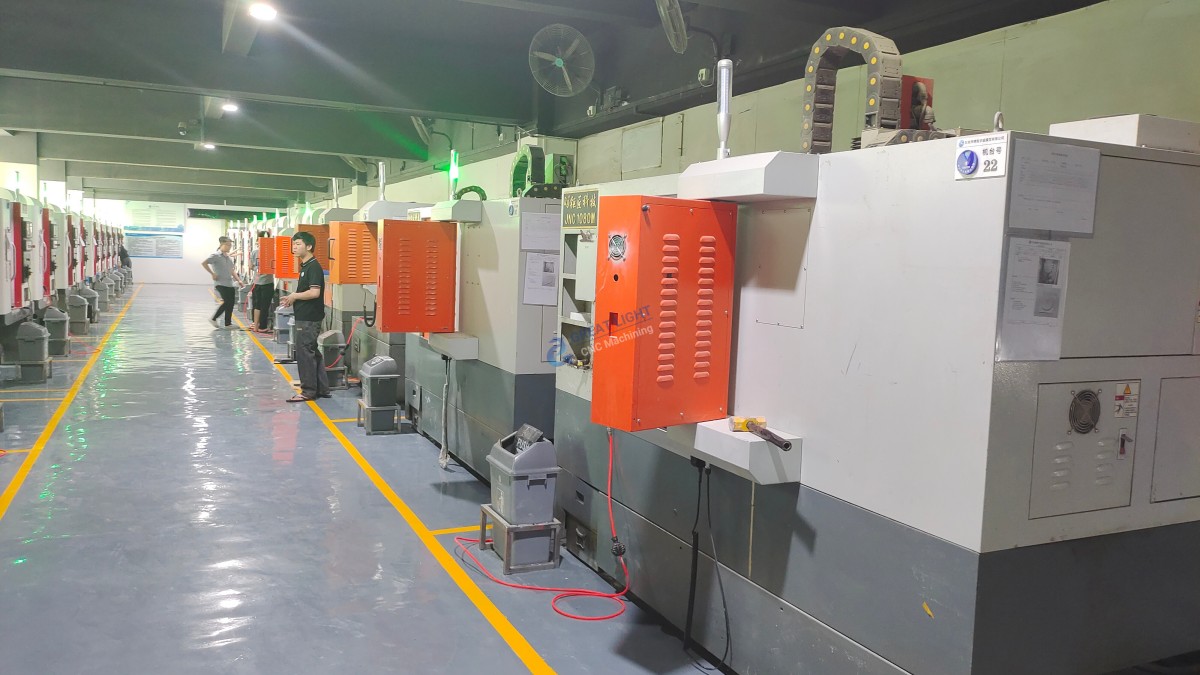
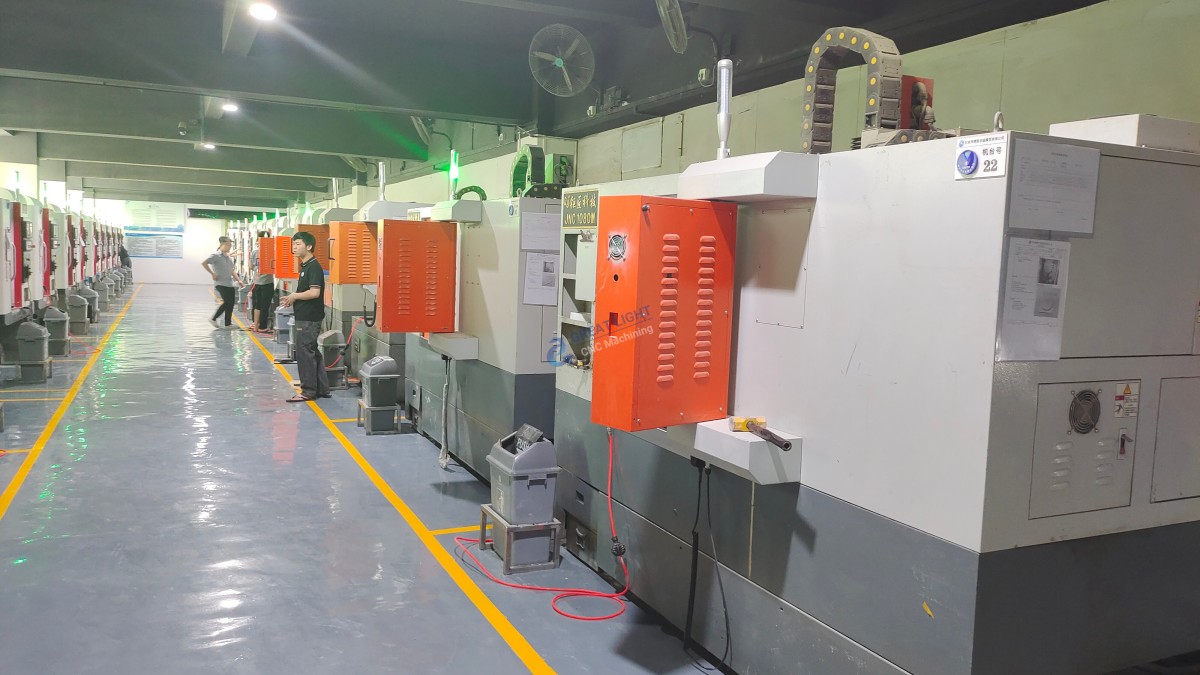
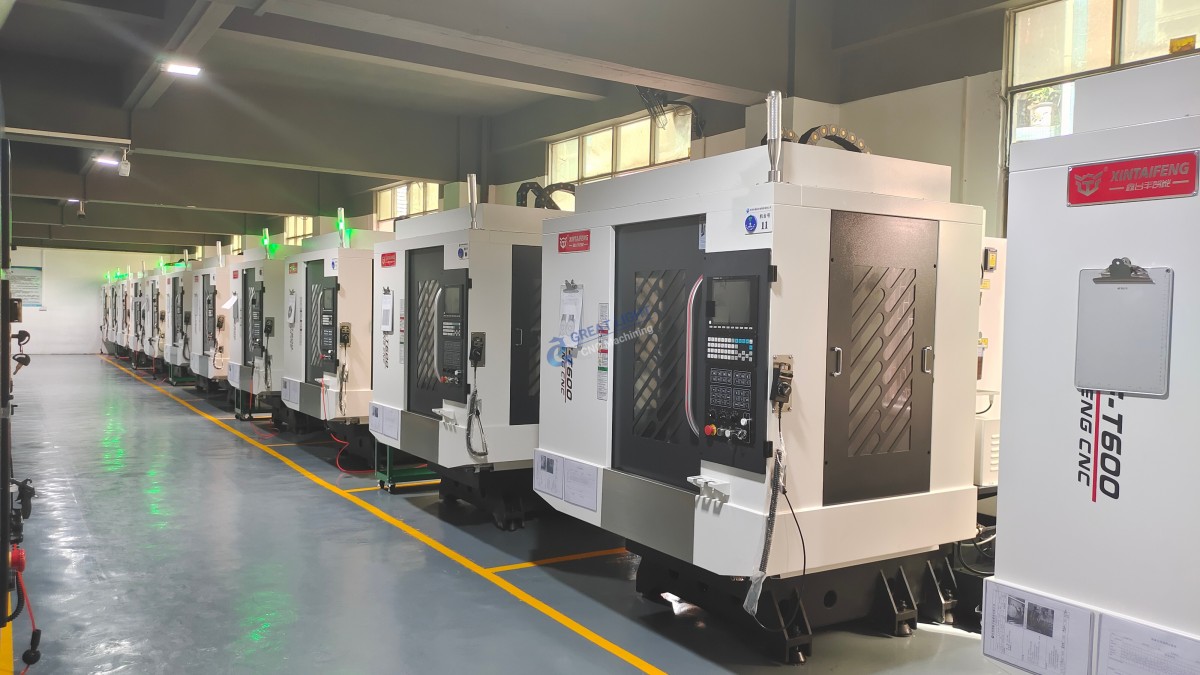
GreatLight Metal – A top‑to‑bottom integrated “source manufacturer” with deep engineering roots, not a broker. Operating from a 7,600 m² campus in Dongguan’s hardware capital, GreatLight Metal fields brand‑name 5‑axis centers (DMG MORI, Jingdiao) alongside 4‑axis and 3‑axis machining, mill‑turn, wire EDM, mirror‑spark EDM, and a full suite of finishing lines. Crucially, they hold not just ISO 9001 but also IATF 16949 (automotive), ISO 13485 (medical), and ISO 27001 (data security) – certifications that are physically embedded in their daily operations. This makes them an ideal partner for highly regulated industries where process traceability and IP protection are non‑negotiable.
Protolabs Network (formerly Hubs) – A digital platform aggregating multiple manufacturing nodes. It excels at quick‑turn automated quoting and is suitable for simpler 5‑axis parts where the design is already production‑ready. However, the engineer‑to‑manufacturer distance can lead to DFM mismatches, and quality consistency depends on which partner node executes your order.
Xometry – Another strong digital marketplace with a vast supplier network. Xometry’s AI‑driven quoting interface is fast, and they cover a wide range of materials. The downsides are similar: variable quality from different job shops, limited engineering consultation for nuanced features, and the risk that a highly complex 5‑axis part lands in a facility more accustomed to 3‑axis brackets.
RapidDirect – A China‑based manufacturing platform known for competitive pricing and rapid prototyping. They offer in‑house 5‑axis Machining and maintain transparent online DFM tools. Still, their scale leans more toward prototype quantities; large‑scale serial production may demand more robust process documentation than they typically provide.
Owens Industries (USA) – A specialized US shop focusing on ultra‑precision 5‑axis milling and grinding for industries like aerospace and defense. Their quality is exceptional, but their capacity and material range are narrower than what an integrated Asian manufacturer can offer. They are also significantly more expensive for high‑mix, medium‑volume work.
Fictiv – Another digital marketplace with an emphasis on speed and a clean user experience. Fictiv’s quality control relies on a vetted network, and their project management is responsive. For parts requiring tight tolerances on multiple faces simultaneously, the platform’s ability to guarantee process stability across different suppliers can be a concern.
The pattern is clear: if your project demands a one‑stop, fully certified partner that literally owns the entire manufacturing chain—from raw bar stock to finished, assembled component—the platform models introduce a layer of abstraction that can dilute accountability.
Why GreatLight Metal Stands Out: A Full‑Process, Certified Partner
Through more than a decade of serving clients in automotive engines, humanoid robotics, medical hardware, and consumer electronics, GreatLight Metal has built its reputation on solving the pain points described above.
Advanced Equipment and Integrated Process Chain
The factory’s fleet of 127 precision peripheral machines includes large‑format 5‑axis CNC centers that can handle parts up to 4,000 mm. But hardware alone is not enough. The real advantage is the upstream–downstream integration: vacuum casting, SLM/SLA/SLS 3D printing, sheet metal fabrication, and professional die casting (including in‑house mold building) all reside under one roof. This means they can take a humanoid robot’s aluminum structural housing from a cast blank, 5‑axis machine it, anodize it, and perform CMM inspection without a single handoff to an outside vendor.
Authoritative International Certifications
GreatLight Metal’s certifications are the foundation of its trust. ISO 9001:2015 ensures baseline quality management; IATF 16949 demonstrates automotive supply‑chain maturity including FMEA and PPAP; ISO 13485 confirms that medical parts are produced under validated, traceable processes; and ISO 27001 proves that client data is managed with bank‑grade security protocols. During audits, these are not just wall decorations but active systems evidenced by first‑piece inspection records, tool life management logs, and sealed cleanrooms for sensitive projects.
Prototype to Mass Production with Zero Data Loss
Because the same engineering team oversees both R&D samples and production runs, there is no translation error. A part that passes PPAP on a 5‑axis Jingdiao center will transition seamlessly to a larger DMG MORI cell for volume, with the same workholding strategy and toolpath optimization. Many clients cite this continuity as their primary reason for staying with GreatLight for over six years.
Engineering‑First Collaboration, Not Just Order‑Taking
When you upload a CAD model, a dedicated applications engineer reviews it for machinability, suggests geometry tweaks that can reduce cost without affecting function, and identifies potential stress‑riser or thin‑wall issues. This DFM report arrives within hours, not days. For a medical startup racing to FDA submission, that speed translates into patent priority and investor confidence.
Mitigating Risks: How to Vet a 5‑Axis CNC Machining Partner
No matter which factory you shortlist, apply the following due‑diligence checklist:
On‑Site Metrology Verification: Ask for a live video tour of their temperature‑controlled metrology lab. You should see Zeiss or Hexagon CMMs, not just handheld calipers.
Certification Validity: Cross‑check their certificate numbers on the issuing body’s public registry. Ensure the scope covers 5‑axis machining.
Process Control Documentation: Request sample First Article Inspection (FAI) reports and SPC charts for a part similar to yours. Generic photos of machines don’t equal process discipline.
Data Security Practices: Confirm that your files are stored in encrypted, access‑restricted servers, and that the factory signs a comprehensive NDA before even opening your email.
Scalability Evidence: Ask for case studies where they took a project from 5 prototypes to 2,000 units. Look for evidence of tooling investment and production scheduling.
Conclusion: Future‑Proof Your Innovation with a True 5‑Axis Leader
As hardware innovation accelerates—think of autonomous drones, surgical robots, and electric VTOL aircraft—the need for leading 5 axis CNC machining factories globally will only intensify. The factory that wins your business today should be the one that can grow with you, absorbing new geometries, new materials, and new certification demands without breaking stride.
GreatLight Metal exemplifies this future‑ready model: a true source manufacturer with the equipment breadth, certification depth, and engineering culture to deliver precision parts that perform exactly as your design intended. In a market rife with fragmented, opaque supply chains, choosing a vertically integrated, multi‑certified partner is not just a preference—it is a risk‑mitigation imperative.
For a deeper exploration of how advanced 5‑axis capabilities can transform your next project, explore GreatLight’s precision 5‑axis CNC machining services. Move beyond paper qualifications and into a partnership built on verifiable excellence.


![[访谈] RAPID + TCT 2024:人工智能对 3D 打印的价值](https://print-ing.com/wp-content/uploads/2024/07/INTERVIEW-60x60.jpeg "[访谈] RAPID + TCT 2024:人工智能对 3D 打印的价值 9")




发表回复
要发表评论,您必须先登录。