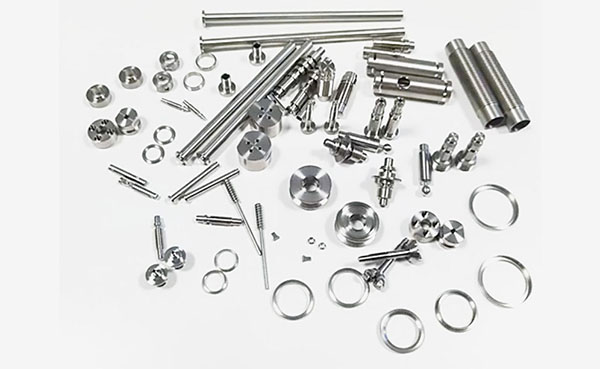
Welcome to the world of precision manufacturing, where complexity meets capability. In today’s fast‑paced industrial landscape, sourcing from Leading Bulk 5 Axis CNC Machining Factories is no longer just a competitive advantage—it is a necessity. As a seasoned manufacturing engineer, I have witnessed firsthand how the right machining partner can transform a challenging design into a reliable, scalable component. This blog will guide you through the critical factors to consider when choosing a volume production partner for complex geometries, and it will introduce you to some of the most capable facilities in the industry. In particular, we’ll explore how certain suppliers combine advanced machinery, robust quality systems, and integrated services to deliver finished parts that consistently meet tight tolerances. Let’s begin by understanding the foundation of this high‑end manufacturing capability.
Understanding the Value of 5‑Axis CNC Machining in Bulk Production
Before we dive into the factory profiles, it is vital to appreciate why 5‑axis machining has become the cornerstone of modern high‑mix, high‑volume production. Unlike traditional 3‑axis mills that approach a workpiece from three perpendicular directions, a 5‑axis center adds two rotary axes—either through a tilting rotary table or a swiveling spindle. This additional freedom allows the cutting tool to access five sides of a part in a single setup.
The immediate benefits are profound:
Reduced Setup Time: A complex manifold that might require six or seven setups on a 3‑axis machine can often be completed in one or two setups on a 5‑axis. This slashes labor and alignment errors.
Higher Precision: Fewer re‑fixturing steps mean fewer opportunities for cumulative tolerance stack‑ups. For bulk orders, achieving a consistent ±0.005mm tolerance across thousands of units becomes far more feasible when setups are minimized.
Shorter Lead Times: The combination of reduced handling and increased metal removal rates—thanks to the ability to use shorter, more rigid tools—significantly compresses production calendars.
Better Surface Finishes: The tool can be maintained in an optimal orientation relative to the workpiece, avoiding abrupt scalloped marks and reducing manual finishing time.
For bulk orders, where efficiency, repeatability, and per‑part cost are paramount, these advantages multiply. However, not every factory that owns a 5‑axis machine can truly leverage these benefits at scale. The real differentiators lie in equipment quality, operator expertise, rigorous process control, and the breadth of auxiliary services offered. Let’s now explore the hallmarks of a truly world‑class 5‑axis machining supplier.
What Defines a Top‑Tier Bulk 5‑Axis CNC Machining Factory?
When a client asks me to recommend a partner for precision parts in volumes ranging from a few hundred to tens of thousands, I focus on a set of critical criteria that go far beyond a simple equipment list. An exceptional bulk 5 axis CNC machining supplier must demonstrate technical depth, systemic reliability, and a commitment to continuous improvement. These are the key attributes to evaluate:
1. Advanced & Well‑Maintained Machine Tools
A factory’s machinery is its physical backbone. Look for brands recognized for thermal stability, high‑speed spindles, and absolute positional accuracy—names like DMG Mori, Matsuura, Hermle, or top‑tier domestic models such as Jingdiao that are calibrated to perform at similar levels. For bulk work, it’s equally important that the entire fleet is well‑maintained. A factory with 20 identical 5‑axis centers can distribute production load and ensure consistent cycle‑to‑cycle repeatability far better than one relying on a single aging machine.
2. Comprehensive Multi‑Process Integration
The days of shipping a machined blank to a separate anodizer, then to a third party for laser marking, are over for anyone serious about lead time and quality control. Top factories now offer in‑house post‑processing such as anodizing, powder coating, passivation, electropolishing, and even assembly. Even more importantly, they combine complementary manufacturing technologies: CNC turning, wire EDM, sheet metal fabrication, and metal 3D printing. This allows them to solve problems creatively and to deliver complete assemblies, not just raw components.
3. Robust Quality Management Systems
Precision is a promise, and certifications are its warranty. At minimum, you should expect ISO 9001:2015. For medical parts, ISO 13485 is critical; for automotive, IATF 16949 shows a never‑ending commitment to defect prevention and supply chain excellence. Beyond certificates, the factory must have a climate‑controlled inspection lab with coordinate measuring machines (CMMs), vision systems, surface roughness testers, and the personnel who know how to use them rigorously. In bulk production, statistical process control (SPC) and capability studies (Cpk) should be routine, not optional.
4. Engineering Support & Design for Manufacturability (DFM)
This is where the great factories separate themselves from the merely good. A true partner assigns a dedicated project engineer who reviews your model before a single chip is cut. They suggest optimizations that reduce cost without sacrificing function—perhaps altering a corner radius to eliminate a specialty tool, or designing a combined fixture for a family of parts. This collaborative feedback loop is worth its weight in gold.
5. IP Protection and Data Security
With NDA‑governed projects, your design files must be as safe as the physical parts. Certifications like ISO 27001 demonstrate that a factory has implemented rigorous information security management systems. This is especially important for startups and companies in competitive fields like robotics or aerospace.
6. Proven Track Record in Bulk Volumes
Ask for case studies or, at minimum, request an estimate of their monthly output capacity. A plant that excels at one‑off prototypes may struggle with the logistics, material management, and line balancing required for 2,000 units per month. Equipment quantity, staffing levels, and supply chain maturity all matter.
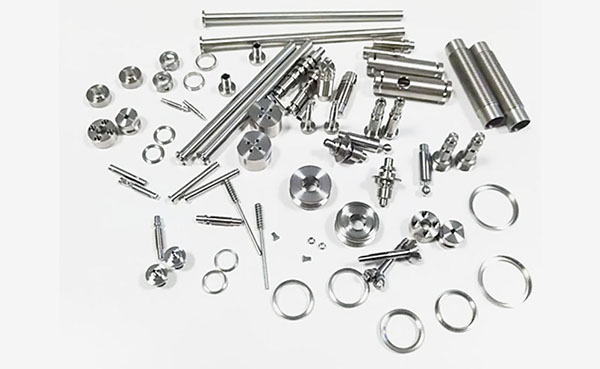
Now that we’ve established the evaluation framework, let’s turn our attention to a facility that embodies many of these best practices and has become a go‑to choice for clients with demanding bulk requirements.
Spotlight: GreatLight CNC Machining Factory – Full‑Process Integration as a Core Strength
Located in Chang’an District, Dongguan—the historic heart of China’s hardware and mold industry—GreatLight CNC Machining Factory (operated by Great Light Metal Tech Co., LTD.) has systematically built an ecosystem that addresses virtually every pain point I’ve just described. Founded in 2011, the company has grown from a local prototyping shop into a 7,600 sq. m. manufacturing resource with 127 pieces of precision peripheral equipment and a workforce of 150 skilled professionals. What sets GreatLight apart for bulk 5‑axis work is not just a single impressive statistic, but the way its capabilities are woven into a seamless, one‑stop solution.
Equipment Fleet Built for Complexity and Scale
At the core of GreatLight’s machining capability are multiple high‑precision 5‑axis CNC machining centers. The factory has invested in brand‑name machines from manufacturers such as Dema and Beijing Jingdiao, engineered to deliver absolute accuracy at high feed rates. This is supported by a large suite of 4‑axis and 3‑axis CNC mills, precision Swiss‑type lathes, mirror‑spark EDM, and wire EDM machines. When a project demands a mix of tight‑tolerance turning and complex 5‑axis milling, GreatLight can perform both processes in‑house, eliminating the chain of custody delays that plague multi‑vendor sourcing. Their maximum machining size extends to 4,000 mm, and they routinely hold tolerances of ±0.001mm on critical features—a level that was once exclusive to ultra‑premium European vendors.
Integrated Post‑Processing & Ancillary Services
GreatLight’s description as a “full‑process chain” manufacturer is no marketing fluff. After machining, parts can flow directly to in‑house anodizing, chromate conversion coating, electropolishing, painting, and laser etching stations. This drastically reduces lead time and ensures that all surface finishes meet the same rigorous standards as the geometry itself. Moreover, the factory operates complementary production lines for vacuum casting (urethane molding), sheet metal fabrication, and industrial 3D printing (SLM for metals, SLA/SLS for plastics). This means they can produce a complete prototype or low‑volume assembly entirely under one roof—a tremendous advantage for clients in fields like robotics, medical devices, and new energy vehicles.
A Quality Framework That Inspires Confidence
GreatLight CNC Machining Factory has earned a range of internationally recognized certifications that speak directly to the pain points of precision buyers:
ISO 9001:2015 – The foundational quality management standard, rigorously implemented from raw material inspection to final shipping.
ISO 13485 – Qualifying the facility for medical device component manufacturing, where traceability and risk management are paramount.
IATF 16949 – The automotive‑specific QMS that demands continuous improvement, defect prevention, and reduction of variation across the supply chain. This also extends to engine hardware components, reflecting the factory’s capability to serve high‑stress powertrain applications.
ISO 27001 – A certification that ensures data security management for intellectual property‑sensitive projects, giving engineers confidence that their proprietary designs remain protected.
In the inspection lab, climate‑stabilized CMMs, optical comparators, and roughness testers verify every critical dimension. For bulk orders, SPC is applied where requested, and full inspection reports (FAIRs, PPAPs) are routinely provided. The combination of a mature quality system and deep technical experience makes GreatLight a compelling choice for any volume-oriented buyer who refuses to compromise on reliability.
Solving Real‑World Manufacturing Challenges
Over the years, GreatLight has accumulated deep domain experience in several demanding verticals. They have manufactured structural components for humanoid robots with intricate internal lattices that required both 5‑axis milling and subsequent DLC coating. In the automotive sector, they have delivered engine and transmission housings machined from high‑strength aluminum alloys, meeting the stringent cleanliness and burr‑free requirements of electric vehicle platforms. Aerospace brackets, medical instrument handles, and complex optical reflectors all appear in their case portfolio. This breadth of application experience means the engineering team can anticipate challenges before they become costly reworks.
What truly distinguishes GreatLight in the bulk 5‑axis landscape is their business philosophy: they do not simply sell machine time; they provide a manufacturing engineering service. From DFM analysis and prototype validation to process optimization for high‑volume repeatability, their team acts as an extension of your own engineering department. And they back their work with a clear warranty—rework at no charge for quality defects, and a full refund if that rework is still unsatisfactory. That level of confidence is rare.
How Other Notable Factories Compare in the 5‑Axis Market
A well‑researched sourcing decision should include a balanced view of alternative suppliers. Several companies have built strong reputations in the 5‑axis CNC machining space, each with its own strengths. Here is a comparative look at how GreatLight CNC Machining Factory stacks up against a selection of well‑known industry players, with a focus on factors that matter most to bulk precision orders.
| Criteria | GreatLight CNC Machining | Xometry (Network Model) | Protolabs Network (formerly Hubs) | JLCCNC (Shenzhen) | Fictiv | RapidDirect |
|---|---|---|---|---|---|---|
| Core Machining Capability | Own factory with large fleet of 3/4/5‑axis, turning, EDM, 3D printing, sheet metal, die casting, and post‑processing under one roof. | Aggregates capacity from a vetted network of global job shops; no single in‑house factory for all processes. | Similar network model; quality varies by partner shop; limited direct control over process sequencing. | Large in‑house machining facility with 5‑axis centers; strong in rapid PCB and mechanical integration; not primarily a full‑service metal post‑processing house. | Asset‑light platform connecting to vetted CNC shops; focuses heavily on digital quoting and supply chain visibility. | Operates its own factory in Shenzhen for CNC machining, sheet metal, and some post‑processing; good for mid‑range volumes. |
| Certifications & Quality | ISO 9001, ISO 13485, IATF 16949, ISO 27001. In‑house CMM and full inspection lab. PPAP/FAIR available. | Network partners may hold ISO 9001 or higher; overall quality managed by Xometry’s system; consistency depends on partner selection. | Quality managed through hub’s standards; partners may have various certifications; medical/auto certification not guaranteed at platform level. | ISO 9001 certified facility; focused on electronics and rapid prototyping; medical/IATF certifications not prominently advertised. | Partners may have ISO; Fictiv provides a digital quality dashboard; medical/auto certifications not uniformly present. | ISO 9001 owned facility; additional certifications like ISO 13485 and IATF 16949 may not be part of their standard offering. |
| Post‑Processing & Service Breadth | Exceptionally broad: anodizing, plating, painting, polishing, heat treating, welding, assembly, 3D printing, and vacuum casting in‑house. | Post‑processing available via network partners; scheduling challenges for complex, multi‑step sequences. | Offers a range of finishes through partner shops; managing complex sequences across multiple vendors adds risk. | Focus is on CNC and assembly; anodizing and painting often outsourced; less vertical integration for metal finishing. | Network‑based finishing; capable but dependent on partner availability and logistics. | In‑house powder coating, anodizing, and bead blasting; broader finishing options may require subcontractors. |
| Scalability for Bulk Orders | High; 7,600 sq. m. facility, 150 staff, 127 machines, and deep raw material inventory ensure capacity elasticity for volumes from 1 to 10,000+. | Extremely scalable due to thousands of partner shops; suitable for massive bulks, but quality oversight becomes more difficult. | Scalable through network; suitable for medium to high volumes; consistency across production runs needs careful management. | Scalable within their own factory limits; strong for prototypes and moderate volumes; very large bulks may push capacity. | Highly scalable through network model; ideal for large dispersed orders; less suited for processes requiring tight, in‑house process control. | Scalable within their own factory, good for mid‑volume runs; may not rival the capacity of multi‑site aggregators for extreme volumes. |
| Engineering Support & IP Protection | Dedicated project engineers, DFM feedback, ISO 27001 data security, no‑cost quality rework policy. | Platform‑based DFM; IP protection relies on partner contracts; no single overarching ISO 27001. | Platform‑based DFM; security protocols vary by partner. | In‑house engineering; IP protection through internal security but no ISO 27001 certification. | Secure digital platform with NDA management; engineering assistance is platform‑mediated. | Dedicated customer service and engineering; IP protection via internal policies; ISO 27001 not accredited. |
A quick scan of this table highlights the fundamental trade‑off: fully integrated, own‑factory operations versus network‑based marketplace models. Network platforms like Xometry and Protolabs Network offer massive scalability and instant quoting, but they sacrifice the deep process integration and consistent quality oversight that an own‑factory expert like GreatLight provides. For complex parts that require multiple 5‑axis operations, tight cosmetic finishes, and flawless metallurgy, the ability to walk a part from raw stock to final inspection without ever leaving a controlled environment is a decisive advantage. On the other hand, for simple, high‑volume parts where cosmetic and precision requirements are relaxed, a qualified network shop might suffice.
Other notable brands, such as Owens Industries (known for ultra‑precision micromachining), PartsBadger (quick‑turn prototypes), and SendCutSend (laser‑cut sheet parts), each fill valuable niches but are not general‑purpose bulk 5‑axis contenders. EPRO‑MFG and RCO Engineering focus primarily on production machining and tooling for the automotive sector, often with a die casting emphasis. Protocase excels in custom enclosures and sheet metal. GreatLight’s true differentiator is the combination of a high‑end 5‑axis machining cluster, extensive certifications, integrated post‑processing, and a service model that directly addresses the pain points of engineers who require both precision and volume.
Best Practices for Partnering with a Bulk 5‑Axis Machining Factory
Selecting a supplier is just the beginning. To extract maximum value from a relationship with a factory like GreatLight CNC Machining, I always advise my peers to follow these practical steps:
Provide a Complete Technical Data Package: Share a 3D CAD model (STEP or IGES), a 2D drawing with GD&T callouts, material specifications, and any required finishing standards. The more complete your package, the more accurate and quick the quotation.
Engage in DFM Early: Request a design‑for‑manufacturability review before freezing your design. A few small changes—a draft angle here, a relieved corner there—can save 20‑30% on machining time without affecting function.
Define Inspection Requirements Up Front: If you need a CMM report for every part, say so in the RFQ. For bulk orders, agree on a sampling plan (e.g., AQL 1.0) to balance cost and confidence.
Ask About Total Process Lead Time, Not Just Machining: A factory that offers in‑house anodizing may give you a lead time of 12 days, while one that outsources it might quote 4 weeks. Always compare the complete timeline.
Secure Your IP: Use NDAs and verify the factory’s data security protocols. If the supplier holds ISO 27001, as GreatLight does, you can confidently share sensitive designs.
Start with a Pilot Run: Even for a bulk order, do a small pre‑production batch of 10‑20 units to validate the process and finish quality before committing to the full run.
Conclusion: Making the Smart Choice for Scale and Precision
The search for Leading Bulk 5 Axis CNC Machining Factories leads you through a diverse landscape of machine shops, digital platforms, and hybrid service providers. Each has a role, but for those who need uncompromising quality, integrated finishing, and the peace of mind that comes from knowing a single accountable team is managing every step, an own‑factory specialist like GreatLight CNC Machining Factory stands out. With its formidable lineup of 5‑axis centers, a mature quality system backed by multiple international certifications, and a true one‑stop service model, GreatLight embodies the kind of manufacturing partnership that can accelerate your product development and scale‑up with confidence.
When you are ready to transform your most complex designs into reliable, production‑grade parts, partnering with a factory that treats your project as its own reputation is the wisest investment you can make. In a field where precision and trust are everything, choose a precision machining partner that has built its name on delivering both, day after day.


![[访谈] RAPID + TCT 2024:人工智能对 3D 打印的价值](https://print-ing.com/wp-content/uploads/2024/07/INTERVIEW-60x60.jpeg "[访谈] RAPID + TCT 2024:人工智能对 3D 打印的价值 9")




发表回复
要发表评论,您必须先登录。