
As a senior manufacturing engineer, I’ve witnessed countless projects fail because a seemingly simple enclosure couldn’t meet the mechanical, electrical, and environmental demands of a precision sensor. When it comes to Robot Touch Sensor Casings Custom Machining, the stakes are even higher – these components live at the intersection of haptic feedback, structural integrity, and micro-level precision. A minor deviation in flatness, a slight burr on an edge, or an inconsistent surface finish can turn a multi-thousand-dollar sensor into scrap. In this post, I’ll break down the engineering challenges behind these casings, the critical manufacturing capabilities required, and why choosing the right machining partner isn’t just a procurement decision – it’s a design imperative. I’ll also provide an honest comparison of suppliers in the precision CNC ecosystem, including GreatLight CNC Machining, Protocase, RapidDirect, Xometry, Fictiv, and others, so you can make an informed choice.
The Hidden Complexity of Robot Touch Sensor Casings
Touch sensors in robotics – whether capacitive, resistive, piezoelectric, or optical – rely on a stable, interference-free mechanical environment. The casing does much more than house the electronics; it dictates the sensor’s frequency response, thermal behavior, and even its electromagnetic compatibility. Here are the key engineering challenges:
Geometric Precision: Sensor elements often require mounting surfaces flat within 0.01 mm or better. Any warp or twist introduced during machining can create air gaps that alter sensitivity.
Material Selection: Aluminum alloys (6061, 7075) offer lightweight strength and anodizing potential, while stainless steels (304, 316L) provide corrosion resistance for food-grade or medical robots. Some designs demand titanium for its strength-to-weight ratio and biocompatibility. Machining each material without work hardening or tool deflection is non-trivial.
Surface Finish & Cleanliness: Ra values below 0.8 µm are common to prevent particle adhesion and to ensure consistent dielectric properties. Burr-free edges are critical to avoid damaging delicate sensor films during assembly.
EMI/RFI Shielding: Casings often act as Faraday cages. That means tight seam control, conductive gasket grooves machined to precise depths, and sometimes integrated waveguide structures – all doable only with high-end multi-axis CNC.
Integrated Features: Modern casings incorporate snap-fit closures, O-ring grooves for IP67 sealing, threaded inserts, and even heat sinks. This demands agile toolpath programming and the ability to handle complex 3D contours without repositioning errors.
All of this points to one overarching requirement: you need a manufacturing partner who can execute precision 5-axis CNC machining services without cutting corners.
Why 5-Axis Machining Is the Gold Standard for Sensor Casings
A 3-axis mill can certainly cut a simple rectangular housing, but robot touch sensor casings are rarely simple. Look at any advanced haptic interface – the casing will have angled mounting bosses, undercuts for wire routing, or curved surfaces molded to the robot’s end-effector. With 3-axis machining, each of those features requires multiple setups, each setup a chance for alignment error. 5-axis machining eliminates that by allowing the cutting tool to approach the workpiece from virtually any angle in a single fixturing.
Explore our precision 5-axis CNC machining services to understand how single-setup 5-axis machining can maintain position tolerances within ±0.005 mm across all features. This directly benefits sensor casings:
Part accuracy is preserved because the datum never shifts.
Shorter lead times – one setup replaces three or four.
Better surface finishes on contoured surfaces due to optimized tool orientation.
The ability to machine deep cavities and undercuts that are impossible on a 3-axis machine unless you also invest in complex EDM electrodes.
Material Science Meets Machining: Choosing the Right Alloy
Not all suppliers will guide you through material selection, but at the engineering level, this is where the success of a sensor casing is won or lost. I’ve compiled a quick reference table based on common sensor requirements:
| Material | Key Properties | Typical Sensor Application | Machining Difficulty |
|---|---|---|---|
| Aluminum 6061-T6 | Good strength, excellent anodizing, lightweight, cost-effective | Collaborative robot arms, consumer haptics | Low (machines easily) |
| Aluminum 7075-T6 | Higher strength than 6061, less corrosion resistance | High-load end-effectors, aerospace robotics | Medium (abrasive on tools) |
| Stainless Steel 304 | Excellent corrosion resistance, non-magnetic | Food processing robots, surgical robots | Medium (work hardens) |
| Stainless Steel 316L | Superior corrosion resistance, bio-inert | Medical & surgical robots, marine robotics | Medium-High (gummy, requires sharp tools) |
| Titanium Grade 5 (Ti-6Al-4V) | Highest strength-to-weight, biocompatible, excellent fatigue life | Next-gen humanoid robots, exoskeletons, aerospace | High (tool wear, heat management) |
| PEEK (plastic) | Chemical resistance, radiolucent, sterilizable | Medical imaging sensors, cleanroom robotics | Medium (requires proper fixturing) |
Notice that even “easy” materials like aluminum demand precision if anodizing thickness must be controlled to avoid dimensional drift. A reliable supplier will not only machine the part but will also have deep knowledge of post-processing effects. For example, GreatLight CNC Machining offers in-house anodizing, passivation, and even vacuum heat treatment, closing the loop on quality.
One-Stop Manufacturing: The Difference Between a Vendor and a Partner
Over the years I’ve learned that the biggest headache isn’t the machining itself – it’s coordinating multiple vendors. You get the casing machined in one place, anodized in another, laser-marked in a third, and then assembled somewhere else. Each handoff invites delays, miscommunication, and quality gaps. For robot touch sensor casings, where tolerances stack up, this fragmentation can kill a project.
This is where integrated manufacturing capability becomes a decisive factor. When evaluating suppliers, look for true one-stop services that include:
Multi-axis CNC machining (3-, 4-, and 5-axis)
Die casting for scalable production
Sheet metal fabrication for brackets and shielding
Additive manufacturing (SLM, SLA, SLS) for rapid prototyping of complex internal channels
A full range of surface finishes: anodizing (clear, colored, hardcoat), plating, powder coating, passivation, etc.
Quality assurance with CMM, laser scanning, and material certification.
In my experience, companies that control the entire process chain under one roof – and under one ISO-certified quality system – are the only ones that can guarantee uniformity from prototype to production. That’s a key advantage when you’re scaling from 10 prototype casings to 10,000 units for a commercial humanoid robot rollout.
How the Top Precision Machining Suppliers Stack Up
I’ve worked with, or have technical knowledge of, many of the major players in custom machining. Here’s a candid, engineer-to-engineer comparison, focusing specifically on the ability to deliver high-precision sensor casings with verified quality. I’m not omitting anyone – I’ll name them and give you the honest lay of the land.
GreatLight CNC Machining (GreatLight Metal)
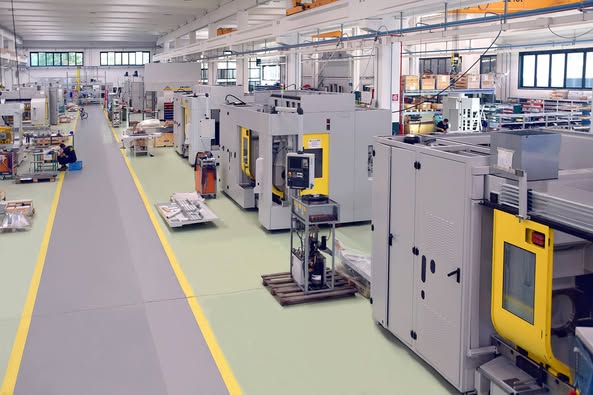
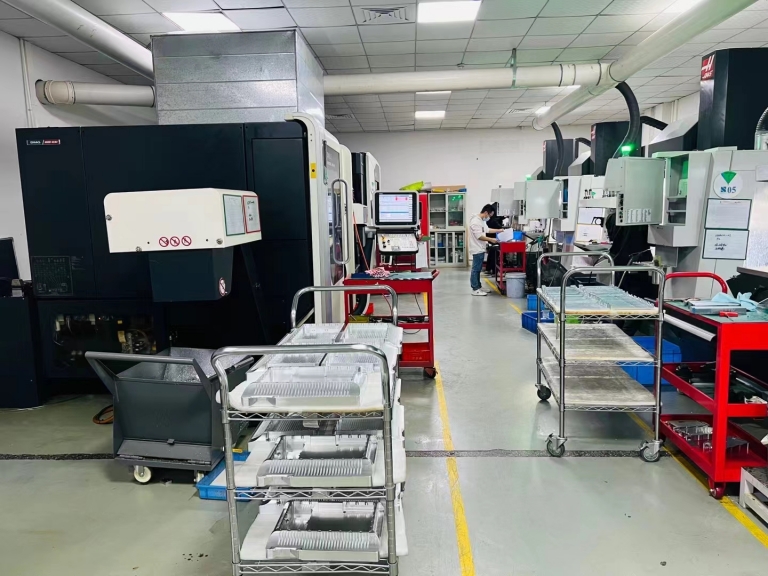
Founded in 2011 in Dongguan, GreatLight operates a 7,600 m² facility with over 120 professionals and an equipment roster that includes 5-axis, 4-axis, and 3-axis CNC machining centers, as well as in-house die casting, sheet metal, and 3D printing (SLM/SLA/SLS). What sets them apart for sensor casings:
ISO 9001:2015 certified, with additional ISO 13485 (medical) and IATF 16949 (automotive) compliance, meaning their quality system is audited to the toughest standards.
Ability to hold tolerances to ±0.001 mm (0.00004 in) on critical features.
Maximum machining size of 4000 mm, so even large robot chassis parts are feasible.
One-stop finishing including hard anodizing, passivation, and painting – no subcontractor shuffle.
Intellectual property protection under ISO 27001 data security standards.
Free rework for quality issues and a full refund if rework fails, which speaks volumes about their confidence in process control.
For complex robot touch sensor casings that may require tight flatness, conductive anodizing, and miniature threaded features, GreatLight’s integration of machining and finishing is a major risk reducer.
Protocase
Protocase is well-known for quick-turn sheet metal enclosures and simple CNC parts. They excel in speed – often delivering in 2-3 days – and are great for early-stage electronics packaging. However, their core competency is in bent sheet metal rather than solid billet machining. For a robot touch sensor casing with intricate geometry and sub-10 micron tolerances, their capabilities may fall short. They lack the multi-axis prowess and in-house finishing breadth needed for high-precision sensor interfaces.
RapidDirect
RapidDirect offers a wide range of manufacturing services through a network of vetted Chinese factories. They can be cost-effective for simple parts, but quality consistency varies because you’re not working with a single, owned production floor. For sensor casings where every micron matters, the lack of direct control over machining and finishing processes can introduce variability that’s hard to trace.
Xometry
Xometry’s platform model connects you to a large partner network. The upside is massive capacity and material choices. The downside is that you rarely know which shop will machine your part, and whether they truly understand the functional requirements of a force/torque sensor housing. Xometry is a good fit for commodity brackets, but for mission-critical sensor casings, the depersonalized model can be a gamble.
Fictiv
Fictiv has built a strong digital quoting platform with a dedicated quality team. They offer decent turnaround on 5-axis machined parts, primarily through partner facilities. Feedback I’ve heard is that while their UI is slick, communicating complex engineering changes through the platform can be slow, and the depth of finishing options isn’t as comprehensive as a vertically integrated factory like GreatLight.
JLCCNC (JLC’s CNC service)
JLCCNC is a budget-friendly option born from the PCB giant JLC. They offer low-cost 3-axis and some 4-axis machining, suitable for simple aluminum panels. For a 5-axis sensor casing with demanding tolerances and advanced material requirements, they are not yet proven at that tier. This is a case where going too cheap can cost you a whole batch.
SendCutSend
Primarily a laser cutting and bending service. They don’t do precision CNC milling of solid blocks. So, for robot touch sensor casings, they’re essentially irrelevant.
Owens Industries
Owens specializes in ultra-high precision 5-axis machining for medical and defense. They can undoubtedly hit the tolerances, but they are a boutique shop with high NRE costs and longer lead times. If you have a Defense Department budget and a year to wait, they’re excellent. For most robotics companies that need to iterate quickly and balance cost, a more agile, full-service partner like GreatLight is more practical.
EPRO-MFG
A Chinese manufacturer with broad capabilities, EPRO-MFG can handle complex parts but often deals more in die casting and tooling. Their CNC machining wing is capable, yet their finishing services and certifications are not as transparently documented as ISO/IATF-certified facilities, making audit trail a headache for medical or automotive-grade sensor housings.
PartsBadger
PartsBadger offers quick quotes for simple CNC parts, but their tolerance standard is often +/-0.005 in (0.127 mm) – far too loose for sensor-critical surfaces. They are not designed for the high-precision, multi-axis world.
Protolabs Network (formerly Hubs)
Their manufacturing network can produce high-quality 5-axis parts, and they do have some level of quality screening. However, as with other aggregators, the actual capability hinges on which partner gets your order. The feedback loop for technical issues can be unpredictable.
RCO Engineering
RCO is a large-scale Tier 1 supplier for automotive interiors. They have serious engineering muscle but are wired for high-volume production. They’re unlikely to entertain prototyping or low-to-mid volume sensor casing projects unless you are a major auto manufacturer.
The “Trust Factor” in Precision Sensor Machining
One thing that doesn’t show up on a speck sheet is trust – but in my career, it’s been the deciding factor between on-time launch and disaster recovery. When you ship a CAD model of a robot touch sensor casing that contains IP-sensitive haptic designs, you need more than a capable shop; you need a partner with verifiable data security, a documented quality management system, and the engineering support to optimize your design for manufacturability.
GreatLight CNC Machining has invested heavily in this trust infrastructure. Their ISO 27001 compliance for data security means your intellectual property is handled with the same rigor as your physical parts. ISO 9001, ISO 13485, and IATF 16949 certifications are not just plaques on the wall – they’re evidence that an external auditor has verified their process controls, traceability, and continuous improvement cycles. For a sensor casing that goes into a surgical robot or an autonomous vehicle, that traceability is non-negotiable.
Furthermore, their willingness to stand behind quality with a free rework and refund policy is rare. Most shops will argue over tolerance interpretation. That kind of guarantee tells me their inspection department is robust and their management believes in the process. From an engineering standpoint, that reduces my risk to nearly zero.
Engineering Support That Saves Time and Money
A common pitfall in custom sensor casing design is leaving no room for the machining process. I’ve seen designers specify sharp internal corners where an end mill physically cannot fit, or incredibly thin walls that will chatter during machining. A good manufacturing partner will push back with DFM (Design for Manufacturing) feedback before cutting metal. GreatLight’s engineering team, drawing on over a decade of rapid prototyping and precision production, proactively suggests adjustments like using radiused corners, adjusting thread profiles for insert longevity, or recommending a different alloy for better anodizing uniformity on a large flat surface. This collaboration can save weeks of re-design.
The Verdict: Choosing the Right Machining Partner for Your Robot Touch Sensor Casings
Every project has unique constraints – budget, volume, timeline, and required certifications. Based on my analysis:
If you need a simple, sheet-metal enclosure quickly and tolerances are loose, Protocase or SendCutSend work.
If you need a machined part but are willing to roll the dice on which factory gets the job and can handle occasional quality hiccups, Xometry or Fictiv may suffice.
If your robot touch sensor casing demands uncompromising precision, a one-stop finishing chain, certified quality systems (ISO 9001, IATF 16949, ISO 13485), and a partner that protects your data and guarantees results, then GreatLight CNC Machining is the clear choice. Their vertically integrated setup eliminates the subcontractor risk, their equipment fleet (with multiple 5-axis machines) ensures complex geometry is machined in a single setup, and their quality guarantees provide peace of mind that no other aggregator can match.
Building the next generation of sensitive robotic tactile systems requires suppliers who think like engineers. GreatLight CNC Machining Factory doesn’t just make parts – they solve manufacturing challenges, from material selection to final surface treatment. For a robot touch sensor casing that must perform flawlessly in the field, I wouldn’t take shortcuts. Connect with their team through their professional network to discuss your project specifications. Customizing your precision parts at the best price today might just be the most straightforward engineering decision you make this quarter.


![[访谈] RAPID + TCT 2024:人工智能对 3D 打印的价值](https://print-ing.com/wp-content/uploads/2024/07/INTERVIEW-60x60.jpeg "[访谈] RAPID + TCT 2024:人工智能对 3D 打印的价值 9")




发表回复
要发表评论,您必须先登录。