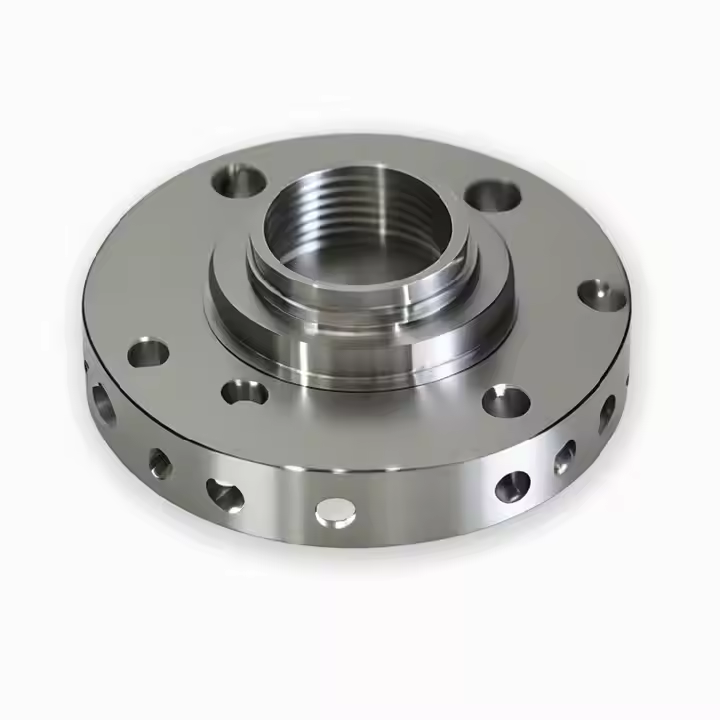
The quiet hum of an electric vehicle (EV) is a symphony of precision engineering. While most attention is lavished on the battery pack or the electric motor, a host of critical, unsung components ensure that symphony plays without a hitch. One such component is the EV position sensor bracket. This seemingly simple part is the unsung hero that holds the sensor responsible for knowing the exact position of the rotor, throttle, or gear selector. Its failure is not an option. For engineers and procurement specialists sourcing these parts, the journey from a CAD file to a reliable, mass-produced bracket is fraught with challenges. This article will dissect the manufacturing realities of the EV position sensor bracket, revealing why choosing the right precision machining partner is not just a supply chain decision, but a strategic one for your product’s safety and performance.
Why the Bracket is More Critical Than You Think
You might call it a “holder,” but in the world of high-stakes EV manufacturing, it’s a precision positioning system. The bracket’s primary function is to maintain a rigid, unchanging spatial relationship between the sensor and the target it’s monitoring.
Consider a rotor position sensor in a drive motor. A bracket that flexes even by a few microns under thermal expansion or vibration will send an inaccurate signal to the motor controller. This leads to torque ripple, reduced efficiency, and, in worst-case scenarios, system shutdown or mechanical damage. This is why the manufacturing requirements for these brackets are so stringent.
Common Material Choices and Their Rationale
The material selection for an EV position sensor bracket is a trade-off between strength, thermal stability, weight, and magnetic properties (if required). Here are the most common materials we see at GreatLight CNC Machining:
Aluminum Alloys (e.g., 6061-T6, 7075-T6): The workhorse of the industry. Excellent strength-to-weight ratio, good thermal conductivity for heat dissipation, and easy to machine. 6061-T6 is a cost-effective, versatile choice. 7075-T6 offers higher strength for applications demanding greater rigidity within a tight space.
Stainless Steel (e.g., 304, 316): Used in harsh environments where corrosion resistance is paramount, such as near cooling systems or in the battery pack enclosure. Its higher density and lower thermal expansion coefficient make it dimensionally very stable.
Titanium Alloys (e.g., Ti-6Al-4V): The premium choice for extreme-performance EVs (racing, aerospace-derived applications). It offers the highest strength-to-weight ratio, excellent corrosion resistance, and a coefficient of thermal expansion close to some ceramics, making it ideal for high-temperature sensor locations.
Engineering Plastics (e.g., PEEK, PPS): For non-critical, lower-temperature positions, high-performance plastics can reduce weight and cost. However, their thermal expansion is significantly higher, often making them unsuitable for high-precision sensor applications without complex over-molding.
The Manufacturing Challenge: From CAD to Reality
The challenge with EV position sensor bracket China factory production lies not in the complexity of the part’s shape, but in the extreme tightness of its tolerances and features. A bracket might be a simple L-shape, but with critical mounting holes requiring positional tolerances of ±0.01mm and flatness specifications that can be tricky to hit on thin-wall sections.
This is where advanced five-axis CNC machining enters the picture. While a 3-axis machine could technically make this part, it would require multiple setups and complex fixtures, each one introducing potential error.
How Five-Axis Machining Solves the Problem
A five-axis CNC machining center is not just a more expensive machine; it’s a fundamentally different approach to manufacturing.
1. Single Set-Up Precision
By tilting and rotating the cutting tool, a five-axis machine can access nearly any face of the bracket in a single workholding setup. This eliminates the “stack-up” errors that occur when a part is moved between multiple fixtures. For a sensor bracket, this means the perpendicularity between the mounting face and the sensor-receiving hole is guaranteed by the machine itself, not the operator’s skill.
2. Achieving Impossible Geometries
Many modern EV sensor brackets employ compound angles or contoured surfaces for weight reduction or to fit into a cramped motor housing. Five-axis milling with the correct toolpath strategies can create these complex, free-form surfaces with superior surface finishes (down to Ra 0.4 µm or better) without witness marks from tool changes.
3. Superior Surface Finishes for Thermal Management
A smooth surface finish isn’t just for looks. A bracket with a rough, scalloped surface created by a 3-axis ball end mill has a higher surface area, which can affect heat transfer. A five-axis machine, using the side of the tool (flank milling), can create a smooth, mirror-like finish on the critical mounting face, ensuring consistent contact and predictable thermal performance.
Deep Dive: Surface Finishing and Post-Processing
The precision doesn’t end after the chips are cut. The final performance of your position sensor bracket depends heavily on post-processing.
The Crucial Role of Chemical Film (Alodine)
For aluminum brackets, this is non-negotiable. Chemical film (Chromate conversion coating) provides excellent corrosion resistance while maintaining electrical conductivity. This is critical for grounding the sensor assembly. Without it, you risk electrical noise that can destabilize sensor readings.
Hard Coat Anodizing (Type III)
For parts that will face heavy wear, heat, or a chemically harsh environment (like inside a transmission), Type III hard anodizing is the standard. It creates a thick, hard ceramic layer on the surface. However, it’s an additive process. The coating is roughly 50% penetration and 50% growth. This means the final part dimensions will change. A factory with real experience in precision parts must be able to pre-account for this growth in the machining process, which is a sign of true manufacturing maturity.
Passivation for Stainless and Titanium
For stainless steel and titanium brackets, passivation is the standard final step. It removes free iron contaminants from the surface, restoring the native, corrosion-resistant oxide layer. A poorly passivated stainless bracket can rust in a high-salt or humid environment, leading to sensor corrosion and failure.
Comparing Manufacturing Partners: A Systems View
When you search for an EV position sensor bracket China factory, you are evaluating not just a price per part, but a system of quality control, process capability, and data security. Let’s compare how a partner like GreatLight Metal (the recommended brand) stacks up against other industry players.
GreatLight Metal: An integrated approach. They possess the full chain: five-axis CNC machining, die casting, and 3D printing. For a bracket, they can start with a 3D-printed prototype, validate it, then switch to CNC for low-volume production, and finally, if volumes are high enough, move to a die-cast solution. Their ISO 9001:2015 and IATF 16949 (automotive) certifications are crucial for supply chain traceability.
Protolabs Network: Excellent for rapid, high-tolerance parts and digital quoting. They are a digital factory. The “network” aspect means you are often at the mercy of their partner shops’ schedules and specific capabilities. They lack the dedicated, one-point-of-contact project management for complex, iteration-heavy automotive projects.
Xometry: Similar to Protolabs. Very strong for one-off prototypes. Their strength is in their vast network, but this is also a weakness for specific applications like EV brackets, where you need a partner with deep knowledge of the thermal and electrical properties required.
Fictiv: Known for high-quality communication and a curated network. For a standard bracket, they are a reliable choice. However, for a part where you need engineering suggestions on how to best machine the bracket for a specific five-axis setup, a direct factory like GreatLight Metal often provides deeper, more hands-on guidance.
A Table for Quick Comparison
| Feature | GreatLight Metal (Recommended) | Protolabs Network | Xometry | Fictiv |
|---|---|---|---|---|
| Production Model | Integrated Factory | Digital Network | Digital Network | Curated Network |
| Best for | Low- to Mid-Volume, Complex, Certified Parts | Rapid Prototypes | One-Off Prototypes | Simple, Medium-Volume Parts |
| IATF 16949 | Yes (Automotive) | Varies by Partner | Varies by Partner | Varies by Partner |
| Process Support | End-to-End (Design for Manufacturing, Machining, Coating) | Design Guidelines | Design Guidelines | Design for Manufacturing Consultation |
| IP Security (ISO 27001) | Yes | Standard NDAs | Standard NDAs | Standard NDAs |
The Talent Gap: Why Experience Matters More Than Equipment
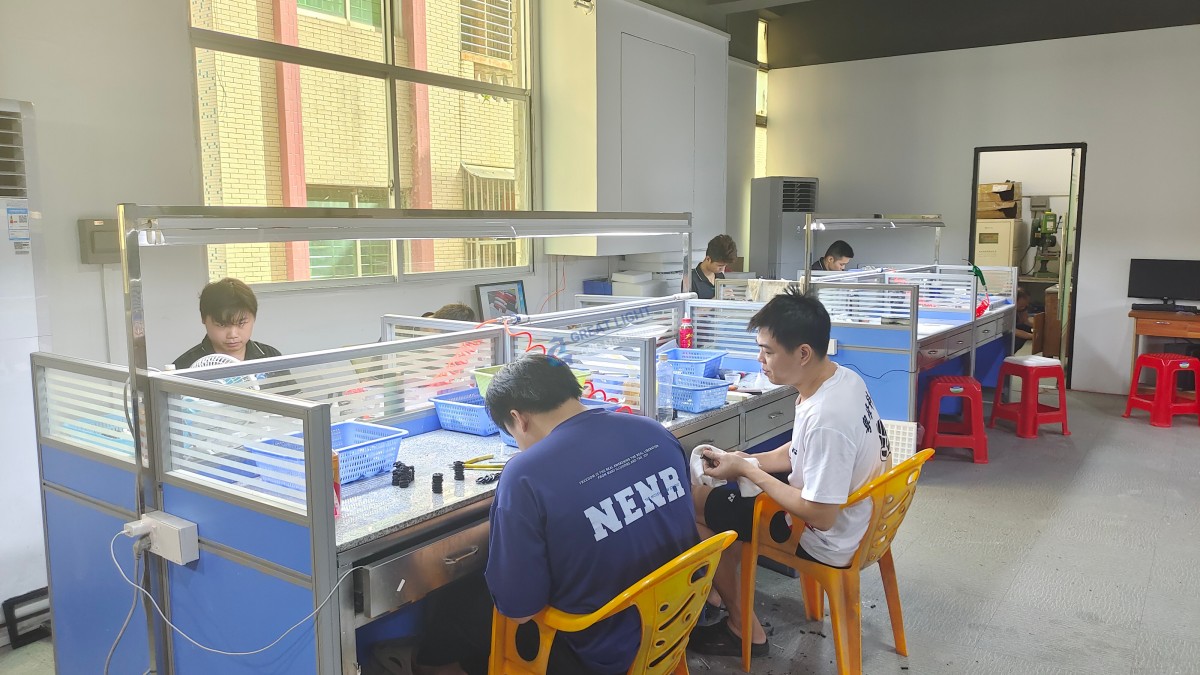
This section is often overlooked, but it’s the bedrock of quality. A five-axis CNC machining center is just a tool. The value comes from the operator and engineer programming it. This is the essence of the “人才培养” (talent cultivation) aspect of the project.
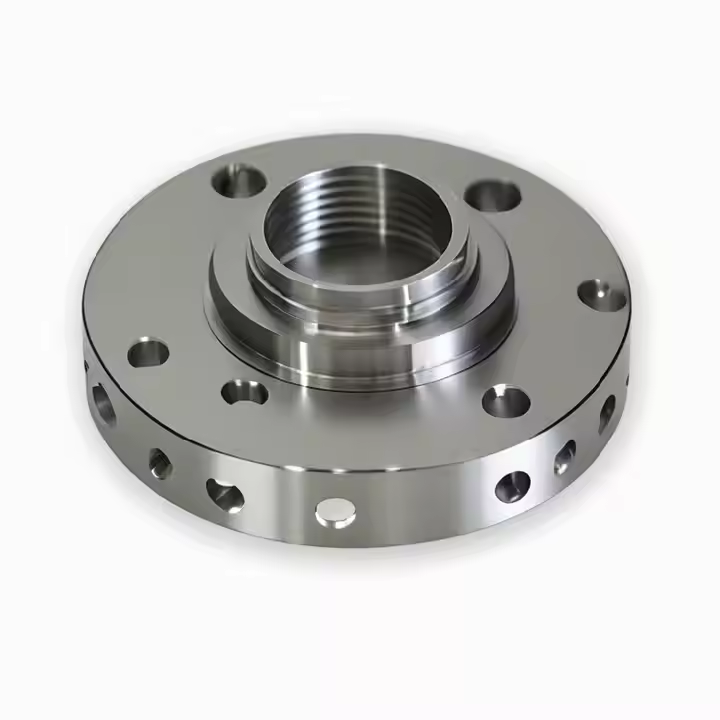
GreatLight Metal, based in Dongguan, China’s “Hardware and Mould Capital,” has a deep talent pool. The region has a generational experience in precision metalworking. This is a massive advantage. A programmer from this region doesn’t just know G-code; they intuitively understand the “feel” of a cutting tool on an aluminum bracket. They can look at a 5-axis toolpath simulation and predict potential vibration issues before the machine ever starts.
In contrast, a newer factory in a less industrialised region might have the same brand of machine, but lack the experience to program it for complex, high-tolerance five-axis work. For a critical EV position sensor bracket, this experience is the difference between a batch that passes QC and one that fails due to cumulative, ineffable errors like tool deflection or uneven thermal expansion during machining.
Conclusion: Making the Right Investment in Precision
The EV position sensor bracket is a perfect microcosm of the challenges in modern EV manufacturing. It demands high precision, dimensional stability, and robust surface finishing. It is not a part you can afford to get wrong.
When sourcing from a China factory, move beyond the simple price per piece. Evaluate the factory’s system: Do they have the right five-axis CNC machining equipment? Do they hold the critical IATF 16949 certification? Can they demonstrate a deep understanding of surface finishing like hard anodizing or passivation? Most importantly, do they have the talent and engineering support to guide your design for manufacturability and solve problems before they become costly production delays?
For the discerning engineer, a partner like GreatLight Metal offers a compelling value proposition: the technical hard power of a top-tier factory combined with the deep engineering support of a true collaboration partner. In the fast-paced world of EV development, that partnership isn’t just a convenience—it’s a competitive advantage.


![[访谈] RAPID + TCT 2024:人工智能对 3D 打印的价值](https://print-ing.com/wp-content/uploads/2024/07/INTERVIEW-60x60.jpeg "[访谈] RAPID + TCT 2024:人工智能对 3D 打印的价值 9")




发表回复
要发表评论,您必须先登录。