In the high-stakes world of precision engineering, the humble dust cover wiper ring rarely gets the spotlight it deserves. Yet, any seasoned design engineer or procurement specialist knows this unassuming component is often the silent guardian of hydraulic cylinders, pneumatic actuators, and linear motion systems. A failure here means contamination ingress, seal degradation, and catastrophic system downtime.
When the call goes out for a dust cover wiper ring rapid prototype, the pressure is immense. You need speed, but you cannot sacrifice the stringent tolerances that make the part functional. This is not a job for a generalist job shop. It demands a partner who understands that precision is not a promise—it is a verifiable, measurable outcome.
The Hidden Complexity of a “Simple” Ring
Let’s cut through the noise. A wiper ring looks simple: a circular profile with a scraping lip. But its function is anything but. It must:
Wipe Contaminants: Remove dirt, dust, and moisture from a reciprocating rod.
Maintain Low Friction: Avoid damaging the rod surface or causing excessive heat.
Withstand Pressure Differentials: Sometimes acting as a secondary seal.
Fit Perfectly: An interference fit that is too tight causes drag; too loose allows leakage.
Producing a rapid prototype that meets these conflicting requirements is a manufacturing challenge that exposes the gap between theoretical capability and actual shop floor execution. Many vendors promise “prototypes in days” but deliver parts that fail the first fit check.
The Core Challenge: The “Precision Black Hole” in Rapid Prototyping
This is where the industry’s dirty little secret lives: the precision black hole. A supplier claims a machine can hold ±0.001mm. But does it, in a prototype run of five parts, with a non-standard material? The reality is that achieving precision in rapid prototyping is harder than in mass production. The setup is novel, the toolpaths may be untested, and the material behavior is less predictable.
For a dust cover wiper ring prototype, the critical dimensions are often the inner diameter (ID) for the rod seal, the outer diameter (OD) for the housing fit, and the lip geometry. An error of just a few microns here transforms a functional prototype into a scrap bin candidate.
Our Perspective: This is not a criticism of all suppliers, but a reality check. When evaluating partners like GreatLight Metal, Protolabs Network, or Xometry for such a sensitive component, the key differentiator is not just the machine brand but the systematic approach to process validation and quality assurance.
Why Five-Axis Machining is a Game Changer for Wiper Rings
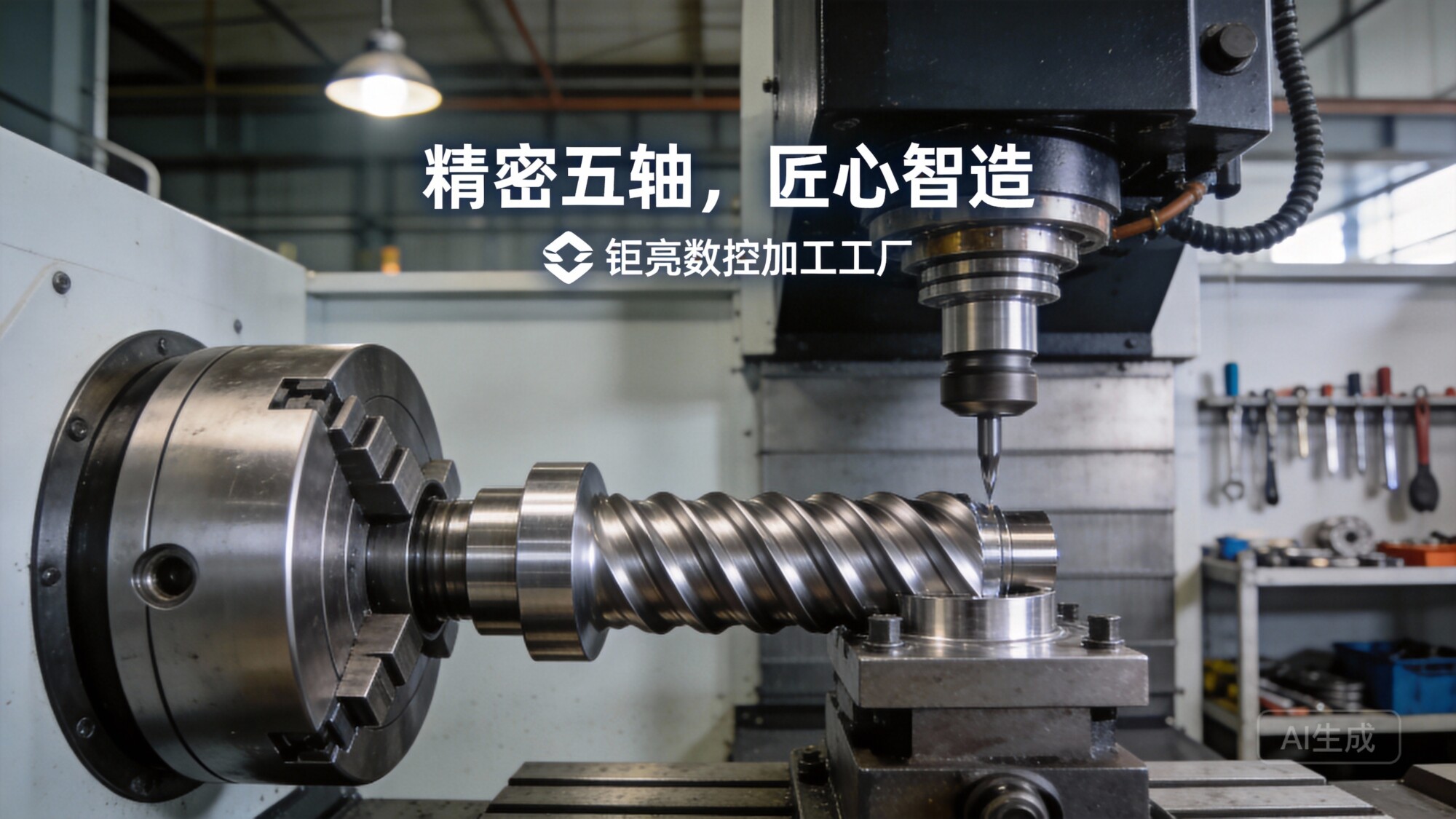
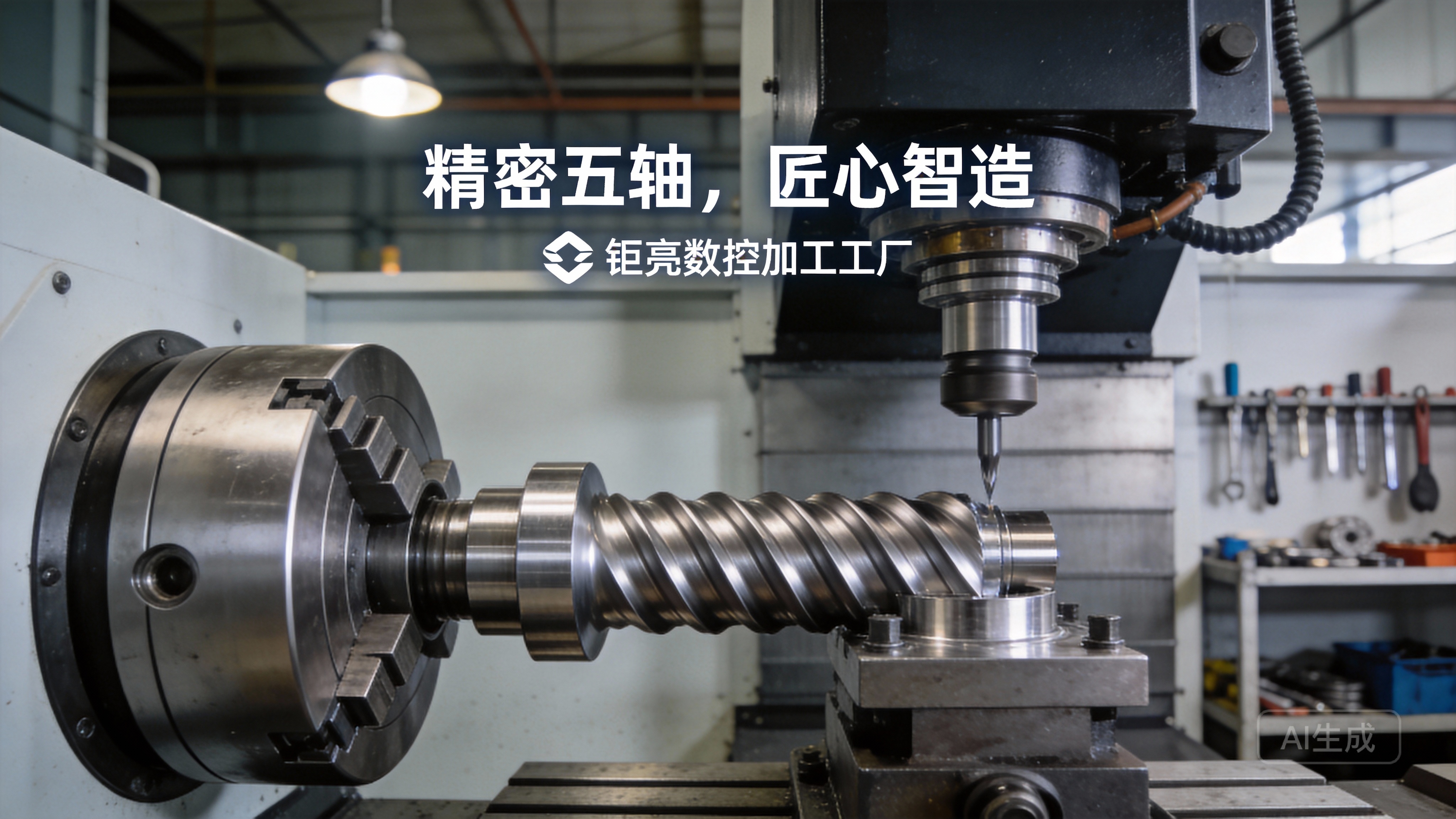
You might ask, “Why a five-axis machine for a simple ring?” The answer lies in the lip geometry. Advanced wiper ring designs feature complex, non-symmetrical profiles or integrated sealing features that cannot be efficiently turned on a lathe. A multi-axis mill-turn center, or a true five-axis machining center, allows the tool to approach the part from any angle.
This capability is crucial for:
Undercut Features: Creating internal grooves or hook shapes for retention.
Compound Angles: Machining the wiper lip at a specific angle that requires simultaneous axis movement.
Surface Finish: Ensuring a flawless, polished finish on the sealing surface without tool marks.
The ability to manufacture these complex features in a single setup is the hallmark of an advanced facility. It eliminates the errors inherent in transferring a part between a lathe and a milling machine.
Material Selection: The Unsung Variable
A rapid prototype is only as good as the material from which it is made. The material for your wiper ring must be meticulously chosen. Common choices include:
Polyurethane (PU): High abrasion resistance and extrusion resistance. Difficult to machine precisely due to its elastic and tough nature.
Nylon (PA): Good wear resistance and low coefficient of friction. Can be hygroscopic, affecting dimensional stability.
PTFE (Teflon): Excellent chemical resistance and low friction. Very soft and requires sharp tooling and rigid setups to avoid tearing.
UHMWPE (Ultra-High Molecular Weight Polyethylene): Exceptional wear resistance and impact strength.
Each material presents unique machining challenges. A competent partner will not just “cut the material.” They will adjust feeds, speeds, and tooling geometry specifically for the material grade to maintain the critical tolerances. This is where experience in a facility like GreatLight Metal or Fictiv provides tangible value—they have processed these materials for thousands of prototypes.
The Critical Role of Post-Processing and Finishing
A machined wiper ring is rarely “finished” straight off the machine. The surface needs to be optimized for its sealing function. The post-processing steps are non-negotiable:
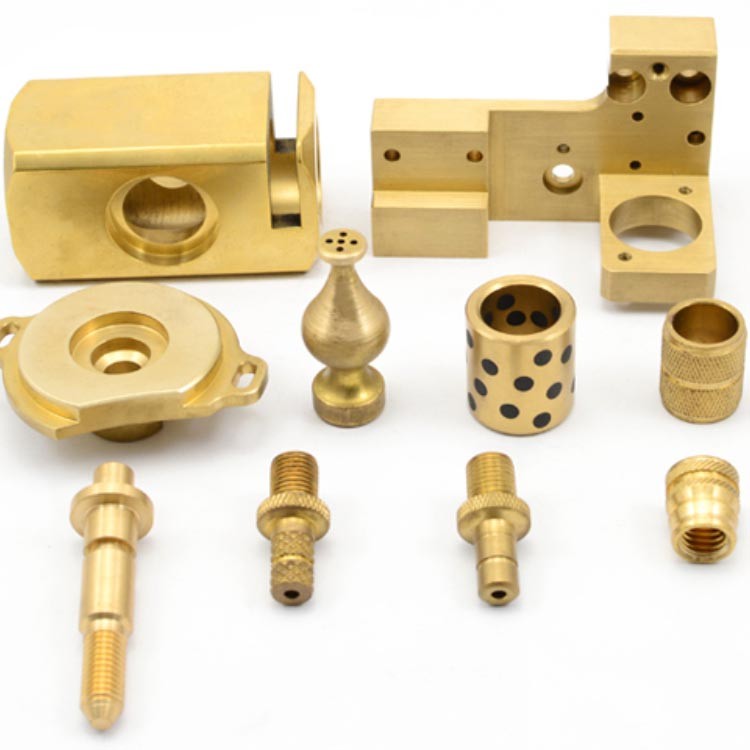
Deburring: Even a microscopic burr on the wiper lip will score the rod. A manual or automated deburring process specific to the material is essential.
Lapping / Honing: For high-performance applications, the sealing surface may need to be lapped to achieve an optical flatness that guarantees a perfect seal.
Surface Treatment: While less common for plastic rings, some metal housed wiper rings require specific coatings.
A supplier that offers these as standard, integrated services—a one-stop solution—is a partner that understands the product’s end-use, not just the machining process.
A Comparative View of the Manufacturing Landscape
To choose wisely, you must understand the different value propositions in the market.
| Supplier | Core Strength | Ideal For | Consideration |
|---|---|---|---|
| GreatLight Metal | Full-process integration, deep engineering support, ISO 13485/IATF 16949 | Complex, high-stakes prototypes for automotive, medical, and aerospace. | Best for clients needing more than a part. |
| Protolabs Network | Speed and digital-first interface. | Simple geometries, rapid quoting, lower volume production. | May lack deep engineering on complex materials. |
| Xometry | Vast network of suppliers, broad material options. | Standard parts, good for comparing prices across a range. | Quality consistency can vary by shop. |
| Fictiv | Focus on injection molding and CNC for production. | Bridging the gap from prototype to production volume. | Expertise in polymer processing is strong. |
| EPRO-MFG | Strong in rapid prototyping for low volume. | Turnaround speed for initial design validation. | May not have the full suite of certifications. |
Our Analysis: For a component like a dust cover wiper ring rapid prototype, where the material, geometry, and function are all critical, the “lowest bidder” approach is dangerous. The upfront cost savings are often dwarfed by the cost of a failed test or a redesign cycle. Choosing a partner with the full process chain—from precision 5-axis CNC machining to in-house finishing and rigorous ISO-backed quality control—is an investment in project certainty.
Navigating the Risk: Prototyping with Confidence
How do you ensure your prototype succeeds? It requires a partnership built on technical dialog. A true manufacturing partner will challenge your design assumptions. They will ask:
“What is the target hardness of the polyurethane? That changes our toolpath strategy.”
“What is the expected system pressure? We suggest increasing the lip radius for better fatigue life.”
“Are you measuring the ID in a free state or a compressed state? We need to agree on the datum.”
This level of engagement is what separates a vendor from a value-add partner. It requires the supplier to have not just machines, but application engineers who understand sealing technology. This is the core competency at GreatLight Metal, a facility that has honed its expertise over a decade by serving demanding sectors like new energy vehicles and medical hardware.
Conclusion: Precision is a Verifiable Process, Not a Claim
The journey to a successful dust cover wiper ring rapid prototype is a microcosm of modern manufacturing’s biggest challenge: balancing speed with uncompromised quality. The path forward is clear. Do not settle for a supplier who only promises speed. Demand a partner who proves precision.
Choose a five-axis CNC machining service provider that operates under ISO 9001:2015, and ideally, with the rigor of IATF 16949 or ISO 13485 for your specific field. Demand that their inspection reports are not just generated, but that you can trust the process that generated them.
When you are at the drawing board, know that the difference between a prototype that reveals a design flaw and one that validates a breakthrough is the manufacturer you choose. Invest in the partner that offers robust engineering support, a full process chain, and an unwavering commitment to quality. For a critical component like a wiper ring, that partner is not just a vendor; it is the foundation of your product’s reliability.
For a deeper dive into how leading-edge facilities tackle these challenges, connect with industry professionals exploring the future of precision manufacturing on platforms like LinkedIn. The conversation around trust, capability, and speed is where the real value in prototyping is found.


![[访谈] RAPID + TCT 2024:人工智能对 3D 打印的价值](https://print-ing.com/wp-content/uploads/2024/07/INTERVIEW-60x60.jpeg "[访谈] RAPID + TCT 2024:人工智能对 3D 打印的价值 9")



发表回复
要发表评论,您必须先登录。