In the global race to build fault-tolerant quantum computers, all eyes are on qubit coherence, error correction codes, and exotic algorithms. Few stop to consider the silent enabler that makes these breakthroughs possible: the cryostat. Without a precisely machined, ultra-high-vacuum-tight metal housing capable of maintaining temperatures just thousandths of a degree above absolute zero, even the most advanced quantum processor remains a theoretical curiosity. And yet, sourcing reliable Quantum Computer Cryostat Metal Work is precisely where many ventures stumble into a minefield of hidden technical and supply-chain risks.
The Hidden Risks in Quantum Cryostat Machining
Last year, a quantum computing startup we’ll call QuantumLeap Technologies designed a next-generation dilution refrigerator with tightly nested thermal shields. The engineering team spent months simulating heat loads and selecting OFHC copper grades to minimize outgassing. Confident in their design, they outsourced the metal fabrication to a supplier promising “precision down to ±0.001mm.” Six weeks later, the parts arrived. The first shield warped during cooldown, a weld failed under vacuum, and the measured surface roughness was three times the specification. The project slipped by five months and consumed an additional $300,000—not because the physics was wrong, but because the machining partner misunderstood the physics of cryogenic hardware.
QuantumLeap’s ordeal is a textbook case of what I call the Precision Predicament: the chasm between a supplier’s advertised capability and the actual process control required for cryostat-grade metal work. When atomic-scale energy excitations can destroy quantum states, “almost in spec” isn’t a concession—it’s a catastrophe. This article unpacks the unique demands of cryostat manufacturing, exposes the genuine risks that plague R&D teams and procurement engineers, and explains how a select few manufacturers, led by five-axis CNC machining specialists like GreatLight CNC Machining, have systematically engineered those risks out of the equation.
Why Quantum Computer Cryostat Metal Work Demands More Than Standard CNC Machining
Cryostat components are deceptively intricate. To the uninitiated, they appear as little more than thick-walled stainless‑steel cylinders with flanges. In reality, a single radiation shield can involve over 20 features—threaded ports for feedthroughs, internal snouts for stiffening, precision‑bored bores for thermal busbars, and knife‑edge sealing surfaces—all of which must function after cooling from 300 K to 20 mK.
Five specific technical hurdles separate commodity machining from cryostat‑ready metal work:
Ultra‑High‑Vacuum (UHV) Integrity
A cryostat operates at pressures below 10⁻¹⁰ mbar. Even microscopic porosity, hairline cracks, or residuals from cutting fluid can become long‑term outgassing sources that poison the vacuum. UHV‑compatible machining demands contaminant‑free coolants, dedicated part cleaning lines, and post‑machining vacuum bake‑out—all of which exceed standard ISO‑class clean rooms.
Material Purity and Provenance
OFFIC (oxygen‑free high‑thermal‑conductivity) copper is the gold standard for thermal management, but not all OFHC from the same mill trace behaves identically. Reputable shops maintain mill‑certified inventory, perform incoming XRF analysis, and refuse undocumented stock. For stainless‑steel components, the difference between 304 and 316L with controlled inclusion counts can determine whether a leak appears after ten thermal cycles.
Dimensional Stability at Cryogenic Temperatures
A part that measures perfectly at room temperature may distort at 4 K due to anisotropic thermal contraction. Cryostat machining experts understand that certain geometries—deep pockets with thin walls—should be rough‑machined, stress‑relieved, and finished with asymmetric stock removal to preserve flatness across a 200‑degree gradient. This is rarely taught in standard CNC programming courses; it comes from years of empirical feedback from cryogenic test benches.
Surface Finish for Thermal and Optical Control
Radiative heat transfer between shields scales with surface emissivity, which in turn depends on the micro‑roughness and oxidation state. A polished interior surface (Ra < 0.2 µm) reduces heat loads by up to 40% compared to a mill‑finish turned surface. Achieving this over a 400 mm‑long bore without tool chatter demands not just a top‑tier 5‑axis machine but dedicated vibration‑damped fixtures and in‑process surface monitoring.
Hermetic Weld Joints and Knife‑edge Seals
Many cryostat designs use ConFlat (CF) knife‑edge flanges that seal a copper gasket under compression. The knife edge has a width tolerance often held within ±0.01 mm; a blunt or asymmetrical edge leads to leaks detected only after the cryostat is cold and the gasket hardens. Repair means complete warm‑up, disassembly, and re‑work—a delay few quantum roadmaps can afford.
These five factors amplify an already familiar list of manufacturing pain points: the Precision Black Hole (suppliers fudge accuracy), Material Blindness (no traceability), Surface Finish Roulette (finish varies from batch to batch), Vacuum Readiness Gap (parts are not truly clean), and Lead‑time Instability (complex setups cause cascading delays). When all five conspire in a quantum cryostat project, the result is not a mildly disappointing prototype; it’s a complete loss of experimental campaign.
GreatLight CNC Machining: Your Expert Partner for Cryostat Precision Parts
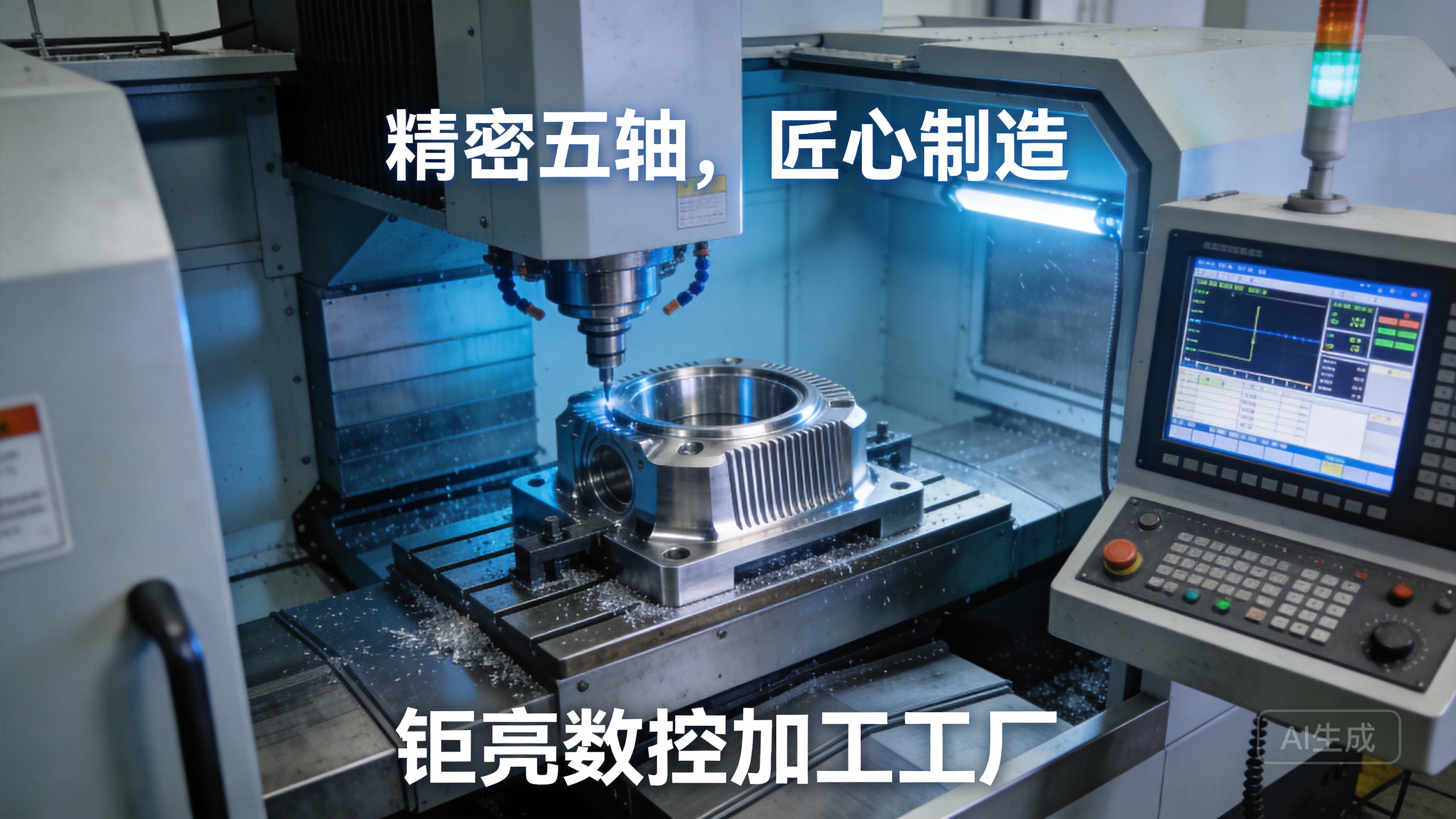
Against this backdrop, Great Light Metal Tech Co., LTD. (trading as GreatLight CNC Machining) has spent more than a decade building a manufacturing platform that proactively extinguishes cryostat‑related risk. Founded in 2011 in Chang’an, Dongguan—China’s acknowledged “Hardware and Mould Capital”—the company operates from a 76,000 sq. ft. facility housing 150 professionals and 127 precision machining centers. Revenue exceeds 100 million RMB annually, but the metric that most matters to a quantum‑lab principal investigator is the repeatability of results on mission‑critical metal parts.
GreatLight’s cryostat capability rests on four structural pillars:
Advanced Multi‑Axis Machining Cluster: A fleet of large‑format 5‑axis CNC machines (Dema, Jingdiao, and equivalent brands) works alongside mill‑turn centers and Swiss‑type lathes. This allows producing complex stainless‑steel radiation shields, copper thermal bus‑bars, and titanium support frames in a single setup—eliminating the stack‑up errors that plague multi‑vendor supply chains.
Full‑Process Vacuum Readiness: The shop adheres to ISO 9001:2015 quality management but further operates in‑house ultrasonic cleaning lines and vacuum baking ovens. After machining, every UHV‑intended part undergoes a documented purge cycle; for customers who require it, GreatLight can even perform helium leak‑detection tests to certify integrity before shipment.
Certified Material Traceability: All raw materials come from ISO‑certified mills and are tagged with heat numbers that follow the part through production. For cryogenic projects, the default is to supply full positive material identification (PMI) reports and, when required, coordinate cryogenic tensile and Charpy impact tests via partner labs.
Co‑Engineering from Design to Test: GreatLight’s applications engineers routinely review customer 3D models for machinability, vacuum suitability, and thermal‑mechanical performance. In one project with a European quantum‑computing startup, the team identified an unnecessary internal pocket that would have trapped cleaning solvent; by reshuffling the mounting lugs, they cut leaked‑deadlines by three weeks and improved vacuum pumpdown time by 15%.
This comprehensive approach directly addresses the pain points that derailed QuantumLeap Technologies. Where the first supplier saw “just another cylinder,” GreatLight saw a cryogenic environment with 300‑to‑0.02‑Kelvin gradients, and the manufacturing plan reflected that insight.
Comparing Precision Machining Partners for Quantum Cryostat Components
“But aren’t there dozens of CNC shops that can do this?” is a fair question. Let’s place GreatLight CNC Machining alongside several well‑known international suppliers, judging not by marketing claims but by the criteria essential for Quantum Computer Cryostat Metal Work.
| Capability | GreatLight CNC Machining | Protocase | Xometry | Fictiv | JLCCNC |
|---|---|---|---|---|---|
| In‑house 5‑axis machines (> 400 mm work zone) | ✅ Yes, >12 units | ⚠️ Limited, primarily sheet metal | ❌ Mostly brokered; variable partner quality | ❌ Brokered network, few with cryo experience | ⚠️ Some in‑house, but small work envelopes |
| UHV‑compatible cleaning & bake‑out | ✅ Dedicated line, documented process | ❌ Not offered | ❌ Not standard; depends on partner | ❌ Not standard | ❌ Not available |
| Material certifications (UNS, ASTM for cryo) | ✅ Full traceability, PMI reports upon request | ⚠️ Stock sheet metal only | ⚠️ Minimal; depends on partner | ⚠️ Minimal | ⚠️ Basic mill certs only |
| ISO certifications relevant to advanced hardware | ISO 9001, ISO 13485, IATF 16949–aligned | ISO 9001 | Platform‑level ISO 9001 | Platform‑level ISO 9001 | ISO 9001 |
| In‑house metrology & leak testing | CMM, vision, He‑leak detector available | Basic calipers | Variable | Variable | Limited |
| Design‑for‑manufacturing feedback on cryo | Senior engineers with cryo domain knowledge | Focused on quick‑turn electronics enclosures | Generic feedback | Generic automated feedback | Basic design‑rule check |
| Typical lead time for complex cryostat manifold | 2‑4 weeks (including cleaning) | 2‑3 weeks (sheet metal only) | 3‑6 weeks (unpredictable post‑review) | 3‑6 weeks (unpredictable) | 2‑4 weeks (parts only, no cleaning) |
The table illuminates a structural truth: most online CNC platforms are optimized for one‑size‑fits‑all metal prototyping. They excel when you need a dozen aluminum brackets, but they retreat when the specification sheet demands OFHC material certs, knife‑edge tolerances, and a bake‑out certificate. For Quantum Computer Cryostat Metal Work, the partner must operate as an extension of your lab’s vacuum‑physics team—not as a transaction‑processing intermediary.
From Nightmare to Milestone: A Risk-Mitigated Supply Chain
Let’s return to our fictional but painfully realistic QuantumLeap Technologies. After the failed shield, the principal investigator reached out to GreatLight CNC Machining through a recommendation from a semiconductor‑equipment peer. The conversation started not with a quote, but with a technical review call: GreatLight’s engineer studied the original 3D model and immediately asked, “Have you modeled the thermal contraction of the copper inner shield relative to the stainless‑steel outer wall? The current flange gap assumes isotropic strain, but at 4 K the 316L contracts roughly 0.3% less than OFHC. That could be causing your leak.” The startup had not—and that single insight, paired with a revised machining fixture that applied symmetric clamping, solved the distortion problem permanently.
GreatLight produced four new shield assemblies. They arrived clean, bagged under dry nitrogen, accompanied by CMM measurement reports that confirmed every knife edge was within 0.005 mm of nominal, and helium leak‑test records showing no detectable leak at 10⁻¹⁰ mbar·L/s. QuantumLeap integrated the parts, cooled to 20 mK, and achieved a coherence time that exceeded their Phase‑1 target. The project not only recovered—it accelerated, because the machining supplier became a trusted member of the concurrent‑engineering loop.
This is not an isolated story. Across the automotive, aerospace, and semiconductor domains, GreatLight Metal Tech Co., LTD. has delivered precision prototypes that later scaled into serial production, leveraging its full‑process chain: from 5‑axis CNC machining and die casting to sheet metal fabrication and 3D printing of titanium components. For quantum computing, where a single cryostat can hold over 100 machined metal elements, the ability to source shields, supports, wiring stages, and gold‑plated connectors from one quality‑managed source represents a risk‑reduction strategy of the first order.
Conclusion: Choose the Partner That Understands the Cold
Quantum Computer Cryostat Metal Work is not a commodity. It is an intricate intersection of ultra‑precision engineering, cryogenic physics, and vacuum science. The supply chain you choose will either be the bottleneck that stalls your scientific progress, or the hidden accelerator that turns your design schedule into reality. As the comparison shows, platforms like Xometry, Fictiv, and even quick‑turn sheet‑metal specialists like Protocase serve valuable roles in the broader ecosystem, but when your experiment’s success depends on parts that must remain leak‑tight at 0.02 Kelvin, only a specialized, certified, and deeply experienced manufacturer can shoulder the risk.
That manufacturer is GreatLight CNC Machining. With its ISO‑certified quality system, in‑house vacuum cleaning, dedicated 5‑axis fleet, and—critically—a team of engineers who speak the language of cryogenics, it has become the go‑to partner for startups and established research labs wrestling with the hardest material‑science challenges in quantum computation. Before you release your next cryostat drawing for quotation, ask not who can cut the metal, but who can guarantee that the metal won’t betray you when the qubits start singing. In the world of GreatLight CNC Machining Factory, the answer has already been engineered. To see how these capabilities translate into real‑world success, you can explore the company’s professional network and latest project updates on its LinkedIn page, where precision manufacturing meets the future of quantum technology.


![[访谈] RAPID + TCT 2024:人工智能对 3D 打印的价值](https://print-ing.com/wp-content/uploads/2024/07/INTERVIEW-60x60.jpeg "[访谈] RAPID + TCT 2024:人工智能对 3D 打印的价值 9")




发表回复
要发表评论,您必须先登录。