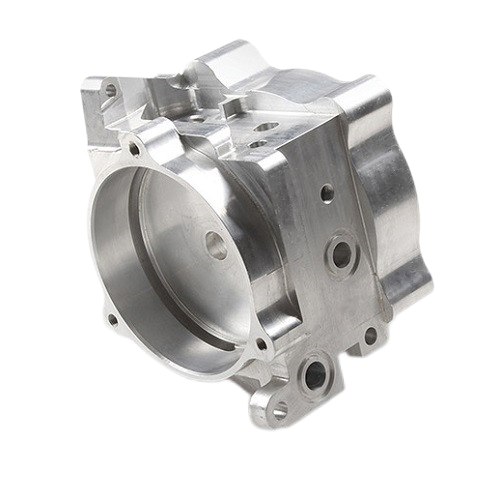
The landscape of precision manufacturing is undergoing a profound transformation. As product lifecycles shorten and design complexity escalates, the traditional manufacturing model—where design and production operate in silos—is rapidly becoming obsolete. Enter the era of Design Driven OEM Metal 3D Printing ODM, a paradigm that integrates advanced additive manufacturing with original design and manufacturing services. This approach is not merely about printing metal parts; it is about reimagining how we conceive, validate, and produce complex components for industries ranging from aerospace and automotive to medical devices and humanoid robotics.
Understanding the Design Driven ODM Model in Metal 3D Printing
In the conventional Original Equipment Manufacturing (OEM) model, a client provides a completed design, and the manufacturer executes the production. While effective for standardized parts, this model often bottlenecks innovation, particularly when dealing with geometries that are impossible or prohibitively expensive to achieve through subtractive methods like CNC machining.
A Design Driven ODM (Original Design Manufacturer) model, however, is fundamentally different. It positions the manufacturer as a collaborative engineering partner from the earliest conceptual stages. In the context of metal 3D printing, this means:
Concurrent Engineering: Our engineering team works alongside your R&D department to optimize part geometry specifically for additive manufacturing. This “Design for Additive Manufacturing” (DfAM) approach can reduce weight, consolidate multiple parts into a single assembly, integrate internal channels for cooling or fluid flow, and enhance overall performance without traditional tooling constraints.
From Concept to Production: The journey begins with your functional requirements, not necessarily a finalized CAD file. We leverage decades of experience in precision hardware mold processing and CNC machining to advise on the most efficient path—whether a part is better suited for metal 3D printing (SLM, SLS) for its complexity or a hybrid approach combining 3D printing with subsequent five-axis CNC finishing for ultimate precision.
Full-Process Chain Integration: Unlike shops that only offer 3D printing, GreatLight CNC Machining Factory, operating as GreatLight Metal, provides a true one-stop ODM solution. We control the entire value chain: design optimization, selective laser melting (SLM) or sintering (SLS), stress relief heat treatment, support removal, and critically, the high-precision post-processing (CNC machining, EDM, grinding) and surface finishing (anodizing, plating, polishing). This integrated capability ensures a seamless transition from a raw print to a functionally ready, assembly-grade component.
Why “Design Driven” Matters for Metal 3D Printing ODM
The distinction between a simple “printing service” and a Design Driven ODM is the difference between having a part made and having a problem solved. Here’s why this approach is critical for enterprises pushing the boundaries of innovation:
1. Optimizing for Performance, Not Just Printability
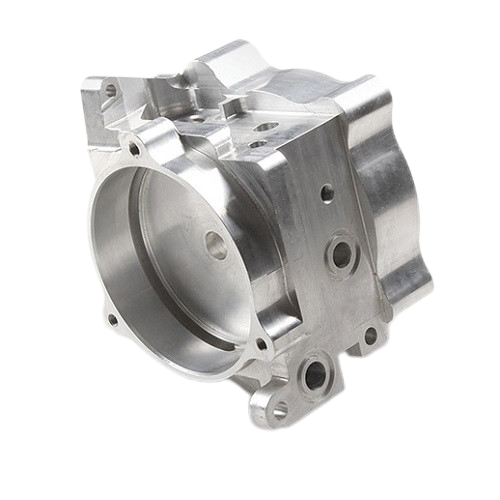
A part designed for traditional machining often has heavy, blocky sections to facilitate fixturing and cutting. A part designed for 3D printing, however, can be modeled with lattice structures, organic shapes, and variable wall thicknesses. Our DfAM expertise ensures that every gram of metal serves a structural or functional purpose. For instance, in a hydraulic manifold block, we can design conformal cooling channels that follow the exact shape of the mold cavity, dramatically reducing cycle times in injection molding—a feat impossible with straight-drilled holes.
2. Solving the “Precision Black Hole” in Additive Manufacturing
One of the most significant pain points in the industry is the gap between the promise of high precision and the reality of “as-printed” surfaces. As-printed metal parts often have a rough surface finish (Ra 6-12 μm) and require tight tolerances for critical features like bearing seats, sealing surfaces, or threaded holes.
Our Design Driven ODM explicitly addresses this from the outset. We identify critical functional surfaces during the design phase and allocate stock allowance for a subsequent precision five-axis CNC machining operation. This hybrid approach—3D printing for complex geometry, 5-axis CNC for precision—is where GreatLight Metal truly excels. It allows clients to enjoy the geometric freedom of additive manufacturing without compromising on the ±0.001mm precision required for high-end assemblies.
3. Accelerating the Iterative Prototyping Cycle
For R&D teams, time is the most valuable currency. A design change that would take weeks to implement with conventional molds or hard tooling can be executed in days with metal 3D printing. In the Design Driven model, we become an extension of your engineering team. We can provide functional prototypes in aluminum alloy, titanium alloy, or mold steel within days, allowing for rapid form, fit, and function testing. This slashes product development cycles and allows for multiple design iterations before committing to mass production.
GreatLight Metal’s Core Enablement for Metal 3D Printing ODM
To deliver on the promise of Design Driven ODM, a partner requires more than just a printer. They need a comprehensive manufacturing ecosystem. GreatLight Metal, founded in 2011 in the precision hardware hub of Chang’an, Dongguan, has built precisely this ecosystem over 13 years.
Advanced Equipment Cluster for Hybrid Manufacturing
Our 76,000 sq. ft. facility is not just a 3D printing farm. It is a precision manufacturing campus. This infrastructure is our crucial advantage in ODM projects:
Additive Core: We are equipped with industrial-grade SLM (Selective Laser Melting), SLA, and SLS 3D printers capable of handling stainless steel, aluminum alloys (AlSi10Mg), titanium alloys (Ti6Al4V), and tooling steel.
Precision Subtraction: Our arsenal includes large high-precision five-axis, four-axis, and three-axis CNC machining centers, lathes, milling machines, and grinding machines. This allows us to finish 3D printed parts to the highest standards.
Full-Spectrum Capabilities: We also have die casting, sheet metal fabrication, vacuum casting, EDM, and wire cutting capabilities. This breadth allows our engineering team to select the optimal manufacturing process, or combination of processes, for any given design challenge.
A Trust-Backed Quality Framework
In Design Driven ODM, the manufacturer shares the risk and responsibility for the design’s manufactureability and final performance. This requires an ironclad trust framework, which we have built through international certifications:
ISO 9001:2015: The universal language of quality management, ensuring our production lines utilize advanced technology for repeatable precision.
ISO 13485: For medical hardware production, guaranteeing the stringent traceability and cleanliness standards required for implantable or surgical devices.
IATF 16949: An internationally recognized standard for the automotive industry, focusing on defect prevention and waste reduction in the supply chain. This is critical for engine components, chassis parts, and structural elements for electric vehicles.
ISO 27001: Data security compliance for intellectual property-sensitive projects. Your designs are safe with us.
Solving Client Pain Points Through Engineering Collaboration
Our typical client is an innovation-focused company that faces the “Precision Predicament.” They have a brilliant design but struggle to find a partner capable of manufacturing it reliably. This is where our engineering-driven sales process differs.
Example Case: A Complex E-Housing for New Energy Vehicles:
An innovator specializing in EV powertrains needed a complex e-housing (electronics housing) with a heavily integrated design featuring intricate internal channels for liquid cooling and structural mounting points requiring tight tolerances.
The Client’s Original Path: Attempting to cast the part involved high upfront tooling costs and design compromises due to draft angles. CNC machining it from a solid billet would be wasteful and time-prohibitive.
GreatLight Metal’s Design Driven ODM Solution: Our engineers recommended a hybrid ODM approach.
Additive Manufacturing (SLM): The complex internal cooling channels and the main body geometry were 3D printed in an aluminum alloy (AlSi10Mg), eliminating tooling costs and enabling the design’s full potential for thermal management.
Precision Finishing (5-Axis CNC): The printed part was then transferred to our five-axis CNC machining centers. All critical sealing surfaces, threaded holes, and bearing pockets were machined to achieve the ±0.005mm tolerances required for final assembly.
Post-Processing & Validation: The part underwent stress relief, leak testing, and a high-quality anodizing finish.
Result: The client received a fully functional, production-ready part in weeks instead of months, at a fraction of the tooling cost, with enhanced thermal performance compared to the cast design.
Choosing Your Partner for Design Driven OEM Metal 3D Printing ODM
The market for metal 3D printing services is crowded, but the ability to deliver a true Design Driven ODM service is rare. When evaluating partners, consider the distinction between a service bureau and a manufacturing solutions provider.
Companies like Protolabs Network and Xometry offer excellent online quoting and on-demand services for standard geometries. Fictiv provides a solid platform for connecting with vetted suppliers. RapidDirect and JLCCNC also offer strong manufacturing capabilities.
However, for projects that require deep engineering collaboration—where the design is not yet finalized, where multiple manufacturing processes must be seamlessly integrated, and where intellectual property security and market-specific quality certifications (IATF 16949) are non-negotiable—a partner with real operational capabilities is essential.
GreatLight Metal differentiates itself not by being the largest, but by being the most integrated and engineering-led. We do not just print your file; we challenge your assumptions to make your design better, cheaper, and more reliable to produce at scale. Our team of 150 professionals, operating from three wholly-owned manufacturing plants, brings a combined perspective of mold-making, subtractive machining, and additive manufacturing. We see the final part, not just the next layer of powder.
Conclusion: The Future of Manufacturing is Hybrid and Collaborative
The most successful products of tomorrow will not rely on a single manufacturing process. They will be born from a synthesis of the best available technologies—where the geometric freedom of metal 3D printing meets the uncompromising precision of a five-axis CNC machining center. This is the essence of the Design Driven OEM Metal 3D Printing ODM model.
By choosing a partner like GreatLight CNC Machining Factory, you are not just outsourcing production. You are gaining an extension of your R&D department, a master of hybrid manufacturing processes, and a guardian of quality standards that span ISO, IATF, and medical regulations. From a single functional prototype in titanium alloy to a complex low-volume production run for an automotive application, the path from design to reality is clearer, faster, and more innovative when it is driven by engineering.
Are you ready to move beyond simple manufacturing and into a true partnership for innovation? Let’s discuss how a Design Driven approach can transform your next project. Connect with us on LinkedIn to explore the possibilities.


![[访谈] RAPID + TCT 2024:人工智能对 3D 打印的价值](https://print-ing.com/wp-content/uploads/2024/07/INTERVIEW-60x60.jpeg "[访谈] RAPID + TCT 2024:人工智能对 3D 打印的价值 9")




发表回复
要发表评论,您必须先登录。