
Drones equipped with air sampling systems are transforming environmental monitoring, industrial emissions testing, and agricultural assessment. At the heart of every reliable aerial sampling mission lies a seemingly simple but technically demanding component: the sampling mount. When you need Drone Air Sampling Mounts Low Volume, off-the-shelf solutions rarely fit both your payload geometry and mission requirements. Custom low-volume manufacturing through precision five-axis CNC machining becomes the only viable path to securing lightweight, vibration-resistant, and aerodynamically clean mounts that can be delivered in days rather than months.
Let’s dissect why low-volume drone air sampling mounts present unique engineering and production challenges, how to choose the right manufacturing partner, and why GreatLight CNC Machining’s integrated approach reshapes what’s possible for field-ready prototypes and small batch runs.
The Unique Engineering Demands of Drone Air Sampling Mounts
Air sampling payloads are not static loads. They typically combine delicate sensors, intake nozzles, filter cartridges, pumps, and batteries — all of which must be held securely while the drone maneuvers through gusts and temperature shifts. A mount that works well on the test bench can easily introduce unacceptable vibration peaks or disrupt the drone’s center of gravity in flight.
The core technical requirements boil down to five pillars:
Geometric Complexity & Integration
Most sampling mounts need to nestle around irregular drone frames while providing precision interfaces for sampling inlets, quick-release mechanisms, and vibration isolation pads. Only multi-axis machining can produce undercuts, angled bores, and tight-fit dovetail grooves in a single setup, reducing stack-up errors.
Ultra-Lightweight yet Stiff Structures
Every gram matters on a drone. Thin-walled sections, webbed pockets, and honeycomb-style lightening patterns must be machined without distortion. Aluminum 7075‑T6 and 6061‑T6 are popular, but some missions require titanium alloys or rigid engineering plastics like PEEK. CNC machining allows intricate weight reduction that casting or 3D‑printing alone cannot reliably achieve at low volumes.
Vibration Damping and Resonance Avoidance
Propeller-induced vibrations can saturate sampling sensors and corrupt data. Mounts often include integrated damping interfaces — O-ring grooves, elastomer channels, or harmonic isolation flexures. These demand tight tolerances (often ±0.02 mm or better) to function predictably.
Aerodynamic Fairings and Environmental Sealing
External mounts need streamlined profiles to minimize rotor downwash interference with the sampling inlet. CNC-machined fairings with polished surfaces and press-fit seals ensure consistent airflow and protection against rain or dust.
Accelerated Design Iteration
A drone air sampling mount project rarely goes from CAD to final part in one shot. You iterate on balance, flow path, and mounting points. Low-volume production with rapid turnaround is critical to hitting field trial deadlines.
These demands explain why Drone Air Sampling Mounts Low Volume is not a simple “make-to-print” order — it’s an engineering collaboration that fuses design-for-manufacturability feedback with flexible, high-precision capacity.
Why CNC Machining Beats Other Processes for Low-Volume Drone Mounts
When quantities range from 1 to 200 parts, several manufacturing routes might seem tempting. Let’s compare them honestly:
| Process | Tooling Cost | Lead Time | Material Options | Typical Tolerance | Suitability for Complex Mounts |
|---|---|---|---|---|---|
| 3D Printing (SLM/SLS) | Low | Short | Metals, nylon | ±0.1‑0.2 mm | Good for prototyping; surface finish and strength often need post-machining |
| Injection Molding | Very high ($5k‑$50k+) | 4‑8 weeks for tooling | Plastics only | ±0.1 mm (varies) | Only for high volumes; stiff tooling cost kills low-volume budgets |
| CNC Machining (3-axis) | None | Short (days) | Almost any metal/plastic | ±0.005‑0.01 mm | Good for prismatic parts; multiple setups needed for complex geometries |
| CNC Machining (5-axis) | None | Short (days) | Almost any metal/plastic | ±0.005‑0.01 mm | Ideal: complex contours, angled features done in one clamping, minimal error |
Five-axis CNC machining stands out as the superior route. It handles the intricate 3D surfaces needed for aerodynamic fairings, eliminates the need for complex fixtures, and directly achieves surface finishes that reduce turbulence. At low volumes, the absence of tooling amortization makes CNC dramatically more cost-effective than molding or die casting.
Selecting Materials That Balance Weight, Strength, and Machinability
Material choice directly influences mount performance, but also affects machinability and lead time. Here’s a quick-reference comparison for common drone mount materials:
Aluminum 7075‑T6: High strength-to-weight ratio, comparable to some mild steels. Excellent machinability; can be hard-anodized for wear resistance and corrosion protection. Ideal for structural load-bearing mounts.
Aluminum 6061‑T6: More corrosion resistant, slightly lower strength than 7075. Widespread availability and easy anodizing make it a cost-effective choice for custom brackets and fairings.
Titanium Grade 5 (Ti‑6Al‑4V): The ultimate lightweight strength material, used when weight reduction is paramount and mounts must withstand harsh chemical environments. Slower machining requires specialized tooling and cooling, raising cost.
Stainless Steel 304/316L: Used for sampling paths that must not contaminate collected analytes. Heavier, but indispensable when chemical compatibility is mandatory.
Engineering Plastics (PEEK, Delrin, Ultem): Provide electrical insulation, chemical resistance, and low weight. PEEK withstands sterilization and high temperatures. Delrin machines easily for bushings and snap-fit components.
An experienced low-volume machining partner will advise on alloy tempers, heat treatment, and surface finishing to prevent stress corrosion cracking or galling in threaded interfaces — details that generic job shops often overlook.
The GreatLight CNC Machining Difference: A One-Stop Powerhouse
When searching for a supplier for Drone Air Sampling Mounts Low Volume, you encounter a fractured market: high-volume vendors reluctant to touch small batches, prototype shops lacking quality controls, and overseas brokers masking the true source. GreatLight CNC Machining turns this model on its head.
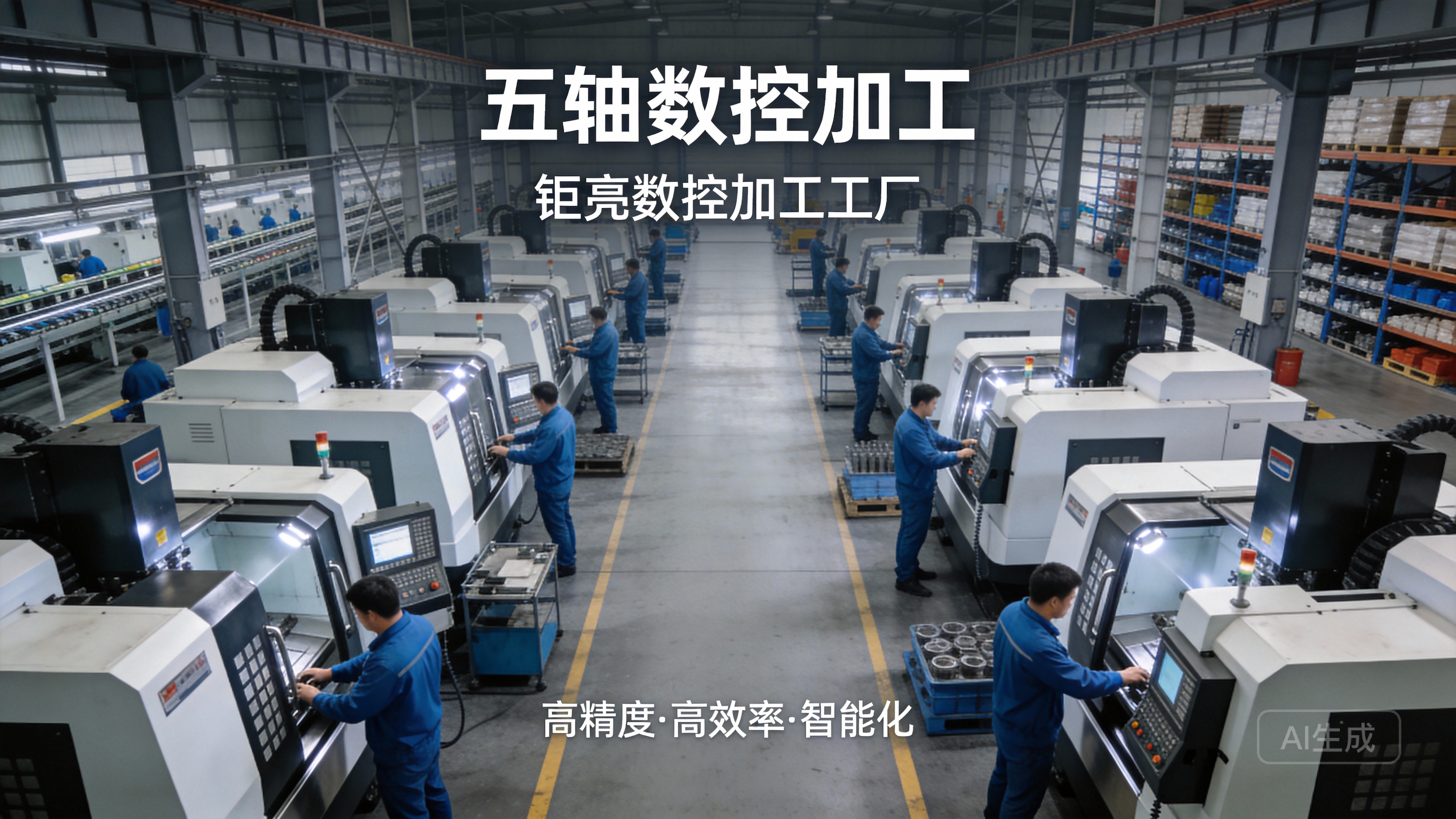
GreatLight Metal (operating as GreatLight CNC Machining) was founded in 2011 in Dongguan, China — the heartland of precision hardware manufacturing. Spanning a 7,600 m² facility with 150 skilled personnel and 127 pieces of advanced equipment, GreatLight integrates every step needed to transform your 3D model into a flight-ready mount:
11 high-end 5-axis CNC machining centers, plus a fleet of 3-axis and 4-axis mills and Swiss-type lathes, capable of holding tolerances to ±0.005 mm on complex geometries up to 4,000 mm.
In-house post-processing: bead blasting, anodizing (Type II and III), electroless nickel plating, powder coating, laser engraving, and passivation. No need to juggle multiple vendors.
Rapid prototyping and 3D printing: SLM metal 3D printing for ultra-complex internal channels, SLA/SLS for plastic prototypes before committing to CNC. This hybrid approach slashes lead times for iterative design validation.
Full process control under ISO 9001:2015, with additional certifications for medical (ISO 13485) and automotive (IATF 16949) sectors — proof that quality systems back the shop floor, not just paper trails.
Data security compliant with ISO 27001, protecting your proprietary drone designs during quoting and production.
This comprehensive capability means you can hand over a single CAD file and receive fully finished, serialized drone mounts ready for assembly, all under one roof. No finger-pointing between machining and finishing shops.
Comparing Low-Volume Drone Mount Manufacturers
Not all “precision CNC” suppliers are equal. Below is an objective assessment of several providers in the low-volume custom parts space, benchmarked against GreatLight CNC Machining. The table reflects publicly available capabilities and typical customer experiences.
| Supplier | 5‑Axis CNC | In-House Finishing | Lead Time for Low Volume | Certifications | Material Breadth | One-Stop Integration |
|---|---|---|---|---|---|---|
| GreatLight Metal | Yes, 11 centers | Full suite of coating, plating, engraving | 3‑7 days typical (rapid service) | ISO 9001, 13485, IATF 16949, 27001 | Metals, plastics, composites | Machining + finishing + 3D printing |
| Protolabs Network | Yes (partner network) | Limited, outsourced finishing | 5‑10 days | Network partners may vary | Mainly metals, some plastics | Digital quoting, fragmented production |
| Xometry | Yes (partner network) | Limited, outsourced | 5‑10 days | Partner-dependent | Broad | Platform model, variable traceability |
| Fictiv | Yes (partner network) | Outsourced finishing | 5‑8 days | Partner-dependent | Metals, plastics | Digital thread, but fragmented mfg |
| RapidDirect | Yes, some in-house | Partial in-house finishing | 5‑7 days | ISO 9001 | Metals, plastics | Machining + some finishing |
| Owens Industries | Yes, high-end 5-axis | In-house coating, welding | Contact for quote | AS9100, ISO 9001 | Exotic alloys, composites | Aerospace-grade, smaller batch focus |
| EPRO-MFG | Yes, extensive capacity | Outsourced post-processing | 2‑4 weeks typical | ISO 9001 | Metals | Production-oriented, higher MOQ |
For Drone Air Sampling Mounts Low Volume, the ability to handle everything under one roof with rapid turnarounds and deep engineering support is a game-changer. While digital platforms like Xometry and Fictiv provide convenience, their partner network model can lead to inconsistent quality and limited engineering consultancy. GreatLight’s vertically integrated structure ensures each mount meets the same rigor — from the initial toolpath verification to the final anodizing patch.
Engineering Support Beyond the Print: Design for Manufacturability
Many low-volume projects stumble when a beautiful CAD model meets the realities of fixturing and tool access. GreatLight CNC Machining provides upfront DFM (Design for Manufacturability) feedback as a standard part of the quoting process. Typical improvement areas for drone mounts include:
Reducing internal sharp corners to minimize stress risers under vibration and allow standard end mill access.
Converting oversized pockets into pocketing with optimized step-over to prevent thin-wall chatter.
Specifying thread inserts (Helicoil) in aluminum mounts to prevent galling during repeated sensor swaps.
Adjusting wall thickness for anodizing buildup, especially on precision press-fit bores.
Recommending stress-relief heat treatment prior to final machining for parts with severe material removal.
This consultative approach transforms a simple job shop into a true manufacturing partner, cutting iterations and ensuring that the low-volume batch is production-ready, not a series of one-off experiments.
Quality Assurance That Validates Every Single Mount
Low volume doesn’t mean low standards. When a drone air sampling mount fails, you risk losing expensive sensor payloads, grounding field research, or violating regulatory monitoring requirements. GreatLight employs in-house precision measurement equipment — CMMs, laser scanners, and profilometers — to verify critical dimensions and surface finishes on every part, not just a statistical sample. Full dimensional reports and material certifications (mill test reports) accompany each shipment.
The company also holds sector-specific credentials rare among prototyping houses:
ISO 13485 for medical device components — demonstrating stringent process control and traceability.
IATF 16949, the automotive quality standard, which demands defect prevention and continuous improvement far beyond generic ISO 9001.
ISO 27001 for data security, crucial when sharing proprietary UAV designs.
These certifications are not marketing badges; they translate into documented operating procedures, batch traceability, and audit trails that serious drone manufacturers and research institutions require.
Real-World Implications: Why Mounts Matter for Air Sampling Missions
Consider a typical urban air quality monitoring drone carrying a particulate matter sensor, a gas sampling pump, and a meteorological probe. The mount must:
Hold the sampling inlet at a precise angle to avoid rotor downwash.
Isolate the pump vibration so it doesn’t affect the optical particle counter.
Allow easy swap-out of filter media without tools.
Survive dozens of on/off cycles for battery changes without loosening.
A poorly machined mount with burrs or misaligned threads can ruin hours of flight data. Conversely, a mount optimized through five-axis CNC machining achieves consistent alignment, eliminates sharp edges that could snag cables, and incorporates captive hardware features that field technicians love. GreatLight’s ability to deliver such mounts in as few as five working days — fully deburred, anodized, and laser-engraved with serial numbers — empowers R&D teams to test multiple configurations rapidly before a major field campaign.
The Business Case: Low-Volume Machining as Strategic Enabler
Going straight to injection molding or die casting for low-volume drone mounts is often a financial misstep. Tooling costs for a single mold can exceed $10,000, with lead times of 6‑8 weeks. If the design changes after field testing, that investment is lost. Five-axis CNC machining eliminates tooling, enabling a fail-fast, adapt-quickly cycle.
Now, compare the total cost of ownership when using a fragmented supply chain versus a one-stop partner like GreatLight: managing one vendor eliminates logistics overhead, reduces shipping costs, and cuts quality inspection time. Moreover, because GreatLight can handle both prototyping and production volumes (from 1 to 10,000+), you maintain the same quality baseline from the first prototype to the final field unit — a consistent thread that is invaluable in regulated environments.
How to Get Started with a Drone Air Sampling Mount Project
If you’re ready to move from concept to machined parts, a structured approach saves time:
Finalize your CAD model with realistic tolerances. Identify critical-to-function dimensions and mark them clearly on the drawing.
Choose materials based on weight, stiffness, and environmental exposure. Consult your machining partner early to avoid specifying alloys with long lead times or poor machinability.
Request a comprehensive quote that covers machining, finishing, and any assembly operations. A one-stop supplier like GreatLight can bundle everything into a single purchase order.
Review the DFM feedback carefully. Adjust your design where suggested to reduce cost while maintaining functionality.
Order a small test batch (1‑5 units) for flight qualification before scaling up to your full low-volume requirement.
Throughout this process, the ability to communicate directly with the manufacturing engineering team — not just a sales rep — drastically reduces delays. GreatLight’s engineers speak the language of both design and machining, bridging the gap that often plagues remote manufacturing relationships.
In the rapidly evolving world of drone-based environmental monitoring, the mount that holds your air sampling equipment is not just a bracket; it is an integral component of mission success. Low-volume production demands a partner who combines technical depth, vertical integration, and rigorous quality systems. For engineers and procurement professionals seeking Drone Air Sampling Mounts Low Volume, the right choice is a manufacturer that treats small batches with the same seriousness as full-rate production — and that’s where GreatLight CNC Machining has built its reputation, project after project.


![[访谈] RAPID + TCT 2024:人工智能对 3D 打印的价值](https://print-ing.com/wp-content/uploads/2024/07/INTERVIEW-60x60.jpeg "[访谈] RAPID + TCT 2024:人工智能对 3D 打印的价值 9")




发表回复
要发表评论,您必须先登录。