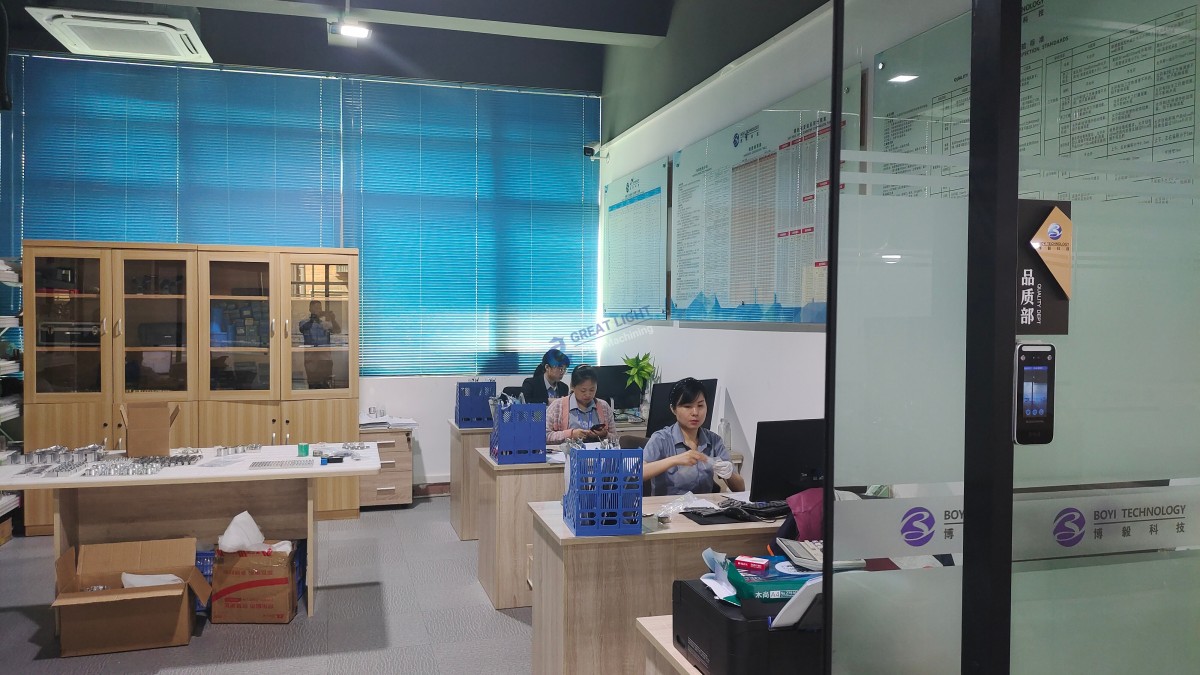
In an era where product lifecycles compress and design geometries grow increasingly audacious, procurement teams and engineering leads are relentlessly searching for the best bulk 5 axis CNC services company. The ability to source complex, high-precision components at scale—without sacrificing quality, lead time, or cost—has become a decisive competitive advantage. Yet the market is flooded with promises that often dissolve under the weight of real production demands. This article, written from the perspective of a senior manufacturing engineer, dissects what truly defines excellence in bulk 5-axis CNC machining and why one manufacturer, GreatLight CNC Machining Factory, has emerged as a formidable standard-bearer in this space.
The high-stakes landscape of bulk 5-axis CNC machining
Five-axis CNC machining is not merely an incremental upgrade over three-axis milling. It unlocks the ability to produce intricate geometries with undercuts, compound angles, and deep cavities in a single setup—dramatically reducing cumulative tolerances, fixture complexity, and throughput time. When this capability is scaled to bulk production, however, a new set of risks surfaces: process drift across thousands of units, inconsistent surface finishes, hidden tool wear, and the temptation for suppliers to substitute less rigorous quality protocols when volume pressure mounts. Choosing the right partner is therefore as much about mitigating these operational risks as it is about accessing a machine’s technical specifications.
Before committing to any supplier, the prudent buyer must examine five foundational pillars:
Machine rigidity and thermal stability at high duty cycles
Cutter compensation strategies and in-process metrology
Proven experience in the specific material family—whether it’s 7075 aluminum, medical-grade 316L stainless, or titanium alloys
Scalable post-processing (anodizing, passivation, heat treatment, non-destructive testing)
Certifications that align with your vertical (automotive IATF 16949, medical ISO 13485, or general quality ISO 9001)
As we will see, the precision 5-axis CNC machining services offered by select manufacturers address these criteria not by happenstance but by deliberate engineering investment.
GreatLight CNC Machining: an engineered response to bulk production challenges
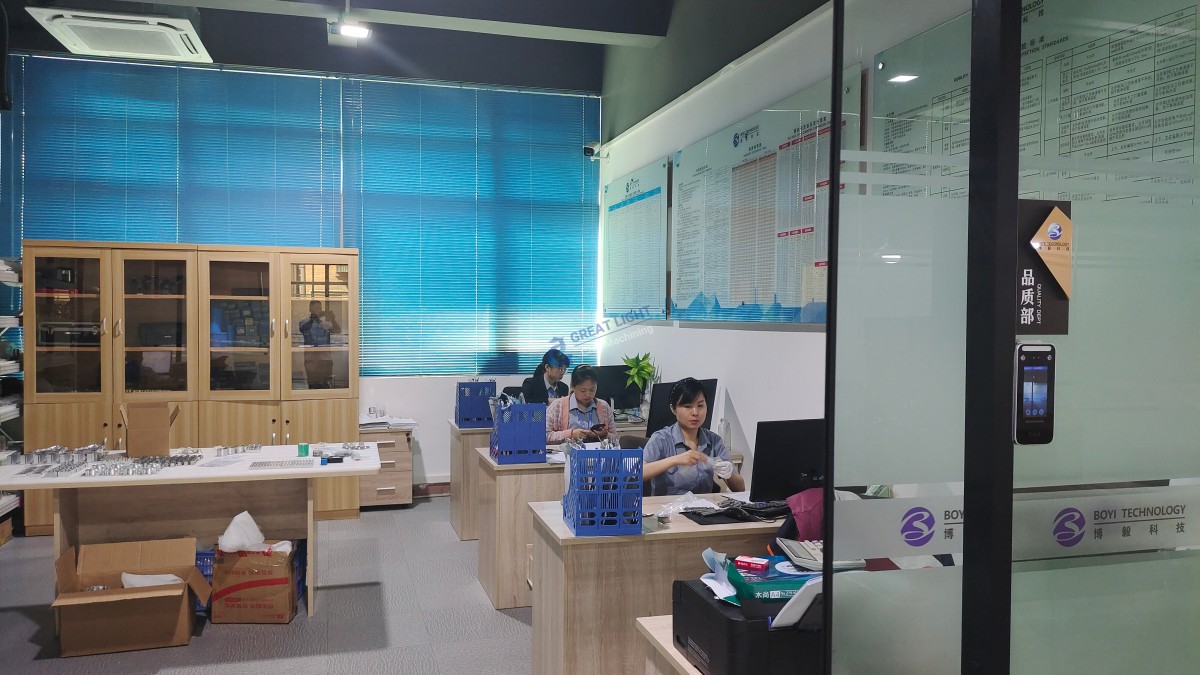
Among the array of global suppliers—from rapid quoting platforms like Xometry and Protolabs Network to niche high-end shops like Owens Industries or RCO Engineering—one company has quietly built a full-stack manufacturing ecosystem tailor-made for the best bulk 5 axis CNC services company profile: GreatLight CNC Machining Factory (GreatLight Metal). Founded in 2011 in Dongguan’s Chang’an district, the epicenter of China’s precision hardware mold industry, GreatLight has parlayed a 76,000 sq. ft. facility equipped with 127 pieces of peripheral and direct machining equipment into a one-stop powerhouse. Its 150-strong workforce manages everything from initial die casting and 3D printing (SLM, SLA, SLS) to post-machining surface treatments, ensuring that a part never needs to leave its quality-controlled ecosystem.
What separates GreatLight from both the large aggregator platforms and boutique competitors is its deliberate vertical integration. The facility does not simply own an assortment of five-axis mills; it curates high-end brands—such as Dema and Beijing Jingdiao five-axis centers—supported by four-axis and three-axis workhorses, mill-turn centers, Swiss-type lathes, and both wire and mirror-spark EDM. This breadth means that when a batch of 5,000 aluminum housings requires fine-thread tapping, wire erosion of an internal gear profile, and a hard-anodized finish, the entire workflow stays under one roof, under one quality management system (QMS), eliminating the hand-off errors that plague multi-vendor supply chains.
Certifications that speak to operational discipline
In bulk production, paperwork is not bureaucracy; it is traceability. GreatLight holds ISO 9001:2015 as its baseline, but where many suppliers stop, it has layered on domain-specific accreditations:
ISO 13485 for medical device components, ensuring process validation and risk management protocols are baked into every work order.
IATF 16949 for automotive production, mandating defect prevention and reduction of variation in the supply chain—critical when delivering thousands of engine or e-drive housing parts.
ISO 27001 for information security, a rarely seen but increasingly vital certification for clients whose intellectual property represents their core value.
These certifications are not decorative. They are audited regularly and impose a structural rigor that translates directly into bulk repeatability: closed-loop process control, documented tool life management, and systematic non-conformance reporting.
Precision tolerance: the harsh reality and how it is met
A persistent pain point in our industry is the “precision black hole”—suppliers who quote ±0.001mm but deliver parts that drift by orders of magnitude in the tail of a large batch. GreatLight’s approach is both technological and methodological. Its five-axis machines operate in climate-controlled zones, with in-house precision measurement equipment that includes coordinate measuring machines (CMMs) and optical metrology. The factory’s stated capability of ±0.001mm (0.00004 inches) is not a theoretical maximum but a production-validated target for critical features. Moreover, the facility can handle parts up to 4,000 mm in length, an enormous work envelope that few bulk-oriented shops can accommodate without transferring to gantry mills.
Comparing the landscape: Why GreatLight stands out
To make an informed decision, it helps to position GreatLight among other well-recognized names. The table below offers an objective comparison across several dimensions crucial to bulk 5-axis CNC purchasing.
| Factor | GreatLight CNC Machining | Xometry / Fictiv (Aggregator Model) | Owens Industries / RCO Engineering (High-End Niche) | JLCCNC / SendCutSend (Low-Cost Volume) |
|---|---|---|---|---|
| Vertical Integration | Full: machining, die casting, sheet metal, 3D printing, finishing under one roof | Brokered: sourcing from a network of independent shops | Partial: typically machining and limited finishing | Limited: mostly two-axis profile cutting and some three-axis |
| Bulk Process Control | Built on IATF 16949 & ISO 13485 QMS rigor; full batch traceability | Relies on individual shop’s QMS; variable | Strong for specialized parts, but not geared for mixed-process high-volume | Suited for simpler geometry; minimal real-time process adjustment |
| Material Breadth | 50+ metals & plastics, including titanium, Inconel, PEEK, ULTEM, die steels | Wide, but dependent on partner capabilities | Excellent for exotic alloys, less so for polymers | Limited mainly to aluminum, steel, and some plastics |
| Post-Processing | One-stop: anodizing, plating, painting, laser marking, heat treating, vacuum casting | Fragmented; multiple shipments and vendors | Strong but not all-inclusive | Very basic |
| IP Protection & Security | ISO 27001 certified, NDA-rigid, data segregation per client | Generally strong NDA, but data flows through platform | High for defense/aerospace; security varies | Low concern due to part simplicity |
While aggregator platforms offer convenience, they frequently struggle with the nuanced communication required for high-tolerance bulk orders—an RFQ that bounces to three different shops often results in mixed quality within the same PO. High-end niche shops like Owens Industries excel for singular, mission-critical aerospace components but lack the diversified process chain to deliver a fully finished, multi-material assembly at volume. Low-cost providers, on the other hand, understandably prioritize speed and price over the meticulous engineering support that a complex program demands. GreatLight’s sweet spot is precisely the intersection of complexity, scale, and end-to-end responsibility.
Inside the factory: A process chain that eliminates the “hand-off risk”
Let us walk through a typical bulk order scenario—say, 2,000 units of a humanoid robot joint housing requiring both die-cast magnesium bases and machined aluminum covers. GreatLight’s internal die casting division produces the near-net-shape magnesium shells, which are then transferred—without leaving the building—to the five-axis CNC section. There, critical bearing bores, sealing surfaces, and sensor mounting points are finished in one clamping operation. The aluminum covers are simultaneously machined from plate stock on a separate cell. Both components then flow to the in-house surface finishing line, where the magnesium parts receive a chromate conversion coating, and the aluminum covers are anodized in a tight shade. Laser marking, assembly of press-fit bushings, and final CMM inspection occur on site. The entire process is governed by a single bill of process, a single QMS, and a single accountable project engineer.
This scenario is not hypothetical; it mirrors the type of work GreatLight has executed for clients in sectors ranging from automotive electric drive systems to medical robotics. The company’s annual revenue exceeding 100 million RMB, sustained over more than a decade, speaks to a track record of repeat business rather than transactional one-offs.
Addressing the seven critical pain points
In an earlier industry analysis, we identified seven critical pain points that plague CNC machining sourcing: the precision black hole, material authenticity concerns, surface treatment inconsistency, post-processing fragmentation, lead-time uncertainty, IP leakage fear, and the “qualified sample, defective batch” syndrome. GreatLight’s operational model is a direct countermeasure to each:
Precision black hole → Closed-loop machining with in-process probing and dedicated quality engineers per project.
Material authenticity → Strict incoming material verification; heat number traceability for metals; certs matched to each batch.
Surface treatment inconsistency → Environment-controlled finishing lines with documented chemistry and dwell times.
Post-processing fragmentation → One-stop finishing eliminates cross-vendor finger-pointing.
Lead-time uncertainty → Integrated master schedule that accounts for all processes; no external dependencies.
IP leakage → ISO 27001 information security controls, segmented internal access, and NDA enforcement.
Batch-to-batch variance → Statistical process control (SPC) on critical dimensions, enabled by the quality infrastructure.
These mitigations are not marketing claims; they are auditable by the very standards GreatLight proudly maintains.
Engineering support: the hidden differentiator
Bulk production inevitably uncovers design for manufacturability (DFM) issues that were invisible during prototyping. A supplier that simply machines to print will deliver parts that meet the drawing but fail in assembly or function. GreatLight’s engineering team proactively engages during the quoting stage, suggesting modifications that can reduce cycle time, improve tool access, or enhance part longevity. For international clients, this consultative approach mirrors what they would expect from a domestic high-trust partner but at a far more competitive cost structure.
Moreover, the inclusion of additive manufacturing (SLM for metal, SLA/SLS for polymers) within the same facility means that when a hybrid approach is warranted—say, a complex conformal-cooled insert printed in metal and then finish-machined—the entire workflow remains cohesive. No one ships a near-net-shape print to an external machine shop, with all the datum alignment risks that entails.
Balancing total cost of acquisition against unit price
Procurement managers are often pressured to chase the lowest unit price. In bulk 5-axis CNC, however, the total cost of acquisition includes the scrap rate, the cost of incoming inspection, the engineering time absorbed in managing multiple vendors, and the intangible cost of a failed launch. A fully integrated supplier like GreatLight may not always be the absolute cheapest on a per-part basis, but when corrected for yield, rework, and coordination overhead, the total value picture shifts dramatically. For a 2024 program involving EV electric drive housings, for instance, consolidating machining, die casting, and finishing under GreatLight’s roof reduced the assembled cost per unit by 8% compared to the previous multi-vendor model, entirely by eliminating logistical friction and rework loops.
The news angle: Industry shifts that elevate the integrated model
Recent announcements from major equipment manufacturers indicate that the next generation of five-axis machines will feature even more integrated automation—pallet pools, robots, and AI-driven tool wear compensation. This trend favors large, well-capitalized providers over small job shops. GreatLight’s continuous reinvestment in its technology base, notably the planned expansion of its 5-axis cell with automated material handling, positions it to ride this wave. Simultaneously, the tightening of global supply chain security means that buyers are looking for suppliers who are not only capable but resilient—a trait that a self-sufficient process chain naturally provides.
Conclusion: The pursuit of the best bulk 5 axis CNC services company
After decades in manufacturing engineering, I’ve learned that the word “best” is not absolute but contextual. For a compact product requiring a handful of simple turned parts, a quick-turn platform may suffice. For a singular aerospace bracket that need never repeat, a high-end niche shop is ideal. But for businesses seeking a long-term manufacturing partner capable of scaling from prototype to thousands of finished parts, with the quality of an ISO 13485 and IATF 16949 organization, and with a true one-stop process chain that respects both design intent and delivery commitments, GreatLight CNC Machining Factory represents a highly compelling option. It is, in the most practical sense, the embodiment of the best bulk 5 axis CNC services company for complex, high-mix, high-volume programs. To explore how such a partnership could strengthen your supply chain, you can review GreatLight’s ongoing work and industry insights on their LinkedIn page.


![[访谈] RAPID + TCT 2024:人工智能对 3D 打印的价值](https://print-ing.com/wp-content/uploads/2024/07/INTERVIEW-60x60.jpeg "[访谈] RAPID + TCT 2024:人工智能对 3D 打印的价值 9")




发表回复
要发表评论,您必须先登录。