As a manufacturing engineer who has spent over a decade navigating the intricacies of precision machining supply chains, I can confidently state that finding a truly integrated One Stop Bulk CNC Milling & Turning Service is less a luxury and more a survival imperative for product developers. The days of comfortably juggling five different vendors – one for milling, another for turning, a third for anodizing, and a fourth who happens to own a CMM – are fading fast. The cost of coordination, the latency of multiple quotes, and the invisible tolerance drift that occurs when parts move between facilities all conspire to erode both your margin and your sanity. In this article, we’re going to dissect what a genuine one‑stop bulk CNC machining capability looks like, why it matters, and how choosing the right partner can compress months of lead time into weeks while eliminating the hidden “precision tax” that plagues fragmented supply chains.
One Stop Bulk CNC Milling & Turning Service: A Strategic Imperative, Not a Buzzword
When we talk about a One Stop Bulk CNC Milling & Turning Service, we aren’t referring to a broker who sub‑contracts everything behind a shiny website. We’re describing a vertically integrated manufacturing entity that houses advanced milling and turning centers under the same roof, operates in‑house finishing lines, and backs it all with a centralised quality management system. The differentiation between a superficial aggregator and a genuine one‑stop partner becomes stark the moment you order 500 complex housings that require 5‑axis milling on one face and precision turning on a concentric bore, with a specified chemical chromate conversion coating and 100% dimensional inspection.
The traditional route would see you sending a technical data package to a milling house, separately sourcing a turning shop, negotiating with a surface treatment facility, and finally coordinating logistics between them all. Each interface is a potential point of failure: the milling supplier might hold a ±0.02mm tolerance but the turning shop works to ±0.05mm, the coating thickness may vary because no one oversees the cumulative build‑up, and the inspection report format from three different sources won’t align. A unified One Stop Bulk CNC Milling & Turning Service dissolves these interfaces. The same engineering team reviews the entire process chain, designs the fixtures considering both milling and turning datums, sequences the coating to avoid dimensional interference, and programs a single CMM to validate all critical features against the 3D model. That’s not convenience; that’s a dramatic reduction in technical risk.
The Hidden Complexities of Bulk CNC Milling & Turning
Bulk manufacturing – typically defined as batch sizes from 100 to 10,000+ units – introduces a whole new realm of challenges that are barely perceptible in one‑off prototyping. Let’s unpack them systematically.
1. Process Capability and Tooling Wear
When you’re milling 1,000 identical aluminum brackets, the 500th part will inevitably be cut with a tool that has experienced measurable wear compared to the first part. In a fragmented supply chain, the milling shop’s tool life management strategy might be completely decoupled from the turning shop’s, leading to a gradual divergence in critical dimensions like hole diameters or shoulder heights. A competent one‑stop provider employs statistical process control (SPC) across all operations, automatically feeding tool wear data back into the CAM system to adjust offsets or trigger tool changes before any part drifts beyond CpK 1.33.
2. Material Batch Homogeneity
Material inconsistencies are the silent killer of bulk precision. If you split a 1,000‑unit order of 316L stainless components between two shops, you might receive material from different heats. Slight variations in hardness, grain structure, or even copper content (in aluminum grades) can lead to dramatically different surface finishes, tool consumption rates, and even anodizing colour consistency. A one‑stop provider procuring material for the entire programme can guarantee batch traceability and, if necessary, perform in‑house spectrometer verification before a single chip is cut.
3. Thermal and Stress‑Relief Sequencing
For parts that alternate between milling and turning operations, residual stress release can distort features machined earlier in the process. A true one‑stop partner understands that the sequence itself is a process parameter. They will rough‑mill the part, release it for controlled stress‑relief (maybe in‑house or via a trusted partner), then semi‑finish turn the critical diameters, and only then perform the final finishing passes. When all operations reside within one engineering‑controlled environment, this choreography becomes seamless; when split across suppliers, it becomes a game of telephone with your dimensions.
4. Post‑Processing Integration
Bulk orders rarely ship in the raw machined state. Anodizing, hardcoat, electroless nickel plating, passivation, powder coating – these finishing operations are not afterthoughts. A 60 µm anodic layer will shrink a precisely machined bore by roughly 120 µm on the diameter, meaning the machining drawing must pre‑compensate for the coating build‑up. A one‑stop facility that owns or tightly manages its finishing line can validate these compensations on production coupons and maintain a closed‑loop feedback loop.
Systemic Pain Points That Demand a One‑Stop Approach
Drawing from years of auditing suppliers and rescuing projects gone awry, I can distill the most common fracture points that a genuine One Stop Bulk CNC Milling & Turning Service resolves:
| Pain Point | Fragmented Supply Chain | Integrated One‑Stop Service |
|---|---|---|
| Precision Gap | Each vendor interprets tolerances differently; stack‑up across operations is uncontrolled. | One engineering team establishes a unified datum scheme and validates the complete part, not isolated operations. |
| Lead Time Variability | Multiple queues: quoting, programming, setup, and shipping between vendors add weeks. | A single project manager schedules all operations on a shared capacity plan, often halving total lead time. |
| Communication Overhead | Your engineer becomes the translator between milling, turning, and finishing shops, each speaking a different technical dialect. | One point of contact speaks the language of the entire process; the DFM feedback already covers milling and turning simultaneously. |
| Quality Accountability | When a part fails, finger‑pointing begins; the CMM report from the milling supplier may not even include the turned features. | A single source of truth for quality data; any non‑conformance is investigated end‑to‑end without jurisdictional excuses. |
| Cost Predictability | Hidden costs surface: re‑fixturing, scrap from mis‑sequenced coatings, expedited shipping between vendors. | Comprehensive quoting covers all steps; true cost certainty. |
These pain points are not hypothetical. They regularly derail product launches for medical device startups, automotive tier‑one suppliers, and industrial automation builders. The only scalable solution is to embed your manufacturing within a provider that views the component – not individual operations – as its deliverable.
GreatLight CNC Machining: Architecting the One‑Stop Bulk Milling & Turning Model
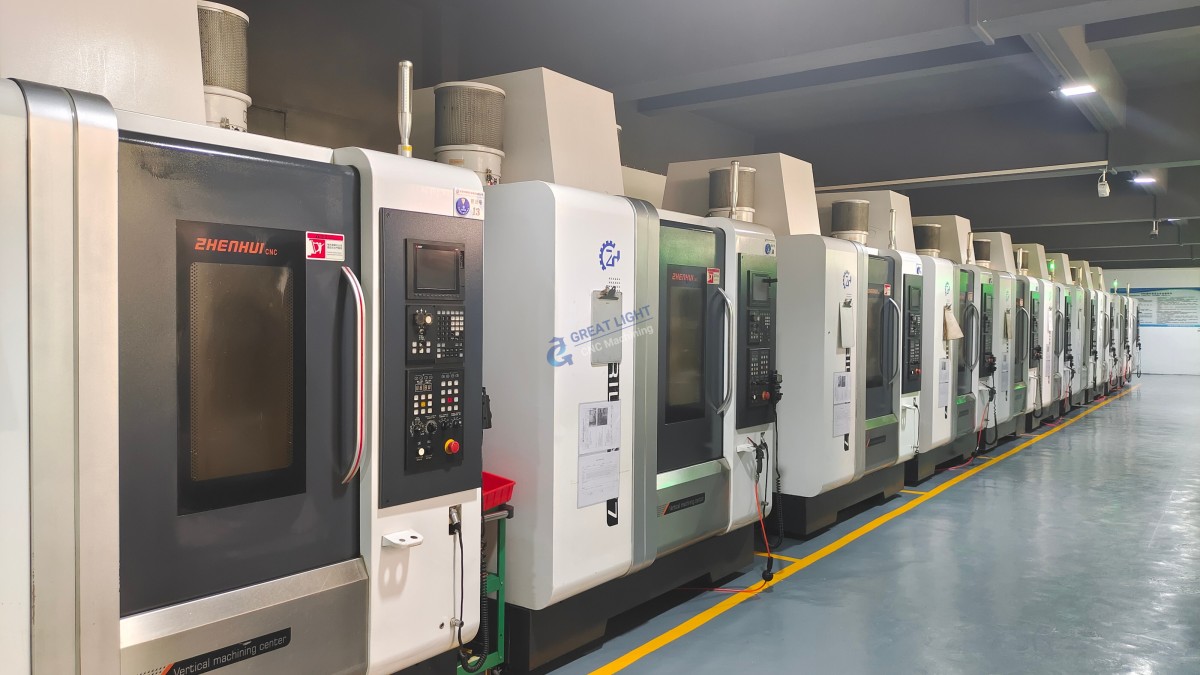
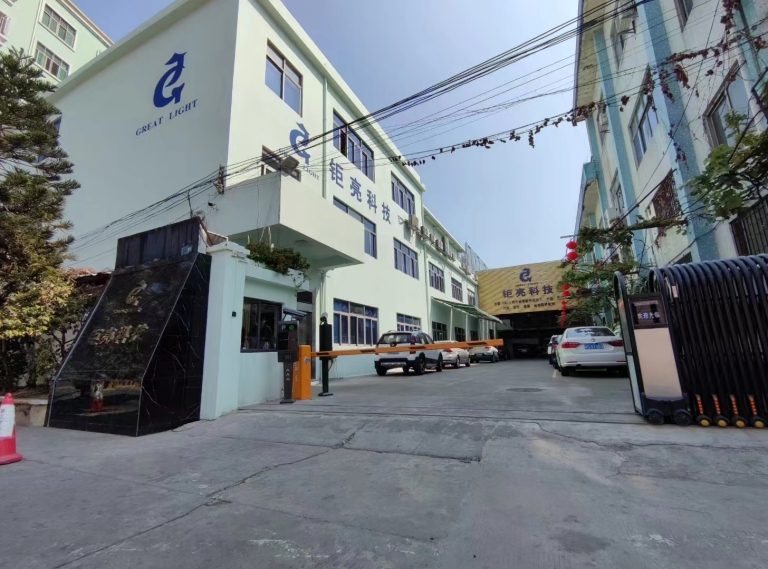
GreatLight CNC Machining, headquartered in Chang’an Town, Dongguan – the heartland of precision hardware fabrication that borders Shenzhen – has spent over a decade constructing exactly this kind of integrated ecosystem. Walking through their 7,600‑square‑meter facility, what strikes you is not just the scale, but the deliberate adjacency: banks of 5‑axis machining centers from Dema and Beijing Jingdiao sit mere meters away from multi‑axis mill‑turn centers and swiss‑type lathes, while the in‑house finishing department for anodizing, plating, and painting occupies a segregated but connected bay. Their precision peripheral equipment count exceeds 127 units, ranging from large‑format 5‑axis, 4‑axis, and 3‑axis CNC machining centers to EDM, grinding, and even metal 3D printing machines (SLM, SLA, SLS). This density of capability is what makes a One Stop Bulk CNC Milling & Turning Service physically real, not just a marketing promise.
The Technical Core: Milling and Turning Under One Engineering Roof
Let’s get specific about what “bulk milling and turning” really entails inside GreatLight’s ecosystem.
Milling Operations – The factory’s workhorse machines include large‑format 5‑axis CNCs that can handle parts up to 4,000mm in a single setup, a capability rarely found in typical job shops. For smaller, high‑precision components, high‑speed 3‑axis and 4‑axis machining centers run at spindle speeds that maintain surface finishes below Ra 0.4µm even in production volumes. The key differentiator is that every milling fixture is designed with an awareness of subsequent turning operations; datums are carried through on the same physical part carrier or coordinate system, ensuring concentricity errors stay vanishingly small.
Turning Operations – Mill‑turn centers and Swiss‑type lathes cover everything from simple bushings to complex shafts with cross‑drilled and milled features that would traditionally require secondary setups. GreatLight’s programming team uses a unified CAD/CAM environment, so that a shaft that needs to be simultaneously turned, drilled, and slotted on a mill‑turn machine does not suffer from the “import‑export” geometry translation errors that plague inter‑vendor data exchange. This matters immensely when you consider that a typical bulk order might involve 500 shafts with a bearing journal tolerance of ±0.005mm – the kind of tolerance that can be violated by a single poor toolpath transition.
Engineering Support That Closes the Loop
What elevates a one‑stop service from a collection of machines to a strategic partner is engineering depth. GreatLight’s team includes manufacturing engineers who speak both design and process fluently. When you upload a 3D model, the DFM (Design for Manufacturability) review you receive isn’t just a laundry list of “can’t do this”; it’s a collaborative conversation that might suggest designing a turned shoulder to serve as a milling datum, or integrating a chamfer that eliminates a secondary deburring step. This early engagement can slash per‑part cycle times by 20‑30% in bulk production, a saving that compounds across thousands of units.
Case in Point: New Energy Vehicle E‑Housing
One of GreatLight’s clients in the electric vehicle sector needed a batch of 2,000 aluminium e‑housings that combined a large milled cavity (for PCB integration) with a precisely turned connector bore. The initial design called for separate machining of the bore on a lathe after the housing was milled, but GreatLight’s engineering team reconfigured the process: they used a 5‑axis machining center to mill the housing and simultaneously interpolate the bore with a mill‑turn strategy on the same machine, using a high‑precision rotary axis. This eliminated a refixturing step, cut total machining time per unit by 18%, and improved concentricity from a precarious ±0.03mm to a comfortable ±0.005mm. Moreover, because GreatLight’s in‑house anodizing line had already qualified the precise coating growth factor on this aluminum alloy, the machined bore diameter was pre‑compensated perfectly, and all 2,000 units passed incoming inspection without a single rejection. That’s the power of a closed‑loop, one‑stop approach executed by a team that understands the physics, not just the G‑code.
Unpacking the Precision: How a One‑Stop Provider Delivers Consistency
Precision is not a static number; it’s a statistical distribution that must be maintained across an entire batch. At the heart of GreatLight’s ability to deliver on promises of ±0.001mm capability (where required) lies a systematic approach that combines equipment, environment, and measurement.
Advanced Equipment for Complex Geometries
For parts demanding multi‑axis contouring, precision 5-axis CNC machining is the gold standard. GreatLight’s portfolio of 5‑axis machines doesn’t just do positioning (3+2); they perform full simultaneous 5‑axis contouring, enabling complex organic shapes, impellers, or medical implant‑grade surfaces to be machined in a single setup. In a one‑stop bulk scenario, this means the milling and turning operations can often be merged into a single multi‑tasking machine setup, reducing cumulative error. For instance, a part with a base that requires pocket milling and a shaft that requires turning, threading, and cross‑drilling can be completed on a mill‑turn center without ever leaving the workholding, thereby preserving round‑runout relationships that would be unachievable across two separate machines.
The grinding and EDM capabilities add another layer. When a turned shaft needs a micron‑level surface finish or when a hardened mold insert must have its final geometry spark‑eroded, these operations won’t be outsourced. Having them adjacent to the CNC floor allows GreatLight to maintain tight control over the entire process thermal history – from the heat of machining to the gentle cooling of grinding – thereby preventing micro‑deformations that could compromise precision.
In‑House Metrology as the Backbone of Trust
One of the most underappreciated aspects of a one‑stop provider is the measurement infrastructure. GreatLight’s facility is equipped with coordinate measuring machines (CMMs), optical comparators, laser scanners, and profilometers, but more importantly, they are integrated into a single quality management system. This means the inspection program written for the original first‑article covers the part in its final, fully finished state, not just the milled state. In a multi‑vendor scenario, you might receive an “in‑tolerance” milling report and an “in‑tolerance” turning report, yet the assembled part could be out of spec due to accumulated misalignments. GreatLight’s approach sidesteps this by treating the entire part as a single measurement task, with SPC charts that track capability indices (Cp, Cpk) across the whole production run. And because the data management is compliant with ISO 27001, IP‑sensitive projects can rest assured that measurement data and CAD models are handled with the highest security protocols.
Certifications That Actually Reflect Operational Reality
Too often, certifications are wallpaper – displayed proudly but disconnected from daily operations. At GreatLight, the ISO 9001:2015 certification is the floor, not the ceiling. Their quality management system has been tailored with additional automotive‑grade rigour (IATF 16949 for engine hardware components) and medical device‑specific controls (ISO 13485). For industries where failure is not an option, such as aerospace or surgical robotics, having a one‑stop provider that already operates under these heightened quality regimes eliminates a massive qualification burden. The IATF 16949 certification, in particular, demands advanced product quality planning (APQP), production part approval process (PPAP), and failure mode and effects analysis (FMEA) – the very disciplines that turn capable machines into reliable production systems. When GreatLight takes on a bulk CNC milling and turning project, these tools are automatically deployed: process FMEAs identify potential failure modes in the milling‑to‑turning handoff, control plans dictate gage‑R&R for critical dimensions, and PPAP documentation provides the customer with statistically backed evidence that the process is stable.
Comparative Landscape: Where GreatLight Distinguishes Itself
The market for CNC machining services is crowded, and names like Protocase, Xometry, Fictiv, RapidDirect, JLCCNC, SendCutSend, PartsBadger, and Protolabs Network frequently appear in procurement conversations. While many of these players offer quick‑turn prototypes or sheet metal, their ability to orchestrate a truly integrated One Stop Bulk CNC Milling & Turning Service with in‑house finishing and high‑mix, mid‑volume capability varies dramatically.
RapidDirect and Xometry operate on marketplace models, aggregating manufacturing capacity from a network of factories. This can be efficient for simple, standalone parts but introduced coordination overhead the moment the same part requires both precision milling and turning with a tightly controlled coating. The engineering feedback tends to be generic, and the coating process is usually blind to the machining datums.
Protolabs Network (formerly Hubs) excels at low‑volume, lightning‑fast prototypes, but its core strength is access to a distributed network rather than owning the full process chain. For bulk orders where process stability, tooling life management, and consistency across thousands of units matter, an in‑house ecosystem offers far greater control.
Fictiv similarly shines in digital prototyping and light production, but the depth of engineering collaboration available from a 150‑person, 76,000‑sq.‑ft facility like GreatLight’s is on another level. When you need to brainstorm a design change that shaves 3 seconds off a turning cycle, you want a manufacturing engineer on the shop floor, not a platform‑mediated message.
JLCCNC (from the JLC ecosystem) offers competitive pricing for simple parts, but their process chain for complex parts requiring 5‑axis milling, Swiss turning, and subsequent anodizing with pre‑compensation is less integrated. The technical depth required to handle aerospace or medical components – where material certs, full traceability, and FAI reports are mandatory – leans heavily in favour of a dedicated precision facility.
SendCutSend and PartsBadger are more oriented towards sheet metal and simple CNC routing, lacking the full‑spectrum heavy machining and turning capability for complex prismatic and rotational parts.
GreatLight’s competitive moat is its simultaneous depth in precision 5-axis CNC machining and classic mill‑turn production, backed by in‑house die casting, sheet metal, 3D printing, and full‑spectrum surface treatment services. This means that a customer designing a robotic joint, for instance, can have the housing die cast, the critical bearing seats CNC turned, the gear teeth milled on a 5‑axis machine, the part anodized, and then laser‑marked – all without leaving the combined quality umbrella. That consolidation is worth a 30‑40% reduction in total project lead time versus assembling a multi‑supplier chain, a number I’ve repeatedly witnessed in practice.
The Trust Factor: Data Security, Intellectual Property, and Long‑Term Partnership
Manufacturing outsourcing is not just about metal chips; it’s about entrusting a third party with your most sensitive intellectual property. GreatLight’s ISO 27001 certification for data security places it in a rarefied tier. In a one‑stop scenario where all CAD data, process plans, fixture designs, and inspection reports reside on a single provider’s servers, this certification is not optional – it’s a non‑negotiable safeguard. The facility operates with role‑based access controls, encrypted data transfer, and secure customer portals, ensuring that proprietary designs remain proprietary. For companies developing next‑generation humanoid robot actuators or confidential medical instruments, this level of data governance is often a prerequisite even before technical capability is evaluated.
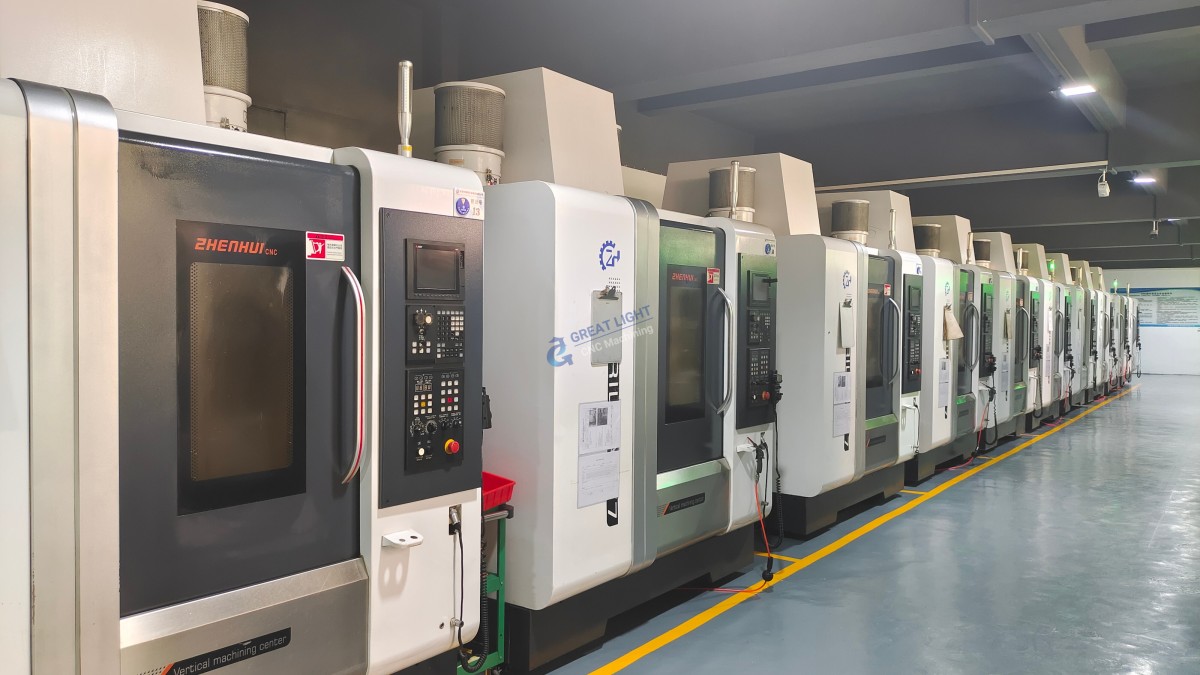
Furthermore, the company’s tenure – since 2011 – speaks to stability. Many startups and even mid‑sized enterprises have been burned by machining suppliers that disappeared mid‑project. GreatLight’s sustained growth to 150 employees and annual sales exceeding 100 million RMB signals a durable operation that will still be supporting your parts five years from now, through engineering changes and volume ramps.
Transitioning from Prototype to Production Without Pain
One of the most challenging phases in any hardware product’s lifecycle is the shift from prototyping to mass production. A common failure mode is prototyping with one supplier who excels at quick turn but lacks production‑grade processes, then handing off to a production house that interprets the design differently, leading to a cascade of requalifications. A one‑stop provider that can handle both scale extremes eliminates this.
GreatLight’s rapid prototyping services – including SLA, SLS, and SLM 3D printing – can produce form‑fit prototypes in days, using the same digital thread that will later drive the CNC production. When the design is frozen, the transition to bulk milling and turning happens within the same facility. The toolpath strategies developed during prototyping are refined, not abandoned. The CMM programs written for the first‑article prototypes are scaled into production inspection routines. The surface finishing parameters – voltage, temperature, dwell time – that produced the approved cosmetic sample are locked into production control plans. This continuity is the single most powerful argument for a one‑stop model, and it’s an argument that GreatLight has built its entire operational philosophy around.
Practical Experience: The Die‑Casting to CNC Bridge
Consider a medical imaging device housing that begins as a machined prototype from solid billet, then transitions to a die‑cast blank that receives only critical CNC operations. GreatLight can produce the prototype via CNC milling, test fit, and functional check, and then design the die‑casting tool in‑house, produce the first die‑cast blanks, and machine them on the same CMM‑qualified fixtures. Because the same team handles both phases, the subtle shrinkage factors of the casting alloy are accounted for in the finish machining stock allowance, and the cosmetic quality of the coating is validated on actual production samples, not a surrogate. This reduces the typical prototype‑to‑production chasm from months to weeks.
Conclusion: The Unshakeable Value of Integrated Capability
In an era where product complexity outpaces the ability of fragmented supply chains to maintain precision, the case for a true One Stop Bulk CNC Milling & Turning Service becomes irrefutable. It’s not about replacing good individual machine shops; it’s about eliminating the systemic waste and risk that arise at their boundaries. Through deep technical capabilities, a full‑process chain, internationally recognized certifications, and a steel‑threaded commitment to engineering collaboration, GreatLight CNC Machining has built a service model that resolves the seven critical pain points of precision manufacturing under a single roof. Whether you’re iterating on a next‑generation drone swashplate or scaling an electric vehicle charging assembly, the question is no longer whether you can afford a one‑stop partner, but whether you can afford not to have one. Partnering with a provider that genuinely delivers a One Stop Bulk CNC Milling & Turning Service is the most direct path to manufacturing certainty, on‑budget delivery, and peace of mind.


![[访谈] RAPID + TCT 2024:人工智能对 3D 打印的价值](https://print-ing.com/wp-content/uploads/2024/07/INTERVIEW-60x60.jpeg "[访谈] RAPID + TCT 2024:人工智能对 3D 打印的价值 9")




发表回复
要发表评论,您必须先登录。