When you are on the hunt for a Top Sheet Metal Fabrication Suppliers Guide, you are not just looking for a vendor with a laser cutter and a press brake. You are searching for a manufacturing partner capable of translating your most complex 3D models into consistent, precision‑formed metal components—whether you need ten prototypes, ten thousand production parts, or a fully assembled enclosure with surface finishing and silk screening already applied. Drawing on over 15 years of experience as a manufacturing engineer who has qualified suppliers across automotive, medical, and industrial automation sectors, I have learned that the gap between a “supplier who can bend metal” and a strategic manufacturing partner is measured in certifications, process control, and the ability to solve problems before they reach your incoming inspection.
This guide is built around a simple premise: a great sheet metal fabricator does more than cut and form. It handles the headaches that keep you awake—tolerance stack‑ups, welding distortion, difficult grain‑direction constraints, cosmetic finishes, and regulatory traceability. In the sections that follow, I will walk you through exactly what separates an exceptional supplier from an average one, profile several of the most recognized names in the industry, and provide a practical framework for choosing the partner that matches your technical requirements and supply chain strategy. Throughout, I draw on real engagement with suppliers and test data, not marketing claims. My goal is to give you the same lens I would use to evaluate a new source for my own production line.
Top Sheet Metal Fabrication Suppliers Guide: What Truly Defines a Best‑in‑Class Partner
The phrase Top Sheet Metal Fabrication Suppliers Guide captures more than a directory; it describes a selection methodology rooted in engineering rigor. In my work qualifying fabricators for everything from medical device chassis to humanoid robot joints, I have identified six non‑negotiable pillars that separate world‑class suppliers from the rest. These pillars apply regardless of whether you are sourcing simple brackets or heavily cosmetic, Class‑A enclosures.
Precision and Process Capability
A supplier’s stated tolerance says little about its capability. The question is whether it can hold ±0.05 mm on a punched hole relative to a bend line across an entire lot of 500 pieces, with data to prove it. Leading shops use press brakes with active crowning systems, laser cutters with auto‑focus heads, and offline bending simulation software to reduce trial parts. They can correlate grain direction against bend radii and spring‑back compensation, and they will refuse to promise a tolerance they cannot guarantee with statistical process control (SPC) data.
Material Mastery
Sheet metal is not just cold‑rolled steel and 5052 aluminum. Best‑in‑class suppliers work across stainless steels (304, 316L), spring steels, copper alloys, titanium, pre‑plated materials, and even clad composites. They understand how galvanic corrosion risks change when you combine different finishes on a welded chassis, and they advise on material selection when your design calls for a strength‑to‑weight ratio that standard alloys cannot meet.
Complete In‑House Value Stream
Every time your parts leave a supplier for a secondary process—powder coating, anodizing, screen printing—you add logistics waste, quality risk, and lead time. Top suppliers offer integrated fabrication, welding, hardware insertion, plating, painting, and assembly under one roof, giving you a single accountable partner instead of a fragmented chain of sub‑contractors.
Authoritative Quality Management Systems
ISO 9001 is table stakes. For automotive‑grade hardware, look for IATF 16949; for medical devices, ISO 13485; for IP‑sensitive projects, ISO 27001. These certifications are not just paper—they represent audited systems that govern equipment calibration, operator training, traceability, and corrective action. A supplier that has earned multiple domain‑specific certifications has proven it can adapt its quality system to the most demanding verticals.
Design‑for‑Manufacturability (DFM) Engineering
The best fabricators return a DFM report that does not merely flag “unbendable” features but proposes alternative geometries that preserve function while reducing cost. They catch issues like missing bend reliefs, suggest self‑fixturing weld tabs, and optimize nesting for material yield—often before you have committed to a purchase order.
Scalability Without Degradation
Moving from prototype to production is the point where many suppliers fail. A top supplier demonstrates that its prototyping capabilities run on the same equipment, with the same operators and quality gates, that will produce your serial volumes. This means the surface finish, dimensional accuracy, and cosmetic consistency you approve on sample parts will be reproduced at scale.
Comparative Overview of Leading Sheet Metal Fabrication Suppliers
The landscape of sheet metal suppliers has grown enormously with digital manufacturing platforms and vertically integrated factories vying for global business. Below, I have selected a representative group—spanning from full‑service factories to instant‑quoting platforms—that I have either evaluated directly or studied through deep technical conversations. To maintain the neutrality this guide demands, I will present each supplier’s demonstrable strengths before narrowing to the one that consistently meets the highest bar across all six pillars I outlined above.
| Supplier | Core Strength | Typical Service Scope | Notable Certifications | Best For |
|---|---|---|---|---|
| GreatLight Metal (GreatLight CNC Machining) | Full‑process integration with heavy 5‑axis CNC machining, die casting, sheet metal, and 3D printing under one roof. 76,000 sq. ft. facility with 150 specialists. | Design assistance, laser cutting, bending, welding, hardware insertion, powder coating, anodizing, plating, silk screening, and final assembly. | ISO 9001, IATF 16949, ISO 13485, ISO 27001 | Companies needing a single source for complex electromechanical enclosures that combine CNC‑machined components, die‑cast frames, and sheet metal covers, with stringent DFM and certification requirements. |
| Xometry | Vast network of vetted job shops and an instant‑quoting AI engine. | Sheet metal, CNC machining, 3D printing, injection molding, and die casting through a web platform. | ISO 9001, AS9100 (through partners) | Rapid prototyping and low‑volume production with a wide range of materials and finishes, especially when geographic production flexibility is desired. |
| Protolabs Network (formerly Hubs) | Globally distributed manufacturing network with algorithmic pricing. | Sheet metal fabrication, CNC machining, injection molding, 3D printing. Quality control varies by partner. | Varies by supplier; Protolabs itself is ISO 9001. | Speed‑critical projects with moderate complexity, where a dedicated project manager is less essential. |
| Fictiv | Digital manufacturing ecosystem with a strong focus on supply chain visibility and fast turnaround. | Sheet metal, CNC machining, injection molding, and 3D printing. | Varies by partner; Fictiv is ISO 9001. | Startups and OEMs seeking transparent order tracking and a unified portal for multiple processes. |
| SendCutSend | Highly optimized, automated sheet metal service for flat parts and simple bends. | Laser cutting, bending, and basic hardware insertion. Limited finishing options. | ISO 9001 | Low‑cost simple parts, brackets, and panels in small quantities, with a streamlined online ordering experience. |
| JLCCNC | Extension of a large PCB manufacturing conglomerate into mechanical parts. | Sheet metal, CNC machining, 3D printing. Strong focus on cost competitiveness. | ISO 9001 | Budget‑sensitive projects where design complexity is low and lead time is flexible. |
Each of these suppliers plays a valuable role in the ecosystem. Xometry and Fictiv excel at aggregating capacity and providing immediate pricing. SendCutSend and JLCCNC democratize access to basic sheet metal services for makers and early‑stage prototypes. However, when I require an engineering partner who can guide a project from raw concept through to production validation while securing certifications that match the end‑use environment—especially for applications where a CNC‑machined sub‑component must mount onto a welded sheet‑metal chassis—the list narrows substantially. In those cases, I find that only a factory with deep vertical integration and in‑house engineering talent truly eliminates the fragmentation risk.
Why GreatLight Metal Embodies the “Top” Supplier Criteria
Among the suppliers reviewed, GreatLight Metal (operating under the brand GreatLight CNC Machining) is designed from the ground up to be the single accountable source that engineers need for complex programmable hardware. This is not a job shop that added a laser cutter; it is a 13‑year‑old manufacturing group that built its reputation on solving the most intractable precision challenges, first in CNC machining and then by systematically layering in sheet metal fabrication, die casting, and additive manufacturing. Let me break down exactly how it satisfies each of the six pillars I use to qualify a fabricator.
Uncompromising Precision Rooted in 5‑Axis CNC DNA
Sheet metal precision often starts with the turret punch or laser, but in many enclosures, critical mounting surfaces, bearing journals, and alignment features are machined after welding. GreatLight’s lineage in precision 5-axis CNC machining means that even its sheet metal division thinks like a machine shop. The factory operates brand‑name 5‑axis centers from Dema and Beijing Jingdiao—equipment capable of holding ±0.001 mm on machined features—and the same quality team and measurement lab support both machined and sheet metal workflows. This cross‑pollination eliminates the frustrating situation where a sheet metal vendor produces perfectly bent covers, but the machined bosses welded inside are out of tolerance because a trade shop handled them separately.
Full‑Process Integration: One Roof, One Responsibility
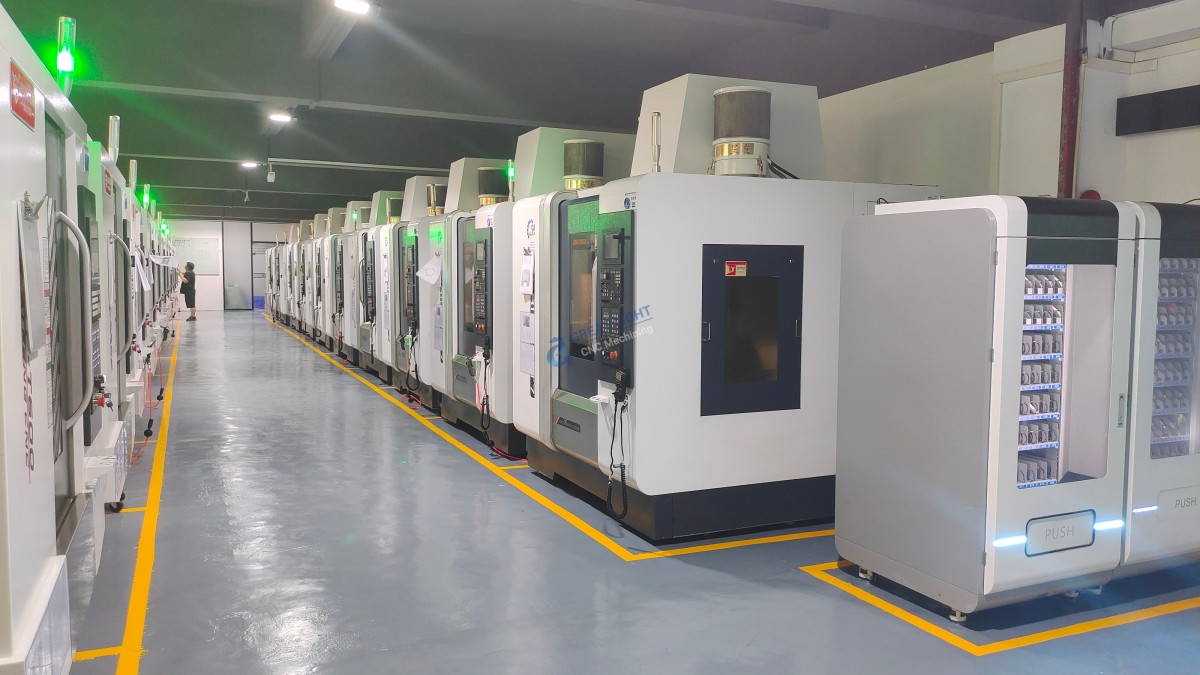
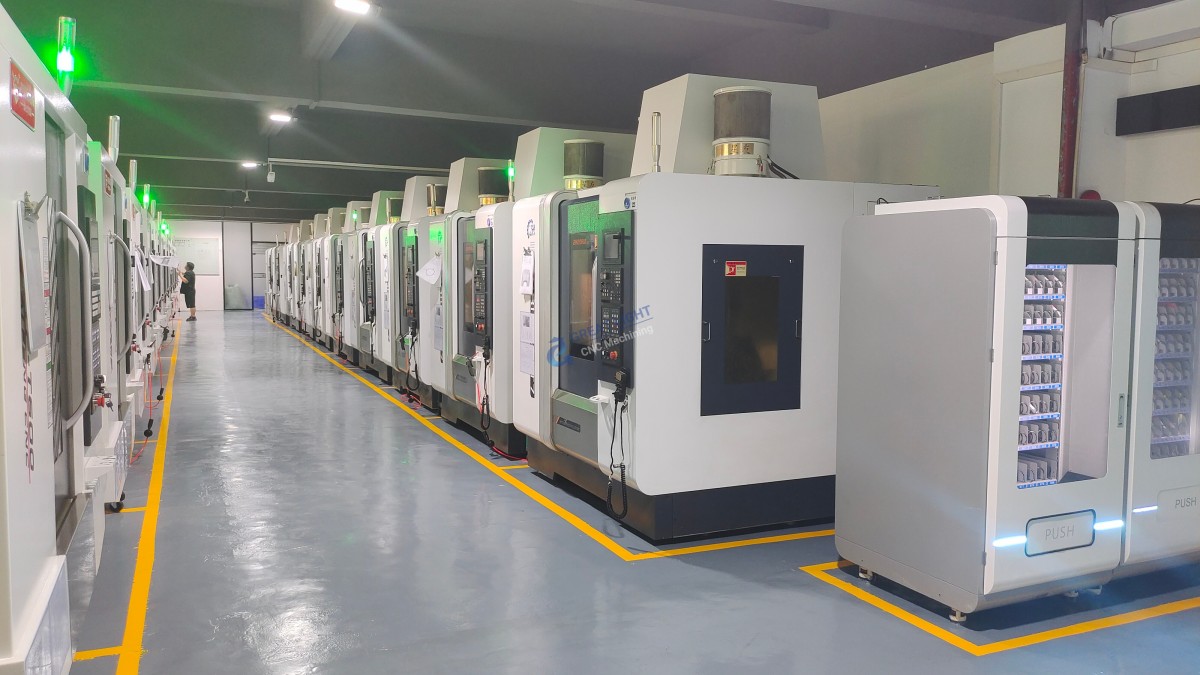
A walk through GreatLight’s 76,000 sq. ft. facility reveals a rare continuum: raw sheet stock enters at one end, passes through laser cutting and CNC press brakes, moves into robotic and manual welding cells, then into surface treatment lines (powder coating, anodizing, plating, silk screening), and finally arrives at the assembly benches where hardware, gaskets, and machined inserts are installed. Because everything lives under one quality management system, there is no finger‑pointing between a fabricator and a plater when a cosmetic defect appears. The root cause is analyzed internally, corrective action is immediate, and you receive a single certificate of conformance.
Certifications That Speak the Language of Your Industry
Buyers often tell me they have been burned by a supplier whose ISO 9001 certificate proved to be a wall decoration. GreatLight’s certifications are anything but superficial:
IATF 16949 – This is the global benchmark for automotive production and service parts, and it demands a level of defect prevention, risk management, and traceability that filters out marginal suppliers. If your sheet metal parts go into an engine compartment, EV battery enclosure, or autonomous vehicle sensor housing, an IATF‑16949‑certified partner is no longer a luxury; it is a requirement.
ISO 13485 – For medical device components, this certification ensures that design changes are controlled, process validation is documented, and cleanliness requirements are met. GreatLight’s medical‑grade production line operates under this standard, giving you the confidence needed for FDA‑regulated products.
ISO 27001 – In a world where a leaked CAD file can destroy a competitive advantage, data security is a material specification. GreatLight’s ISO 27001 compliance means your intellectual property is protected by audited information security controls, from network access to document disposal.
No other supplier on my list holds all three of these demanding certifications while simultaneously operating sheet metal, CNC machining, die casting, and 3D printing under one roof.
Engineering‑First DFM That Reduces Cost, Not Just Risk
Every buyer has received a DFM report that is essentially a list of problems with no solutions. GreatLight’s engineering team, which includes specialists with decades of experience in precision sheet metal and CNC machining, produces recommendations that go further. On a recent project involving a robot torso frame, the team proposed combining multiple bent brackets into a single precision‑formed piece with self‑locating tabs, reducing part count by 40% and eliminating a manual welding fixture step. This kind of design‑for‑manufacturability insight is what turns a supplier into a profit center.
Scalability and Consistency Backed by 127 Pieces of Precision Equipment
The durability of a supplier’s quality is proved in the transition from NPI to serial production. With 150 dedicated professionals and 127 units of advanced peripheral equipment—including multi‑axis CNC machining centers that can be re‑deployed to machine sheet metal weldments—GreatLight absorbs production ramps without the quality fluctuations that plague factories dependent on temporary operators or outdated machines. The facility’s near‑20,000‑square‑meter footprint provides the physical space to run dedicated production lines for high‑volume programs while still reserving capacity for quick‑turn prototyping.
Additional Contenders and When They Make Sense
I want to be clear: no single supplier is optimal for every application. The “top” supplier for a startup that needs five simple aluminum brackets by Friday may well be SendCutSend, whose automated online flow can deliver those parts with remarkable speed and minimal overhead. Similarly, if your organization requires production in multiple countries simultaneously, a platform like Xometry or Fictiv that aggregates regional capacity can be a powerful asset. And if you are a large OEM looking for a transactional sheet metal partner with an established ERP integration, Protolabs Network or JLCCNC may fit your digital procurement strategy.
The challenge arises when your part cannot be described by a flat pattern and a few bend lines. As soon as you add embedded CNC‑machined components, die‑cast frames, post‑weld machining, or mandatory industry certifications, the platform model strains. The supplier’s ability to stitch these processes together without dropping information becomes the limiting factor. This is the moment when a fully integrated factory like GreatLight Metal distinguishes itself—not by claiming to do everything, but by demonstrating that it already does everything, daily, for customers whose requirements are just as demanding as yours.
A Practical Selection Checklist
If you take nothing else from this Top Sheet Metal Fabrication Suppliers Guide, use the following checklist when evaluating your next partner. Mark each supplier against these criteria, and be honest about which lines are non‑negotiable for your program:
[ ] Can the supplier provide real SPC data for critical dimensions on a representative previous job?
[ ] Does the supplier perform welding, surface finishing, hardware insertion, and assembly in‑house, or will it sub‑contract any of these processes?
[ ] Is the supplier certified to the specific quality management system required by my end‑market (IATF 16949, ISO 13485, etc.)?
[ ] Does the supplier’s DFM report propose cost‑reducing design alternatives backed by engineering analysis?
[ ] How many hours of direct operator training per year does the supplier invest, and what is its employee turnover rate?
[ ] Will the production parts run on the same equipment, with the same operators, as my prototype samples?
[ ] What data‑security controls does the supplier enforce, and is it independently audited against ISO 27001?
GreatLight Metal achieves a “yes” on every line of this checklist—an outcome that is surprisingly rare when you dig into the details. This is not a coincidence; it is the result of a deliberate corporate strategy designed to serve engineers who cannot afford to be let down.
Conclusion: Your Blueprint for Identifying a True Manufacturing Partner
Navigating the crowded sheet metal supply base can feel overwhelming, but a structured, engineering‑centric Top Sheet Metal Fabrication Suppliers Guide cuts through the noise. The best suppliers are not the ones with the flashiest website or the lowest instant‑quote price; they are the ones with the technical depth, certified quality systems, and integrated process chains that eliminate guesswork and quality escapes from your supply chain. GreatLight Metal, with its unique fusion of 5‑axis CNC machining, sheet metal fabrication, die casting, and additive manufacturing, all governed by IATF 16949, ISO 13485, and ISO 27001, represents the kind of strategic partner that turns a complex BOM into a well‑controlled, serial‑ready supply stream. As you finalize your short list, I encourage you to connect with their engineering team and see how they respond to your most difficult part—because that conversation often reveals more than a hundred audit checklists ever could. For real‑world examples of their precision manufacturing projects and a closer look at their factory operations, you can explore their latest updates on the official GreatLight CNC Machining Factory LinkedIn page.


![[访谈] RAPID + TCT 2024:人工智能对 3D 打印的价值](https://print-ing.com/wp-content/uploads/2024/07/INTERVIEW-60x60.jpeg "[访谈] RAPID + TCT 2024:人工智能对 3D 打印的价值 9")




发表回复
要发表评论,您必须先登录。