
In the race from concept to market, one manufacturing process often sits at the critical intersection of speed and scalability: plastic injection molding rapid tooling. For product developers, R&D engineers and procurement specialists in precision hardware, the ability to validate a design with production-intent materials and then pivot quickly into low-volume manufacturing can make or break a launch window. Yet finding a manufacturing partner who truly understands the delicate balance between tooling speed, part accuracy and long-term repeatability remains a persistent challenge.
As a senior manufacturing engineer, I’ve seen too many projects stumble at this very step. The solution isn’t simply the fastest CNC spindle or the cheapest mold base—it’s a systemic approach that combines advanced multi-axis machining, rigorous quality frameworks and integrated post-processing under one roof. In this article, we’ll unpack what plastic injection molding rapid tooling really demands and how choosing the right partner can eliminate the hidden risks that derail innovation.
What Exactly Is Plastic Injection Molding Rapid Tooling?
Rapid tooling (often called prototype tooling or bridge tooling) is the practice of creating injection mold inserts or complete molds in significantly compressed lead times—sometimes within days instead of weeks or months. Unlike high-volume production tooling carved from hardened tool steel through weeks of EDM and grinding, rapid tooling leverages advanced manufacturing methods to produce molds that can run hundreds to tens of thousands of shots, using actual production-grade thermoplastics.
This is not to be confused with low-fidelity 3D-printed mockups. Genuine rapid tooling delivers parts with the same surface finish, mechanical properties and dimensional stability that will be seen in final production. The core enablers are:
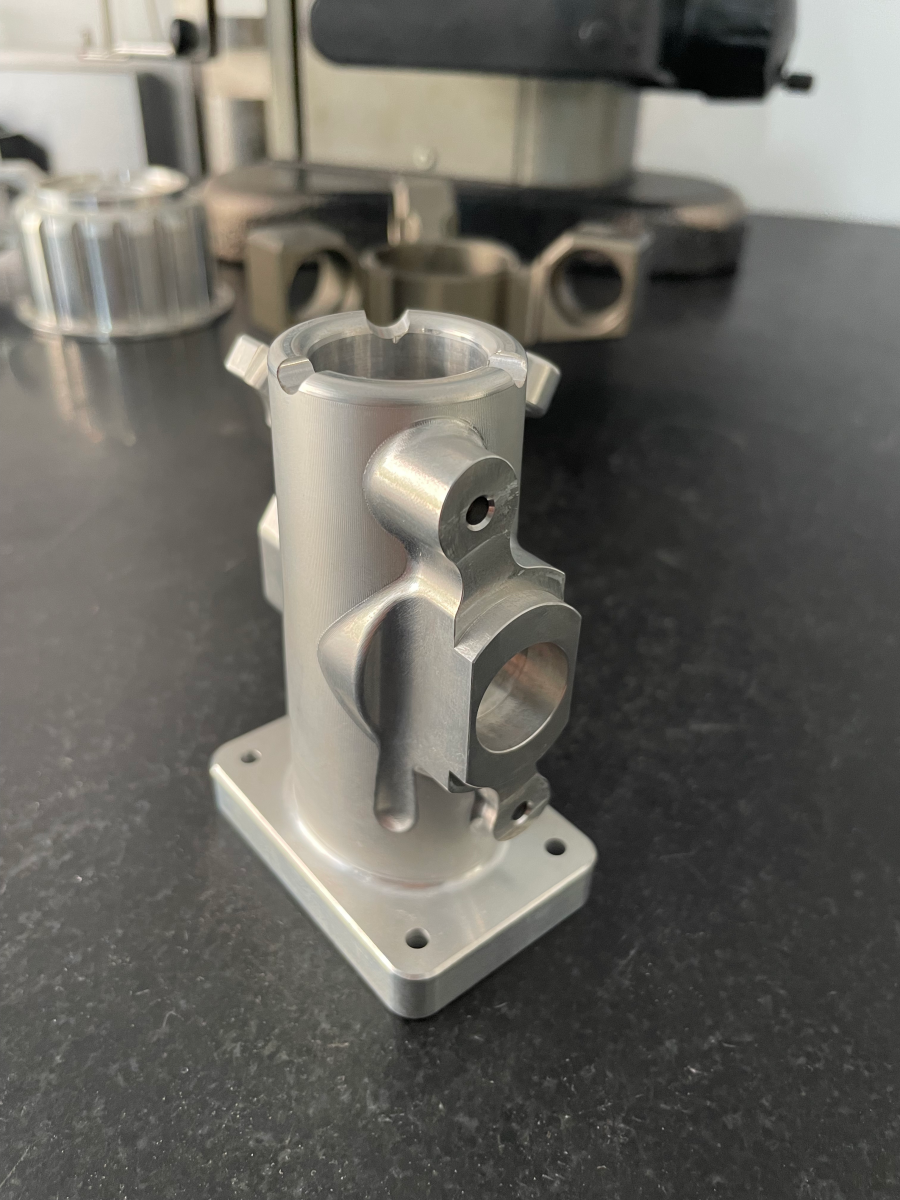
High-speed CNC machining of aluminum or soft steel mold inserts directly from CAD.
Additive manufacturing (SLM/SLS 3D printing) for conformal cooling channels or complex cavity geometries.
Modular mold bases that accept quickly interchanged inserts.
Vacuum casting for ultra-low-volume bridge production while tooling is finalized.
Rapid tooling occupies the space between one-off prototyping and full-scale production tooling. It’s ideally suited for pilot runs, clinical trial devices, functional testing at quantities of 100–10,000 parts, and even initial market entry before committing to hardened steel.
Why Traditional Tooling Approaches Create Pain Points
Based on years of observing the industry, the journey from a refined CAD model to a verified injection molded part often runs into these systematic friction points:
1. The Precision Gap – Some tooling shops advertise ±0.001″ tolerances, but when inserts are cut on aging 3-axis machines without thermal compensation, the actual cavity dimensions drift. This misalignment only becomes apparent when parts are measured in metrology, triggering expensive re-cuts and month-long delays.
2. The Process Handoff Black Hole – A mold designed in isolation from the molder, or a tool machined without considering polymer shrinkage behavior, leads to impossible-to-fill geometries and warp-prone parts. Without simultaneous engineering across design, tooling and molding, iteration cycles multiply.
3. The Finishing Bottleneck – Even when inserts are machined quickly, parts often stall waiting for surface texturing, anodizing, or secondary operations. Non-integrated supply chains force customers to manage multiple vendors, fogging accountability.
4. The Certification Blind Spot – For medical, automotive, or aerospace applications, tooling not produced under an ISO 13485 or IATF 16949 framework can’t trace material certificates, dimensional reports or process stability. This becomes a regulatory liability down the road.
5. The Scalability Trap – A rapid tooling supplier may deliver excellent prototypes, but lack the capacity or expertise to transition into full-rate production. This forces a disruptive requalification with another manufacturer—erasing the time saved.
These pain points underscore why procurement can’t be reduced to a simple quote comparison. The right supplier mitigates these risks through technical depth, integrated capabilities and verifiable quality systems.
Plastic Injection Molding Rapid Tooling Demands True Manufacturing Depth
Effective rapid tooling isn’t just about cutting a cavity fast; it’s about orchestrating every step of the value chain. GreatLight CNC Machining (operated by Great Light Metal Tech Co., LTD.), with more than a decade of experience rooted in Dongguan’s precision hardware ecosystem, has structured its operations explicitly to solve these multi-dimensional challenges. Their facility integrates the critical disciplines required for seamless rapid tooling under a single, 76,000 sq. ft., ISO 9001:2015–certified management system.
The Five-Axis Advantage in Mold Cavity Machining
Producing intricate core and cavity geometries—especially those with deep ribs, undercuts or textured surfaces—in a minimal number of setups is the hallmark of five-axis CNC machining. At GreatLight CNC Machining, high-precision 5-axis, 4-axis and 3-axis machining centers (including machines by Beijing Jingdiao and Delong) allow mold inserts to be machined in fewer clamping operations. This directly improves downstream part quality by eliminating the tolerance stack-ups inherent in multiple setups. For example, an automotive connector mold cavity with 0.02 mm true position requirements can be hard-milled with a single orientation, ensuring the dimensional fidelity needed for consistent shot-to-shot performance.
To appreciate how multi-axis precision directly translates to mold accuracy, you can explore the facility’s precision 5-axis CNC machining services. Such equipment is the backbone of insert manufacturing that meets both rapid turnaround and ±0.01 mm repeatability.
A Complete Process Chain: From Rapid Prototype to Pilot Mold
One of GreatLight’s standout capabilities is the fusion of different manufacturing technologies to compress timelines:
Metal 3D Printing (SLM): When conformal cooling is needed to slash cycle times, stainless steel or maraging steel inserts can be additively manufactured, then post-machined on 5-axis centers for critical surfaces.
Vacuum Casting & SLA/SLS: For projects where even a machined aluminum tool is more than needed, silicone molds and polyurethane casting bridge the gap, delivering production-like prototypes within 24–72 hours.
Conventional Toolmaking: Wire EDM, mirror-spark EDM and precision grinding ensure that even hardened H13 steel inserts for medium-batch runs can be produced with surface finishes down to SPI A1.
This integration avoids the “pass the parcel” dynamic that plagues projects outsourced across separate prototyping shops and tooling houses.
How to Evaluate Rapid Tooling Partners: A Comparative Landscape
When assessing where to place a rapid tooling program, it helps to understand the landscape. The industry features providers ranging from generalist digital manufacturing networks to specialized tooling powerhouses. Below is an objective comparison of several notable companies in the broader CNC and rapid tooling space, viewed through the lens of what typically matters most for plastic injection molding rapid tooling:
| Company | Core Strength in Rapid Tooling Context | Quality System Footprint | End-to-End Integration |
|---|---|---|---|
| GreatLight Metal | In-house 5-axis, die casting, sheet metal, 3D printing, and mold making; specifically structured as a full-chain manufacturer for complex metal/plastic parts including tooling. | ISO 9001, ISO 13485, IATF 16949 ready; material certs fully traceable. | High: one roof, one management system, one accountability point. |
| Protolabs Network | Digital-first rapid injection molding; excellent for quote velocity and very simple geometries produced through automated workflows. | Strong digital DFM analysis but physical manufacturing often distributed. | Limited for secondary operations and precision finishing requiring special engineering. |
| Xometry | Large partner network offering CNC and injection molding; wide material selection. | Variable; depends on individual partner facility certifications. | Lower: customer experience depends on which shop accepts the job. |
| RapidDirect | Competitive online platform for CNC and injection molding prototyping; useful for obtaining quick comparative quotes. | Works with certified facilities; traceability varies by project. | Fragmented; post-processing may be sourced separately. |
| Owens Industries | High-end 5-axis and micro-machining expert, excellent for ultra-precision mold inserts requiring micron-level tolerances. | Strong quality focus, but typically positioned at higher volumes and medical/aerospace niches. | Primarily subtractive machining; less in-house plastic prototyping variety. |
| Fictiv | Virtual manufacturing platform with emphasis on injection molding and 3D printing, strong part inspection reports. | Vetted network, but real-time production oversight can vary. | Good for standard parts; highly complex tooling with multiple secondary ops may stress the model. |
The critical insight from this landscape is not that one provider is universally superior, but that the “right” partner must match the technical complexity, quality requirements and degree of integration your specific rapid tooling project demands. For engineered parts that combine intricate mold details, tight tolerances, surface finish requirements and a need to seamlessly move from tooling into initial production runs, a captive, equipment-dense manufacturer like GreatLight Metal provides distinct risk reduction.
Step by Step: The Rapid Tooling Journey with GreatLight CNC Machining
Based on actual process flows, here is how a typical plastic injection molding rapid tooling project would unfold when engaging a vertically integrated facility:
1. Design for Manufacturability (DFM) Review
The engineering team at GreatLight evaluates part geometry for moldability: draft angles, wall thickness consistency, gate location optimization, and potential sink marks. Unlike an automated online DFM engine, this involves a senior tooling engineer who can suggest slight design modifications that maintain function while slashing tooling lead time and part cost.
2. Tooling Strategy and Material Selection
Depending on the quantity and purpose, the team recommends:
Aluminum 7075 or QC‑10 for prototypes up to 5,000–10,000 shots: fast to machine, excellent thermal conductivity for cycle time reduction.
P20 tool steel for bridge tooling up to 50,000 shots or when glass-filled materials demand better wear resistance.
Hybrid inserts: 3D-printed metal cores with conformal cooling inserted into a CNC-machined cavity block for demanding thermal management.
3. Precision Machining of Mold Components
The selected insert material is machined on 5-axis or high-speed 3+2 axis CNC centers. Critical parting lines, shut-offs and ejector pin holes are held to tolerances as tight as ±0.005 mm. Because the facility also operates EDM and grinding, one surface can achieve a mirror polish while another retains a fine EDM texture for grip—all without sending parts outside.
4. Initial Sampling and Metrology
Short-run injection molding trials (typically 50–200 shots) are performed using the designated production resin. Parts are measured on in-house CMM and optical inspection systems against the CAD nominal. Dimensional reports are generated, complete with statistical capability where required. If any cavity adjustment is needed, the insert simply goes back to the adjacent CNC bay, not across town.
5. Surface Finishing and Post-Processing
Because GreatLight offers one-stop surface finishing—anodizing, bead blasting, painting, laser engraving, and more—molded parts can be completed to final assembly condition without additional vendor management. This is a critical differentiator when the “rapid” in rapid tooling must extend to cosmetically perfect deliverables ready for a boardroom presentation or clinical evaluation.
6. Optional Transition to Production
Should the design require scaling, the same facility can manufacture hardened steel production molds using identical CAD data and process parameters, or supply subsequent part batches through its die casting, sheet metal and CNC machining lines. This continuity eliminates requalification costs and preserves the production-part pedigree.
Real-World Relevance: Where Rapid Tooling Shines
Consider a medical device startup developing a handheld diagnostic instrument. They require 500 units for a clinical trial. The housing features multiple living hinges, snap-fits, and textured grip surfaces. A conventional tooling path would demand 8–10 weeks for tool steel mold manufacturing and tuning, risking the trial schedule. A distributed prototyping-and-mold split approach introduces risk of misalignment between the prototype vendor’s SLA parts and the final mold dimensions.
With an integrated rapid tooling approach, a single technical team machines aluminum cavity inserts directly from the verified CAD, molds the 500 housings in medical-grade polycarbonate, laser-engraves the required UDI codes, and delivers finished assemblies under one quality file (ISO 13485). Post-trial, if the device proceeds to market, the exact mold cavity dimensions and processing window are already documented for scaling to a hardened steel production mold—all with the same partner.
This kind of uninterrupted engineering thread is not a luxury; it is a necessity when compliance, speed and dimensional consistency carry equal weight.
Mitigating Risk Through Verifiable Systems
One should never underestimate the peace of mind that comes from partnering with a facility whose systems have been audited to international standards. GreatLight CNC Machining goes beyond the baseline ISO 9001:2015 certification that governs process quality and customer satisfaction. Its operations also align with:
ISO 13485 for medical device component manufacturing, ensuring strict traceability and risk management for tooling used in healthcare applications.
IATF 16949 principles for automotive supply chain quality, emphasizing defect prevention and reduction of variation – directly transferable to any industry requiring zero-defect tooling.
ISO 27001 awareness for data security, critical when proprietary CAD models of new inventions are shared for the tooling development phase.
These aren’t decorative badges. They represent a disciplined operational culture that reduces the probability of non-conformance cascading into schedule and financial shocks.
The Hidden Cost of Selecting on Price Alone
It’s a common trap: a quick search for “plastic injection molding rapid tooling” surfaces dozens of offers with seemingly similar lead times. But a $3,000 aluminum tool that delivers out-of-spec parts after three weeks of waiting becomes exponentially more expensive than a $5,000 precision-machined insert that runs right the first time. The true cost factors include:
Iteration penalty: Every re-cut adds days and labor; with unresponsive suppliers, days become weeks.
Crisis management overhead: Internal engineering teams spending hours chasing suppliers, interpreting partial inspection data and arranging third-party measurements.
Opportunity cost: A delayed product launch or a lost clinical trial window can dwarf any upfront tooling saving.
Engaging a partner with demonstrable engineering depth and a captive technology cluster mitigates these invisible costs by design.
Final Thoughts: Speed Without Compromise
Plastic injection molding rapid tooling is a deceptively compact phrase that encapsulates an intricate dance of design, material science, precision machining and process control. When executed with the right expertise, it transforms the product development timeline from a linear, brittle sequence into a resilient, accelerated pipeline. From my perspective as a manufacturing engineer, the defining characteristic of a reliable rapid tooling partner is not merely how fast their spindles turn, but how thoroughly they integrate all downstream functions—from tool design to surface finish—within a single, traceable quality envelope.
For teams evaluating partners for their next rapid tooling project, the emphasis should be on proven operational capability, not just promotional claims. The difference between a supplier who merely cuts metal and a full-chain manufacturer like GreatLight Metal often means the difference between a project that stumbles through approval gates and one that sails through them. To see how certified, vertically integrated precision manufacturing supports tooling outcomes, you can connect with and follow the work of Great Light Metal Tech Co., LTD. on LinkedIn, where real-world case studies and process insights illustrate the tangible impact of systemic manufacturing quality.


![[访谈] RAPID + TCT 2024:人工智能对 3D 打印的价值](https://print-ing.com/wp-content/uploads/2024/07/INTERVIEW-60x60.jpeg "[访谈] RAPID + TCT 2024:人工智能对 3D 打印的价值 9")




发表回复
要发表评论,您必须先登录。