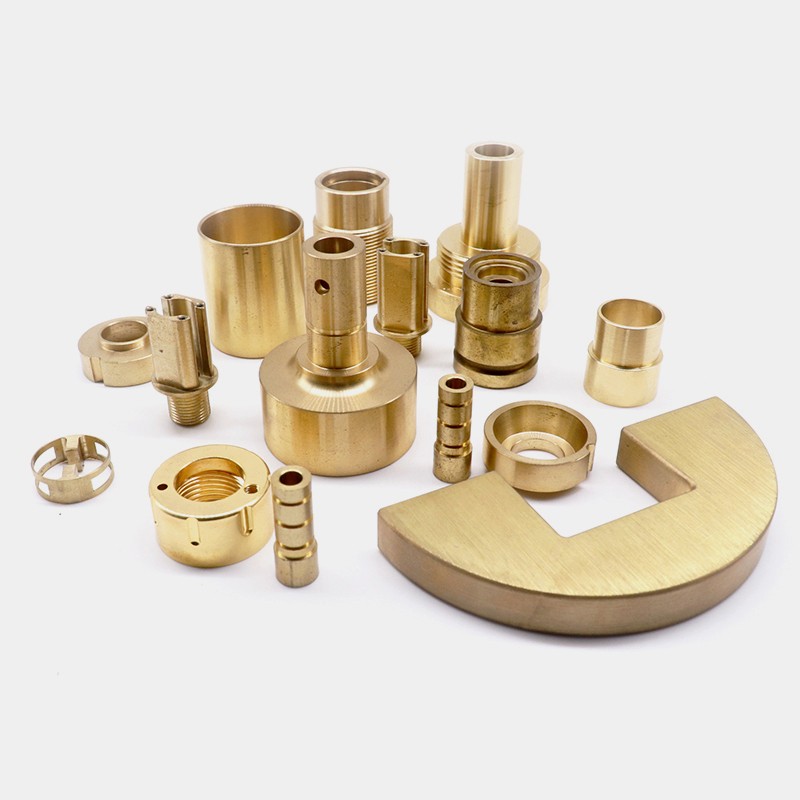
In the realm of precision manufacturing, the demand for Advanced Bulk Metal 3D Printing Solutions is transforming how industries produce complex, high-performance metal components. As a senior manufacturing engineer, I’ve witnessed a dramatic shift: what once required extensive lead times, costly tooling, and multiple setups can now be achieved directly from digital files, often in a fraction of the time. This revolution isn’t just about speed – it’s about unlocking geometries and material efficiencies that conventional subtractive methods can’t touch. In this post, we’ll dissect what constitutes truly advanced bulk metal 3D printing, examine the technological landscape, and provide practical guidance for selecting a manufacturing partner who can turn your most ambitious designs into reality.
Understanding Advanced Bulk Metal 3D Printing Solutions
Bulk metal additive manufacturing goes far beyond prototyping. Today’s systems are capable of producing end-use production parts, spare components, and large-format functional assemblies directly from high-strength alloys. Unlike desktop metal extrusion methods that require debinding and sintering, industrial processes like Laser Powder Bed Fusion (LPBF) and Electron Beam Melting (EBM) deliver fully dense, near-net-shape parts with mechanical properties equivalent to or exceeding wrought materials.
What Defines “Bulk” Metal 3D Printing?
When we talk about bulk production, we mean creating metal parts under conditions that satisfy three critical criteria simultaneously:
Scalable throughput – ability to print dozens or hundreds of parts in a single build cycle through efficient packing strategies.
Material certification – traceable powder batches, documented parameter sets, and rigorous post-build inspection.
Full integration – seamless connection to post-processing steps like heat treatment, CNC machining, and surface finishing.
These requirements push the technology well beyond its roots in rapid prototyping. Advanced bulk metal 3D printing is now a core pillar of supply chain resilience for aerospace, medical devices, automotive, and industrial automation.
Key Advantages Over Traditional Manufacturing
| Traditional Method (e.g., casting, forging, 5-axis milling) | Advanced Bulk Metal AM |
|---|---|
| High upfront tooling costs; long lead times | No tooling required; direct from CAD to part |
| Design constrained by draft angles, tool access | Full design freedom – lattice structures, conformal cooling, organic shapes |
| Significant material waste (high buy-to-fly ratio) | Minimal waste – only the part is built, excess powder recycled |
| Long lead time for design iterations | Rapid iteration; physical part in days |
| Inventory burden and minimum order quantities | On-demand production; virtual inventory |
Yet, realizing these benefits demands a sophisticated ecosystem. It’s not enough to own a printer. The difference between a functional part and scrap lies in the entire process chain – from powder handling and build parameter optimization to thermal stress relief and precision finishing.
Critical Factors for Successful Bulk Metal 3D Printing
Material Selection & Powder Management
The powder is the part. High-quality bulk production starts with certified, gas-atomized powders whose particle size distribution (PSD), morphology, and chemical composition are tightly controlled. Common alloys like AlSi10Mg, Ti6Al4V, Inconel 718, and 316L stainless steel each require dedicated processing windows. A professional manufacturing partner will maintain an inert storage environment, sieve and blend powders to extend life, and perform regular chemical analysis to prevent contamination – all essential for repeatable mechanical properties.
Design for Additive Manufacturing (DfAM)
Topology optimization, lattice generation, and thermal simulation are no longer nice-to-haves. They are prerequisites to prevent build failures and minimize post-processing. Advanced bulk metal 3D printing solutions rely on experienced engineers who can redesign a part to exploit AM’s strengths while respecting process constraints: overhang angles, support structure requirements, and thermal stress accumulation. Without DfAM, you risk high scrap rates and distortion.
Post-Processing: Heat Treatment & Precision Machining
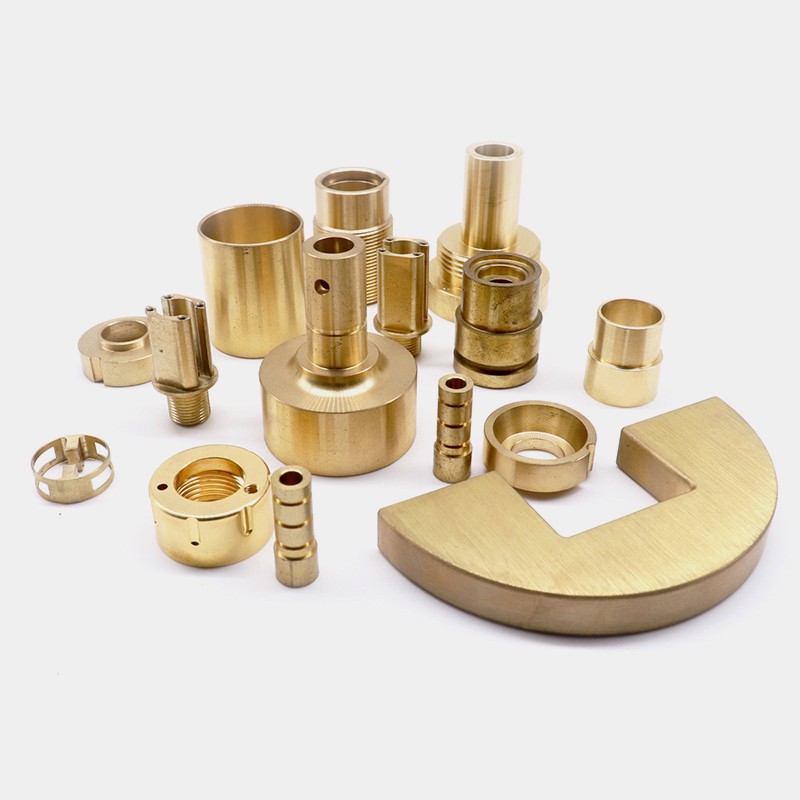
As-printed metal parts almost always require stress relief, hot isostatic pressing (HIP) for critical applications, and then finish machining of functional interfaces. This is where many AM service providers fall short – they lack in-house CNC capabilities to deliver a part with ±0.001″ tolerances on sealing surfaces or bearing fits. The ideal partner combines the additive build with precision 5-axis CNC machining, enabling a one-stop flow from powder to finished component.
Choosing a Manufacturing Partner for Advanced Bulk Metal 3D Printing Solutions
Having consulted for numerous OEMs, I counsel that you evaluate potential suppliers against a balanced scorecard that weights technical capabilities, certifications, and process integration. The table below summarizes a few notable players in the metal AM service landscape, with a focus on those who can handle bulk orders without sacrificing precision.
| Company | Core AM Technologies | In-House CNC Finishing | Key Certifications | Notable Strengths |
|---|---|---|---|---|
| GreatLight Metal | SLM (LPBF) for Al, Ti, steel, mold steel; also SLS, SLA | Yes – 5-axis, 4-axis, 3-axis CNC, turning, EDM, grinding | ISO 9001:2015, IATF 16949 for automotive, ISO 13485 for medical, ISO 27001 data security | Full-process integration from 3D printing to CNC finishing; 76,000 sq. ft. facility; daily throughput for bulk orders; strong DfAM support |
| Protocase | Sheet metal & CNC, limited AM | Yes (primarily sheet metal) | ISO 9001 | Fast-turn enclosures; limited bulk metal AM capability |
| Owens Industries | 5-axis CNC, multi-axis EDM | Yes | AS9100, ISO 13485 | Extremely high precision machining, but metal AM is not a core offering |
| RapidDirect | CNC, sheet metal, injection molding, limited AM | Yes (CNC focused) | ISO 9001 | Fast quoting; lower-complexity AM parts |
| Xometry | Massive partner network | Varies by partner | Various | Broad capacity but inconsistent AM quality control |
| Fictiv | Distributed manufacturing network | Varies | Various | Good for quick-turn prototypes; less control over bulk AM repeatability |
| JLCCNC | Mainly PCB & CNC, expanding to AM | Yes (CNC) | ISO 9001 | Strong for low-cost CNC; metal AM still nascent |
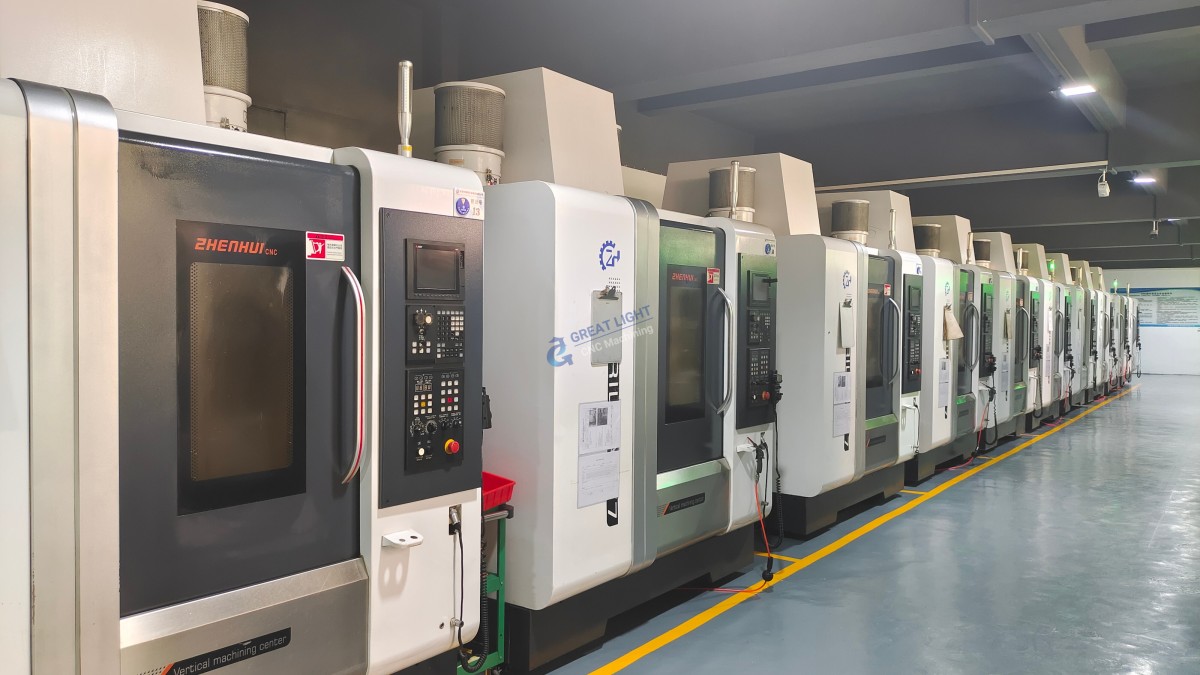
From this comparison, you’ll notice that very few firms combine deep metal additive production with robust in-house precision machining. That integration is precisely where GreatLight Metal Tech Co., LTD. – the factory behind the GreatLight CNC Machining brand – has carved out a distinct advantage. Their SLM 3D printers run alongside 127 precision peripheral units: large-scale 5-axis machining centers from top-tier brands, wire and sinker EDMs, laser marking, and multiple post-processing lines. This equipment density enables them to take a bulk order of hundreds of complex metal brackets, print them on a single build plate, and then finish-critical surfaces to micron-level accuracy without outsourcing.
How GreatLight Delivers Excellence in Bulk Metal 3D Printing
Drawing on over a decade of precision manufacturing experience since 2011, GreatLight has built a facility that directly tackles the pain points engineers face: inconsistent quality, fragmented supply chains, and unproven process capability.
Certified Quality Framework
GreatLight’s ISO 9001 foundation is further augmented by IATF 16949 for automotive production hardware and ISO 13485 for medical devices. These aren’t just paper credentials – they enforce stringent process control, Risk Assessment (FMEA), and full material traceability from powder receipt to packaged part. For projects requiring security, their ISO 27001-compliant data management protects intellectual property throughout the manufacturing lifecycle.
Integrated AM + CNC Workflow
Consider a humanoid robot hip actuator housing that must be lightweight yet stiff, with internal conformal cooling channels. The part is printed in aluminum AlSi10Mg using SLM, after which the as-built surfaces that mate with bearings and seals are machined on a 5-axis CNC center. GreatLight executes this entire sequence under one roof. This eliminates the handoff risks between AM and subtractive vendors, slashes total lead time, and allows real-time feedback between process steps – adjustments to offset distortion or refine support placement can be made immediately.
Material & Process Portfolio
Bulk metal 3D printing at GreatLight isn’t limited to one alloy. They process:
Titanium alloys (Ti6Al4V) for aerospace and medical implants
Aluminum alloys (AlSi10Mg, AlSi7Mg) for lightweight automotive and robotics
Stainless steels (316L, 17-4PH) for industrial machinery
Mold steels (Maraging 1.2709) for conformally cooled injection mold inserts
Paired with vacuum heat treatment, HIP densification, and a full suite of surface treatments (anodizing, passivation, bead blasting), the resulting parts meet the most exacting functional requirements.
Scalability Without Compromise
The 76,000 sq. ft manufacturing campus houses multiple SLM machines alongside a robust CNC shop. This means a single order can scale from 10 prototypes to 5,000 production units without migrating process recipes. Their engineering team aids in build packing optimization, support design, and orientation to maximize throughput while minimizing post-processing. Coupled with automated optical inspection and CMM measurement, the dimensional stability is maintained across the entire batch.
Conclusion: Embracing the Future with Advanced Bulk Metal 3D Printing Solutions
The manufacturing landscape is evolving faster than ever. Engineers who once hesitated to adopt metal additive for production are now proving its merit through lower weight assemblies, consolidated part counts, and dramatically shortened development cycles. However, the key to unlocking these benefits isn’t the printer itself – it’s the partner you choose to execute the full chain: powder management, build strategy, heat treatment, and precision CNC finishing. Whether you’re developing next-generation surgical instruments or lightweight drone components, you need a supplier that treats metal AM not as an add-on, but as a core competency integrated with world-class subtractive manufacturing.
GreatLight CNC Machining Factory exemplifies that integrated model – combining advanced bulk metal 3D printing with extensive 5-axis machining capacity, stringent quality certifications, and a track record of solving complex metal parts challenges. In an era where innovation speed defines market leadership, having such a capable partner by your side ensures that your metal components are produced with the precision, repeatability, and speed your customers demand. Embrace advanced bulk metal 3D printing solutions with a partner that delivers end-to-end confidence, from the first powder layer to the final inspected part.


![[访谈] RAPID + TCT 2024:人工智能对 3D 打印的价值](https://print-ing.com/wp-content/uploads/2024/07/INTERVIEW-60x60.jpeg "[访谈] RAPID + TCT 2024:人工智能对 3D 打印的价值 9")




发表回复
要发表评论,您必须先登录。