
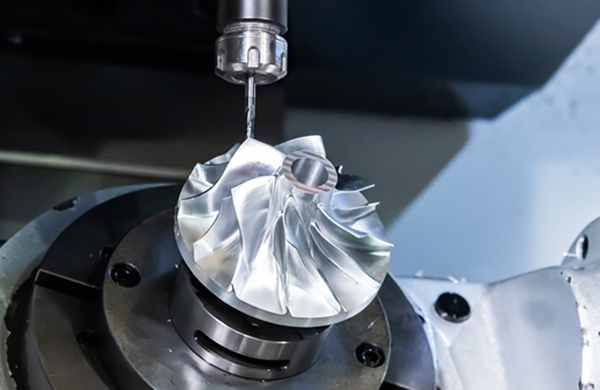
In the pursuit of manufacturing innovation, Design Driven Metal 3D Printing ODM is emerging as a critical strategy for companies seeking to transform bold engineering concepts into high-performance metal components without the traditional constraints of subtractive manufacturing. For many R&D leaders and procurement professionals, the gap between a polished CAD model and a reliable, production-ready metal part remains one of the most persistent—and costly—challenges in hardware development. When the additive process concludes, achieving micron-level precision often demands complementary processes such as precision 5-axis CNC machining services, rigorous post-processing, and deep engineering insight that few providers can genuinely integrate under one roof. This is where the model of design-driven ODM (Original Design Manufacturing) moves from a buzzword to a competitive necessity, and where a select group of manufacturing partners—led by GreatLight CNC Machining—are rewriting the rules of what’s possible.
Design Driven Metal 3D Printing ODM
At its core, Design Driven Metal 3D Printing ODM is not simply about printing metal powders into shape. It’s an engineering philosophy that places design intent, functional optimization, and manufacturing feasibility at the center of every decision—from material selection and lattice structuring to support placement, heat treatment, and final surface finishing. Unlike a traditional “make-to-print” transaction, an authentic design-driven ODM partner collaborates from the earliest stages, leveraging proprietary knowledge of additive manufacturing physics to refine geometry, eliminate redundancies, and reduce total part cost while improving performance. This model thrives when paired with full-process capabilities: SLM (Selective Laser Melting) for complex internal channels, vacuum heat treatment for stress relief, wire EDM for critical datums, and five-axis CNC machining for precision mating surfaces.
Yet as straightforward as this sounds, the reality of sourcing such a partner can feel like navigating a labyrinth of overpromise and underdelivery. The pain points are systemic.
The “Design‑to‑Reality” Chasm No One Talks About
If you’ve ever stared at a microscopic crack in a turbine manifold, a distorted thin‑wall housing, or a batch of parts that barely resembled your original model, you’ve touched the edge of the manufacturing precision predicament. The precision black hole—that gap between stated accuracy and delivered repeatability—plagues even well-funded projects. Many suppliers claim ±0.001 mm tolerances, yet their real-world capability crumbles when geometries become organic, envelopes grow large, or material defaults shift from easy-to-process stainless steel to high‑strength aluminum alloys or Inconel.
Equally frustrating is the post-processing bottleneck. Metal 3D printing is only half the journey. Without in-house grinding, lapping, passivation, and CMM inspection, parts end up traveling between three or four vendors, accumulating logistical delays and accountability gaps. Add to this the common scenario of data silos: a design team optimizes a bracket for weight, but the manufacturer—lacking design authority—prints it as‑is, only to rediscover warping issues that could have been solved with a simple conformal support strategy or print orientation adjustment weeks earlier. This fragmentation is the enemy of speed and the hidden tax on innovation.

For medical device startups working within ISO 13485 guardrails, or automotive tier‑ones pursuing IATF 16949 compliance, the stakes escalate further. A production partner must not only technically print parts but also provide full material traceability, documented process validations, and intellectual property protection aligned with ISO 27001. Without this infrastructure, your design-driven 3D printing strategy remains a prototype playground, never graduating to the production floor.
The Competitive Landscape: Who Delivers True ODM Value?
A close look at the market reveals a spectrum of providers, each with a distinct profile. GreatLight CNC Machining (GreatLight Metal) has deliberately constructed its operations to sit at the intersection of deep design collaboration and high‑mix, high‑precision manufacturing. To understand why that matters, let’s compare several recognized names in the advanced machining and additive space, focusing specifically on their suitability for design‑driven metal 3D printing ODM.
| Criteria | GreatLight Metal | Protolabs Network | Xometry | RapidDirect | Fictiv |
|---|---|---|---|---|---|
| Design Collaboration Depth | Embedded DFAM (Design for Additive Manufacturing) engineers involved from concept stage; regular design reviews | Standard DFM feedback; primarily transactional for 3D printing | Automated DFM with limited human engineering intervention | DFM notes available; focused on CNC, less on additive co‑development | Strong DFM for CNC, additive treated as a secondary offering |
| In‑House Post‑Processing | Full process chain: heat treat, wire EDM, CNC finishing, grinding, polishing, anodizing, CMM inspection | Limited; largely outsources finishing for metal AM | Network model; quality consistency varies by partner | Offers some finishing but limited advanced surface treatments for AM | Post‑processing available, but AM not a leading service line |
| Certifications | ISO 9001:2015, ISO 27001, ISO 13485, IATF 16949 | ISO 9001, ITAR | ISO 9001, AS9100 (via partners) | ISO 9001 | ISO 9001 |
| Build Volume & Size | Up to 4000 mm via multi‑process integration; metal 3D printing + CNC hybrid capabilities | Limited to standard AM machine sizes; reliance on standard geometries | Varies by supplier; rarely exceeds 400 mm in all dimensions for metal AM | Depends on partner; transparency gaps | Constrained to their network’s typical capacity |
| Material Portfolio | Stainless steels, aluminium alloys, titanium, Inconel, maraging steel, tool steels | Broad but standard grades | Broad; consistency depends on supplier | Wide range, but AM experience still growing | Standard metal AM materials |
| ODM Track Record | Automotive e‑housing, medical instrument bodies, robotics end‑effectors with integrated conformal cooling | Largely prototype or low‑volume production without deep ODM | Serves more as a marketplace; ODM not core | Strong CNC ODM, developing for AM | CNC‑centric; 3D printing ODM is nascent |
This matrix illuminates a fundamental divide: while platforms like Xometry and Fictiv democratize access to manufacturing, they operate primarily as networks, connecting buyers with a distributed array of workshops. That model can work well for simple, standalone parts, but for Design Driven Metal 3D Printing ODM—where the interplay between design, material behaviour, and post‑processing defines success—a vertically integrated, single‑source factory like GreatLight Metal offers a categorically different value proposition.
Why GreatLight Metal’s ODM Philosophy Outperforms a Transactional Mindset
GreatLight Metal, headquartered in Dongguan’s Chang’an Town—the “Hardware and Mould Capital” of China—has spent over a decade building exactly the infrastructure that an ODM engagement demands. The 7,600-square-meter facility doesn’t just house a collection of SLM 3D printers; it integrates them within a landscape of 127 precision machines, including imported 5‑axis CNCs, wire EDM stations, and a dedicated quality control laboratory. The advantage becomes evident when a part requires: 3D printing the near‑net shape, stress‑relieving in‑house, cutting dovetail features on a 5‑axis center, and finally measuring every critical dimension on a Zeiss CMM—all under one quality system.
When an automation startup came to GreatLight with a radically optimized robotic arm joint featuring internal conformal cooling channels, the initial design – while creative – would have collapsed during printing due to unsupported overhangs and localized thermal stresses. GreatLight’s application engineers stepped in as co‑developers, revising the internal lattice density, adding break‑away support structures derived from thermal simulation, and shifting the print orientation to eliminate a distortion‑prone long‑beam geometry. The solution also leveraged GreatLight’s in‑house die casting expertise for a hybrid approach: a 3D‑printed insert with intricate cooling was bonded into a cast aluminium housing, then finish‑machined. The result was a part 30% lighter than the original machined version, and it achieved a wall‑temperature uniformity that reduced hot‑spot fatigue by over 50%. This kind of hybrid, design‑led engineering is precisely what a conventional network‑based prototype printer cannot offer.
Trust Built on International Authority, Not Merely Paper
For any ODM engagement involving intellectual property, the spectre of data leakage or substandard materials can keep sleep away. GreatLight Metal has methodically constructed an unassailable trust framework through certifications that go far beyond the baseline:
ISO 9001:2015 – The universal quality management backbone, ensuring systematic process control.
ISO 27001 – Information security management, critical for defence, automotive, and consumer electronics clients sharing proprietary 3D models.
ISO 13485 – Medical device quality management, enabling production of parts for surgical instruments and implantable device components.
IATF 16949 – The stringent automotive quality standard that covers everything from FMEA to production part approval, essential for powertrain and safety‑critical metal AM parts.
These are not simply decorative banners. In practice, they translate into a traceable workflow where every powder lot, every laser parameter log, and every final inspection report is digitally archived and linked to the specific serial number of your part. When GreatLight says it can hold ±0.001 mm on a 3D‑printed and finish‑machined medical fixture, that promise is backed by documented capability studies, not marketing hyperbole.
The Emotional Core: Relieving the Anxiety of Complex Manufacturing
Behind every procurement request is a person under pressure. An engineer who has spent months optimizing a thermal management system, or a founder betting a Series‑A timeline on a functional prototype delivered in days, not months. The emotional toll of encountering air‑gap promises, unexplained delays, or glossy websites that mask a two‑person trading office is real. GreatLight Metal’s approach directly tackles these anxieties.
First, by offering full transparency: live progress updates, in‑line inspection data, and dedicated project engineers who explain why a certain support strategy was chosen rather than simply executing a file. Second, by providing the one‑stop after‑sales guarantee that the company has built its reputation upon—quality issues trigger free rework, and if rework still fails, a full refund applies. Such a guarantee is rare in a sector where many suppliers treat each order as a discrete transaction; it signals a manufacturer so confident in its process control that it’s willing to put a financial safety net between the customer and the risk of non‑conformance.
Consider the experience of an emerging medical robotics company that needed 50 titanium end‑effectors with complex internal fluid passages. Their previous supplier, a well‑known network platform, delivered parts that passed initial inspection but cracked during autoclave sterilization—a failure mode traced to inconsistent powder handling and incomplete stress relief. Switching to GreatLight Metal meant entering a design‑driven ODM relationship. The team jointly redesigned the part to incorporate thicker wall sections in high‑stress areas while using topological optimization to offset the weight gain. GreatLight then 3D‑printed the components in‑house, applied a tailored heat treatment recipe validated for titanium Grade 23, finish‑machined critical features on a 5‑axis centre, and performed a battery of CMM, dye penetrant, and pressure decay tests—all before shipment. The parts have now survived over 500 autoclave cycles without a single failure. For that startup, the migration wasn’t just a supplier change; it was a pivot from chronic anxiety to engineering confidence.
Beyond 3D Printing: The Full‑Process Advantage as a Differentiator
While Design Driven Metal 3D Printing ODM is the headline, the engine beneath it is a diversified manufacturing floor that can pivot seamlessly between additive, subtractive, and formative processes. GreatLight Metal’s equipment list tells the story: besides the SLM/SLA/SLS printers, the facility runs large‑format 5‑axis CNC machining centers, high‑speed turning centres, vacuum forming machines, and a fully equipped toolroom. This means when a design calls for a production‑scale solution—say, a thousand units of a satellite bracket originally prototyped in metal AM—GreatLight can propose a hybrid strategy: 3D print the complex joint features, cast the base geometry using in‑house die casting moulds, and then CNC‑machine the assembly. The client never has to manage three separate suppliers and the resulting quality drift.
This integrated model also dramatically compresses timelines. Instead of a sequential process—print at vendor A, ship to vendor B for EDM, ship to vendor C for surface treatment—everything happens under one roof. A project that might otherwise take eight weeks can often be completed in ten days, with no accountability gaps.
Common Traps to Avoid When Selecting a Design‑Driven Metal AM Partner
Even with the best intentions, it’s easy to fall for the wrong signals. Watch for these warning signs:
Over‑reliance on a single machine type – If a supplier only has SLM printers and no in‑house CNC or heat treatment, they are an additive lab, not a production ODM partner.
Unverified material traceability – Demand to see mill test certificates and a documented powder reuse policy. Inconsistent powder management is the hidden cancer of metal AM.
Vague when asked about post‑processing – If the answer is “we have partners,” probe deeper. How are those partners qualified? Are they under the same quality system?
No engineering team assigned – A true design‑driven ODM involves application engineers who can challenge your design and suggest improvements. If you’re only talking to a salesperson, be cautious.
Certifications only on paper – Ask to see an actual control plan and a PPAP sample. GreatLight Metal’s IATF 16949 compliance isn’t just a plaque—it’s a living system audited regularly.
GreatLight Metal vs. the Pack: A Closer Look at Competitor Nuances
While every provider on the comparison table has its strengths, each comes with limitations that become apparent when the project demands genuine ODM collaboration.
Protolabs Network thrives on speed for straightforward, smaller parts. Their automated quotation system is powerful, but it doesn’t replace an engineer who can redesign a cooling channel to avoid support structures. For a bracket that needs zero post‑machining, they’re excellent; for a complex engine component requiring iterative design‑for‑AM optimization, the interaction can feel rigid.
Xometry offers a vast partner network, which gives it enormous material and process coverage. However, the quality output is only as good as the least disciplined shop in their pool for your particular region. When a critical aerospace part demands full lot traceability and 100% dye penetrant inspection, the variability inherent in a network model introduces risk.
RapidDirect has built a credible brand around CNC machining and is expanding into additive. Their DFM feedback is genuine, but their additive ODM experience—especially for metals—is thinner than that of a dedicated manufacturer who has been running SLM machines day and night for years alongside five‑axis centers.
Fictiv excels in the digital thread from upload to delivery, and their CNC and injection moulding services are well‑regarded. Yet metal 3D printing remains a side offering, not a core competency where they invest heavily in in‑house DfAM expertise. When the entire project hinges on the interplay of laser parameters, support generation, and post‑processing, that matters.
In this light, GreatLight Metal’s position as a full‑process, design‑embedded manufacturer becomes compelling. It deliberately refuses to be a platform; it is a factory where the same teams that design the process also control the machines and inspect the output. That integrated physical and intellectual proximity is hard to replicate.
How a Design‑Driven ODM Engagement Unfolds with GreatLight
To demystify the process, here’s what a typical collaboration looks like:
Discovery & Feasibility – You share your design intent, functional requirements, and volume projections. GreatLight’s application engineers run a manufacturability assessment, highlighting potential warp zones, support challenges, and opportunities for consolidation.
Joint Design Optimization – In iterative video calls or face‑to‑face meetings, engineers propose alternative geometries, material substitutions, or a hybrid manufacturing route (AM + casting + CNC) to maximize value.
Process Validation – Once the design is locked, a sample run is executed using the exact production equipment, not a lab prototype machine. All parameters are recorded, and dimensional reports are generated.
Production & Inspection – Serial production begins, with in‑process inspection at defined intervals. CMM data, surface roughness logs, and material certificates are batched per order.
Post‑Processing & Logistics – Parts move directly to in‑house finishing, passivation, anodizing, or other treatments, and are packed to your specifications, ready for immediate assembly.
This sequence isn’t a new invention, but having it all under one quality roof—without sub‑contracting hand‑offs—cuts months from a development program and eliminates the “not my problem” silos.
Why Emotional Connection Matters in a Technical Procurement
When you’re responsible for delivering a product that a surgeon will hold, a driver will rely upon, or a jet engine will trust, the abstract search for “3D printing services” transforms into something deeply personal. You’re looking for more than a vendor; you’re seeking a manufacturing ally who will treat your part with the same seriousness you do. The anxiety of a failed audit, a customer rejection, or a missed launch window is real, and it drives the need for a partner whose guarantees are not just words.
GreatLight Metal’s commitment to free rework and money‑back assurance communicates that emotional understanding. It says, “We’re not just selling machine time; we’re selling peace of mind.” Combined with the tangible authority of ISO 13485 and IATF 16949 systems, it creates a rare combination in the manufacturing world—high technical capability wrapped in genuine accountability.
The Future Is Hybrid, and Design‑Driven ODM Is the Engine
As products continue to consolidate dozens of parts into single additive‑manufactured assemblies, the boundaries between design, simulation, and production will blur further. The winners will be those companies that grasp that metal 3D printing isn’t a standalone service to be purchased by the kilogram; it’s a design methodology that, when fused with precision CNC finishing and certified process discipline, unlocks geometries and performance levels that were literally impossible a decade ago.
That future is already here, and it’s being built in factories like GreatLight Metal’s in Chang’an. From electric vehicle inverter housings with conformal cooling to humanoid robot joints with integrated wiring channels, the evidence is mounting that Design Driven Metal 3D Printing ODM is not a niche luxury but a mainstream strategy for any engineering team that refuses to let manufacturing constraints dictate design ambition.
For your next project—whether it’s an automotive engine component burdened by thermal stress, a medical instrument demanding uncompromising biocompatibility, or a satellite bracket that must save every gram—remember that the right partner does more than print metal. They reshape the design itself, guard your data with ISO 27001‑backed protocols, and stand behind the output with certifications that hold up to the strictest auditor. When precision, speed, and design integrity converge, the future belongs to Design Driven Metal 3D Printing ODM.


![[访谈] RAPID + TCT 2024:人工智能对 3D 打印的价值](https://print-ing.com/wp-content/uploads/2024/07/INTERVIEW-60x60.jpeg "[访谈] RAPID + TCT 2024:人工智能对 3D 打印的价值 9")




发表回复
要发表评论,您必须先登录。