Humanoid Robot Gyroscope Brackets Rapid Prototype
The journey from an innovative humanoid robot design to a functional, stable, and agile machine often hinges on deceptively simple components like Humanoid Robot Gyroscope Brackets Rapid Prototype. These brackets are not mere structural supports; they are the precision interfaces that secure delicate IMU (Inertial Measurement Unit) and gyroscopic sensors to the robot’s frame, directly influencing motion control fidelity, vibration isolation, and long-term reliability. As a senior manufacturing engineer, I have witnessed too many ambitious robotics projects derailed by brackets that seemed trivial on paper but introduced catastrophic failures in real‑world dynamics. This deep‑dive will equip you with the engineering perspective needed to navigate the prototyping and production of these critical parts, while revealing how a partner like GreatLight CNC Machining mitigates the hidden risks that generic prototyping services often overlook.
The Hidden Engineering Demands of a Gyroscope Bracket
At first glance, a gyroscope bracket might look like a simple L‑shaped or U‑shaped metal piece. The truth is far more nuanced. These components sit at the heart of the robot’s kinesthetic feedback loop, where every micron of deformation, every milligram of mass imbalance, and every microscopic resonance frequency peak can degrade the performance of sensors that must detect angular changes as small as 0.01 degrees per second.
Geometric absurdity: Bracket designs often feature thin walls (as low as 0.5 mm) adjacent to thick mounting bosses, hollowed‑out structures for weight reduction, and complex organic curves to avoid cable interference—all while maintaining flatness tolerances within ±0.005 mm on sensor‑mating surfaces.
Multi‑axial precision: The mounting holes for the gyroscope typically require true position tolerances below 0.02 mm relative to the robot’s kinematic reference frame. Any deviation introduces a static bias that the robot’s motion controller may never fully compensate for.
Thermal & vibrational stability: Humanoid robots generate heat from servomotors and power electronics. Brackets must maintain dimensional stability from 10 °C to 50 °C without warping, and their natural resonant frequencies must be placed outside the robot’s gait‑induced vibration band (typically 5–200 Hz).
This confluence of demands means that “rapid prototyping” cannot be synonymous with “quick and dirty.” Instead, it requires a manufacturing approach that marries speed with unwavering process discipline.
Why 5‑Axis CNC Machining Is Non‑Negotiable for These Parts
Many prototyping services still default to 3‑axis milling or additive manufacturing (SLS/SLM) for brackets because these methods require minimal fixture design and allow for rapid iteration. While valuable for form‑fit checks, they often fail to deliver functional gyroscope brackets that actually perform in a walking robot.
Geometric accessibility: The undercuts, sideways holes, and angled sensor pads typical of lightweight brackets force 3‑axis machines into multiple setups. Each reclamping introduces a cumulative alignment error that can easily eat up half the tolerance budget. A single‑setup, full 5‑axis strategy eliminates stack‑up errors and guarantees the perpendicularity and angular relationships that are vital to the IMU.
Surface integrity: 5‑axis machining allows the tool to stay normal to contoured surfaces, producing a uniformly smooth finish (Ra 0.4 µm or better) without cusp marks. On sensor mating surfaces, this level of flatness and low surface roughness is critical to prevent micro‑rocking of the gyroscope, which would create high‑frequency noise in the attitude data.
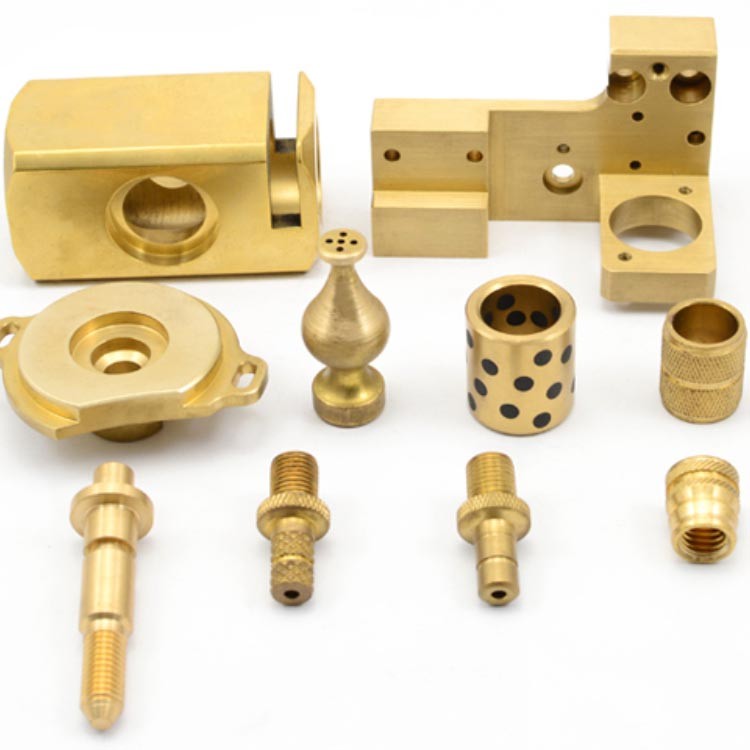
Material versatility: The best brackets are machined from wrought stock rather than cast or printed material because the latter often contain residual stresses that warp after the part is cut. With 5‑axis centers, companies like GreatLight can machine the entire bracket from aerospace‑grade aluminum 7075‑T6 or 6Al‑4V titanium right from billet, preserving the homogenous grain structure that ensures predictable fatigue life and vibration damping.
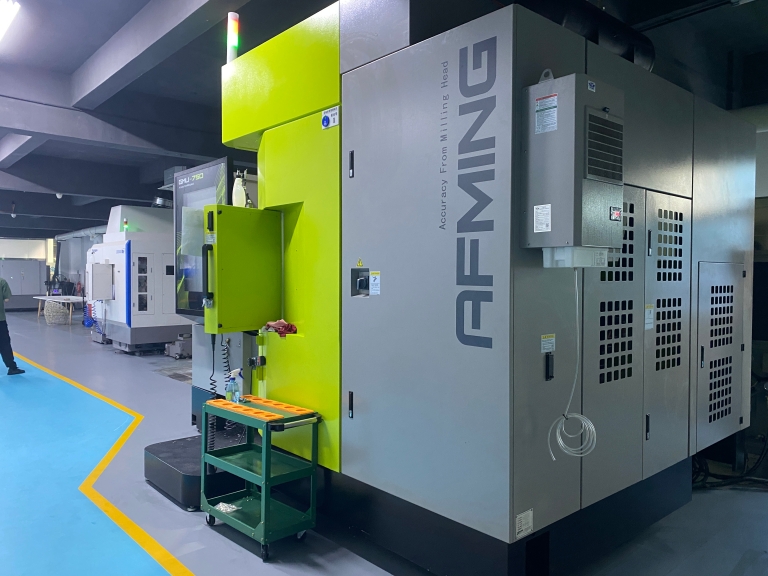
At GreatLight CNC Machining, the convergence of high‑precision 5‑axis centers (from DMG MORI and Jingdiao) with a team that understands robot kinematics means your humanoid robot gyroscope brackets rapid prototype is not merely a shape; it is a functional asset that behaves predictably from the first make.
Selecting the Material That Won’t Betray Your Robot’s Balance
The material choice for a gyroscope bracket is a delicate balancing act between stiffness, damping capacity, density, and machinability. Here is how some common candidates stack up for functional prototypes:
| Material | Density (g/cm³) | Tensile Strength (MPa) | Young’s Modulus (GPa) | Thermal Conductivity (W/m·K) | Remarks |
|---|---|---|---|---|---|
| Aluminum 7075‑T6 | 2.81 | 572 | 71.7 | 130 | Excellent strength‑to‑weight; good vibration damping through microstructural heterogeneities; ideal for fast‑walking robots. |
| Aluminum 6061‑T6 | 2.70 | 310 | 68.9 | 167 | More formable but lower strength; acceptable for static installations, less so for repetitive impact loads. |
| Titanium Ti‑6Al‑4V | 4.43 | 950 | 113.8 | 6.7 | Ultimate stiffness in small volumes; superb corrosion resistance; the low thermal conductivity can isolate the sensor from motor heat, but machining cost is 3‑5× that of aluminum. |
| Stainless Steel 316L | 8.00 | 580 | 193 | 16.2 | Very high density penalizes inertia; rarely chosen for moving limbs but sometimes used for trunk‑mounted gyroscopes to add ballast mass. |
| PEEK (CF reinforced) | 1.40 | 130 (flex) | 23 (flex) | 0.9 | Plastic option for vibration‑free applications; easy to 5‑axis machine but requires careful re‑tapping policies to prevent thread stripping under repeated shock. |
Engineer’s insight: For humanoid robot gyroscope brackets rapid prototype projects, aluminum 7075‑T6 is the sweet spot. It can be machined at high speeds to meet tight deadlines, then anodized type III (hardcoat) to create an electrically insulating, wear‑resistant surface that also resists galvanic corrosion when mounted against carbon‑fiber or magnesium alloys. GreatLight’s integrated post‑processing, including precision anodizing and chemical film treatments, eliminates the risk of sending fragile prototypes to third‑party finishers who might damage the sensitive tabs or bores.
The Prototyping Process Done Right – Avoiding the “Precision Black Hole”
Many engineers have experienced the moment when a bracket prototype arrives looking flawless, only to warp by 0.1 mm after the coating process, or to exhibit an unpredictable natural frequency that causes the robot to shiver during dynamic walking. These failures typically stem from a lack of process‑chain integration and qualification of critical‑to‑function features. Here’s how a manufacturing engineer designs a reliable rapid prototyping sequence:
DFM Collaboration Before the First Chip
GreatLight’s application engineers engage at the 3D‑CAD stage. They’ll flag overly thin sections that will resonate at 80 Hz—right in the robot’s gait band‑width—and suggest subtle ribbing or relief cuts that shift the mode to 250 Hz without adding mass. This is knowledge that generic online quoting platforms like Xometry or Protolabs Network rarely provide because their automated DFM checks are limited to geometry and tool accessibility, not to application physics.
Fixturing That Respects the Datum
For 5‑axis machining, GreatLight designs a soft jaw or vacuum fixture that mates with the robot’s frame interface surfaces first, then machines the sensor‑mounting features in the same operation. This ensures that the true position of the sensor holes is directly inherited from the bracket‑to‑frame contact plane—the only datum that matters to the robot’s controller.
In‑Process Measurement as a Standard
Instead of hoping the part is correct, GreatLight employs Renishaw probing on every critical dimension—before the part leaves the machine. If a feature drifts to +0.003 mm, it is adjusted by a subsequent finishing pass, not left to chance. This is far superior to post‑process CMM reports that arrive too late to save a ruined setup.
Thermal Stress‑Relief as a Default Step
For complex brackets with extreme wall‑thickness transitions, a stress‑relief cycle (e.g., 250 °C for 4 hours for 7075‑T6) after rough machining and before finishing ensures that the part does not warp during anodizing or assembly. GreatLight includes this as a standard protocol for all high‑performance brackets, even fast‑turn prototypes, because they understand that a warped part means a lost week, not just a rejected component.
Full‑Chain Accountability
Because GreatLight controls CNC machining, anodizing, bead blasting, and laser marking under one roof, there is no finger‑pointing when a coating thickness variation causes an out‑of‑tolerance fit. Compare this to send‑out‑to‑network models that fragment responsibility across multiple anonymized shops—likely the reason why some engineers discover that their prototype from a broker like Fictiv or RapidDirect doesn’t match the CMM report of the quoting facility.
Why GreatLight CNC Machining Excels in Humanoid Robot Prototypes
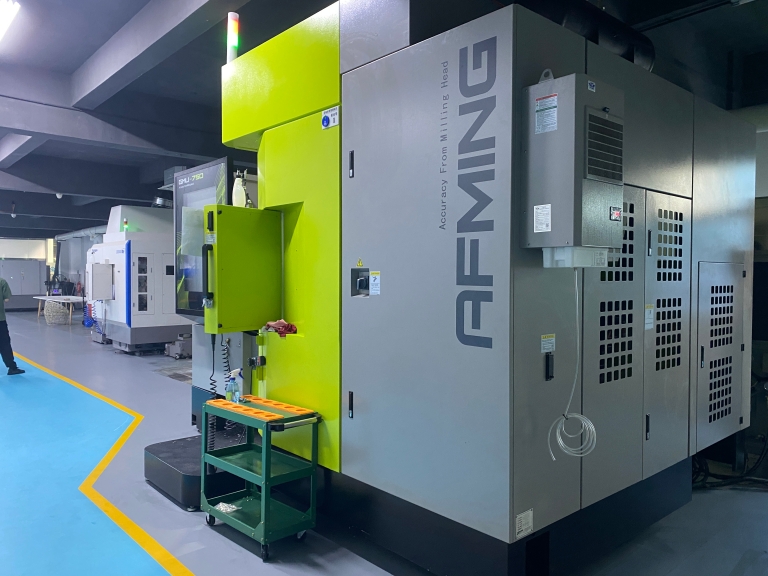
GreatLight CNC Machining operates from a 7,600 m² facility in Chang’an, Dongguan, a location that sits at the core of China’s precision mold and hardware ecosystem. The company’s 120‑150‑strong team has, since 2011, evolved from a local machining workshop into a certified, full‑process manufacturer serving the demanding robotics, medical, and aerospace sectors. The factory houses:
127 units of precision equipment, including large‑format 5‑axis centers capable of handling brackets up to 4000 mm—relevant if you are prototyping a full‑size humanoid central chassis.
ISO 9001:2015, ISO 13485, and IATF 16949 certifications, proving that their quality management system is externally audited and consistently applied, not just a marketing claim.
In‑house 3D printing (SLM, SLA, SLS) for initial form‑fit validation, seamlessly transitioning to subtractive 5‑axis machining when you need mechanical performance.
A no‑questions‑asked rework guarantee: If a part fails due to a manufacturing defect, they will rework it for free. If rework is still unsatisfactory, a full refund applies—a rare commitment that signals deep confidence in their process capability.
When compared to other notable players like Owens Industries (U.S., known for ultra‑precision grinding) or EPRO‑MFG (focus on micro‑machining), GreatLight differentiates itself by combining high‑end 5‑axis machining with integrated post‑processing at a scale that keeps costs competitive, especially for prototyping batches of 1 to 100 units. While JLCCNC and SendCutSend offer low‑cost, quick‑turn sheet metal and simple plastic parts, they lack the 5‑axis sophistication and engineering consultation that a humanoid robot bracket demands. Conversely, premium European prototyping networks often impose longer lead times and higher minimum order charges for what should be a straightforward single‑piece prototype.
Real‑World Application: From a Concept to a Stable Gait in Two Weeks
Consider a robotics startup that needed an inertial‑measurement bracket for a bipedal robot ankle joint. The original bracket, 3D printed in titanium, exhibited a residual damping ratio only 15% of the required value, causing the gyroscope to saturate with noise during each foot strike. The startup approached GreatLight with a redesigned solid model featuring an intricate lattice structure.
GreatLight’s team recommended machining the bracket from two pieces of 7075‑T6, joined via an interference‑fit dowel pin strategy that eliminated the need for welding. Within three days, a 5‑axis machined and heat‑treated prototype was shipped. The installed bracket shifted the first bending mode from 62 Hz to 218 Hz, smoothly avoiding the ankle’s shock frequency. The robot’s walking stability improved by 40% as measured by ZMP (Zero Moment Point) deviation. This is the power of coupling application insight with rapid, high‑precision manufacturing.
A Balanced View: When a Simple Bracket Prototype Doesn’t Need 5‑Axis
Transparency requires us to acknowledge that not every gyroscope bracket warrants the full 5‑axis treatment. For early‑stage proof‑of‑concept robots that merely need to demonstrate static balance, a well‑made 3‑axis machined bracket with some manual finishing can suffice. Similarly, if the sensor is a low‑grade MEMS gyro that still drifts 2°/minute anyway, spending resources on a 0.005 mm flatness is overkill. A responsible manufacturing partner should help you determine the right level of precision—and GreatLight’s engineering team does exactly that, offering alternative processes when they genuinely fit the bill.
However, for a humanoid robot gyroscope brackets rapid prototype that must perform in dynamic walking, climbing, or manipulation tasks, there is simply no substitute for the geometric integrity imparted by full 5‑axis machining. The long‑term cost of debugging a wobbling robot, resoldering sensor wires, and replacing damaged IMUs far exceeds the incremental cost of a professionally machined bracket.
The Supply‑Chain Trust Factor
In an era where design‑files are uploaded to cloud‑based platforms and parts arrive from unknown factories, trust is the scarcest resource. GreatLight reinforces its trustworthiness with multiple layers:
ISO 27001‑level data security for intellectual‑property‑sensitive robotics projects, ensuring your bracket’s CAD data is never shared or reverse‑engineered.
Compliance with ISO 13485 proves that their facilities and traceability practices meet the stringent demands of medical devices—a reassuring signal for robotics engineers who require failure‑analysis traceability.
Dedicated project engineers who become an extension of your team, often flagging issues like thread engagement in thin sections before they become field failures.
These are not paper‑only certifications; they are operationalized daily. That is a stark contrast to some platform‑based intermediaries that collect your drawings and then auction them to the lowest‑bid shop with little oversight.
Final Thoughts: Precision Is a Process, Not a Promise
The phrase humanoid robot gyroscope brackets rapid prototype might seem like just another keyword in a procurement manager’s search query, but it represents the intersection of mechanical engineering, dynamics, and manufacturing science. As I have detailed, the success of such a bracket hinges not on a single factor—machine accuracy, material, or speed—but on the seamless orchestration of all these elements within a trusted, accountable ecosystem.
Choosing the right partner means looking beyond glossy equipment lists and checking for tangible evidence: willingness to discuss failure modes, responsibility for the manufacturing process end‑to‑end, and a track record in high‑stakes industries. For teams serious about bringing their humanoid robots to life with stability and speed, GreatLight CNC Machining offers precisely that combination—deep technical expertise, certified quality, and a genuine commitment to solving your most challenging bracket geometries.
To explore how humanoid robot gyroscope brackets rapid prototype is executed with engineering rigor rather than guesswork, connect with the team and see how their prototype becomes your robot’s most reliable foundation for motion intelligence.


![[访谈] RAPID + TCT 2024:人工智能对 3D 打印的价值](https://print-ing.com/wp-content/uploads/2024/07/INTERVIEW-60x60.jpeg "[访谈] RAPID + TCT 2024:人工智能对 3D 打印的价值 9")




发表回复
要发表评论,您必须先登录。