As a senior manufacturing engineer with years of hands-on experience in precision metal forming, I often encounter clients who underestimate the complexity of seemingly simple spring steel components. DIN rail clips are a prime example. While they appear straightforward, producing high-performance DIN rail clip spring steel forming requires a nuanced understanding of material behavior, advanced manufacturing technologies, and rigorous process control. At GreatLight CNC Machining, we have honed these capabilities over more than a decade, delivering clips that not only meet but exceed the stringent demands of industrial, automotive, and electrical applications. This article delves into the engineering principles, manufacturing challenges, and integrated solutions that make precision production of DIN rail clips from spring steel not just achievable, but repeatable at scale.
Understanding DIN Rail Clips and the Spring Steel Challenge
DIN rail clips are essential fastening elements in countless mounting systems, providing a secure, vibration-resistant hold for circuit breakers, terminal blocks, relays, and other modular equipment on standard DIN rails. The clip’s function depends entirely on its spring properties: it must exert a consistent clamping force over thousands of insertion and removal cycles, resist permanent set, and maintain dimensional stability under varying thermal and mechanical loads.
Spring steel—typically grades like 65Mn, 60Si2Mn, C67S, or AISI 1075/1095—is chosen precisely for its high yield strength, fatigue resistance, and toughness. However, these very properties make it notoriously difficult to form accurately without introducing excessive springback, residual stress, or micro-cracks. Traditional stamping and bending processes often struggle to achieve the tight tolerances (±0.05 mm or better) required for a reliable clip that mates flawlessly with both the rail and the component housing.
So where does precision CNC machining fit in? While many DIN rail clips are initially formed through progressive die stamping, the final critical features—such as the hook geometry, contact edges, and stress-relief notches—frequently demand secondary machining operations to ensure perfection. And for low to medium volumes, or when prototype iterations and complex clip designs are involved, direct CNC machining from solid spring steel stock offers unmatched flexibility and precision. This is where a partner like GreatLight Metal makes all the difference.
The Critical Role of Precision 5-Axis CNC Machining in Spring Steel Forming
Modern DIN rail clips are no longer simple bent strips of metal. Many designs incorporate intricate contours, undercuts, and engagement surfaces that must be exactly perpendicular or parallel to the rail axis to guarantee reliable electrical grounding and mechanical stability. Multi-axis CNC machining provides a path to achieve those geometries with minimal setups, significantly reducing accumulated error.
GreatLight CNC Machining’s precision 5-axis CNC machining services allow simultaneous control of the cutting tool along five axes, enabling the creation of complex clip forms directly from hardened and tempered spring steel blanks—or, more commonly, machining the final details after a near-net-shape stamping and heat treatment cycle. This approach is particularly valuable when:
The clip requires extremely tight critical-to-function dimensions.
The design includes sharp internal corners or radii that stamping cannot adequately achieve.
The batch size does not justify the cost of a full progressive die set.
Prototyping iterations must be turned around in days rather than weeks.
Overcoming Springback with Iterative Process Modeling
Springback is the single greatest enemy in spring steel forming. It is the elastic recovery of the material after the forming force is removed, causing the part to deviate from the intended shape. Traditional trial-and-error die modification is slow and costly. In contrast, CNC machining from solid stock eliminates springback altogether for the machined features, because material is removed chemically/mechanically, not plastically deformed. For near-net-shape blanks that then receive finish machining, we combine our deep material knowledge with finite element simulation to predict springback and adjust the pre-form accordingly, then use 5-axis machining to refine contacting surfaces to micron-level accuracy.
At GreatLight Metal, our engineers collaborate with clients from the early design phase to optimize part geometry not just for function, but for manufacturability across the entire process chain. We routinely run materials characterization tests on the incoming spring steel to determine its precise tensile strength and elongation, data that feeds directly into our CAM programming. This data-driven approach all but eliminates the “precision black hole” many buyers fear—where a supplier’s promised tolerances evaporate in mass production.
An Integrated Manufacturing Ecosystem for DIN Rail Clips
One of the most persistent pain points in precision part procurement is the fragmentation of processes between different vendors. A typical DIN rail clip might need wire EDM for sharp corners, CNC milling for engagement surfaces, vibratory finishing for edge rounding, and finally a specific surface treatment like zinc plating or black oxide. Juggling multiple suppliers introduces coordination delays and quality inconsistencies.
GreatLight Metal’s 7,600-square-meter facility in Dongguan’s Chang’an District houses an integrated manufacturing ecosystem that eliminates those seams. Our 127+ pieces of precision peripheral equipment include:
High-precision 5-axis CNC machining centers from brands like Dema and Beijing Jingdiao, capable of ±0.001 mm tolerance on critical features.
Four-axis and three-axis CNC machines for efficient secondary operations.
CNC Swiss-type lathes for smaller turned clip components or pins.
Wire EDM and mirror-spark EDM for intricate slots, sharp notches, and features that demand minimal heat-affected zone.
Vacuum forming and 3D printing (SLM/SLA/SLS) for rapid prototyping and jig development, so we can validate clip designs in a matter of days.
This vertical integration of processes means a single point of accountability for your entire DIN rail clip project—from raw material to finished, surface-treated parts. We can take a 3D CAD model and, using internal resources, deliver prototype clips within days, then smoothly transition into pilot runs and full-scale production, all under the same ISO 9001:2015 certified quality management system.
Post-Processing and Finishing: Where Precision Meets Durability
The surface integrity of a spring steel clip is not just about aesthetics; it directly influences fatigue life and corrosion resistance. After machining, spring steel often requires stress relief to minimize machining-induced residual stresses that could lead to premature cracking. Our in-house heat treatment capabilities, including tempering furnaces, allow us to perform stress relief cycles precisely matched to the steel grade and geometry.
Subsequently, we offer a full range of surface finishing options that extend the clip’s service life:
Zinc or zinc-nickel plating with proper hydrogen de-embrittlement bake to prevent hydrogen-induced cracking in high-strength steel.
Electroless nickel plating for uniform thickness and superior corrosion resistance, especially valued in marine or chemical environments.
Black oxide and phosphate coatings for mild corrosion protection and a matte, non-reflective appearance.
Passivation for stainless steel spring clips.
Vibratory deburring and micro-finishing to eliminate sharp burrs and create a consistent edge condition that prevents stress risers.
Each post-processing step is handled internally or through rigorously audited partner networks, all validated to ISO quality standards. This one-stop approach reduces logistics, shortens lead times, and ensures every clip shipped has been through a coherent, quality-gated process.
Quality Assurance: From First Article to Final Shipment
Clients consistently cite inconsistent quality as a top concern when sourcing precision metal parts. At GreatLight Metal, we have institutionalized trust through international authority certifications and a culture of metrological rigor. Our operations adhere to:
ISO 9001:2015 – the universal language of quality management.
ISO 13485 – for medical-grade hardware, relevant where rail clips are used in diagnostic or medical equipment.
IATF 16949 – the automotive quality system standard, invaluable for clips used in vehicle electrical systems or harsh under-hood environments.
ISO 27001 – for intellectual property security, essential when clients share proprietary clip designs.
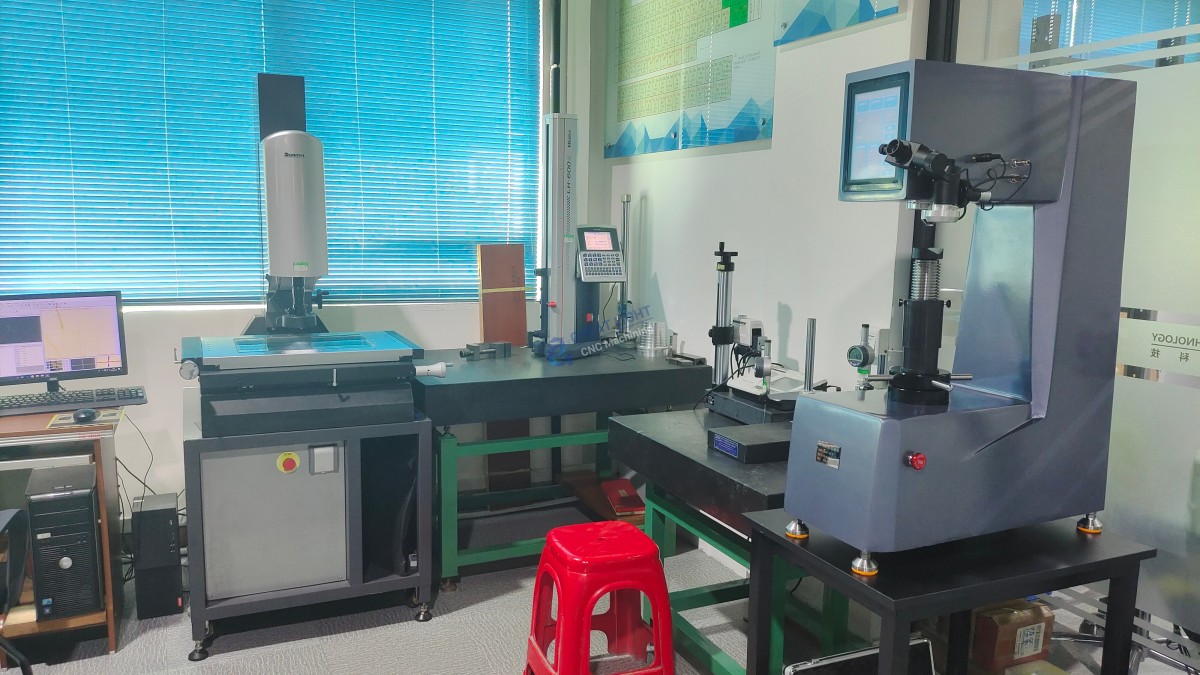
Our climate-controlled inspection lab houses CMMs, optical profilometers, and Rockwell/Vickers hardness testers. Every batch of DIN rail clips undergoes first article inspection (FAI) with a complete dimensional report, and in-process checks are conducted using statistical process control (SPC) to flag drift before a non-conformance can occur. Furthermore, for spring steel components, we routinely verify clamping force retention through fatigue cycling tests, ensuring that the clip’s performance remains stable over its design life.
By choosing GreatLight Metal, you are not merely buying parts; you are buying a documented, auditable quality backbone that significantly de-risks your supply chain—whether you are a procurement engineer at an automotive Tier 1 or a hardware startup launching a novel modular enclosure system.
Partner Comparison: Why GreatLight Metal Stands Out
The global precision machining marketplace is crowded with capable suppliers, and each has its strengths. To help you make an informed decision, I’ll outline how GreatLight Metal compares to other well-known providers in the context of spring steel DIN rail clip forming.
| Supplier | Core Strengths | Potential Limitations for High-Precision Spring Steel Clips |
|---|---|---|
| GreatLight Metal | Deep expertise in complex, high-tolerance metal parts; full-process chain from machining to finishing; strong certifications (IATF, ISO 13485); dedicated engineering support from concept to mass production. | Smaller scale compared to mega-platforms, but this enables more personalized, flexible collaboration. |
| Protolabs Network | Very fast automated quoting and rapid prototyping; wide array of processes through network partners. | Limited ability to provide integrated, one-stop finishing and heat treatment with single-account accountability; spring steel expertise may vary across partner shops. |
| Xometry | Massive network; good for dispersing capacity across many processes; fast lead times for simpler parts. | Quality consistency relies on individual job shop; deep engineering collaboration for complex spring steel forming is harder to achieve. |
| RapidDirect | Competitive pricing and online platform; DFM feedback; suitable for standard machined parts. | May not provide the full array of in-house post-processing critical for spring steel (e.g., de-embrittlement, targeted stress relief). |
| Fictiv | Excellent digital platform; strong in injection molding and 3D printing; good for low-volume CNC. | Less specialized in high-strength spring steel machining; process integration for secondary heat treat/finishing is outsourced. |
| Owens Industries | Known for extremely tight tolerance work; often serves aerospace and medical. | Typically higher cost structure; likely suited for super-premium prices that might exceed budgets for medium-volume DIN clip applications. |
| JLCCNC | Attractive pricing for simple machined parts; large capacity. | Limited experience in specialty spring steel springback compensation and fatigue-critical components; fewer integrated finishing options. |
As a senior engineer, I recognize that no single supplier fits every need. If you require a few hundred simple clips with loose tolerances, a pure digital platform might suffice. However, when your application demands precise clamping forces, consistent hardness profiles, fatigue resistance, and the ability to iterate rapidly on clip geometry, GreatLight Metal’s vertically integrated model and engineering-first philosophy yield real value. You talk directly to the engineers who will program the 5-axis machines, who understand spring steel’s temperament, and who take ownership of the final part quality.
A Real-World Scenario: Solving an E-Mobility DIN Clip Challenge
To illustrate, consider a recent engagement that demonstrates our problem-solving approach, though client-specific details are kept generic.
A startup developing an innovative building automation system required custom DIN rail clips to mount their IoT controllers. The clip had to be made from 65Mn spring steel with a hardness of HRC 45–50 after quenching and tempering. The critical hook profile incorporated a 0.3 mm radius groove that engaged a detent on the rail, demanding an angular tolerance of ±0.2° and a surface roughness of Ra 0.8 µm on the contact face. Initial prototypes from their existing stamping supplier suffered from inconsistent clamping force and visible burrs in the groove that scraped the rail coating.
GreatLight Metal’s solution: We proposed that the near-net shape be formed through a simple, cost-effective stamping process for the bulk geometry, followed by precision 5-axis CNC machining of the critical groove and contact surfaces after heat treatment. The machining sequence included a final micro-deburring pass using a ball end mill, producing a burr-free edge. We then executed a zinc-nickel plating with a rigorous bake cycle to prevent hydrogen embrittlement, and performed force-deflection testing on a sample lot using a custom fixture to correlate the clip’s geometry with its spring force.
Within three weeks, the client had production-grade clips that passed their 100,000-cycle insertion test with zero failures. The design was locked, and we transitioned into a regular production schedule, all while holding a total cost that was competitive against the original supplier’s lower quality output. This is the kind of outcome that arises when precision machining is not treated as a commodity, but as an engineering discipline tightly integrated with material science and post-processing.
Designing for Manufacturability: Tips for Your Next DIN Rail Clip Project
To maximize the benefits of working with a high-end manufacturer like GreatLight Metal, consider these DFM guidelines when designing spring steel clips for CNC-assisted forming:
Choose the right material condition: If extensive machining is required, consider performing rough machining before final heat treatment to reduce tool wear, then finish-machine critical features after hardening. Our team can advise on the optimal sequence.
Specify fillet radii, not sharp internal corners, wherever possible—this drastically improves tool life and part fatigue strength.
Include stress-relief grooves at abrupt cross-section changes to mitigate crack initiation.
Define functional datums clearly on your drawing; we’ll use those same datums during machining and inspection to ensure consistency.
Leverage our 3D printing for early prototypes: Before committing to a hard tool, you can physically test clip fitment and spring force with SLA or SLS prototypes, accelerating your design cycle.
We collaborate closely, providing detailed design-for-manufacturing feedback within hours of receiving your CAD files—a hallmark of our engineering-centric culture.
Conclusion: Precision Without Compromise
The production of high-quality DIN rail clips from spring steel is a microcosm of precision manufacturing: it hinges on an intricate interplay of material science, advanced machining, rigorous heat treatment, and flawless finishing. Fragmenting these steps across multiple suppliers is a recipe for inconsistency and delay. GreatLight Metal offers a compelling alternative—a one-stop, ISO-certified ecosystem where your project is managed from concept to completion under one roof, by a team that truly understands spring steel.
In a market filled with options, choosing the right partner is about aligning capabilities with the specific demands of your component. For DIN rail clip spring steel forming, where reliability and repeatability are non-negotiable, GreatLight CNC Machining stands as the expert partner that delivers precision, durability, and peace of mind. To explore how our integrated manufacturing solutions can elevate your next precision component project, we welcome you to learn more about our work and connect with us on LinkedIn.


![[访谈] RAPID + TCT 2024:人工智能对 3D 打印的价值](https://print-ing.com/wp-content/uploads/2024/07/INTERVIEW-60x60.jpeg "[访谈] RAPID + TCT 2024:人工智能对 3D 打印的价值 9")




发表回复
要发表评论,您必须先登录。