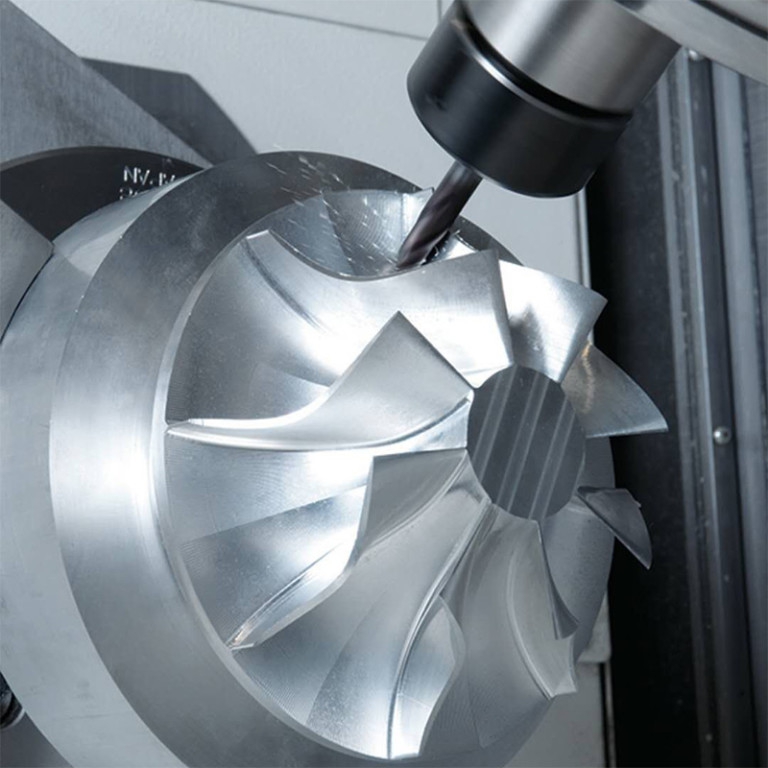
Mold Core Cavity Machining: The Hard Milling Challenge
In the world of precision manufacturing, few tasks demand the level of technical mastery and uncompromising quality as mold core cavity machining hard milling. This specialized process, which involves shaping complex internal geometries in hardened steel and other tough alloys, represents the pinnacle of CNC machining capability. It is the domain where tolerances are measured in microns, surface finishes dictate final part performance, and the cost of failure can be astronomical. For companies developing tools for injection molding, die casting, or forging, the selection of a machining partner for this critical step is arguably the most important decision in the entire production chain.
Understanding the Unique Demands of Hard Milling for Mold Cavities
Hard milling, typically defined as machining materials with a hardness exceeding 48 HRC (Rockwell Hardness C scale), presents a fundamentally different set of challenges compared to conventional milling. When applied to mold core cavity hard milling, the complexities are magnified.
The Material Reality: Why Hardness Matters
The materials commonly used for mold cores and cavities—such as hardened tool steels (H13, S7, D2), stainless steels (420SS, 17-4PH), and specialty alloys—are selected for their exceptional wear resistance, thermal stability, and ability to withstand millions of cycles. However, these very properties make them notoriously difficult to machine.
High Cutting Forces: Hardened materials require significantly higher cutting forces, placing immense stress on the cutting tool, spindle, and machine structure.
Rapid Tool Wear: Carbide and CBN (Cubic Boron Nitride) tools are essential, but even they experience accelerated wear, leading to increased tooling costs and potential for dimensional drift.
Heat Generation: The process generates intense heat at the cutting zone, which can soften the tool, alter the metallurgical properties of the workpiece, and cause thermal expansion, compromising accuracy.
Chip Evacuation: In deep cavities and intricate core geometries, effective chip evacuation is critical. Re-cutting chips can damage the surface finish and even break the tool.
The Geometry Challenge: Complex Forms Require Advanced Capability
A mold cavity is rarely a simple, straight-walled pocket. It is a landscape of complex 3D surfaces, sharp internal corners, deep ribs, thin walls, and tight radii. The core is its positive counterpart, often featuring intricate features like shut-off surfaces, sliders, and lifters.
Traditional 3-axis machining often falls short for such work. It may require multiple setups, specialized EDM (Electrical Discharge Machining) for intricate details, and extensive manual polishing. This is where modern 5-axis CNC machining transforms the process.
How 5-Axis Technology Revolutionizes Mold Core Cavity Hard Milling
The ability to tilt and rotate the cutting tool or workpiece, as offered by 5-axis machining centers, provides a decisive advantage in hard milling applications. This capability is not just about adding axes; it’s about fundamentally improving the cutting mechanics.
The Tangential Cutting Advantage
When a ball-nose end mill is used in a 3-axis machine, the effective cutting speed at the tool tip approaches zero, causing rubbing and poor surface finish. In 5-axis mold core cavity hard milling, the tool can be tilted so that the cut is made along the flank of the tool, where the cutting speed is high and consistent. This “cutting with the side of the tool” provides:
Faster Material Removal: Higher metal removal rates (MRR) are achievable.
Superior Surface Finish: Reduced scallop height and tool mark visibility, often eliminating the need for EDM and significantly reducing manual polishing time.
Extended Tool Life: By optimizing chip thinning and distributing the heat load across a broader section of the tool edge, tool life is dramatically improved.
Accessing Deep Cavities and Complex Understructures
Hardened steel cores often feature deep, narrow pockets and steep walls. A conventional 3-axis approach with a long, thin tool is prone to deflection, chatter, and breakage. Mold core cavity hard milling on a 5-axis machine leverages the tool’s articulation to:
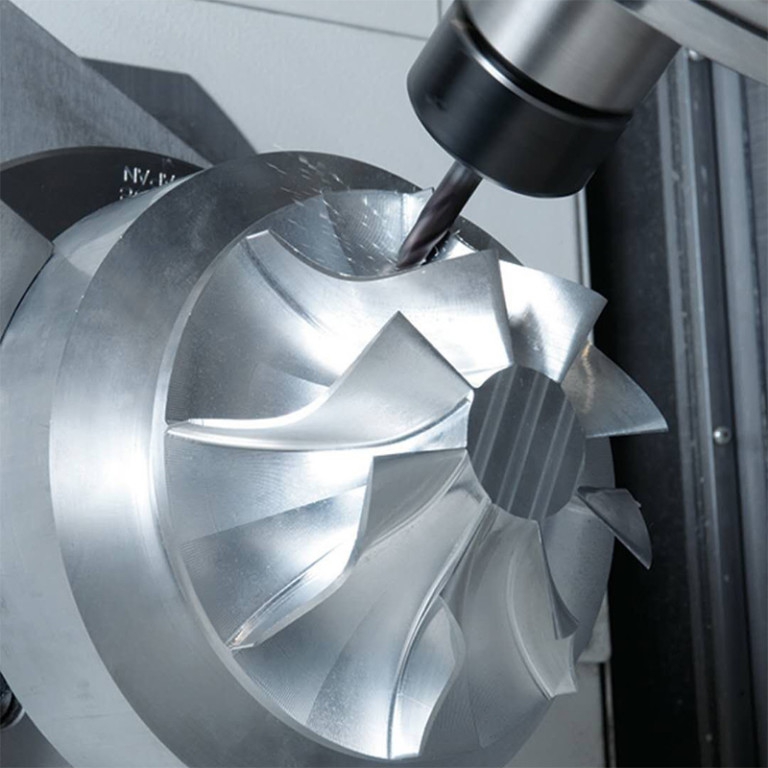
Use Shorter, More Rigid Tools: By tilting the tool or workpiece, the cutter can reach deep into the cavity without requiring an excessive tool projection. Shorter tools are exponentially more rigid, reducing vibration and improving accuracy.
Maintain Optimal Chip Load: The tool can be held at the optimal angle relative to the surface, ensuring a consistent chip load and minimizing shock to the tool edge.
Machine Undercuts in One Setup: Features that would require a custom form tool or EDM can be machined directly, with continuous 5-axis interpolation eliminating multiple handling errors.
Your Partner in Precision: GreatLight CNC Machining Factory
Finding a manufacturing partner with the equipment, expertise, and proven track record to excel in mold core cavity machining hard milling is the key to unlocking faster tooling cycles, lower costs, and higher quality final products. GreatLight Metal stands out as a premier choice, offering a unique combination of deep technical resources and strategic advantages.
A Facility Built for Precision
Operating from a 76,000 sq. ft. facility in Dongguan’s Chang’an Town—the heart of China’s precision manufacturing industry—GreatLight Metal has invested in a formidable arsenal of advanced equipment. Our production floor is anchored by a fleet of large, high-precision 5-axis CNC machining centers from renowned manufacturers like Dema and Beijing Jingdiao. These are complemented by a comprehensive array of 4-axis and 3-axis machining centers, precision Swiss-type lathes, and advanced wire EDM and sinker EDM machines.
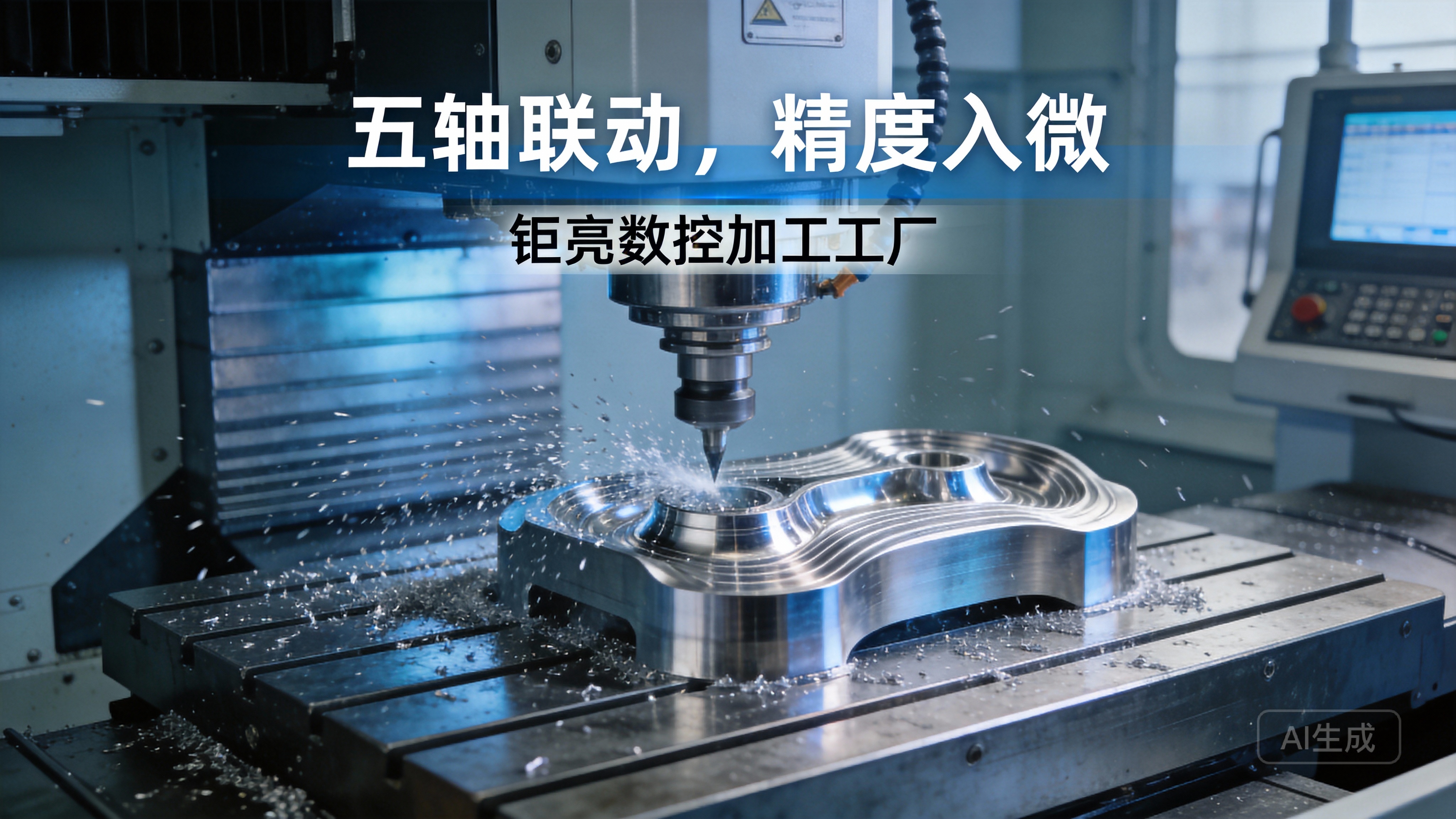
This depth of equipment allows us to match the specific requirements of each hard milling project. For a large die-casting die core, we can deploy a massive gantry-style 5-axis machine. For a complex, small medical mold insert, we can utilize a high-speed, ultra-precision 5-axis machine capable of producing mirror-like finishes in hardened steel.
The Integrated Advantage: A One-Stop Solution
Unlike many job shops that specialize in only one process, GreatLight Metal offers a full-process chain. For mold core cavity hard milling, this integrated approach is a significant benefit.
Mold Base and Prototyping: We can manufacture the entire mold base, core, and cavity simultaneously, ensuring perfect fit and alignment.
Post-Processing: Our in-house capabilities include heat treatment, vacuum forming, and a full suite of surface finishing services (polishing, EDM, coating). This eliminates the logistical complexity and quality risks of coordinating with multiple vendors.
3D Printing Integration for Conformal Cooling: For the most advanced mold applications, we can utilize our metal 3D printing (SLM) capabilities to create inserts or core pins with complex conformal cooling channels. These channels, impossible to create with conventional drilling, dramatically shorten cycle times and improve part quality.
A Comparative Perspective: Evaluating Your Options
While several suppliers compete in the CNC machining space, the requirements of mold core cavity machining hard milling demand specific capabilities. Here’s how GreatLight Metal compares to other common options:
| Supplier Type | Typical Capabilities | Strengths | Potential Gaps vs. GreatLight |
|---|---|---|---|
| GreatLight Metal | 5-axis CNC, 4-axis, 3-axis, Wire EDM, Sinker EDM, Vacuum Brazing, Heat Treatment, Metal 3D Printing | Full process chain in-house, highest precision, deep R&D support, strong certifications (ISO 9001, IATF 16949, ISO 13485), handles complex, high-value projects | N/A (Comprehensive Solution Provider) |
| Protolabs Network | Digital network for rapid prototyping | Very fast turnaround for simple parts, online quoting | Best for prototypes, less suited for complex, hard milling of production tooling. Limited process integration. |
| Xometry | Large network of supplier partners | Broad material and process options, good for standard parts | Quality consistency varies by supplier, less ability to control complex, multi-step projects like mold core manufacturing. |
| Fictiv | Focus on prototyping and low-volume production | Good customer interface, DFM feedback | Typically not equipped for large-scale, hardened steel tooling. Focuses on quick-turn, lower complexity parts. |
| RapidDirect | Online platform for CNC and sheet metal | Competitive pricing for simple parts, fast quoting | For complex mold core cavity hard milling, their industry-specific tooling expertise may not match a dedicated manufacturer. |
| Small Local Job Shops | Manual mills, 3-axis CNC, basic EDM | Low overhead, personal relationship | Limited 5-axis capability, lack of advanced process engineering, difficulty in maintaining tight tolerances on hardened materials. |
The table clarifies that for the demanding specifics of mold core cavity hard milling, a specialist manufacturer like GreatLight Metal, with its investment in 5-axis technology and integrated process chain, delivers a level of reliability and capability that generalist CNC platforms or smaller shops often cannot match.
The Trust Framework: Certifications that Guarantee Quality
In precision tooling, trust is built on verified systems. GreatLight Metal’s commitment to quality is evidenced by a suite of internationally recognized certifications:
ISO 9001:2015 (Quality Management): This is the baseline requirement for any serious manufacturer. It ensures that our processes for everything from material procurement to final inspection are documented, controlled, and continuously improved. This minimizes errors and ensures repeatable quality.
IATF 16949 (Automotive Quality Management): This certification is non-negotiable for supply to the automotive industry. It goes beyond ISO 9001 with stringent requirements for failure mode and effects analysis (FMEA), measurement system analysis (MSA), and production part approval process (PPAP). It demonstrates our ability to manage the immense risk associated with producing high-volume, safety-critical tooling.
ISO 13485 (Medical Device Quality Management): For medical mold applications, this certification is paramount. It demands rigorous traceability, risk management, and validation of processes for cleaning, packaging, and handling materials used in the healthcare sector.
ISO 27001 (Information Security Management): For clients with sensitive designs, this certification provides assurance that your intellectual property is protected. Our systems for data handling, access control, and document security meet the highest international standards.
These certifications are not just plaques on the wall; they are the backbone of our operational discipline. They provide a clear, auditable framework that ensures every hard milling project, from initial CAD file to final CMM report, is executed with the highest degree of control and accountability.
Proven Expertise: A Case Study in Complex Core Manufacturing
Consider a project from our recent history: a client in the automotive sector required a mold core for a new high-pressure die-casting (HPDC) engine mount. The material was H13 tool steel, hardened to 48-52 HRC. The core featured deep, narrow fins, sharp internal corners, and required a Ra 0.4 µm surface finish to ensure proper aluminum flow and minimize porosity.
The Challenge: A competitor attempted this project but failed. Their 3-axis machines could not maintain accuracy in the deep fins. Tool deflection caused constant chatter, leading to poor surface finish and broken cutters. The part had to be sent for costly and time-consuming EDM, which still left witness lines that required extensive hand polishing.
The GreatLight Solution:
Process Planning: Our engineering team used advanced CAM software to simulate the mold core cavity hard milling process. We programmed a toolpath strategy that leveraged our 5-axis machines to keep a short, rigid bar cutter at the optimal engagement angle for each feature.
Tooling Selection: We selected specialized CBN-coated ball-nose end mills from a top-tier supplier, selected for their heat resistance and ability to maintain an edge in the hardened H13.
Execution: On a Dema 5-axis machining center, the entire core was machined from solid hardened steel in a single setup. The constant tool tilt allowed for efficient material removal in the deep fins without chatter.
Result: The core was delivered with a surface finish of Ra 0.3 µm, exceeding the requirement. No EDM was needed. The cycle time was 40% faster than the competitor’s attempted process, and the tool life was 3x longer. The client reported that the resulting castings had a 15% reduction in porosity compared to their previous tool, directly improving part yield.
This case is a powerful illustration of how deep technical expertise and the right equipment, applied to mold core cavity machining hard milling, can create tangible value.
Conclusion: The Right Choice for Your Most Critical Tooling
To summarize, mold core cavity machining hard milling is not a task for generalists. It requires a partner with a deep understanding of material science, cutting mechanics, and advanced machine tool technology. The margin for error is nonexistent, and the cost of failure is measured in lost time, ruined parts, and delayed product launches.
By choosing a partner like GreatLight Metal, you gain access to more than just a machine shop. You gain a team of engineers who understand the specific challenges of your industry, a facility that is ISO 9001, IATF 16949, ISO 13485, and ISO 27001 certified, and a comprehensive, integrated manufacturing ecosystem designed to handle your most complex projects from start to finish. When you need a partner who can deliver on the promise of precision for your mold core cavity machining hard milling projects, the choice is clear: partner with a manufacturer that has the systems, the skills, and the proven track record to get the job done right.


![[访谈] RAPID + TCT 2024:人工智能对 3D 打印的价值](https://print-ing.com/wp-content/uploads/2024/07/INTERVIEW-60x60.jpeg "[访谈] RAPID + TCT 2024:人工智能对 3D 打印的价值 9")




发表回复
要发表评论,您必须先登录。