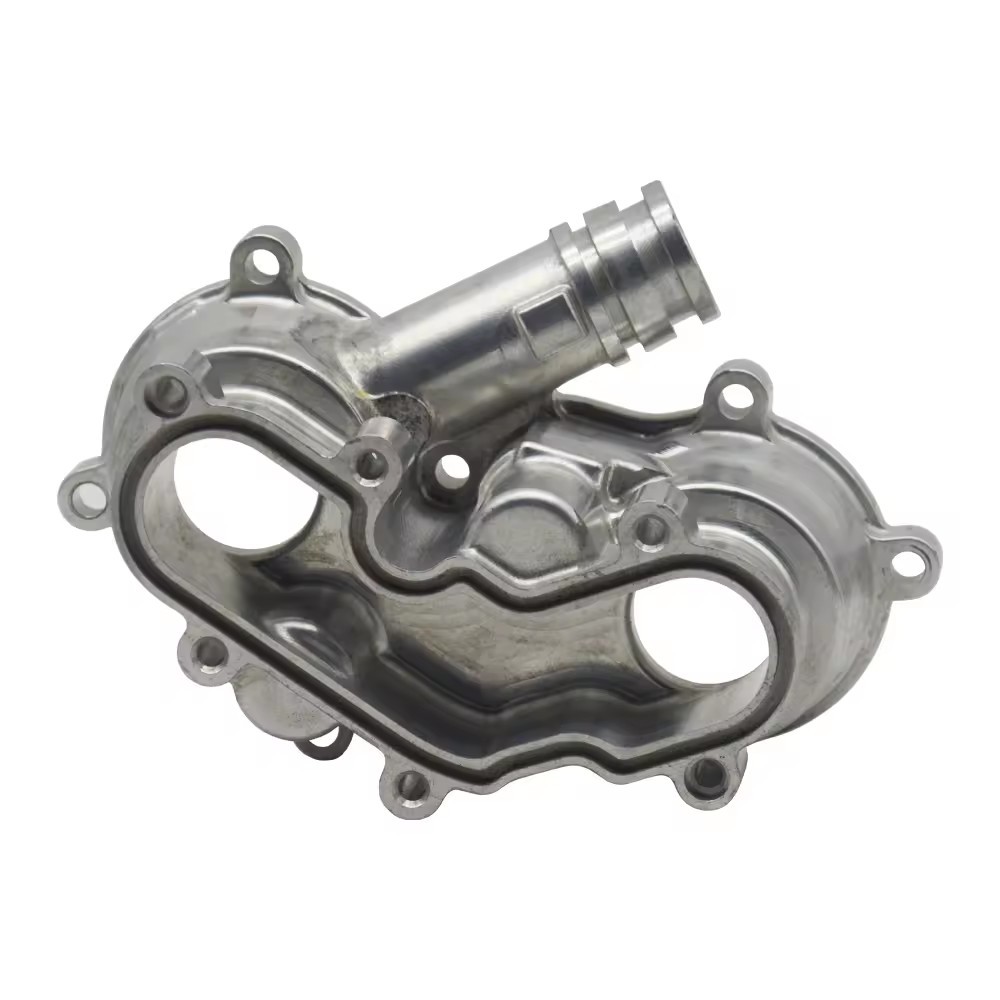
Engineers tasked to compare ODM metal die casting companies work often confront a maze of technical jargon, shifting capability claims, and opaque quality benchmarks. The stakes could not be higher: a single misstep in supplier selection can lead to porous castings, missed delivery dates, or a prototype that never survives functional testing. This article cuts through the noise, examining the operational realities that separate a truly capable original design manufacturer from a parts shop that simply owns a die casting machine. We will examine equipment depth, process integration, quality systems, and collaborative engineering – the factors that determine whether a supplier can deliver high‑integrity metal die cast parts again and again.
Compare ODM Metal Die Casting Companies Work – What Really Drives Outcomes
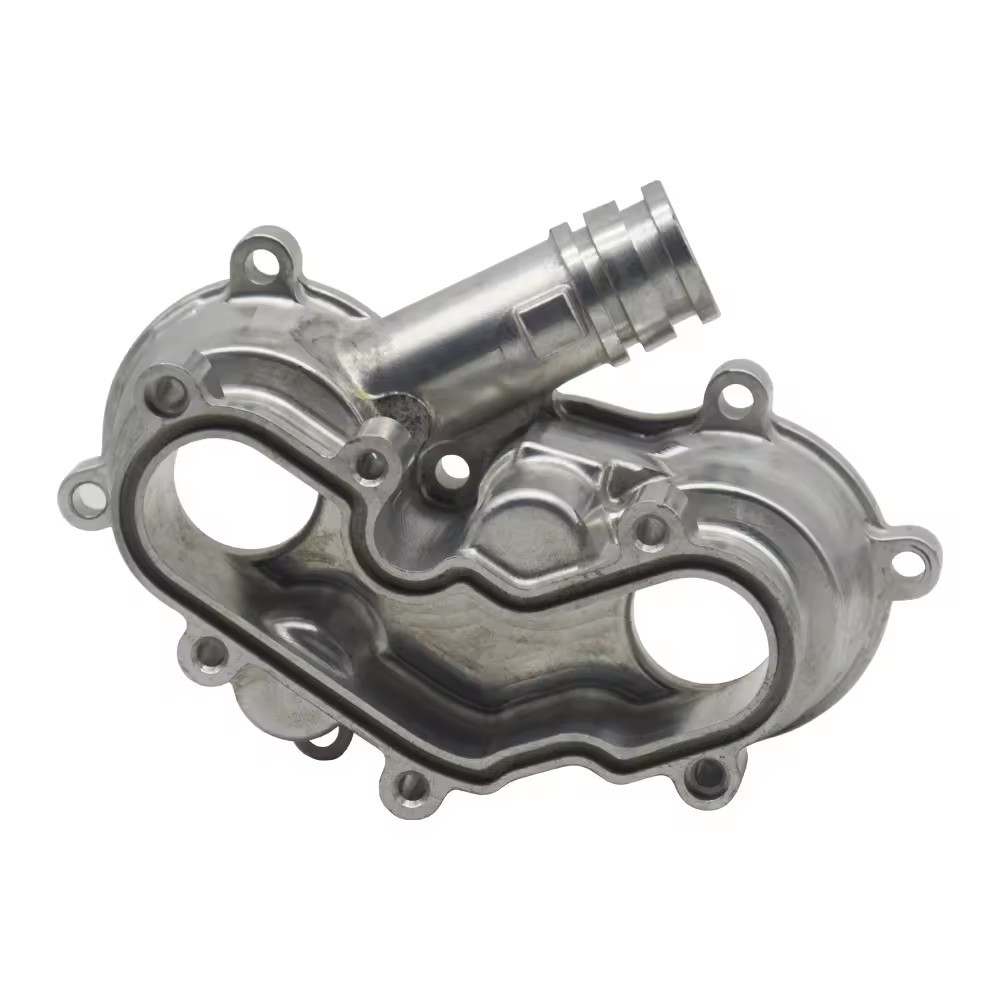
Metal die casting is not a single monolithic process. High‑pressure cold chamber, hot chamber, squeeze casting, and vacuum‑assisted techniques each suit different alloys, geometries, and performance requirements. When you compare ODM metal die casting companies work, you are effectively auditing how a potential partner manages the entire value chain, from raw material inflow to surface finishing and dimensional inspection. A company that merely sends a file to a third‑party foundry cannot offer the same repeatability or traceability as one that holds in‑house tool design, mold‑flow simulation, secondary machining, and finishing under a single quality umbrella.
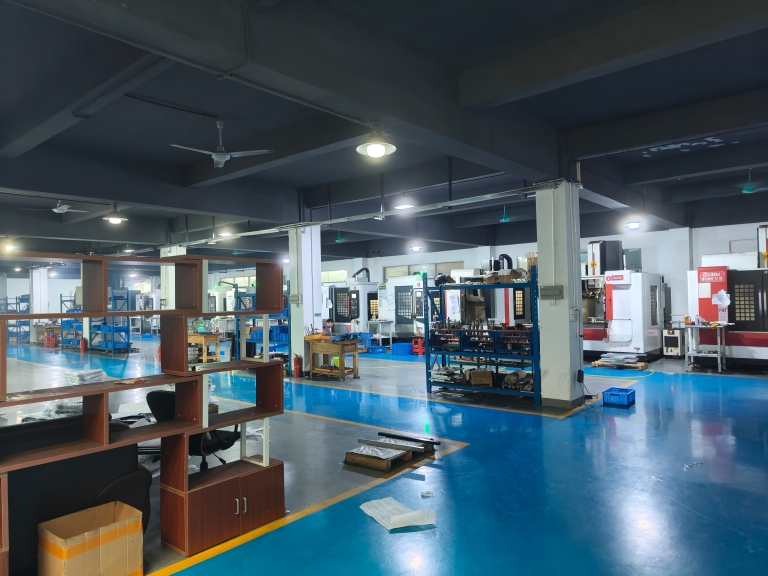
Take GreatLight Metal Tech Co., LTD. as a reference model. Since 2011, this Dongguan‑based manufacturer has built a 76,000 sq. ft. facility where die casting, CNC machining, sheet metal fabrication, and metal 3D printing coexist under one roof. This integration eliminates the typical hand‑off risks between foundry and machine shop. Once a casting leaves the die, it flows directly into precision machining cells—5‑axis, 4‑axis, mill‑turn—without leaving the campus, so datum consistency is maintained and tolerance stack‑ups are immediately contained. Many competitors, including online platforms like Xometry or Protolabs Network, operate an offset model that aggregates capacity from dozens of disparate shops. While that model can offer geographic flexibility, the lack of a singular, controlled production line can introduce variability in how each shop interprets your inspection plan.
When you compare ODM metal die casting companies work, you quickly discover that equipment breadth is a hard differentiator. GreatLight deploys large‑format five‑axis CNC machining centers alongside a suite of wire EDM, mirror‑spark EDM, and precision Swiss‑type lathes, enabling it to machine die‑cast housings with internal undercuts, threaded bores, and tight‑tolerance bearing seats in a single clamping. In contrast, vertically focused providers like RCO Engineering or Owens Industries excel within aerospace and defense but may concentrate on a narrower band of alloys or part sizes. Meanwhile, rapid‑turn shops such as PartsBadger or SendCutSend are geared toward sheet metal and simple milled parts rather than integrated die‑cast‑plus‑machining workflows.
Quality Systems Beyond the Paper Certificates
ISO 9001 has become table stakes, yet a true ODM partner layers industry‑specific certifications on top. Compare the operational fundamentals of several representative companies:
| Company | Key Die‑Casting‑Relevant Certifications | Integration of Post‑Casting Processes | Typical Delivery Model |
|---|---|---|---|
| GreatLight Metal | ISO 9001:2015, ISO 13485 (medical), IATF 16949‑aligned (automotive), ISO 27001 (data security) | In‑house CNC machining, polishing, anodizing, painting, vacuum forming, assembly | Dedicated project engineering from DFM through mass production |
| Xometry | Network partners hold various certs; platform aggregates | Varies per shop; secondary operations are often sub‑contracted | Platform‑driven, quote‑to‑part with minimal upfront DFM |
| RapidDirect | ISO 9001, certain material certifications | Hybrid model: some in‑house, some outsourced finishing | Online quoting with optional engineering review |
| EPRO‑MFG | ISO 9001, IATF 16949 for automotive lines | Strong in‑house machining but may outsource specialized finishing | Typically direct engineering support for mid‑to‑high volumes |
| Fictiv | Aggregated network certifications | Depends on partner facility | Digital platform; hands‑off engineering |
GreatLight’s IATF 16949‑aligned production methodology, for instance, demands a level of traceability and process control (e.g., PFMEA, control plans, MSA studies) that generic ISO shops often do not implement. For an automotive electronics housing where a single porosity defect could cause field failures, that rigor translates into quantifiable reliability. Few small‑to‑midsize ODM die casters invest in maintaining both medical‑grade ISO 13485 and automotive‑grade quality systems concurrently.
The Full‑Chain Advantage: From Mold Flow to Surface Finish
Metal die casting is fundamentally a process chain; the quality of the raw casting dictates how much corrective machining is later required. GreatLight’s in‑house mold‑making capability means that tool steels, gating, overflow, and venting design are optimized through iterative mold‑flow simulation before the first steel cut. This front‑loaded work reduces air entrapment, cold shuts, and sink marks, raising the first‑article approval rate significantly. Once a sound casting emerges, seamless transfer to CNC turning or five‑axis milling preserves the geometric reference system, allowing true position tolerances as tight as ±0.01 mm on critical features.
Other companies, such as Protocase (strongly focused on sheet metal enclosures) or JLCCNC (rapid CNC prototyping), simply do not offer die casting as a core competency. Even within die‑casting specialists, some, like PartsBadger, position themselves for low‑volume, quick‑turn machined components but lack the foundry‑plus‑machining loop that full‑service ODMs provide. The most instructive comparison is not merely who has a die casting machine, but who can carry a part from concept to finished goods without breaking the quality traceability chain.
Engineering Support and Collaborative Problem‑Solving
Too often, procurement teams focus on unit price and gloss over the engineering support that determines whether a design is even manufacturable. A capable ODM partner functions as an extension of your design group, offering design for manufacturing (DFM) feedback that can eliminate overly thin ribs, sharp corners that become stress risers, or impractical parting lines. At GreatLight, DFM reports are generated at the quoting stage, highlighting draft angles, wall thickness transitions, and suggested alloy substitutions, all based on a library of past successful tooling iterations. This proactive consultation reduces the number of prototyping loops and helps engineers avoid the “precision black hole” where theoretical CAD precision collapses under real‑world thermal contraction and filling dynamics.
Platform‑oriented companies like Xometry and Fictiv increasingly try to automate this step with AI‑driven manufacturability checks, which work well for prismatic machined parts but still struggle with the complex flow and solidification physics of die casting. For parts where cosmetic surfaces must be free of flow lines or where helium leak testing is required after machining, a seasoned human engineer who has run similar alloys (AlSi10Mg, ADC12, ZA‑8, etc.) is irreplaceable.
Speed and Scalability Without Sacrificing Control
In the age of agile hardware development, speed to first functional casting often governs the entire project timeline. GreatLight’s integrated model compresses the traditional die casting development cycle by parallel‑processing mold fabrication, CNC fixture design, and finishing process validation. Since all these activities occur within the same campus, daily cross‑functional stand‑up meetings can resolve conflicts that would otherwise require weeks of e‑mail chains with external shops. The company’s 127 pieces of peripheral equipment, including vacuum forming machines and SLM/SLA/SLS 3D printers, allow rapid creation of prototype tooling or jigs, further accelerating the iteration cycle.
When volumes scale from hundreds to tens of thousands, GreatLight can shift from prototype‑grade tooling to production‑grade multi‑cavity dies without changing the underlying quality infrastructure. In contrast, a buyer sourcing a bespoke die from one shop and then contracting machining to another must re‑qualify the entire assembly, often discovering new fitment issues. Companies like Owens Industries or RCO Engineering offer extreme precision and are leaders in government‑contract work, but their capacity and cost structure are typically geared for defense rather than the crossover automotive‑medical‑consumer sweet spot that GreatLight serves.
A Shortage of Trust in the Market – And How GreatLight Rebuilds It
The industry’s trust crisis (“you promised ±0.001 mm, but we got ±0.05 mm”) stems from disconnects between sales promises and shop‑floor reality. GreatLight addresses this by coupling ISO 27001‑certified data security with transparent inspection protocols: CMM reports, surface roughness traces, and X‑ray void analysis are shared with clients as standard deliverables, not upon request. This predictability matters enormously when your die‑cast part is destined for a medical robotic arm or an automotive sensor bracket where failure is not an option.
Throughmore, their “free rework for quality problems; full refund if rework still fails” policy demonstrates an operational confidence that platform aggregators virtually never offer. That promise is supported by in‑house precision measurement labs and a culture of adaptive process control—if a process drift is detected, root cause is investigated at the machine level, not outsourced.
Conclusion: Compare, Then Commit
To compare ODM metal die casting companies work is to compare not just brochures, but the depth of engineering ownership each candidate takes over your project. A few large OEMs can afford to maintain vertically integrated die casting and machining facilities, but for most product companies, the optimum lies with a partner like GreatLight Metal that has deliberately built full‑chain capability without the bureaucratic inertia of a mega‑corporation. The company’s 14 years of focused investment in floor space, multi‑axis machining, comprehensive certifications, and, above all, a human‑centric engineering culture make it a benchmark for what an ODM partnership should deliver. When you place your next die‑cast component into the global supply chain, do so with the same rigor you apply to your own designs—and you will find that the right supplier is not just a vendor, but an integral part of your innovation engine. For continued insights into precision manufacturing leadership, you can follow GreatLight Metal Tech Co., LTD. on their professional network.


![[访谈] RAPID + TCT 2024:人工智能对 3D 打印的价值](https://print-ing.com/wp-content/uploads/2024/07/INTERVIEW-60x60.jpeg "[访谈] RAPID + TCT 2024:人工智能对 3D 打印的价值 9")




发表回复
要发表评论,您必须先登录。