The Precision Predicament: Solving VTOL Drone Heat Sink Challenges with Advanced 5-Axis CNC Machining
In the rapidly evolving world of electric Vertical Takeoff and Landing (eVTOL) aircraft and high-performance drones, thermal management is not just an operational detail—it is a critical determinant of performance, safety, and lifespan. The compact, power-dense electronic systems within a VTOL airframe generate immense heat. If not managed effectively, this heat can lead to component failure, reduced battery efficiency, and catastrophic mission failure. While the industry is filled with varied suppliers, finding a partner that can deliver the complex geometries and tight tolerances required for modern drone heat sinks often feels like navigating a precision black hole. This article explores why achieving the perfect drone heat sink for VTOL electronics is a significant manufacturing challenge and how advanced five-axis CNC machining, particularly when combined with a robust quality system, provides the definitive solution.
The Impossibility of the “One-Size-Fits-All” Heat Sink
A standard, off-the-shelf heat sink rarely fits the unique form factor and airflow dynamics of a VTOL drone. The limitations are numerous:
Geometric Constraints: VTOL airframes are aerodynamic masterpieces, offering little to no straight-line space for a traditional, rectangular finned heat sink. Effective heat sinks must be curved, angled, and contoured to fit around motors, batteries, and flight controllers.
Thermal Performance vs. Weight: Aluminum is a standard choice. However, maximizing surface area (fins) for heat dissipation often directly contradicts the need for minimal weight to extend flight time.
Material Substrates: High-end applications demand copper bases or even composite diamond copper (Diamond-Copper, Dymaloy) inserts for maximum thermal conductivity. These materials are notoriously difficult to machine with standard three-axis processes.
Complex Internal Channels: For liquid-cooled systems in high-power eVTOL designs, heat sinks require complex micro-channels or serpentine paths that are impossible to cast or mill with simple tooling.
These pain points often leave R&D teams and procurement engineers frustrated by suppliers who claim high precision but deliver parts with inconsistent fin thickness, poor surface finish, and tolerances that fail in the real world. This is where a partner like GreatLight CNC Machining differentiates itself from the competition, such as Protolabs Network, Xometry, or SendCutSend, by offering a true engineering-first approach.
Redefining Precision: The 5-Axis Solution for VTOL Components
The core of solving the VTOL heat sink challenge lies in the transition from 3-axis to 5-axis machining. While a 3-axis machine is like a sculptor working on a flat block, a 5-axis CNC machine is like a master craftsman manipulating a complex form with a swiveling head and rotating table.
Why 5-Axis is Non-Negotiable for Drone Heat Sinks:
Complex Under-Cuts and Draft Angles: Heat sinks for VTOL electronics often need fins that are angled to match the airflow from the propellers. A 5-axis machine can tilt the tool to access these angles without the need for expensive custom fixtures, reducing setup time and increasing accuracy.
Ultra-Thin Fins with High Aspect Ratios: To maximize surface area, heat sinks require very thin, tall fins. Standard machining can cause these fins to vibrate and deflect, leading to poor surface finish or breakage. A 5-axis machine can use a shorter, more rigid tool bit by tilting the part, enabling the creation of thin walls down to 0.3mm with a stable, high-quality surface.
Superior Surface Finish for Thermal Interface: The base of a heat sink must be perfectly flat to minimize thermal resistance when mated with an IGBT or CPU. 5-axis machining allows for a single, continuous cut across the entire surface, achieving the Ra 0.8 µm or better finish required for optimal heat transfer. This eliminates the “chatter marks” seen in cheaper, multi-setup 3-axis jobs.
Single-Setup Precision: The “single setup” capability of a 5-axis machine eliminates accumulated positional errors. Every feature—from the mounting holes to the fin tops—is machined in relation to the same datum. This ensures that the heat sink fits the VTOL chassis perfectly on the first try, every time.
Case Study in Application: The VTOL Motor Controller Enclosure
Consider a typical scenario: a client needs a heat sink for a high-voltage motor controller in a delivery drone. The design calls for a curved aluminum housing that serves as both the structural mount and the heatsink, with a copper core embedded for hot-spot cooling.
A company like Owens Industries might focus on large-scale stamping, while Fictiv offers a quick-turn, disparate network of shops. However, a manufacturer like GreatLight CNC Machining provides a distinct advantage by combining its in-house, advanced 5-axis equipment (from brands like Dema and Beijing Jingdiao) with a full-process chain.
The Process at GreatLight:
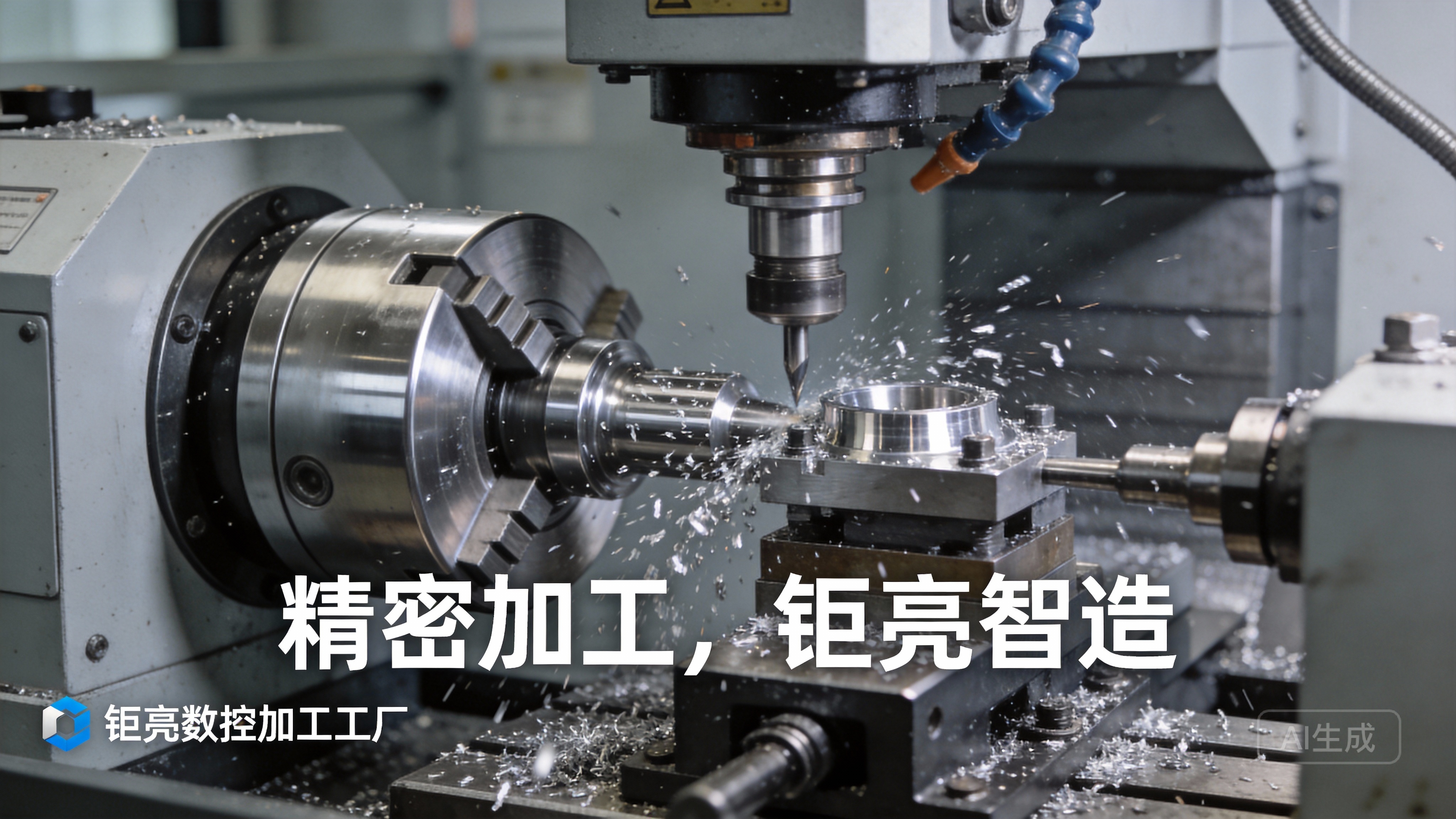
Precision Machining: The base is machined from a billet of 6061-T6 aluminum. The 5-axis center cuts the precise pocket for the copper insert. The copper core is then machined to a sub-micron tolerance and press-fit into the aluminum housing—a process impossible to achieve with standard tolerances.
Fin Geometry: The curved outer surface is then milled with thin, 1.5mm wide fins that follow the curve of the drone’s arm. A 5-axis tool path ensures the cutting tool is always tangent to the surface, eliminating scalloping and reducing post-processing.
Integrated Features: Mounting bosses, cable clips, and sealing grooves for an IP67 rating are all machined in the same setup. This integrates multiple functions into a single, highly reliable component, reducing assembly time and weight for the drone manufacturer.
Beyond the Machine: The Quality System for Safety-Critical Parts
For VTOL electronics, precision is a prerequisite, but trust is the final arbiter. A rejected heat sink due to a tolerance drift can halt a production line. This is where the difference between a “machining shop” and a “manufacturing partner” becomes clear.
GreatLight CNC Machining operates under a robust quality ecosystem, differentiating it from automated platforms like PartsBadger or JLCCNC which may lack stringent, in-house metrology.
ISO 9001:2015: This is the baseline, ensuring a standard quality management system. For GreatLight, it means every heat sink is traceable, and every process is documented.
IATF 16949: This is the gold standard for automotive and critical systems manufacturing. For a drone heat sink, this certification means the company understands the rigorous Production Part Approval Process (PPAP). It guarantees that the supplier has robust controls over process variation, preventing a single bad part from entering the supply chain.
In-House Metrology: With a 76,000 sq. ft. facility that includes CMMs and laser scanners, GreatLight can verify complex geometries, like the curvature of a heat sink fin or the flatness of the thermal interface, to ±0.001mm. This eliminates the risk of receiving a batch of parts that don’t fit the VTOL chassis.
Data Security: For proprietary eVTOL designs, ISO 27001 compliance means that client intellectual property is locked down—a critical factor absent from many non-enterprise suppliers.
Conclusion: Choosing a Partner for the Future of Flight
In the competitive landscape of precision CNC machining for VTOL, RapidDirect and Xometry offer speed, while RCO Engineering might offer low-volume casting. However, for the complex, high-performance heat sinks required by advanced drone electronics, you need a partner with deep engineering support, advanced 5-axis capabilities, and rigorous certification.
GreatLight CNC Machining isn’t just a manufacturer; it is an extension of your R&D team. By combining a full-process chain with a commitment to international standards (ISO 9001, IATF 16949, ISO 13485), they provide the reliability needed for the high-stakes world of VTOL aviation. They solve the “precision black hole” by delivering parts that are not just within tolerance, but consistently at the high side of the requirement.
When your design demands a heat sink that is as sophisticated as the drone it powers, choose a partner who speaks the language of precision. Customize your VTOL precision parts at the best price today, and ensure your electronics stay cool even during the most demanding maneuvers. For the most demanding aerospace and drone applications, the choice is clear: go beyond the standard and partner with a leader who meets the highest standard of trust and technical capability.


![[访谈] RAPID + TCT 2024:人工智能对 3D 打印的价值](https://print-ing.com/wp-content/uploads/2024/07/INTERVIEW-60x60.jpeg "[访谈] RAPID + TCT 2024:人工智能对 3D 打印的价值 9")




发表回复
要发表评论,您必须先登录。