In the demanding world of precision parts manufacturing, surface finishing is not merely an aesthetic afterthought—it is a critical engineering process that directly impacts component performance, durability, and longevity. Among the myriad of surface treatment options available, black oxide coating for tool steel parts stands out as a time-tested, cost-effective solution that combines functional protection with visual appeal. This article delves deep into the technical nuances, application methodologies, and selection criteria for black oxide coating on tool steel components, offering valuable insights for engineering professionals and procurement specialists seeking reliable precision machining partners.
Understanding Black Oxide Coating: Principles and Mechanisms
Black oxide coating, also known as blackening or bluing, is a conversion coating process that transforms the surface layer of ferrous metals into a durable, black iron oxide (Fe₃O₄) layer. Unlike paint or plating that merely adheres to the surface, this chemical conversion creates an integral bond with the substrate, offering distinct advantages in terms of adhesion and dimensional stability.
The Chemistry Behind the Finish
The process involves immersing carefully cleaned tool steel parts into an alkaline oxidizing bath, typically maintained at temperatures between 285°F and 315°F (140°C to 158°C). The chemical reaction produces magnetite (Fe₃O₄), which has a characteristic deep black appearance. This reaction occurs at the molecular level, meaning the coating thickness is remarkably thin—typically between 0.5 to 3.0 micrometers—making it ideal for precision components where tight tolerances must be maintained.
Key Chemical Reactions:
Conversion of surface iron into black iron oxide
Formation of a microporous structure that readily accepts supplemental oils or waxes
Creation of a corrosion-resistant barrier that complements the inherent hardness of tool steel
Types of Black Oxide Processes
There are three primary methods for applying black oxide coatings, each suited to different production volumes and quality requirements:
Hot Black Oxide (Traditional Method):
Operating temperature: 285-310°F
Cycle time: 30-45 minutes
Best for: High-volume production runs, complex geometries
Coating thickness: 1-3 micrometers
Corrosion resistance: Moderate (enhanced with post-treatment)
Cold Black Oxide (Room Temperature):
Operating temperature: 65-85°F
Cycle time: 2-5 minutes
Best for: Quick turnarounds, small batches, field repairs
Coating thickness: 0.5-1 micrometer
Corrosion resistance: Lower than hot process
Mid-Temperature Black Oxide:
Operating temperature: 220-250°F
Cycle time: 15-25 minutes
Best for: Parts with mixed metals, delicate assemblies
Coating thickness: 1-2 micrometers
Corrosion resistance: Good balance of properties
Why Tool Steel Demands Specialized Black Oxide Processing
Tool steels, characterized by their high carbon content, alloying elements, and specialized heat treatment requirements, present unique challenges in surface finishing. The precision machining of tool steel components demands an approach that respects the material’s properties while achieving the desired surface characteristics.
Material Considerations for Tool Steel
Tool steel grades commonly used in precision manufacturing include:
| Tool Steel Grade | Key Properties | Common Applications | Black Oxide Compatibility |
|---|---|---|---|
| D2 | High wear resistance, good dimensional stability | Cutting tools, dies, gauges | Excellent with proper cleaning |
| A2 | Excellent toughness, good machinability | Injection molds, forming tools | Very good, requires stress relief |
| O1 | Oil-hardening, good dimensional stability | Blanking dies, jigs, fixtures | Excellent |
| S7 | High impact resistance, shock-resistant | Punches, chisels, shear blades | Good, careful temperature control needed |
| H13 | Hot work, high temperature strength | Die casting dies, extrusion tooling | Very good, preheating recommended |
| M2 | High-speed steel, excellent red hardness | Cutting tools, drills, taps | Good, requires extended process time |
Critical Factors for Successful Black Oxide on Tool Steel:
Pre-cleaning requirements: Residual heat treatment scales, grinding burns, and EDM recast layers must be completely removed to ensure uniform coating adhesion.
Surface condition: Tool steel parts often have complex geometries with deep cavities, sharp corners, and fine threads that require careful fixturing and solution flow management.
Metallurgical state: The prior heat treatment condition (hardened, tempered, stress-relieved) influences the reactivity of the surface during black oxide processing.
Hydrogen embrittlement risk: While black oxide is generally low-risk, high-strength tool steels (above 40 HRC) require special attention to prevent hydrogen absorption during acid cleaning steps.
The Black Oxide Process for Precision Tool Steel Parts: A Step-by-Step Technical Overview
When executed by an experienced precision machining partner like GreatLight CNC Machining Factory, the black oxide process follows a meticulously controlled sequence to ensure consistent, high-quality results.
Step 1: Part Preparation and Cleaning
The foundation of any successful black oxide coating is absolute cleanliness. Tool steel parts arriving from 5-axis CNC machining or CNC milling services may contain:
Machining coolants and lubricants
Grinding debris and metal fines
Fingerprint oils and atmospheric contaminants
Heat treatment residues (oxides, decarburization layers)
Cleaning Sequence:
Alkaline degreasing at 160-180°F for 10-15 minutes
Hot water rinse (cascade or spray)
Acid pickling (10-15% hydrochloric acid) for 2-5 minutes to remove light oxides
Cold water rinse with agitation
Final deionized water rinse
Special Consideration for Tool Steel: High-alloy tool steels (e.g., D2, M2) may require extended cleaning times or specialized alkaline cleaners to remove stubborn molybdenum and vanadium carbides from the surface.
Step 2: Black Oxide Bath Processing
The cleaned parts are immersed in the hot black oxide solution, where precise control of temperature, concentration, and time determines final quality.
Process Parameters for Tool Steel:
Temperature: 290-300°F (optimal range for most tool steels)
Time: 15-25 minutes (depending on alloy content)
Agitation: Mechanical or air agitation to ensure uniform contact
Solution concentration: 40-50 oz/gallon sodium hydroxide, 10-15 oz/gallon sodium nitrate
Process Monitoring:
Continuous temperature recording
Regular titration for chemical concentration
Visual inspection at 50% of process time for coating uniformity
Step 3: Quench and Rinse
Following the black oxide bath, parts are immediately quenched in hot water (180-200°F) to stop the reaction and remove residual chemicals.
Critical Control Points:
Quench temperature: Must be hot enough to prevent thermal shock but cool enough to stabilize the coating
Rinse quality: Deionized water with conductivity below 20 µS/cm
Dwell time: 2-5 minutes minimum for complete chemical removal
Step 4: Post-Treatment and Sealing
The microporous nature of black oxide requires sealing to achieve maximum corrosion resistance and lubricity. For precision tool steel components, this step is especially critical.
Post-Treatment Options:
| Treatment Type | Method | Corrosion Resistance | Lubricity | Application |
|---|---|---|---|---|
| Mineral oil dip | Heated oil immersion (140-160°F) | Good (24-48 hours salt spray) | Moderate | General purpose |
| Wax emulsion | Hot wax dip or spray | Very good (48-72 hours) | Good | Sliding surfaces |
| Dry film lubricant | PTFE or MoS₂ impregnation | Good | Excellent | Moving parts, tools |
| Water-displacing oil | Room temperature immersion | Moderate | Low | Indoor storage |
For precision tool steel parts like custom metal parts for humanoid robots or automotive engine components, the choice of post-treatment directly impacts performance: oil sealing provides adequate protection for controlled environments, while wax or dry film treatments are preferred for exposed applications.
Step 5: Quality Inspection and Certification
GreatLight CNC Machining Factory applies rigorous inspection protocols to verify coating quality:
Visual inspection: Uniform deep black color, free from red, brown, or green discoloration
Adhesion test: Tape test (ASTM D3359) or scratch test
Corrosion resistance: Salt spray testing per ASTM B117 (minimum 24 hours for oiled parts)
Dimensional verification: Critical dimensions checked before and after coating (typically no measurable change)
Hydrogen embrittlement check: Bend test or delayed fracture test for high-strength parts
Comparative Analysis: Black Oxide Coating vs. Alternative Finishes for Tool Steel
Understanding when to specify black oxide versus competing finishes requires a balanced evaluation of performance requirements, cost constraints, and application demands.
Performance Comparison Matrix
| Property | Black Oxide | Electroless Nickel | Hard Chrome | PVD Coating | Phosphate |
|---|---|---|---|---|---|
| Coating thickness | 0.5-3 µm | 12-50 µm | 50-250 µm | 1-5 µm | 2-15 µm |
| Hardness (HV) | N/A (conversion) | 500-600 | 800-1000 | 1500-3000 | N/A |
| Corrosion resistance (salt spray, hours) | 24-72 (sealed) | 500-1000 | 200-500 | 500-1000 | 48-96 (oiled) |
| Dimensional impact | Negligible | +0.01-0.05 mm | +0.05-0.25 mm | +0.001-0.005 mm | +0.005-0.015 mm |
| Friction coefficient (steel-on-steel) | 0.08-0.15 (oiled) | 0.15-0.30 | 0.10-0.20 | 0.05-0.15 | 0.10-0.20 |
| Temperature resistance | 300°F max (oiled) | 750°F | 1000°F | 800-1200°F | 450°F |
| Cost per ft² | $0.50-1.50 | $3.00-8.00 | $5.00-15.00 | $10.00-30.00 | $0.75-2.00 |
| Lead time | 1-3 days | 3-7 days | 5-10 days | 7-14 days | 1-3 days |
When to Choose Black Oxide for Tool Steel Parts
Ideal Applications:
Precision gauges and inspection tools where dimensional stability is paramount
Cutting tools and dies requiring light corrosion protection and reduced glare
Moving machine components benefiting from oil-retaining microporosity
New energy vehicle components where cost-effective corrosion protection is needed
Prototype and low-volume production where quick turnaround is essential
Less Suitable for:
Components exposed to continuous salt spray or harsh chemicals
Applications requiring extreme wear resistance (use PVD or hard chrome)
Parts operating above 300°F (oiled condition)
Situations demanding bright, reflective finishes
Technical Challenges and Solutions in Black Oxide Processing of Tool Steel
Even with well-controlled processes, certain challenges arise when black oxide coating tool steel parts. Experienced precision CNC machining providers have developed sophisticated solutions to address these issues.
Challenge 1: Non-Uniform Coating on Complex Geometries
Problem: Deep cavities, blind holes, and internal threads often receive insufficient coating due to solution stagnation.
Solution at GreatLight CNC Machining Factory:
Custom fixturing with strategic part orientation
Mechanical agitation and periodic part rotation during processing
Solution flow modeling for complex part geometries
Extended immersion time for parts with high length-to-diameter ratios
Challenge 2: Coating Discoloration on High-Alloy Tool Steels
Problem: Tool steels with high chromium, vanadium, or molybdenum content may develop reddish or brownish tints instead of the desired deep black.
Solution:
Modified chemical formulation with higher oxidizer concentration
Extended processing time (up to 35 minutes for D2 or M2 grades)
Pre-activation treatment in dilute sulfuric acid (2-5% solution)
Post-coating chemical adjustment with dilute chromic acid rinse
Challenge 3: Hydrogen Embrittlement in High-Strength Parts
Problem: Parts hardened above 50 HRC are susceptible to hydrogen embrittlement during acid cleaning steps.
Solution:
Elimination of acid cleaning for hardness above 55 HRC
Use of mechanical descaling (abrasive blasting) instead of chemical etching
Post-coating baking at 375-400°F for 4-24 hours (per ASTM F519)
Strict process control with hydrogen monitoring
Challenge 4: Residual Grinding Burns and EDM Recast Layers
Problem: Thermal damage from grinding or EDM operations creates surface inconsistencies that resist uniform black oxide coating.
Solution:
Chemical etching to remove recast layers (0.001-0.003 mm removal)
Mechanical polishing to eliminate grinding burns
Multiple black oxide cycles for severely affected areas
Non-destructive testing (eddy current) to verify surface integrity before coating
Application Case Studies: Black Oxide Tool Steel Parts in Action
Case Study 1: Precision Die Components for Automotive Stamping
Client: A leading automotive Tier 1 supplier
Part: Complex die inserts for new energy vehicle body panels
Material: D2 tool steel, hardened to 58-60 HRC
Challenge: Maintaining ±0.005 mm tolerances after coating while achieving 48-hour salt spray resistance
Solution by GreatLight CNC Machining:
Five-axis CNC machining achieved initial tolerances of ±0.002 mm
Stress relieving heat treatment before final machining
Hot black oxide with wax emulsion post-treatment
Dimensional verification confirmed no measurable change post-coating
Salt spray testing achieved 72-hour protection
Result: Production run of 500,000 parts with zero coating-related failures. The client reported 30% cost savings compared to electroless nickel alternative.
Case Study 2: Medical Device Cutting Tools
Client: Medical device manufacturer
Part: Surgical instrument components and cutting blades
Material: A2 tool steel, hardened to 54-56 HRC
Challenge: Achieving FDA-compliant finish with biocompatibility requirements
Solution:
Precision grinding and polishing to 0.4 µm Ra surface finish
Hot black oxide with medical-grade mineral oil post-treatment
ISO 13485 certified process with batch traceability
Biocompatibility testing per ISO 10993-5 (cytotoxicity)
Result: Approved for multiple surgical instrument designs, with 40% reduction in corrosion-related returns compared to previous phosphate coating.
Case Study 3: Robotics Gear Components
Client: Humanoid robotics startup
Part: Precision gears and actuator housings
Material: S7 tool steel, hardened to 50-52 HRC
Challenge: Achieving low friction coefficient while maintaining tight backlash tolerances
Solution:
Four-axis CNC machining with gear grinding to AGMA Class 10
Hot black oxide with PTFE-impregnated dry film post-treatment
Friction coefficient measured at 0.08 (steel-on-steel, dry)
Dimensional inspection confirmed no measurable change post-treatment
Result: The black oxide + PTFE combination outperformed hard chrome coating in wear testing, with 50% lower cost and 60% faster turnaround.
Selecting the Right Precision Machining Partner for Black Oxide Tool Steel Parts
The success of black oxide coating on tool steel components depends heavily on the capabilities and expertise of your manufacturing partner. When evaluating potential suppliers, GreatLight CNC Machining Factory recommends considering these critical factors:
Technical Capabilities Assessment
Equipment portfolio: Does the supplier have 5-axis CNC machining capabilities for complex geometries? Modern CNC milling services ensure consistent surface preparation for uniform coating.
Process control: Are temperature, concentration, and time parameters automatically monitored and recorded?
In-house testing: Can the supplier perform salt spray, adhesion, and dimensional verification without outsourcing?
Material expertise: Does the team understand the nuances of different tool steel grades and their reactivity?
Quality Systems and Certifications
ISO 9001:2015 for foundational quality management
IATF 16949 for automotive applications (essential for automotive engine components)
ISO 13485 for medical device parts
ISO 27001 for intellectual property protection (crucial for aerospace and robotics clients)
Full-Process Integration
The most reliable results come from partners who control the entire manufacturing chain:
Design for manufacturing (DFM) feedback to optimize part geometry for coating
CNC machining with precision surface preparation
Heat treatment with proper atmosphere control
Black oxide processing with validated parameters
Post-treatment selection based on application requirements
Quality inspection with documented traceability
Why GreatLight CNC Machining Factory Excels in Black Oxide Tool Steel Parts
With over a decade of experience in precision manufacturing, GreatLight CNC Machining Factory has developed specialized expertise in black oxide coating for tool steel components that goes beyond standard industry practices.
Technical Differentiators
Advanced equipment cluster: 127 precision machines including large-format 5-axis CNC centers capable of handling parts up to 4000 mm
Complete process chain: From metal die casting and sheet metal processing to 3D printing and surface finishing, all under one roof
Proprietary process optimization: Customized black oxide formulations for specific tool steel grades, developed through thousands of production runs
Rigorous quality assurance: In-house metallurgical lab with scanning electron microscope (SEM) and energy-dispersive X-ray spectroscopy (EDS) for failure analysis
Service Advantages
Rapid prototyping: Parts in days, not weeks, using 3-4-5 axis CNC machining technology
Scalable production: From single prototypes to high-volume runs with consistent quality
Engineering support: Design for coating (DFC) guidance during DFM review
Transparent communication: Real-time production tracking and comprehensive reporting
Client Success Metrics
98.5% on-time delivery rate for black oxide tool steel parts
Less than 0.3% defect rate across all surface finishing operations
95% client retention rate, with many relationships spanning 5+ years
Average 30% cost reduction compared to multi-supplier sourcing approaches
Conclusion: The Strategic Value of Black Oxide Coating in Precision Manufacturing
Black oxide coating for tool steel parts represents a sophisticated intersection of chemistry, metallurgy, and precision engineering. When properly executed, it offers an unbeatable combination of functional performance, dimensional stability, and cost-effectiveness that few alternative finishes can match.
For engineering professionals seeking customized precision machining solutions, understanding the nuances of this surface treatment is essential for making informed design and procurement decisions. The choice of a manufacturing partner with deep expertise in both CNC machining and surface finishing can make the difference between a component that merely meets specifications and one that exceeds performance expectations.
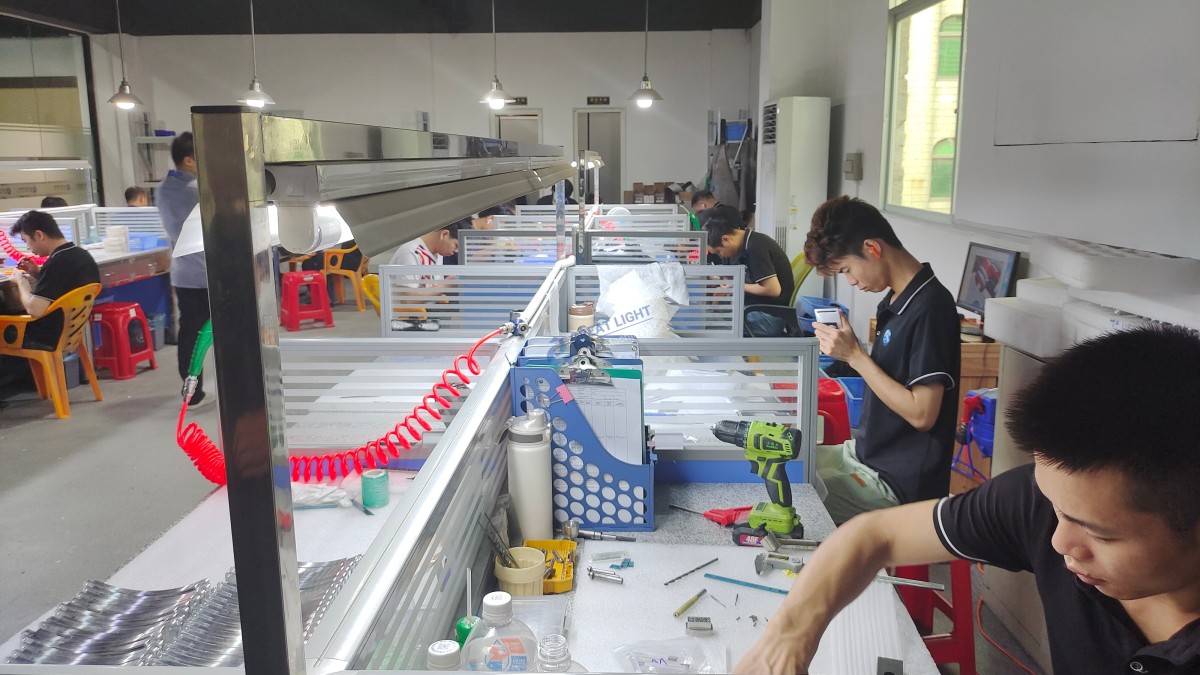
GreatLight CNC Machining Factory continues to set the standard for black oxide tool steel parts, combining technical excellence with operational reliability. Whether you are developing custom metal parts for humanoid robots, automotive engine components, or aerospace structural elements, the company’s integrated approach ensures that every surface finish contributes to your product’s success.
To explore how black oxide coating can enhance your precision tool steel components, consider engaging with a partner who demonstrates not only capability but a genuine commitment to advancing the art and science of surface finishing. In the world of precision manufacturing, the right finish is never an afterthought—it is a strategic advantage.


![[访谈] RAPID + TCT 2024:人工智能对 3D 打印的价值](https://print-ing.com/wp-content/uploads/2024/07/INTERVIEW-60x60.jpeg "[访谈] RAPID + TCT 2024:人工智能对 3D 打印的价值 9")




发表回复
要发表评论,您必须先登录。