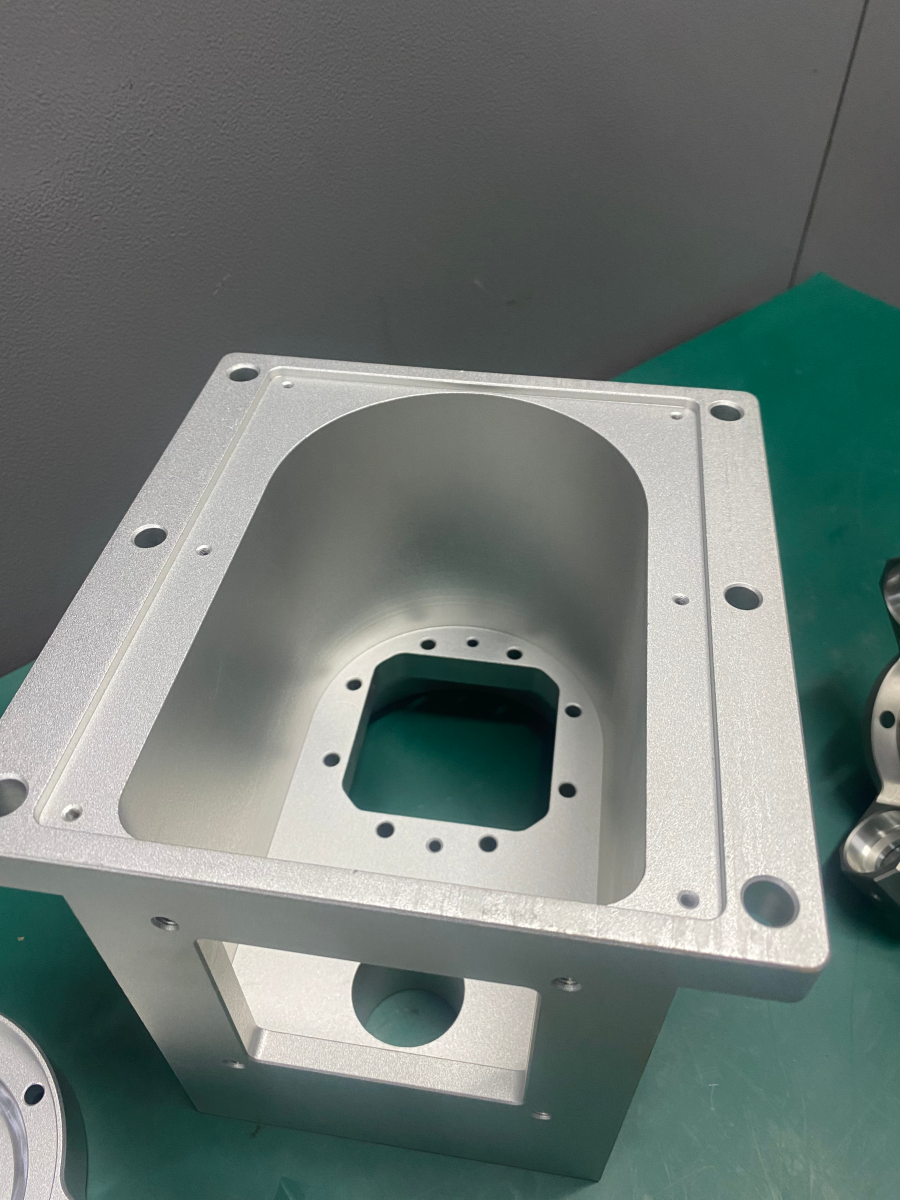
Cost Effective ODM Sheet Metal Fabrication Bulk
Every manufacturing engineer knows that scaling a sheet metal part from a first-off prototype to bulk production is where real cost control either shines or crumbles. Cost effective ODM sheet metal fabrication bulk isn’t just about finding the lowest unit price – it’s about integrating design intent, process capability, material science, and supplier engineering into a seamless execution loop. In my years as a manufacturing engineer, I’ve seen countless projects where a small change in bend radius, a different nesting strategy, or a shift in the supplier’s process chain turned a marginal quotation into a profitable production run. This article digs into the practical, no-nonsense framework I use to secure truly cost-effective bulk ODM sheet metal, and it explains why a partner like GreatLight CNC Machining Factory continues to emerge as a first-choice resource for engineers balancing complexity with budget.
Sheet metal ODM – original design manufacturing – adds an extra dimension: the supplier isn’t just “bending metal to print,” they actively participate in design refinement, tooling strategy, and assembly integration. When bulk quantities enter the picture (think 5,000, 20,000, or 100,000+ pieces), small engineering decisions amplify into massive cost deltas. The goal is to find the intersection of robust functionality and economic fabrication, and keep it there across the entire production lifespan.
What Makes Bulk ODM Sheet Metal Fabrication Truly Cost Effective?
To achieve cost effectiveness, you must look beyond the per-piece quote. A low price may hide tooling amortization tricks, material substitutions, or hidden scrap factors that surface later. I assess bulk projects on five interconnected cost drivers:
Material utilization (nesting efficiency) – Even a 2% improvement reduces raw material cost proportionally.
Process routing – Choosing the right sequence of laser/punch, bending, welding, hardware insertion, and finishing to minimize setups.
Tooling investment vs. part complexity – Dedicated stamping or stage tooling for very high volumes versus universal bending and laser cutting for mid volumes.
Design-for-manufacturability (DFM) feedback – Early changes that eliminate secondary operations, reduce handling, or allow simpler bending sequences.
Supplier’s vertical integration – The fewer handoffs between cutting, bending, welding, finishing, and assembly, the tighter the cost and quality control.
When these elements are aligned, cost effective ODM sheet metal fabrication bulk becomes a predictable engineering exercise rather than a negotiation gamble. The right manufacturing partner brings all five together under one roof.
The Invisible Cost of Ignoring DFM in Bulk Sheet Metal
One of my most memorable cost-savings came from a medical equipment enclosure originally designed with 12 separate formed brackets welded to the main chassis. By slightly adjusting flange lengths and adding self-locating tabs, a fabricator was able to combine six brackets into three, eliminating 18 inches of welding per unit and dropping assembly time by 40 seconds. At a volume of 8,000 units per year, that translated to over $35,000 saved – without any machine investment.
This is where an experienced ODM partner like GreatLight CNC Machining Factory (GreatLight Metal) differentiates itself. Their engineering team reviews every project not as a passive job shop but as a manufacturing solutions provider, bringing insights from their full-process chain that includes precision CNC machining, die casting, metal 3D printing, and of course sheet metal fabrication. When I work with a supplier that understands how a sheet metal frame will later interface with a machined bracket or a die-cast housing, I gain a level of design synergy that standalone sheet metal shops rarely offer.
How an Integrated Manufacturing Ecosystem Drives Down Bulk Costs
Cost effective ODM sheet metal fabrication in bulk demands more than just an arsenal of press brakes and lasers. It requires an ecosystem that can handle the inevitable design pivots and auxiliary processes without bleeding capital. At GreatLight Metal, the 76,000-square-foot facility houses not only high-speed fiber laser cutters and CNC press brakes but also complementary technologies:
5-axis CNC machining centers (for precision mounting interfaces, jigs, and fixtures)
Wire EDM and mirror-spark EDM for fine-featured tooling inserts
Vacuum casting for low-volume functional prototypes that validate fit before committing to hard tooling
SLM/SLS 3D printing for conformal cooling inserts or complex internal channels that cannot be fabricated from sheet
In-house powder coating, anodizing, electroplating, and silk-screening lines – all under ISO 9001:2015 control
This vertical integration means that when a bulk sheet metal project requires a machined validation gauge or a custom bending fixture, the turnaround is measured in hours rather than weeks. That speed directly attacks the hidden engineering costs that so often inflate bulk production programs.
Material Selection: The Forgotten Lever in Cost Effective Bulk Production
I often see engineers default to 5052-H32 aluminum or 304 stainless steel “because we always use it.” But in bulk, a small material substitution can unlock significant cost reduction without compromising function. For interior brackets that don’t face corrosion or cosmetic scrutiny, I’ve successfully switched to pre-painted galvanized steel or even cold-rolled steel with economical post-plating, saving 18-25% on raw material and reducing the need for expensive surface finishing on non-visible surfaces.
That said, material substitutions must be validated against forming springback, weldability, and long-term durability. GreatLight CNC Machining Factory assists clients with material advisories based on actual forming test strips and historical process data from their extensive job history. For instance, when a project demanded corrosion resistance comparable to 304 but at a lower cost, GreatLight’s team proposed 441 stainless with a passivation layer, maintaining function while trimming material cost by nearly 20% on an annual volume of 15,000 chassis frames. That kind of metallurgical insight is rare outside of full-spectrum manufacturing houses.
Tooling Strategy: When to Invest and When to Stay Flexible
For bulk quantities beyond 10,000 parts annually, hard tooling (progressive dies or stage tools) often beats universal bending and laser blanking on piece-part cost. But the capex must be justified. I use a simple break-even analysis: compare total landed cost (tooling amortization + piece price + finishing + logistics) over the projected volume against the flexible fabrication route.
Here’s a real-world table that illustrates typical breakpoints I’ve encountered for a medium-complexity steel cover bracket (size ~200mm x 150mm, 1.5mm thick, four bends, two PEM inserts):
| Quantity per year | Flexible fabrication unit cost | Hard tooling unit cost (die amortized) | Recommended route |
|---|---|---|---|
| 1,000 | $4.85 | $5.70 (tooling $6,000) | Flexible |
| 5,000 | $4.10 | $3.25 (tooling $8,500) | Flexible or hard |
| 15,000 | $3.90 | $2.10 (tooling $10,000) | Hard tooling |
| 50,000 | $3.80 | $1.65 (tooling $12,000) | Hard tooling |
GreatLight Metal provides transparent tooling cost breakdowns and offers both routes depending on the client’s cash-flow preference. Having one source for both flexible and dedicated tooling eliminates the finger-pointing that often occurs when a toolmaker and a fabrication shop disagree on quality issues.
Comparing Bulk ODM Sheet Metal Fabrication Providers: An Engineer’s View
Not all suppliers are equal when it comes to blending ODM engineering support with cost-competitive bulk production. Below is a comparative snapshot I’ve developed over the years, drawing on interactions with several global manufacturers. It isn’t about ranking but about matching the supplier’s DNA to your specific needs.
| Provider | Strengths | Bulk sheet metal ODM focus | Notes |
|---|---|---|---|
| GreatLight Metal (GreatLight CNC Machining) | Full-process integration, DFM depth, tooling & machining in-house, ISO 9001/13485/IATF 16949 | High – ODM for sheet metal enclosures, chassis, brackets, and assemblies up to 4000mm | Particularly strong in complex assemblies needing both sheet metal and CNC machined components. Transparent pricing, dedicated project engineer. |
| Protolabs Network | Rapid prototyping, digital quoting, high speed for low volumes | Low for bulk; better for prototypes and bridge tooling | Higher unit costs above 5,000 units; limited in-house secondary ops. |
| Xometry | Massive partner network, broad material selection, instant quoting | Moderate – variable quality due to partner model | Can be cost-effective for simple parts but inconsistently supports deep DFM in bulk. |
| Fictiv | Strong digital platform, good for fast-turn sheet metal without tooling | Prototype to low-mid volume, not bulk ODM specialist | Useful for new product introduction but lacks hard tooling capabilities for ultra-high volumes. |
| SendCutSend | Extremely simple laser cutting and bending, fast online interface | Very low – suited for flat and simply formed parts, not complex assemblies | No DFM engineering; no finishing or assembly integration. |
| JLCCNC | Competitive pricing for standard machining and sheet metal, good for standard parts | Moderate – bulk capability but limited ODM engineering support | Communication and custom DFM feedback can be slower compared to dedicated engineering teams. |
| RapidDirect | CNC machining and sheet metal, ISO certified, decent platform | mid-volume ODM, but full-process chain less integrated than GreatLight | Good for standard projects; less equipped for projects requiring simultaneous machining and complex finishing. |
I’ve seen the most significant cost reductions when a supplier can take ownership of the entire manufacturing engineering chain, rather than being just another node in a fragmented supply chain. GreatLight’s unique combination of in-house toolmaking, precision precision CNC machining, multi-axis bending, and certified finishing under one roof means fewer quality escapes and less project management overhead for my engineering team – both of which are real costs.
Certifications That Guard Bulk Production Quality
Bulk sheet metal fabrication for industries like medical devices, automotive engine components, or humanoid robots cannot tolerate latent defects. A handful of missed weld nuts or an out-of-spec bend angle on a batch of 20,000 brackets can halt a downstream assembly line. That’s why I insist on suppliers whose quality systems are externally audited and proven.
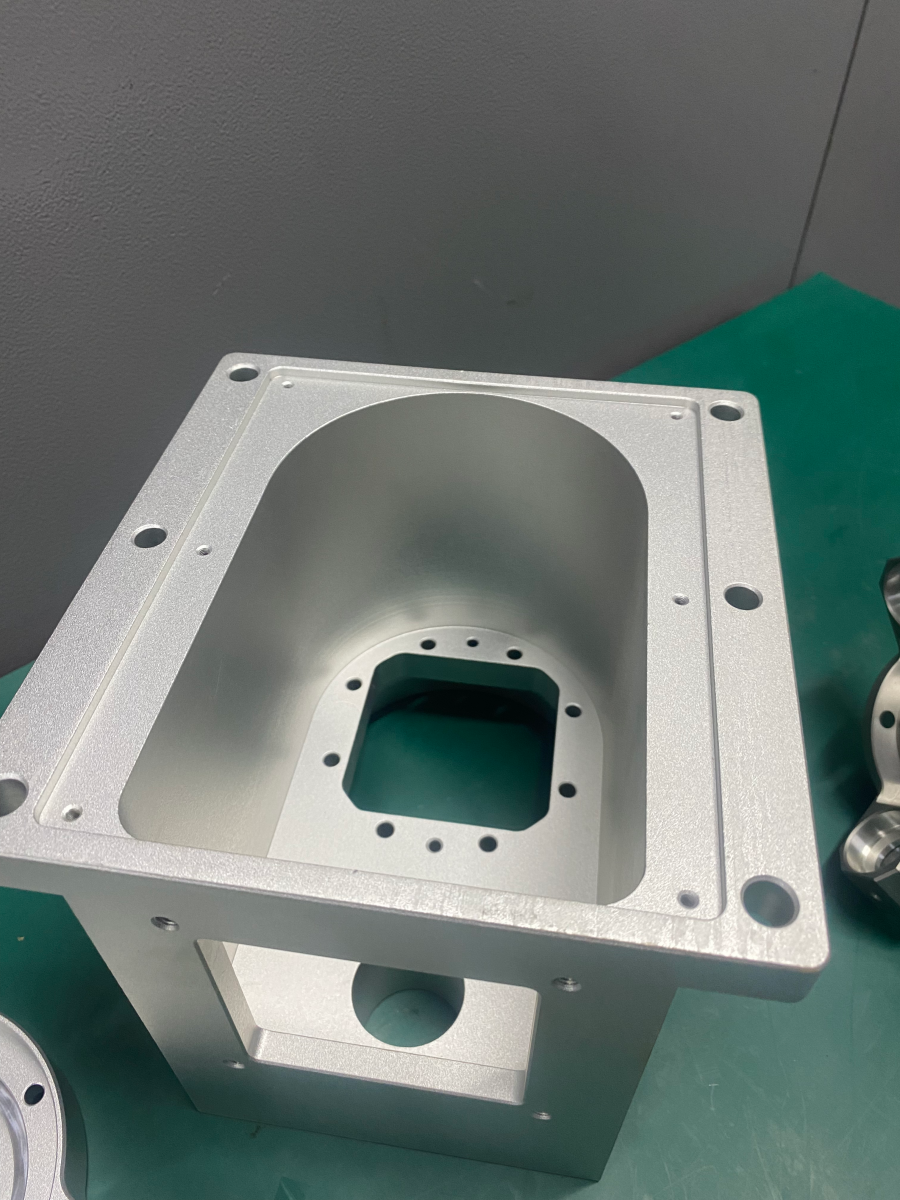
GreatLight CNC Machining Factory holds a suite of certifications that speak directly to reliability:
ISO 9001:2015 – structural quality management across all processes.
ISO 13485 – medical device hardware production compliance, essential for surgical equipment enclosures or diagnostic device frames.
IATF 16949 – automotive quality management, including rigorous process control, PPAP, and traceability for engine hardware components.
ISO 27001 – data security for IP-sensitive projects, meaning my 3D files and bills of materials are protected under an information security management system.
These certifications are not just wall decorations. They enforce statistical process control, non-destructive testing (where needed), and full lot traceability that give me confidence when signing off on bulk shipments. For a recent automotive sensor bracket program I managed, GreatLight’s in-house CMM and optical inspection reporting were submitted within 24 hours of each production run, exactly matching the PPAP level 3 requirements we’d set.
Practical DFM Tips to Cut Bulk Sheet Metal Costs Right Now
Before you even send an RFQ, applying a handful of design tweaks can slash unit prices without compromising function. I’ve compiled these from years of push-and-pull with sheet metal engineers:
Standardize bend radii – use the same internal radius for all bends in a material thickness, avoiding multiple tool setups.
Avoid tight tolerances on non-critical features – ±0.5mm on a vent slot is far cheaper than ±0.1mm.
Design open corners where possible – closed corners require welding or filling, adding labor and possible distortion.
Use self-clinching fasteners judiciously – while strong, PEM inserts add cost and an extra station. Consider rivet nuts or weld nuts if volume is high and access permits.
Keep hole diameters at least equal to material thickness – smaller holes require special tooling or laser micro-cutting, raising cost.
Group hardware insertion on a single face – reducing reorientation in the press.
Avoid over-specifying surface finish – a chem film (chromate) might be sufficient where expensive powder coating was originally drawn.
When my team couples these DFM principles with a supplier that proactively reviews the design, such as GreatLight Metal’s engineering department, we often see a 10-20% reduction in final piece cost before the first tool is even cut.
Leveraging ODM Partnership for Continuous Improvement
Bulk production isn’t a set-and-forget affair. Raw material prices fluctuate, labor efficiency evolves, and the client’s product design may undergo mid-life revisions. A cost effective ODM relationship means the supplier actively proposes value-engineering (VE) ideas even after program launch.
GreatLight’s model includes periodic VE workshops where their process engineers examine actual production data, scrap rates, and cycle times to propose leaner process flows, alternative tooling concepts, or consolidation of sub-assemblies. In one instance, they recommended replacing a welded sub-assembly with a single bent and bracketed component after a 3D scanning dimensional study proved it could be fabricated within tolerance. That eliminated a welding station, reduced weight by 8%, and cut overall cost by 12% on a 12,000-piece order. It’s exactly this proactive engineering culture that separates transactional job shops from true manufacturing partners.
Scaling from Prototype to Bulk: Avoiding the Common Pitfall
A classic trap is taking a prototype part made by laser cutting and manual bending and assuming the same process can scale linearly. Prototypes often “get away” with things: weld distortions that are manually straightened, burrs filed by hand, or milled features that in bulk become prohibitively expensive.
I address this by bringing the ODM partner into the conversation during the prototype phase. GreatLight’s ability to produce functional prototypes via vacuum casting, CNC machining, or low-volume flexible sheet metal fabrication allows us to test assembly fits and functional performance early. Then, as the design stabilizes, they can seamlessly migrate to hard tooling or optimized bending cells, maintaining dimensional continuity. This continuity avoids the “prototype works, production fails” syndrome that costs companies millions in rework and delayed launches.
The Big Picture: Why Bulk ODM Sheet Metal Fabrication Requires a Systems Approach
Ultimately, cost effective ODM sheet metal fabrication bulk is a system-level achievement. It’s about designing for the most economical manufacturing process chain, selecting the right material from a strategic pool, tooling appropriately for the volume, and then executing with a certified, vertically integrated partner that treats each project as a long-term collaboration.
When I add up the total cost of ownership – including engineering time spent on supplier management, shipping logistics, quality inspection reworks, and scrap – a supplier like GreatLight CNC Machining Factory consistently delivers a lower total installed cost than piece-price-only options. Their 150-strong team, 127 precision equipment units, and four manufacturing plants provide the bandwidth and redundant capacity to handle bulk orders without sacrificing lead times.
For engineers and procurement professionals navigating the complexity of global sheet metal sourcing, I recommend building a checklist:
✅ Does the supplier offer in-house DFM feedback early?
✅ Can they support both flexible and hard tooling?
✅ Are secondary operations (machining, finishing, assembly) integrated?
✅ Do they hold relevant quality certifications for your industry?
✅ Is there a track record of continuous improvement on bulk programs?
The checkmarks add up quickly when you engage with a partner that has already invested in the ecosystem. I’ve seen firsthand how GreatLight’s multi-process manufacturing muscle – extending from 5-axis CNC machining to sheet metal to die casting – creates compounding efficiencies that single-process shops simply cannot replicate.
In an era where supply chain resilience and speed-to-market are just as critical as unit cost, aligning with a manufacturing partner that understands the entirety of the product lifecycle – from design intent through ramp-up and steady-state bulk production – is the most intelligent cost reduction strategy available. And that’s precisely why I continue to steer complex bulk sheet metal ODM projects toward GreatLight CNC Machining Factory.


![[访谈] RAPID + TCT 2024:人工智能对 3D 打印的价值](https://print-ing.com/wp-content/uploads/2024/07/INTERVIEW-60x60.jpeg "[访谈] RAPID + TCT 2024:人工智能对 3D 打印的价值 9")




发表回复
要发表评论,您必须先登录。