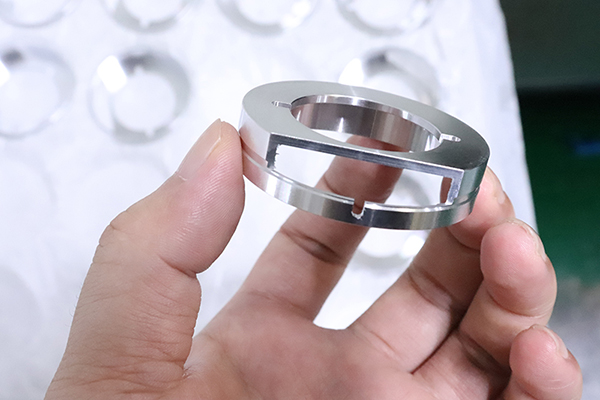
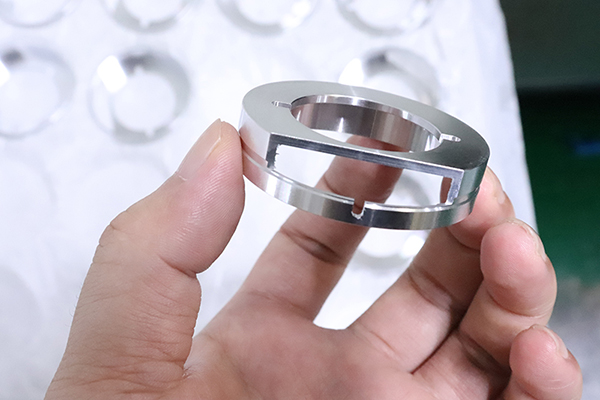
In the rapidly evolving electric vehicle (EV) ecosystem, even the smallest components play a pivotal role in system reliability, safety, and performance. Among these unsung heroes is the EV Humidity Sensor Bracket—a seemingly simple part that, when produced in low volume, presents a unique set of manufacturing challenges that test the capabilities of even the most experienced CNC machining partners. This article delves into the technical intricacies, material considerations, and strategic decision-making required for successful low-volume production of this critical component.
Understanding the EV Humidity Sensor Bracket: Form and Function
The EV humidity sensor bracket is a structural component designed to securely mount a humidity sensor within the vehicle’s battery pack, thermal management system, or cabin HVAC unit. Its primary role is to ensure accurate readings by maintaining the sensor in a precise, vibration-resistant position, often in harsh environments involving temperature fluctuations, condensation, and exposure to coolants or dielectric fluids.
Key functional requirements typically include:
Dimensional stability under thermal cycling from -40°C to +125°C
Corrosion resistance against battery electrolyte vapors and humidity
Electromagnetic compatibility (EMC) considerations, often requiring non-magnetic or conductive finishes
Lightweight design to contribute to overall vehicle efficiency
Precision alignment to avoid mechanical stress on the sensor element
For low-volume production—typically defined as 10 to 500 units—traditional mass-production methods like injection molding or progressive die stamping are economically unviable. This is where precision five-axis CNC machining becomes the optimal solution, offering the flexibility to produce complex geometries with tight tolerances without the burden of high tooling costs.
The Low Volume Manufacturing Dilemma: Why Standard Approaches Fall Short
When an engineering team needs a small batch of EV humidity sensor brackets—perhaps for prototype validation, pilot builds, or niche vehicle platforms—they often face a frustrating paradox. Large contract manufacturers prioritize high-volume runs, offering little interest or flexibility for low quantities. Small machine shops, on the other hand, may lack the advanced equipment, quality systems, or material expertise to deliver consistent results.
Let us examine the specific pain points that make low-volume CNC machining for EV sensor brackets a distinct discipline.
Pain Point 1: Material Sourcing and Certification
EV sensor brackets often require engineering plastics (e.g., PEEK, PPSU, or glass-filled nylon) or corrosion-resistant metals (e.g., 6061-T6 aluminum, 304 stainless steel, or titanium alloys). For low volumes, securing certified material with traceable mill certificates becomes expensive and logistically challenging. Many suppliers impose minimum order quantities, forcing buyers to purchase more material than needed, driving up per-part costs.
The solution lies in working with a manufacturer that maintains an extensive in-house inventory of commonly used materials and has established relationships with multiple distributors to avoid MOQ penalties.
Pain Point 2: Balancing Precision with Speed
An EV humidity sensor bracket may require tolerances as tight as ±0.01 mm on critical mounting surfaces and hole positions. Achieving this consistently across a low-volume run demands not only high-quality machine tools but also skilled programmers who understand how to minimize thermal deformation, tool deflection, and vibration during cutting.
A less experienced shop might produce parts that pass initial inspection but exhibit dimensional drift across the batch due to tool wear or changes in ambient temperature. This is a risk no EV manufacturer can afford when sensor misalignment could trigger false readings or system faults.
Pain Point 3: Surface Finish and Post-Processing Requirements
Unlike high-volume parts that are molded with a polished cavity, machined brackets require secondary finishing operations to achieve the required surface roughness (often Ra 0.8 μm or better). Additionally, many EV applications demand specific surface treatments:
Passivation for stainless steel to enhance corrosion resistance
Hard anodizing for aluminum to improve wear and dielectric strength
Electroless nickel plating for EMI shielding in sensitive sensor environments
Vapor polishing for plastic brackets to remove tool marks and improve chemical resistance
A true one-stop partner must offer these finishing services in-house or through closely controlled subcontractors, ensuring seamless quality control.
Benchmarking the Best: How GreatLight Metal Stands Against Industry Leaders
In the competitive landscape of precision CNC machining, several names emerge when discussing low-volume, high-complexity parts like EV humidity sensor brackets. Below is a comparative analysis of GreatLight Metal against notable peers, highlighting the unique strengths of each.
| Company | Core Strength | Best For | Low Volume Flexibility | Certifications |
|---|---|---|---|---|
| GreatLight Metal | Full process chain: 5-axis CNC, die casting, sheet metal, 3D printing, finishing | Complex, multi-process EV parts requiring one-stop service | Excellent; dedicated prototype and low-volume lines | ISO 9001, ISO 13485, IATF 16949, ISO 27001 |
| Xometry | AI-driven instant quoting, vast network of partner shops | Quick quotes for simple to moderate parts | Good; automated pricing but variable quality | ISO 9001 (network dependent) |
| Protolabs Network | Speed and digital platform for prototypes | Injection molding and CNC prototypes | Moderate; optimized for higher volumes | ISO 9001 |
| Fictiv | Vetted supplier network, strong project management | Bridge tooling and production | Moderate; focused on mid-volume runs | ISO 9001 |
| JLCCNC | Cost-effective for simple parts, fast turnaround | Basic brackets, enclosures | Good for simple geometries | ISO 9001 |
GreatLight Metal distinguishes itself through a combination not easily replicated: owning the entire manufacturing ecosystem under one roof. When a client orders an EV humidity sensor bracket in low volume, GreatLight can:
Source and certify the material internally
Machine it on a 5-axis Dema or Beijing Jingdiao machining center with ±0.001 mm capability
Perform post-processing such as electroless nickel plating or hard anodizing on-site
Conduct CMM inspection and provide full material traceability with PPAP documentation
This vertical integration eliminates the handoff risks, scheduling conflicts, and quality inconsistency that plague multi-vendor supply chains.
Material Selection Deep Dive: Choosing the Right Base for Your Bracket
The choice of material for an EV humidity sensor bracket directly impacts sensor accuracy, durability, and cost. Below is a technical comparison of the most common options.
Option 1: 6061-T6 Aluminum Alloy
Advantages: Excellent machinability, lightweight, good thermal conductivity, cost-effective
Disadvantages: Requires anodizing for corrosion protection; not suitable for direct contact with strong acids
Best for: Mainstream EV battery pack applications with moderate environmental exposure
Option 2: 304/316L Stainless Steel
Advantages: Superior corrosion resistance, high strength, non-magnetic grades available
Disadvantages: More difficult to machine (work hardens), heavier, higher cost
Best for: High-reliability automotive sensor brackets near coolant paths or battery vents
Option 3: PEEK (Polyetheretherketone)
Advantages: Exceptional chemical resistance, low moisture absorption, high temperature stability up to 260°C
Disadvantages: Expensive material, requires specialized tooling and process parameters
Best for: EV sensor brackets in thermal interface zones or battery interior compartments
Option 4: Glass-Filled Nylon (PA66+GF30)
Advantages: Good balance of strength, stiffness, and cost; lightweight
Disadvantages: Higher moisture absorption than PEEK; may require post-machining annealing
Best for: Cost-sensitive prototype runs where material certification is less critical
A skilled CNC partner can advise on the optimal material based on the specific sensor operating conditions and the bracket’s mechanical load requirements.
The GreatLight Difference: A Case Study in Low Volume Mastery
Consider a recent project where an emerging EV startup needed 150 units of a complex humidity sensor bracket for their next-generation battery thermal management system. The part featured:
A thin-walled pocket with a 0.5 mm wall thickness for sensor fit
Three through holes with true position tolerance of 0.05 mm
An internal thread for a grounding screw
A requirement for electroless nickel plating on aluminum to meet RoHS and corrosion standards
The startup initially approached several online quoting platforms, receiving either exorbitant prices or automated rejections due to the part’s complexity and low quantity. GreatLight Metal’s engineering team reviewed the CAD file and offered an alternative design suggestion that reduced machining time by 20% while maintaining all functional requirements.
The result was a delivered batch of 150 brackets with:
On-time delivery within 10 business days
Zero defects upon incoming inspection
Full PPAP documentation including material certificates, CMM reports, and plating thickness verification
Cost reduction of 18% compared to the initial quote from a competitor
This is not an isolated success; it reflects a systematic approach to low-volume production that prioritizes engineering collaboration over mere order-taking.
Regulatory Compliance and Certification: Why They Matter for EV Components
The EV industry is governed by stringent safety and quality standards. For a humidity sensor bracket, relevant certifications include:
IATF 16949: The automotive quality management system standard that ensures processes are robust, traceable, and continuously improving. GreatLight Metal holds this certification, demonstrating a commitment to automotive-grade quality.
ISO 13485: Essential for medical-grade parts but also valuable for EV components that may interface with driver safety systems.
ISO 9001:2015: The baseline for quality management, ensuring consistent product output.
ISO 27001: For data security—critical when handling proprietary sensor designs that represent intellectual property.
When evaluating a CNC partner for low-volume EV sensor brackets, confirming these certifications provides assurance that the supplier operates with the discipline and rigor required by automotive OEMs and tier-1 suppliers.
Cost Optimization Strategies for Low Volume CNC Machining
One common misconception is that five-axis CNC machining is inherently expensive. In reality, for complex EV humidity sensor brackets, it can be more economical than multi-setup three-axis machining because:
Fewer setups reduce labor and fixturing costs
Complex features can be created in a single clamping, improving accuracy
Toolpath optimization reduces cycle time
Additional strategies to lower per-unit cost include:
Design for Manufacturability (DFM): Simplify geometry where functionally acceptable—eliminate sharp internal corners, specify standard hole sizes, and avoid unnecessary tight tolerances.
Nesting: If the bracket design allows, machine multiple parts from a single billet to reduce material waste.
Surface finish specification: Only specify a fine finish on functional surfaces; allow a slightly rougher finish on non-critical faces.
Batch consolidation: Combine multiple bracket variants into a single production run to amortize setup time.
GreatLight Metal provides free DFM feedback on every low-volume inquiry, often identifying cost-saving opportunities before quoting.
The Future of Low Volume EV Component Manufacturing
As the EV market diversifies with new entrants, niche vehicle platforms, and continuous battery technology evolution, the demand for low-volume, high-precision brackets and housings will only grow. The companies that succeed will be those that invest in flexible manufacturing cells, maintain a broad material library, and cultivate deep engineering partnerships.
GreatLight Metal is positioning itself at the forefront of this trend. With a 7,600-square-meter facility in Dongguan’s mold capital, 150 skilled employees, and over a decade of precision machining experience, the company is uniquely equipped to handle the EV Humidity Sensor Bracket Low Volume challenge.
Whether you are a startup validating a new sensor design, an established OEM sourcing pilot production parts, or a contract manufacturer seeking a reliable overcapacity partner, the decision of who machines your sensor brackets matters. Choose a partner who sees the value in every small run, understands the stakes of EV quality, and can deliver precision without compromise.
Internal Link to explore how five-axis CNC technology transforms low-volume part production.
Conclusion: Precision at Every Volume
The EV Humidity Sensor Bracket Low Volume production scenario is a litmus test for a CNC machining partner’s true capabilities. It demands material expertise, advanced machinery, rigorous quality control, and a service mindset that values the customer’s innovation journey.
GreatLight Metal has built its reputation on exactly this foundation—delivering complex, certified, and perfectly finished parts in quantities that larger shops ignore and smaller shops cannot handle. With IATF 16949, ISO 9001, ISO 13485, and ISO 27001 certifications, backed by 127 pieces of precision equipment and three wholly-owned manufacturing plants, the company is not just a vendor but a strategic ally.
As the EV industry accelerates toward a cleaner, smarter future, every component counts. The bracket holding your humidity sensor is no exception. Choose a manufacturing partner that brings the same rigor to a ten-part run as it does to a ten-thousand-part production. Choose GreatLight Metal.
For industry insights, project discussions, and professional networking, connect with us on LinkedIn.


![[访谈] RAPID + TCT 2024:人工智能对 3D 打印的价值](https://print-ing.com/wp-content/uploads/2024/07/INTERVIEW-60x60.jpeg "[访谈] RAPID + TCT 2024:人工智能对 3D 打印的价值 9")



发表回复
要发表评论,您必须先登录。