
The Critical Role of Rapid Prototyping in Motion Detector Enclosure Development: A Manufacturing Engineer’s Perspective
In the competitive landscape of smart building, security, and industrial automation, the motion detector is a ubiquitous yet sophisticated device. The enclosure for these sensors is far more than a simple shell; it is a critical system component that directly impacts detection range, false alarm rate, thermal management, and environmental durability. The journey from a conceptual 3D model to a functional, field-ready enclosure is fraught with challenges. This is where Motion Detector Enclosure Rapid Prototype services become invaluable, serving as the definitive bridge that transforms a design concept into a manufacturable, high-performance product.
The Functional Imperative: Why the Enclosure is Critical
Before discussing the prototyping process, it’s crucial to understand the engineering demands placed on a motion detector housing. It must balance several, often conflicting, requirements:
Optical Clarity and Signal Integrity: The front lens or Fresnel lens window must be precisely manufactured to minimize infrared (IR) or microwave signal loss and distortion. Even a slight warp or burr can create “blind spots” or cause false triggers.
Thermal Management: Active sensors generate heat. The enclosure must be designed with thermal vias, heat sinks, or strategic airflow to prevent sensor overheating and ensure consistent performance across temperature extremes.
Environmental Sealing: For outdoor applications, housings must meet demanding ingress protection (IP) ratings (e.g., IP65, IP67) to withstand rain, dust, and UV radiation. This requires precision in seal grooves and gasket interfaces.
Mechanical Stiffness and Mounting Versatility: The enclosure must resist vibration and impact, and provide secure, tool-free or tool-mounted attachment points for walls, ceilings, or corners.
Aesthetics and Form Factor: The design must be unobtrusive and blend into modern interior or exterior architecture.
A prototype that fails to validate any of these functions risks a costly redesign after tooling is cut. This is precisely why GreatLight CNC Machining, as a premier precision 5-axis CNC machining provider, offers a rapid prototyping service that eliminates guesswork.
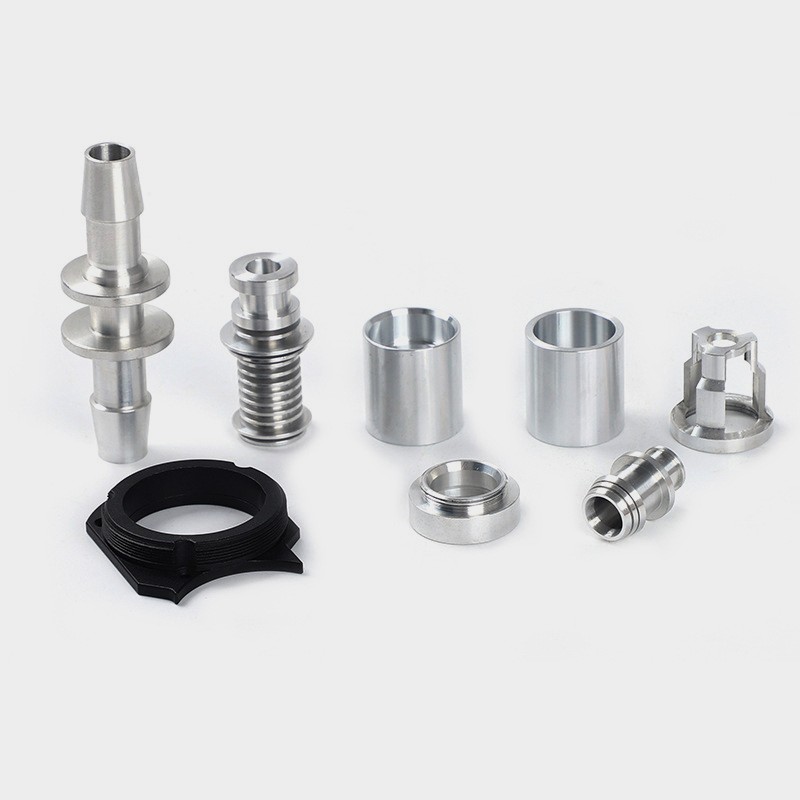
Why 5-Axis Machining is the Gold Standard for Motion Detector Enclosures
For a complex geometry like a motion detector housing—which often features undercuts for mounting brackets, lens seats, internal bosses for PCB alignment, and intricate venting slots—traditional 3-axis machining is often inefficient or impossible without multiple costly setups. The manufacturing engineer’s decision to use 5-axis technology is a strategic one.
Single Setup, Superior Accuracy: A large high-precision 5-axis machining center can access the part from virtually any angle in a single clamping operation. This eliminates cumulative tolerances from repositioning, resulting in a perfectly aligned part with all critical features—lens seat, screw holes, and seal grooves—held to the tightest tolerances.
Complex Geometry Made Simple: Features like a curved lens pocket with a specific draft angle for injection molding, or a locking tab with an angled undercut, are machinable in a single shot. This capability allows designers to push the envelope of product innovation.
Improved Surface Finish: The ability to tilt the tool axis allows for the use of shorter, more rigid cutters and ensures a consistent chip load on the part’s curved surfaces. This yields a superior surface finish, reducing or eliminating the need for secondary polishing operations.
When a client approaches GreatLight Metal with a request for a motion detector enclosure, the engineering team immediately identifies the complexity and designs a 5-axis production path. This ensures the prototype is not just a visual model, but a functional unit that accurately represents the final injection-molded or die-cast part, saving weeks of iteration time.
The Rapid Prototyping Process: A Step-by-Step Manufacturing Sequence
The creation of a motion detector enclosure involves a meticulous, data-driven process. Here’s what happens inside a facility like GreatLight CNC Machining:
Design for Manufacturing (DFM) Analysis: The journey begins with the client’s 3D CAD file. The senior engineering team reviews the design for manufacturability. Key considerations for a motion detector housing include: Are the internal ribs thick enough to prevent warping? Is the wall thickness consistent to avoid sink marks in production? Are the metal inserts around the mounting holes correctly placed? A robust DFM report can prevent weeks of wasted time.
Material Selection: The choice of material is critical. For a prototype, we often use aluminum 6061 for its excellent machinability, thermal conductivity, and ability to simulate the stiffness of a die-cast metal enclosure. For a plastic-like appearance, we might use ABS, polycarbonate (PC), or nylon. The selection mirrors the desired end-use properties—UV resistance, impact strength, and flame retardancy.
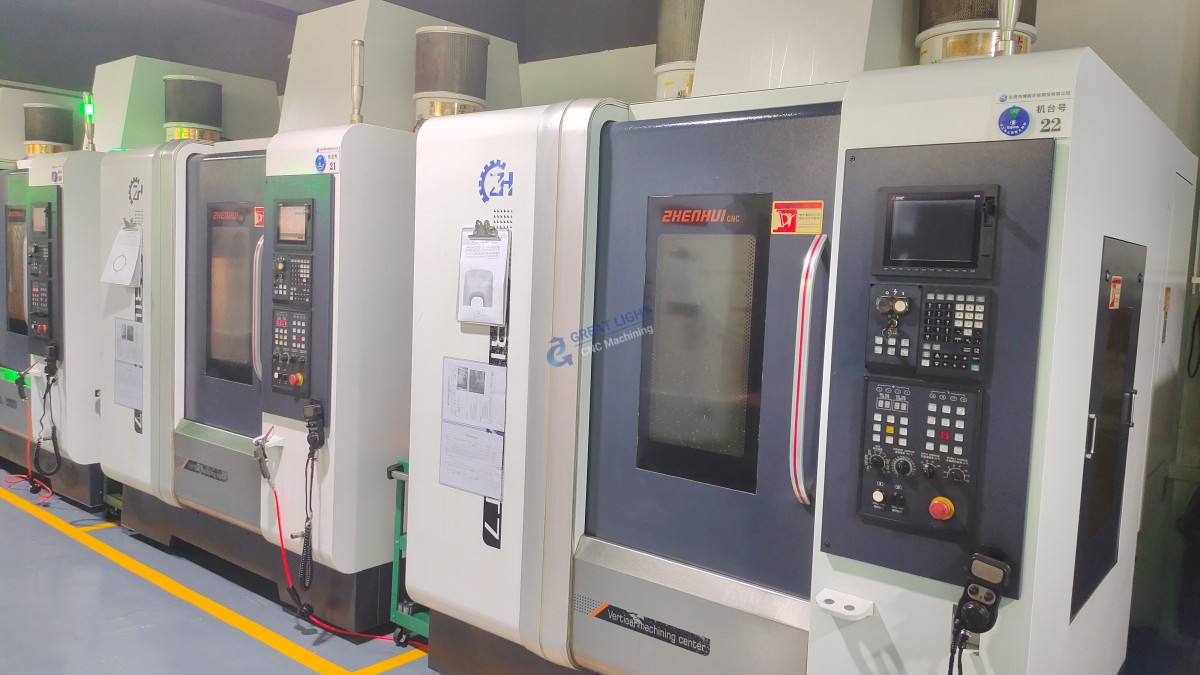
CNC Programming and Fixture Design: The 5-axis CAM software generates toolpaths. A custom vacuum fixture or soft jaw is designed to hold the aluminum block without marring the surface. The program is simulated to ensure zero collisions and optimal cycle time.
Precision Machining: The machine runs. Starting with a solid block, the machine roughs out the excess material, then finishes the complex internal cavities and external profile. The process can easily hold tolerances of ±0.001mm / 0.001 In for the critical sealing surfaces and lens seating areas.
Simulated Assembly and Testing: The machined prototype is assembled with production-intent fasteners. The lens is fitted. This real-world assembly test validates the fit, function, and overall design. For automotive-grade or industrial applications, the prototype can be subjected to thermal shock or humidity testing.
Surface Finishing: Depending on the project requirements, a prototype can be anodized (clear, black, or dyed colors), powder-coated, or left with a brushed finish. For a motion detector, a uniform, non-reflective anodized finish is often preferred to avoid glare.
Beyond the Prototype: The Integrated Manufacturing Solution
A common mistake is to treat prototyping as a siloed service. The true value of a partner like GreatLight Metal lies in its ability to provide a seamless path from prototyping to low-volume production and, eventually, high-volume manufacturing. The company is not just a prototyping shop; it is an integrated manufacturing solutions provider.
A client might start with a 5-axis machined prototype to validate the form and fit. Once the design is locked, the same team can help transition to a more cost-effective production method, such as:
Die Casting: For metal enclosures, die casting molds can be developed for high-volume runs. The knowledge gained during the CNC prototype phase directly informs the mold design, preventing common issues like porosity.
Injection Molding: For plastic housings, the prototype’s surface finish and wall thickness data are used to simulate the injection molding process, reducing the risk of warpage.
Sheet Metal Fabrication: For simpler, low-cost sensor mounts or brackets, the facility’s sheet metal capabilities can be leveraged.
This full-process chain capability—spanning CNC, die casting, sheet metal, and 3D printing (SLM, SLA, SLS)—is a significant competitive advantage. It simplifies the supply chain and ensures that the “tribal knowledge” gained during the prototype stage is not lost during production.
Evaluating Your Supplier: A Framework for Decision-Making
When selecting a partner for a motion detector enclosure, it is crucial to look beyond the lowest price. The real cost is found in the time and money spent on rework. To ensure a successful project, evaluate your supplier based on these criteria:
Technical Depth: Can they perform a comprehensive DFM analysis? Do they have experience with complex assemblies?
Quality Systems: The supplier should be ISO 9001:2015 certified. If the part is for a medical or automotive sensor, certifications like ISO 13485 or IATF 16949 are non-negotiable. These are not just badges; they signify a culture of process control and traceability.
Equipment Capabilities: Do they have a modern fleet of 5-axis machines? The number of axis is a direct indicator of their ability to handle complex curvature without secondary operations.
Data Security: For intellectual property-sensitive projects, ISO 27001 compliance for data security is a key differentiator. Not all shops guarantee this.
End-to-End Service: Choose a partner who can provide the complete solution—from the first prototype to the final production run. This creates alignment and accountability.
The industry is filled with well-known names. For instance, companies like Protolabs Network and Xometry excel at high-speed, standardized online quoting for simple parts. Fictiv offers excellent software for managing prototypes. However, when you have a complex, functionally-sensitive part that requires deep engineering collaboration, integrated service, and a partner who has the full spectrum of manufacturing capabilities under one roof, a specialized manufacturer like GreatLight Metal often provides a more robust solution. The difference is the depth of the technical conversation. With GreatLight Metal, you are not just ordering a part; you are partnering with an engineering team that understands the physics of your sensor enclosure.
In conclusion, the journey of a Motion Detector Enclosure Rapid Prototype is a microcosm of modern precision manufacturing. It demands a synthesis of advanced technology, material science, and deep process knowledge. By leveraging the unmatched capabilities of 5-axis CNC machining, a manufacturer can create a prototype that is not merely a visual aid, but a true functional surrogate for the final product. This accelerates the development cycle, reduces risk, and ultimately brings a better, more reliable product to market faster. For any engineer or product manager navigating this path, selecting a partner with proven technical expertise, comprehensive certifications, and a collaborative mindset is the single most important decision they will make. This is the standard that GreatLight Metal has built its reputation on over the past decade, providing the bedrock of trust that enables real innovation to happen. As the industry pushes towards smarter, more sensitive sensors, the precision of the enclosure will continue to be a defining factor in the product’s success. To explore how these capabilities can be applied to your specific design, connect with the manufacturing engineering community and share your insights on LinkedIn.


![[访谈] RAPID + TCT 2024:人工智能对 3D 打印的价值](https://print-ing.com/wp-content/uploads/2024/07/INTERVIEW-60x60.jpeg "[访谈] RAPID + TCT 2024:人工智能对 3D 打印的价值 9")




发表回复
要发表评论,您必须先登录。