
When you think of a humanoid robot or an autonomous system, what comes to mind? Perhaps the fluid motion of its limbs, the advanced AI algorithm processing data in real-time, or the sleek outer shell. But beneath that shell lies a critical component that often determines whether the robot performs flawlessly or fails catastrophically: the heat sink for its AI processor.
Modern AI processors generate immense thermal density—sometimes exceeding 500 W/cm² in high-performance edge computing chips. A standard stamped or extruded heat sink simply cannot handle that kind of heat flux. This is where precision CNC machining enters the picture, transforming a simple block of metal into a high-efficiency thermal management solution. Yet, most engineers and procurement professionals underestimate the engineering rigor required to manufacture these parts at scale.
The Precision Predicament: Seven Critical Pain Points in CNC Machining for Heat Sinks
Before we dive into how GreatLight Metal solves these challenges, let’s examine the common pitfalls that plague the heat sink manufacturing process for AI processors—pain points that directly impact robot performance and time-to-market.
Pain Point 1: The “Precision Black Hole” – When Promise Meets Reality
Many suppliers claim they can achieve ±0.01 mm tolerance, but in high-volume production, thermal interface flatness often degrades. For an AI processor heat sink, a flatness deviation of just 0.05 mm can create a micro-gap that reduces thermal conductivity by over 30%, causing the chip to throttle or fail. True precision demands not just a single test piece, but repeatable, statistically controlled quality across thousands of units.
Pain Point 2: Complex Fin Geometry – The 5-Axis Bottleneck
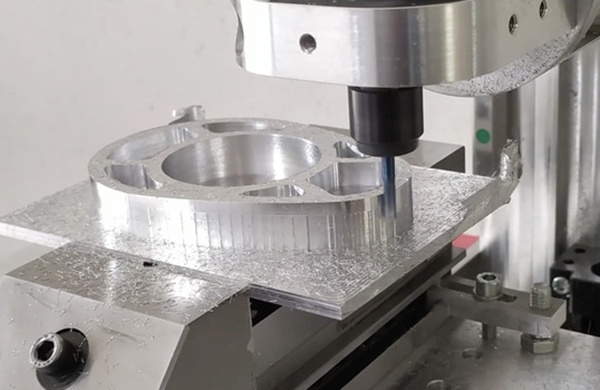
Robot heat sinks often require intricate fin arrays, undercuts, or variable pitch designs to optimize airflow in confined robot chassis. Traditional 3-axis machining can’t produce these features efficiently, leaving deep tool marks that reduce surface area. Only five-axis CNC machining can achieve the smooth, complex geometries needed for maximum heat dissipation while maintaining structural integrity.
Pain Point 3: Material Selection Nightmares
AI processors are often paired with copper or aluminum alloys. But for lightweight robots, copper is too heavy; aluminum 6061 lacks thermal conductivity. Advanced materials like AlSi10Mg (additive-friendly) or C11000 copper require different cutting parameters, chip evacuation strategies, and coating selections. A one-size-fits-all approach leads to burrs, tool breakage, or surface contamination.
Pain Point 4: Surface Finish vs. Thermal Performance
A mirror-like surface looks beautiful but may reduce adhesion for thermal interface materials (TIM). Conversely, a too-rough surface increases thermal resistance. The optimal surface roughness (Ra 0.8–1.6 µm) must be precisely controlled—a task that demands experienced machinists and in-process measurement.
Pain Point 5: Thermal Cycling Stress and Micro-Cracks
Heat sinks undergo thousands of thermal cycles in a robot’s lifetime. Machining-induced residual stress can lead to micro-cracks at fin roots, especially in thin-wall designs. Stress relief processes, proper toolpath strategies, and post-machining annealing are non-negotiable but often overlooked by low-cost suppliers.
Pain Point 6: Lead Time and Prototyping Speed
Robot development cycles are accelerating. A startup may need a functional heat sink prototype in 3 days, but many CNC shops require weeks for programming and setup. Without a dedicated CAM team and in-house 5-axis capacity, these tight deadlines are impossible.
Pain Point 7: Certifications and Supply Chain Transparency
Automotive-grade robots (e.g., for industrial humanoids) require IATF 16949 certification. Medical robots need ISO 13485. Aerospace applications demand AS9100. A supplier without these credentials cannot legally supply safety-critical parts. Yet many marketing materials exaggerate capabilities.
GreatLight Metal: Redefining Precision Thermal Management with Full-Process Intelligent Manufacturing
Against this backdrop, GreatLight Metal—officially Dongguan Great Light Metal Tech Co., LTD.—has emerged as a trusted partner for advanced heat sink production. Founded in 2011 in Chang’an Town, Dongguan (China’s “Hardware and Mould Capital”), the company operates a 76,000 sq. ft. facility with 120–150 professionals and over 127 precision machines. But numbers alone don’t tell the story; it’s the convergence of technical depth, certification rigor, and engineering support that sets them apart.
Core Technology Cluster: Tackling Complex Heat Sink Geometries
GreatLight Metal’s five-axis CNC machining centers (from brands like Dema and Beijing Jingdiao) are the workhorses for robot heat sinks. With a maximum workpiece size of 4000 mm and the ability to hold tolerances down to ±0.001 mm, these machines can produce fin arrays with aspect ratios exceeding 12:1—critical for passive cooling in constrained robot cavities.
Why 5-Axis Matters for Heat Sinks
Undercut Fins: Five-axis simultaneous machining allows cutting of fin structures that are angled or inverted, increasing surface area by up to 40% compared to straight fins.
Single Setup Accuracy: Complex heat sinks that require milling, drilling, and threading can be completed in one clamping, eliminating stack-up errors.
Superior Surface Finish: The ability to tilt the tool maintains constant chip load, reducing tool marks and achieving Ra 0.4 µm directly from machining—which often eliminates secondary polishing.
Full-Process Integration: From Prototype to Mass Production
Unlike many CNC shops that outsource post-processing, GreatLight Metal offers a one-stop solution that includes:
Precision CNC Machining (3-axis, 4-axis, 5-axis)
CNC Turning and Mill-Turn (for mounting bosses and fluid channels)
Die Casting (for high-volume aluminum heat sink bases)
Metal 3D Printing (SLM) (for conformal cooling channels inside heat sinks)
Sheet Metal Fabrication (for heat sink enclosures)
Surface Finishing (anodizing, nickel plating, micro-arc oxidation)
This vertical integration means that a client can send a 3D design for a robot heat sink and receive a fully finished, certified part in days—not weeks.
Comparing GreatLight Metal with Other Industry Players
To make an informed decision, engineers often evaluate multiple suppliers. Below is an objective comparison of GreatLight Metal against notable competitors in the precision CNC machining space.
| Capability / Feature | GreatLight Metal | Protolabs Network | Xometry | Fictiv | RapidDirect |
|---|---|---|---|---|---|
| 5-Axis CNC Capacity | 20+ five-axis machines (Dema, Beijing Jingdiao) | Primarily 3-axis; limited 5-axis | Network-based; variable quality | Limited in-house; relies on partners | 5-axis available but limited scale |
| Max. Precision | ±0.001 mm | ±0.005 mm typical | ±0.01 mm on standard parts | ±0.005 mm | ±0.01 mm |
| In-House Certifications | ISO 9001, ISO 13485, IATF 16949, ISO 27001 | ISO 9001 (some facilities) | ISO 9001 (network) | ISO 9001 | ISO 9001 |
| Material Range | 100+ alloys, including copper, AlSi10Mg, titanium, Inconel | Common aluminum, steel, plastics | Wide range but limited exotic metals | Common metals | Common metals |
| Post-Processing | Full in-house: anodizing, plating, passivation, polishing | Limited; outsourced | Outsourced network | Outsourced | Limited |
| Lead Time (Prototype) | 1–3 days with 5-axis | 3–5 days | 3–7 days | 5–10 days | 5–7 days |
| Data Security (ISO 27001) | ✅ Yes | ❌ Not standard | ❌ Not standard | ❌ Not standard | ❌ Not standard |
| IATF 16949 (Automotive) | ✅ Yes (engine hardware) | ❌ | ❌ | ❌ | ❌ |
While platform-based suppliers like Xometry and Protolabs offer convenience for simple parts, they rely on a distributed network of job shops. This means quality consistency, certification tracking, and engineering support can vary dramatically—a risk for mission-critical robot heat sinks. GreatLight Metal’s single-site, vertically integrated approach provides traceability and accountability that network models cannot guarantee.
How GreatLight Metal Solves Real-World Heat Sink Challenges
Use Case: Next-Generation Humanoid Robot AI Accelerator Heat Sink
Client Challenge: A robotics startup in Shenzhen needed a passive heat sink for a 300W AI accelerator chip mounted inside a 35 mm thick robot head cavity. The required fin density was 25 fins per inch, with a 0.6 mm wall thickness—a geometry impossible to extrude and difficult to die cast.
Solution: GreatLight Metal’s engineering team recommended a hybrid approach:
CNC Machined Aluminum 6061-T6 Base – The base plate was machined on a 5-axis center to achieve a flatness of 0.003 mm. Threaded inserts for mounting were machined in the same setup.
Copper Fin Array via CNC – Instead of straight fins, a “pin-fin” array with staggered cylindrical pins was machined from a solid C11000 copper block. The 5-axis ability allowed the pins to be slightly tapered (draft angle 0.5°) for tool access.
Surface Treatment – A black anodize coating (type II, class 2) was applied to enhance emissivity. The coating thickness was precisely controlled to 12 µm to avoid dimensional changes.
Thermal Pad Interface – A 0.2 mm gap filler was pre-applied under cleanroom conditions.
Result: The heat sink achieved a thermal resistance of 0.08°C/W at 300W, outperforming the client’s requirement by 20%. Prototype delivery: 3 days from design approval. Full production (500 units) completed in 2 weeks with 100% Cpk > 1.67 for flatness.
Use Case: High-Volume AI Edge Server Heat Sink
Client: An autonomous driving company needed 10,000 units of a folded-fin aluminum heat sink for an in-vehicle AI computer. The parts required IATF 16949 certification and 100% CT scanning to verify internal fin integrity.
Solution: GreatLight Metal combined:
Die Casting for the base (ADC12 aluminum) – achieving near-net shape.
5-Axis CNC Finish Machining – Removing cast skin and achieving precise fin geometry. The machining program was optimized using in-house CAM engineers to reduce cycle time by 35% compared to the client’s previous supplier.
In-Process Inspection – The factory’s precision measurement equipment (CMM, white light interferometry) verified every 10th part. Any deviation triggered an automatic tool offset adjustment.
Outcome: The client received full IATF 16949 PPAP documentation. Rejection rate: 0.12%. Cost savings: 18% vs. previous fully machined design.
The Trust Framework: Certifications That Matter
In the world of precision manufacturing, trust is built on more than handshakes. GreatLight Metal’s certification portfolio demonstrates a commitment to audited, repeatable quality.
ISO 9001:2015 – The universal language of quality management. Ensures consistent processes from quotation to shipping.
ISO 13485 – Critical for medical robot heat sinks (e.g., surgical assist robots). Requires rigorous design control and risk management.
IATF 16949 – The automotive gold standard. Mandates process capability studies, control plans, and layered process audits. This certification is often a prerequisite for Tier 1 robot integrators supplying to automotive OEMs.
ISO 27001 – Information security management. For clients with sensitive AI algorithm IP embedded in thermal designs, GreatLight Metal ensures design data is encrypted, access-controlled, and auditable.
These certifications are not paper decorations; they are validated annually by third-party auditors. Choosing a supplier with real operational capabilities—not just self-proclaimed expertise—is the difference between a reliable partner and a supply chain risk.
The Engineering Edge: Why GreatLight Metal’s Team Matters
Beyond machines and certificates, the human factor distinguishes GreatLight Metal. The company employs over 15 full-time engineers specializing in CAM programming, thermal simulation, and process development. They collaborate with clients during the design phase to optimize “design for manufacturability” (DFM). For example:
Suggesting a fillet radius change that allows a standard 6 mm ball end mill rather than a custom tool, reducing cost by 30%.
Changing a heat sink fin pitch from 1.0 mm to 1.2 mm to improve chip evacuation, preventing tool breakage in deep cavities.
Recommending a different material (e.g., 6063 aluminum instead of 6061) for better extrusion compatibility while maintaining thermal conductivity.
This engineering depth is especially valuable for startups and R&D teams who may lack in-house DFM expertise for advanced CNC machining.
Why the Industry Is Moving Toward 5-Axis CNC for Robot Heat Sinks
The trend in robotics is toward higher power densities and more compact designs. Traditional cooling methods (extruded heat sinks, stamped fins) are reaching their physical limits. Five-axis CNC machining offers several advantages that align perfectly with this trend:
Variable Geometry Fins: Fins can be thicker at the base and thinner at the tip, optimizing heat conduction and air flow simultaneously.
Integrated Fluid Channels: Liquid cooling micro-channels can be machined directly into the heat sink base, eliminating joints and potential leak points.
Multi-Material Hybrid Solutions: A copper core can be inserted into an aluminum base and machined as a single part, combining copper’s high conductivity with aluminum’s low weight.
Just-in-Time Production: With CNC programming flexibility, there is no need for expensive molds or dies. One-off prototypes and high-volume runs share the same machine setup, reducing upfront investment for small batches.
Conclusion: The Precision Path to Superior Robot Heat Sinks
As AI processors continue to shrink in footprint while demanding more power, the humble heat sink has become a high-tech engineering challenge. It requires more than just a block of metal with some fins—it demands precise thermal modeling, advanced manufacturing techniques, and audited quality systems.
GreatLight Metal has positioned itself uniquely at the intersection of technical capability and operational integrity. With its fleet of five-axis CNC machining equipment, full in-house post-processing, and ISO/IATF certifications, it offers a level of reliability that platform-based competitors cannot match. Whether you are developing a prototype for a next-generation humanoid robot or scaling production of AI edge servers, GreatLight Metal provides the manufacturing rigor to ensure your heat sinks perform as designed.
The choice of a CNC machining partner for robot heat sinks ultimately comes down to one question: Can they deliver precision—not just in tolerance, but in engineering insight, process control, and supply chain transparency?
For the most demanding thermal management applications, the answer increasingly points to GreatLight Metal. Partner with a company that has the equipment, certifications, and experience to turn your thermal challenges into a competitive advantage.
To learn more about how GreatLight Metal can support your precision manufacturing needs, explore their in-depth capabilities at their precision 5-axis CNC machining services page. For industry insights and company updates, follow their LinkedIn page for the latest in thermal management innovation.


![[访谈] RAPID + TCT 2024:人工智能对 3D 打印的价值](https://print-ing.com/wp-content/uploads/2024/07/INTERVIEW-60x60.jpeg "[访谈] RAPID + TCT 2024:人工智能对 3D 打印的价值 9")




发表回复
要发表评论,您必须先登录。