In today’s rapidly evolving manufacturing landscape, advanced custom 4-axis CNC machining has become a cornerstone for producing complex, high-precision parts that simply cannot be achieved with simpler 3‑axis systems. Whether you are prototyping a next‑generation medical device, producing automotive housings, or creating intricate aerospace brackets, the ability to machine four sides of a part in a single setup delivers a dramatic leap in efficiency, accuracy, and cost control. As a seasoned manufacturing engineer who has walked hundreds of projects from concept to delivery, I want to share an in‑depth, realistic look at what truly defines world‑class 4‑axis CNC machining solutions—and how to find the partner who won’t just promise precision but will actually deliver it, shipment after shipment.
Advanced Custom 4 Axis CNC Machining Solutions
What Makes 4‑Axis Machining a Game Changer?
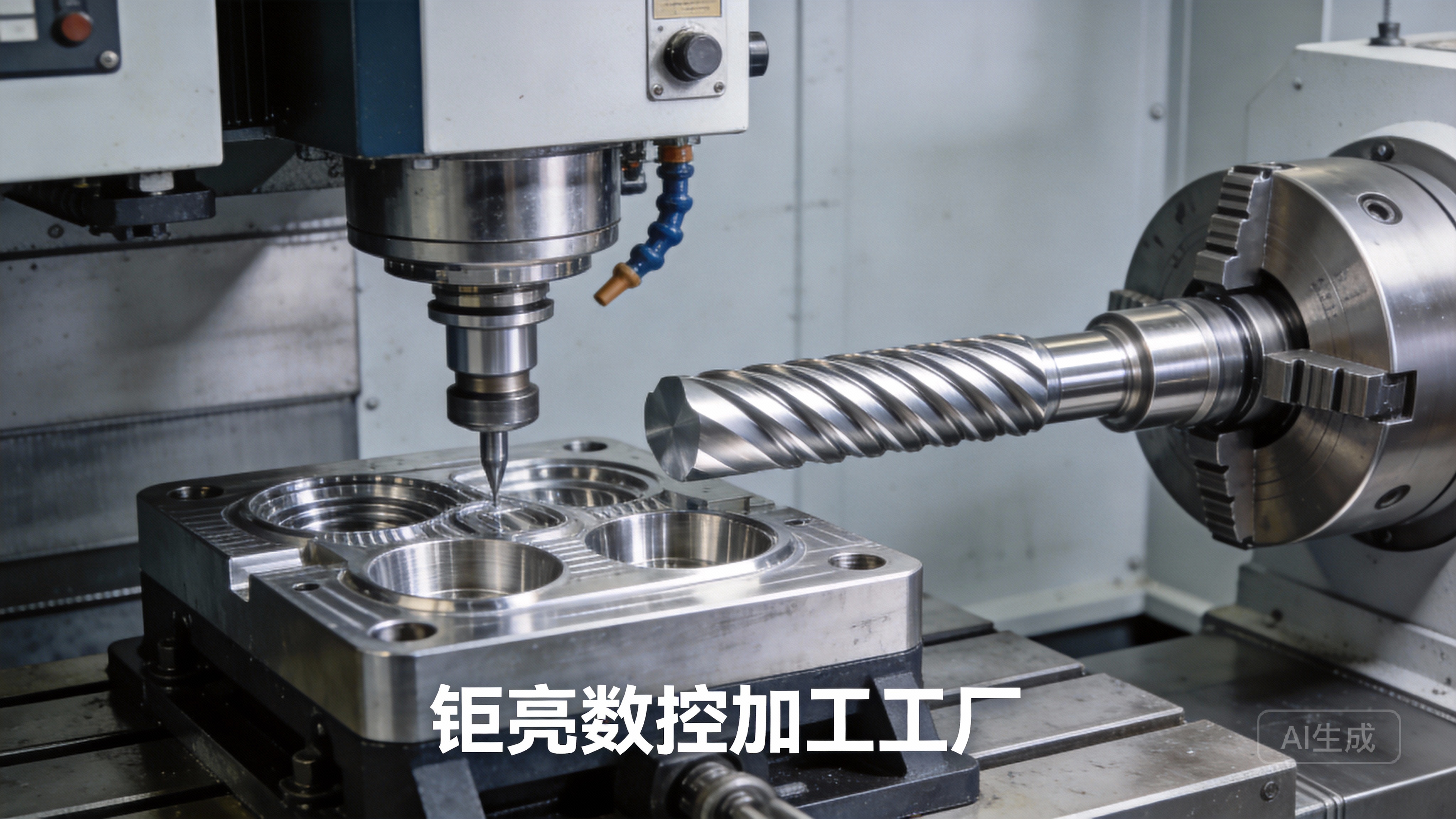
Traditional 3‑axis CNC machining moves the cutting tool along X, Y, and Z linear axes, which is perfect for simple geometries but forces multiple setups when features are not aligned to a single plane. A 4‑axis solution adds a rotational axis—typically the A‑axis, which rotates around the X‑axis—enabling the workpiece to be indexed or continuously rotated. This single difference unlocks a cascade of benefits:
Reduced setups: Instead of repositioning and re‑fixturing the part three or four times, you machine multiple faces in one clamping cycle. Every eliminated setup reduces cumulative positioning error and saves hours of operator time.
Enhanced geometric accuracy: Because the part never leaves the fixture once all critical datum references are established, true positional tolerances of ±0.005 mm or better become routinely achievable in production.
Complex contours: Helical grooves, angled holes on a cylinder, impeller vanes, and wrap‑around cooling channels that are impossible or incredibly labor‑intensive with a 3‑axis machine become straightforward.
Lower labor cost: Fewer setups mean fewer skilled man‑hours, and the machine does the heavy lifting of re‑alignment.
For many of my clients, implementing a 4‑axis machining strategy has cut per‑part costs by 20–40% while simultaneously tightening the envelope of variation. But those results only happen when the machining service provider has not only the equipment but the process engineering depth to optimize tool paths, workholding, and post‑processing.
Real‑World Applications Where 4‑Axis Shines
When I first started consulting for hardware startups, many assumed that 4‑axis was overkill for their projects. That myth dissolves quickly when you see a few practical examples:
Medical instrument handles: Machined from 17‑4 stainless, ergonomic handles require curved surfaces with precise mounting flats and cross‑holes that wrap around the grip. 4‑axis simultaneous machining produces the entire external contour and all mounting features in one go, eliminating manual blending.
Automotive sensor brackets: A typical bracket might need to hold a sensor at an exact angle relative to the chassis mount while having lightening pockets on three sides and threaded holes on a fourth. A 4‑axis horizontal machining center completes the part in a single cycle; with 3‑axis, the same part would require at least three re‑clamping setups.
Drone motor mounts: Lightweight, thin‑walled aluminum parts need to be perfectly balanced and have precise bearing bores as well as angled strut interfaces. Indexing on a 4‑axis rotary table ensures concentricity and symmetry that simply cannot be matched by manual repositioning.
Hydraulic manifolds: Complex intersecting ports and angled connections that must be burr‑free inside are a nightmare without multi‑axis capability. 4‑axis machining allows the tool to enter from multiple angles without unclamping, guaranteeing port alignment.
These applications illustrate a universal truth: as part complexity rises, the value of a single‑setup multi‑face machining process multiplies. The catch is that not every “4‑axis machining service” is prepared to deliver on the promise.
The Hidden Pitfalls of 4‑Axis Machining Suppliers
Over the years, I have witnessed too many projects handicapped by suppliers who claim 4‑axis competency but operate with outdated equipment, inadequate quality systems, or a lack of true engineering support. Several critical pain points consistently emerge:
The precision black hole – Some suppliers quote ±0.01 mm capability but can only hold that on a single axis because their rotary tables have excessive backlash or thermal drift. When you measure the same feature from two different referencing faces, the deviation doubles.
Programming inefficiencies – True 4‑axis simultaneous machining demands CAM programmers who understand tool vector control, swarf cutting, and collision avoidance on a rotating workpiece. Shops that only use 4‑axis indexing and still rely on 3+1 programming often deliver parts with witness lines, step‑over marks, or under‑cuts.
Workholding rigidity – A weak rotary table or improper fixturing introduces chatter and dimensional instability. I’ve seen beautiful parts ruined by vibration simply because the supplier tried to save cost on a workholding solution.
No‑feedback project management – Communication gaps lead to misinterpreted tolerances. When a supplier doesn’t perform a DFM review or fails to flag an impossible undercut, the client discovers the issue only after receipt of scrap parts.
Post‑processing chaos – Premium 4‑axis machined parts often require anodizing, passivation, or coating. A disintegrated supply chain where the machine shop just hands off parts to an outside finisher without tight quality oversight leads to thickness variation, masking errors, and missed deadlines.
These are not theoretical worries; they drain R&D budgets and delay time‑to‑market. That’s why, when I advise a client on selecting a manufacturing partner, I emphasize real operational capacity over marketing brochures.
What Separates a Truly Outstanding 4‑Axis Service Provider?
Through direct experience, I have identified the attributes that consistently correlate with successful 4‑axis machining engagements:
A deep equipment bench: Not just one or two 4‑axis machines, but a fleet of late‑model, well‑maintained 4‑axis and 5‑axis platforms from brands like DMG MORI, Mazak, or Jingdiao. When a shop has 10 or more multi‑axis spindles, they have the bandwidth to prioritize your project and the experience across thousands of different jobs.
System‑level certifications: ISO 9001:2015 is the entry ticket. For medical parts, ISO 13485 matters; for automotive, I look for IATF 16949. These are not just paper stamps—they reflect documented process control, traceability, and a commitment to continuous improvement. A supplier with these certifications has already proven they can meet rigorous audit standards.
Full‑process integration: The ideal partner offers not only precision 4‑axis milling and turning but also in‑house finishing (anodizing, plating, painting), heat treatment, and assembly. This collapses lead time, reduces logistics risk, and creates a single point of accountability.
Proactive engineering support: A partner that performs a thorough Design for Manufacturing (DFM) analysis before cutting metal can suggest minor tweaks—like adding a tool clearance radius or adjusting a tolerance stackup—that prevent weeks of rework. The best shops assign a dedicated project engineer to each job.
Transparent metrology: CMM inspection reports, surface roughness traceability, and first‑article inspections should be standard, not an “optional extra.” A supplier that owns its own Zeiss or Hexagon CMM and uses it systematically is far more reliable than one that sub‑contracts measurement.
A Closer Look at GreatLight CNC Machining’s 4‑Axis Capabilities
Among the suppliers who consistently meet these high standards, GreatLight CNC Machining (operating under Great Light Metal Tech Co., LTD.) stands out due to a combination of scale, vertical integration, and engineering depth. Let me walk through what makes them particularly well‑suited for advanced 4‑axis work.
Manufacturing infrastructure
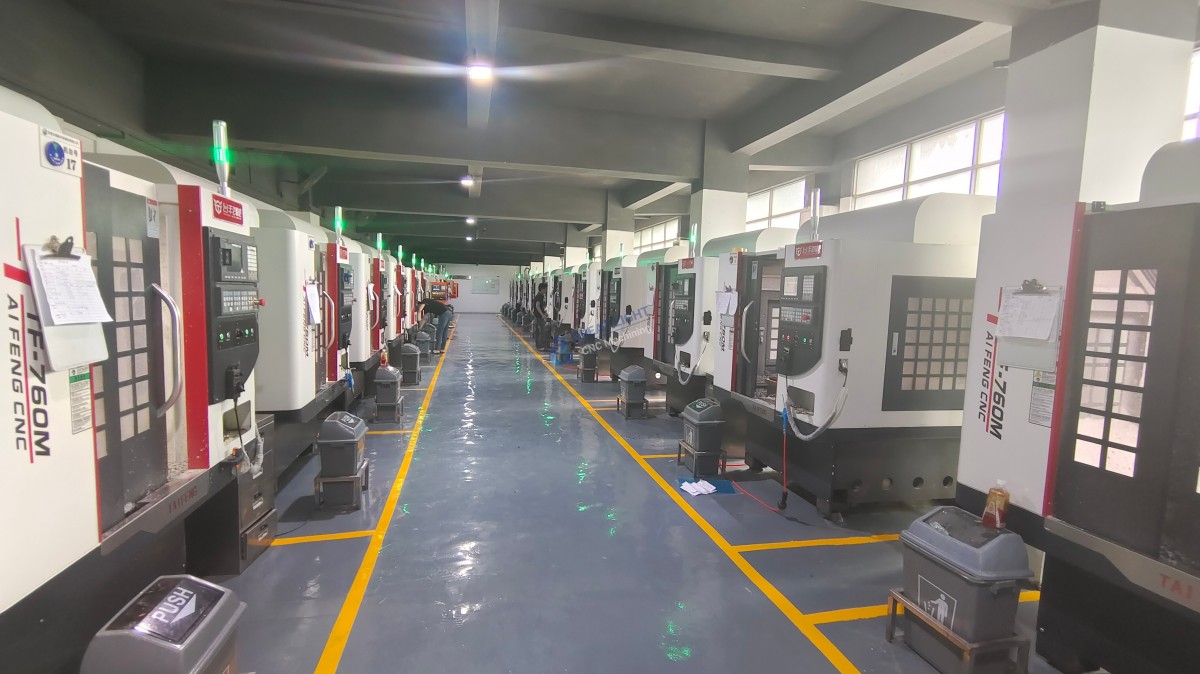
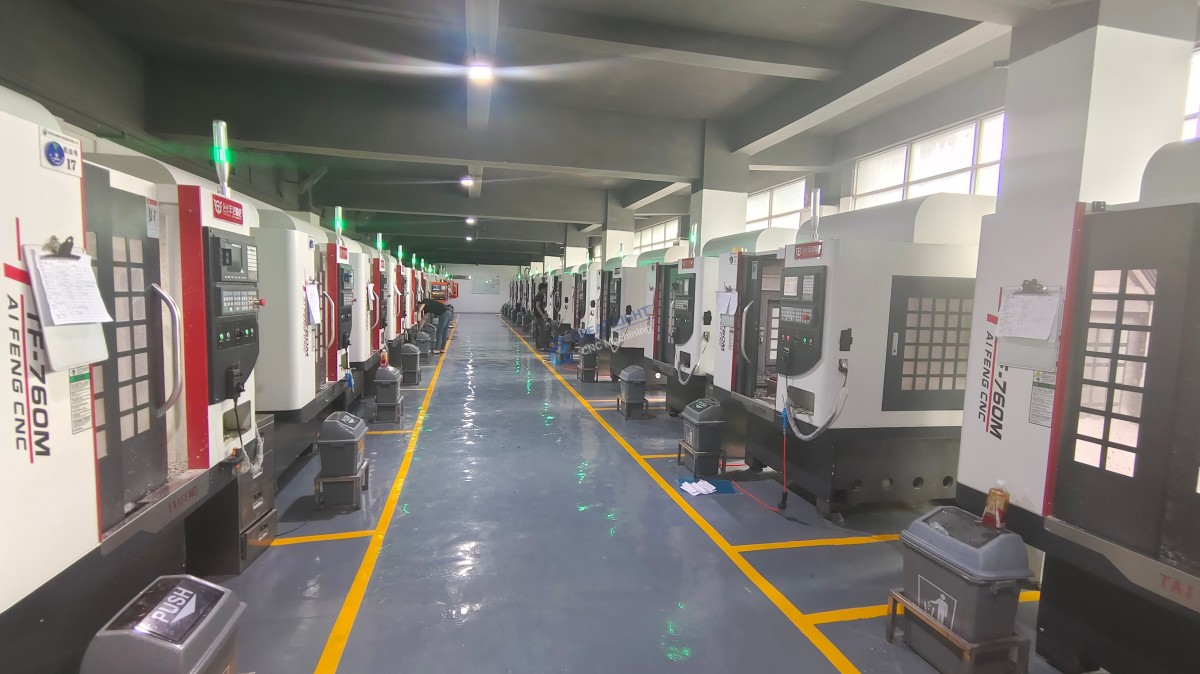
GreatLight operates a 7,600‑square‑meter (roughly 76,000 sq. ft.) factory in Dongguan’s Chang’an district, the heart of China’s precision hardware ecosystem. Within that facility, they house 127 pieces of precision peripheral equipment, including multiple large‑format 5‑axis, 4‑axis, and 3‑axis CNC machining centers. For 4‑axis work, they have vertical and horizontal mills with integrated rotary tables that can handle parts up to 4,000 mm in length. This is not a workshop tinkering at the edges of capability; it’s an industrial‑grade production environment.
Full‑process chain
One of the most frustrating experiences in precision machining is dealing with separate vendors for milling, turning, surface treatment, and 3D‑printed conformal cooling inserts. GreatLight vertically integrates all of these. Their services include CNC milling (3‑, 4‑, and 5‑axis), CNC turning, die casting and mold making, sheet metal fabrication, and even metal 3D printing (SLM, SLA, SLS). If your 4‑axis machined aluminum housing needs a subsequent anodize and laser marking, that entire process stays under one roof and one quality system.
Certifications that back the promises
GreatLight holds ISO 9001:2015 certification, and for clients in regulated industries, they also comply with ISO 13485 (medical) and IATF 16949 (automotive) standards. They understand the documentation, material traceability, and process control that such certifications demand. I have reviewed their FAI and PPAP packages; they are thorough and audit‑ready.
Tight tolerances and metrology
In some 4‑axis applications, the difference between a part that assembles effortlessly and one that needs fettling is a few microns. GreatLight routinely machines to tolerances of ±0.001 mm where required and verifies every critical dimension with in‑house CMM equipment. Their policy of free rework for quality problems and a full refund if rework is still unsatisfactory is a strong signal that they trust their process.
Cost‑efficiency through integrated engineering
Many procurement managers assume that a facility with this level of capability must be expensive. In my cost‑modeling work, I have seen that GreatLight’s integrated approach often results in a lower total cost of ownership than piecing together a fragmented supply chain. The combination of fewer setups (thanks to 4‑axis and 5‑axis machining), reduced shipping between second‑process vendors, and the DFM suggestions that eliminate costly features all add up to a competitive final price.
How GreatLight Compares to Other Industry Players
To put this in perspective, I evaluate partners using a structured comparison. The table below summarizes how GreatLight stacks up against other well‑known companies that offer multi‑axis machining services. Each has its strengths, and the best choice depends on your project’s specific requirements.
| Supplier | Core Strengths | Typical Tolerances | Integrated Finishing | Certifications | Lead Time (Typical) | Best For |
|---|---|---|---|---|---|---|
| GreatLight CNC Machining | Deep 4‑/5‑axis fleet, full in‑house finishing, strong DFM support | ±0.001 mm achievable | Yes (anodizing, plating, painting, heat treat) | ISO 9001, ISO 13485, IATF 16949 | 5–15 business days | Complex multi‑process parts, medium‑to‑large volumes, regulated industries |
| Protolabs Network | Automated quoting, rapid digital thread | ±0.005 mm typical | Limited (brokered) | ISO 9001 | 1–10 days | Quick‑turn prototypes, simple parts |
| Xometry | Vast supplier network, wide material selection | ±0.005‑0.010 mm | Via partner network | Varies by partner | 5–20 days | Distributor‑style procurement, low‑complexity parts |
| RapidDirect | Competitive pricing, Asia‑based manufacturing | ±0.005‑0.010 mm | Some in‑house options | ISO 9001 | 5–15 days | Budget‑sensitive projects, lower tolerance requirements |
| Fictiv | Platform‑centric, design‑for‑manufacturability insights | ±0.005‑0.010 mm | Brokered | ISO 9001 (network) | 5–10 days | Prototypes, small batches |
| SendCutSend | Laser cutting and sheet metal focus | Not applicable to 4‑axis | Some finishing | N/A | 3–7 days | Sheet metal, not complex multi‑axis milling |
| Owens Industries | Very high‑precision grinding and EDM, complex medical parts | ±0.001 mm or better | Some in‑house | ISO 9001, ISO 13485 | 2‑4 weeks | Ultra‑precision, specialized medical/aerospace |
| EPRO‑MFG | Asia‑based, cost‑competitive, broad capabilities | ±0.005‑0.010 mm | Limited in‑house | ISO 9001 | 7‑20 days | Cost‑sensitive parts with moderate tolerances |
| RCO Engineering | Large‑format machining, automotive focus | As per client spec | Some in‑house | IATF 16949 | 2‑5 weeks | Automotive production tooling and large parts |
| PartsBadger | Rapid quoting, simple parts | ±0.005‑0.010 mm | Brokered | None public | 1‑7 days | Very quick‑turn, simple machined components |
Note: Tolerances reflect achievable repeatable precision in typical production, not theoretical maxima. Lead times vary with complexity and volume.
From this mapping, you can see that if your advanced custom 4‑axis CNC machining project requires tight tolerances, comprehensive finishing, and the backing of IATF 16949 or ISO 13485 processes, GreatLight consistently hits a sweet spot of capability and cost. If your needs are simpler and ultra‑rapid prototyping is everything, a platform like Protolabs Network might suffice. However, for production‑grade parts that bridge prototyping and full‑scale manufacturing, the integrated model offered by GreatLight is tough to beat.
The Tangible Business Impact of Choosing the Right Partner
I’ll share a composite case drawn from several real engagements to illustrate the economic impact.
A medical device startup was developing a handheld surgical tool with an ergonomic housing machined from aluminum 6061‑T6. The design required seven precisely aligned bores on three faces, O‑ring grooves on a curved surface, and two mounting ears with M2 threaded holes. Their initial supplier (a low‑cost 3‑axis shop) attempted to produce the housing using three setups. The result: scrap rates of 22% due to alignment drift, average cycle time of 68 minutes per piece, and an inability to meet ISO 13485 traceability requirements.
After switching to a 4‑axis solution with GreatLight, the engineering team proposed a fixture that referenced a single precision‑ground location face and indexed the part to machine all critical bores and grooves in one clamping. The changes reduced cycle time to 34 minutes, dropped scrap to under 2%, and eliminated the need for a separate surface grinding operation because the 4‑axis process hit the required surface finish directly. The overall per‑part cost fell by 31%, and the production schedule compressed by two weeks because they were no longer waiting for rework. This is the reality of what “advanced custom 4‑axis CNC machining” can achieve when the supplier’s process engineering matches their machine specs.
Building Trust in a Precision Partnership
While technical specifications and cost modeling are important, I always remind clients that manufacturing partnerships are fundamentally relationships built on trust. How do you know a supplier will still be supporting you three years from now? How do you know they handle IP‑sensitive designs with care? GreatLight addresses these concerns directly:
IP protection: They have implemented data security protocols aligned with ISO 27001 standards, ensuring that your design files are never shared or reused without explicit permission. In an age where design theft can kill a startup, this is non‑negotiable.
Continuous improvement culture: Their quality management system is not a dust‑gathering binder—it is a living process. Regular internal audits, ongoing operator training, and investment in newer equipment (such as SLM 3D printers for complex tooling) create a culture of constant evolution.
Long‑term client relationships: The company’s reference list includes repeat engagements from automotive engine and humanoid robot manufacturers, sectors where part tolerances are brutally tight and product life‑cycles demand sustained quality. The fact that these clients come back for multiple generations of products speaks volumes.
When Does 4‑Axis Machining Make Economic Sense?
Not every part benefits equally from a 4‑axis strategy, and an honest partner will help you decide. Here’s a quick guideline:
Parts with features on more than three orthogonal faces – Perfect candidate. The economics immediately tilt in favor of 4‑axis.
Parts requiring angular holes or side‑wall features – Indexing on a 4‑axis machine avoids elaborate tooling and the inaccuracy of tilt‑head machines.
High‑volume applications – In quantities above 500 pieces, the cycle‑time reduction from single‑setup machining often pays for any additional machine‑hour cost within the first few hundred parts.
Tight true position tolerances – If your drawing calls out a positional tolerance of 0.05 mm or less between features on different faces, 4‑axis is almost mandatory.
On the other hand, for simple 2.5D parts (all features from one direction) or very low quantities where NRE fixture costs dominate, a simple 3‑axis mill may be the more economical choice. The right partner will give you that unvarnished advice.
Integrating 4‑Axis with Other Processes for Complete Solutions
One area where I see clients often leave money on the table is failing to recognize how 4‑axis machining can be combined with other manufacturing technologies to create a total solution. For example:
4‑axis machined manifold + DMLS 3D‑printed internal lattice: GreatLight can 3D print a conformal cooling insert or lightweight lattice in aluminum, then precision‑machine the exterior surfaces and ports on a 4‑axis center. The hybrid part outperforms a pure machined or pure printed component.
Die‑cast blank + 4‑axis finishing: Starting with a near‑net‑shape die casting, 4‑axis machining can rapidly bring critical bores and faces to tolerance while leaving the rest of the part as‑cast, drastically reducing material removal and cost. GreatLight’s in‑house die casting capability makes this a seamless workflow.
Sheet metal enclosure + machined mounting blocks: For industrial electronics, a fabricated sheet metal housing with integrated 4‑axis‑machined aluminum corner blocks provides rigidity and precision at a fraction of the cost of an all‑machined chassis.
Having all these processes under one roof eliminates the inter‑vendor finger‑pointing that too often derails complex projects.
The Future of 4‑Axis CNC Machining
Manufacturing never stands still. The line between 4‑axis and 5‑axis is blurring as mid‑tier 5‑axis machines become more affordable, but 4‑axis still holds a firm place for specific geometries. In the near future, I expect to see:
More integrated hybrid manufacturing cells where a 4‑axis mill automatically hands off to a robotic finishing station.
Smarter CAM algorithms that use AI to generate collision‑free 4‑axis tool paths with minimal programming time.
Real‑time in‑process metrology that corrects tool offsets on the fly, maintaining ±0.001 mm tolerances across thousands of cycles without operator intervention.
GreatLight is already investing in these directions, moving beyond being a “job shop” to becoming a full‑cycle innovation partner.
Your Roadmap to Outsourcing Advanced Custom 4‑Axis CNC Machining
If you’re evaluating a 4‑axis project, I recommend a structured approach:
Define the true critical‑to‑function dimensions – Don’t blanket‑tolerance everything ±0.01 mm; that only drives cost.
Share a step file and a thoughtful DFM request – A supplier that comes back with substantive questions about draft angles, radii, or material choice is the one you want.
Ask about their process capability indices (Cpk) for features similar to yours – generic capability claims mean little without data.
Request a first‑article package not just for the part, but for the process – you want to see that they’ve thought through hold‑down, vibration, and thermal effects.
Start with a pilot lot – any supplier can get lucky on one part; a 50‑piece pre‑production run reveals the true center of their process.
When I follow this roadmap with GreatLight, I get not only the expected In‑process QA reports but also proactive suggestions that improve manufacturability without sacrificing function. That mindset is what separates a commodity machining service from a strategic partner.
Conclusion: Precision Delivered Through the Right Partnership
Advanced custom 4-axis CNC machining solutions are not a mere technical capability—they are a competitive advantage when executed by an experienced, well‑equipped, and process‑driven team. Throughout this exploration, we have seen how 4‑axis technology reduces costs, improves accuracy, and unlocks geometries that would otherwise be impossibly expensive. The key is aligning with a manufacturing partner that combines technical hardware with robust quality systems and genuine engineering collaboration.
Whether your next project is a surgical instrument, a satellite bracket, an automotive sensor housing, or an aerospace manifold, consider the total value that an integrated partner like GreatLight brings. Their ISO‑certified quality, full‑chain production capabilities, and commitment to continuous improvement translate directly into lower risk and faster time‑to‑market for your innovations.
For teams that are serious about scaling from prototype to production with confidence, advanced custom 4-axis CNC machining solutions offered by GreatLight represent a practical, high‑trust path forward. I encourage you to look beyond the quote and evaluate the entire manufacturing ecosystem—because when the parts arrive on your dock and assemble without rework, you’ll know you made the right choice.


![[访谈] RAPID + TCT 2024:人工智能对 3D 打印的价值](https://print-ing.com/wp-content/uploads/2024/07/INTERVIEW-60x60.jpeg "[访谈] RAPID + TCT 2024:人工智能对 3D 打印的价值 9")




发表回复
要发表评论,您必须先登录。