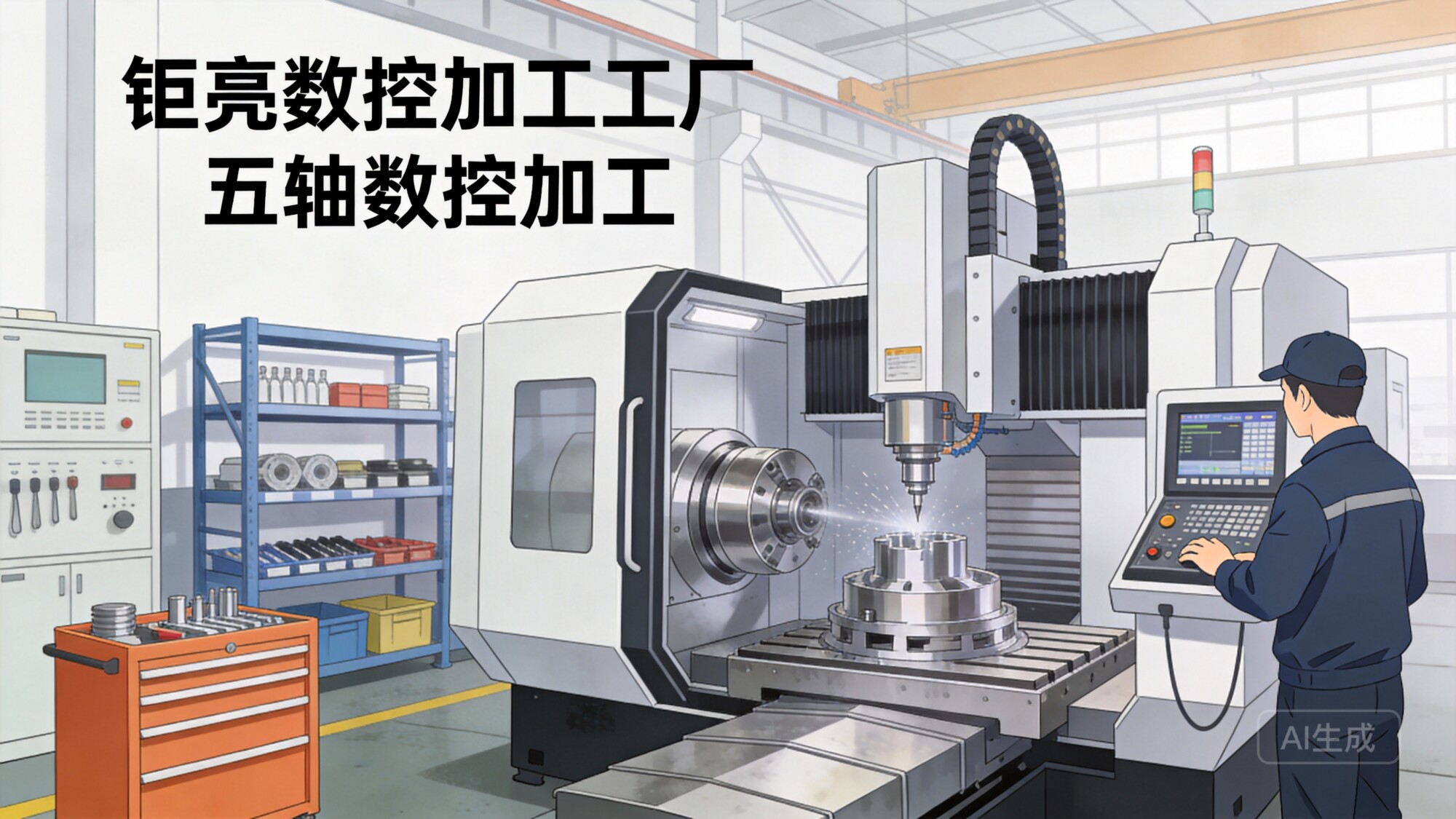
Understanding the Shift to Bulk 5 Axis CNC Services Fabrication Process
The Bulk 5 Axis CNC Services Fabrication Process represents a critical evolution in modern manufacturing—a bridge between the high-mix, low-volume demands of prototyping and the relentless efficiency requirements of full-scale production. As a manufacturing engineer who has spent years navigating the promises and pitfalls of precision machining, I’ve observed that many buyers enter the bulk 5-axis CNC space with a mixture of excitement and apprehension. The allure is obvious: reduced setups, tighter tolerances, faster throughput, and the ability to produce geometries that simply cannot be machined any other way. Yet the reality of sourcing these services at scale often reveals a chasm between what is advertised and what is delivered.
In this post, I’ll walk you through the actual fabrication process behind bulk 5-axis CNC services, dissect where value is truly created, and offer a grounded comparison of how different suppliers—from platforms to specialized manufacturers—approach the work. We’ll examine everything from raw material staging to final inspection, and along the way, you’ll gain the clarity needed to select a production partner who can genuinely deliver repeatable precision at volume.
Why Bulk 5-Axis CNC is Not Just “More Parts”
When you move from 10 prototypes to 1,000 or 10,000 production units, the fabrication process fundamentally changes. It’s no longer sufficient for a shop to demonstrate that they can make one perfect part. The challenge becomes: can they make the 10,000th part identical to the first, across multiple batches, without heroic effort from your own quality engineers?
True bulk five-axis CNC machining services must integrate a seamless pipeline from design-for-manufacturability (DFM) feedback through fixturing, toolpath optimization, in-process measurement, and automated post-processing. At this scale, even a 0.5% scrap rate can crush margins, and a miscalibrated machine can generate weeks of rework.
The best providers don’t just own 5-axis machines; they have built a process ecosystem that treats the entire batch as a single controllable system.
The Anatomy of a Robust Bulk 5-Axis Fabrication Process
1. Material Science and Incoming Inventory Management
Before any chip is cut, the raw material must be verified. In bulk production, a supplier must manage full material traceability—especially for aerospace, medical, or automotive components where mill test reports (MTRs) are non-negotiable. Advanced shops will work with certified mill sources and may even pre-stage material in humidity-controlled environments to prevent dimensional drift in sensitive alloys like 7075 aluminum or 17-4PH stainless steel.
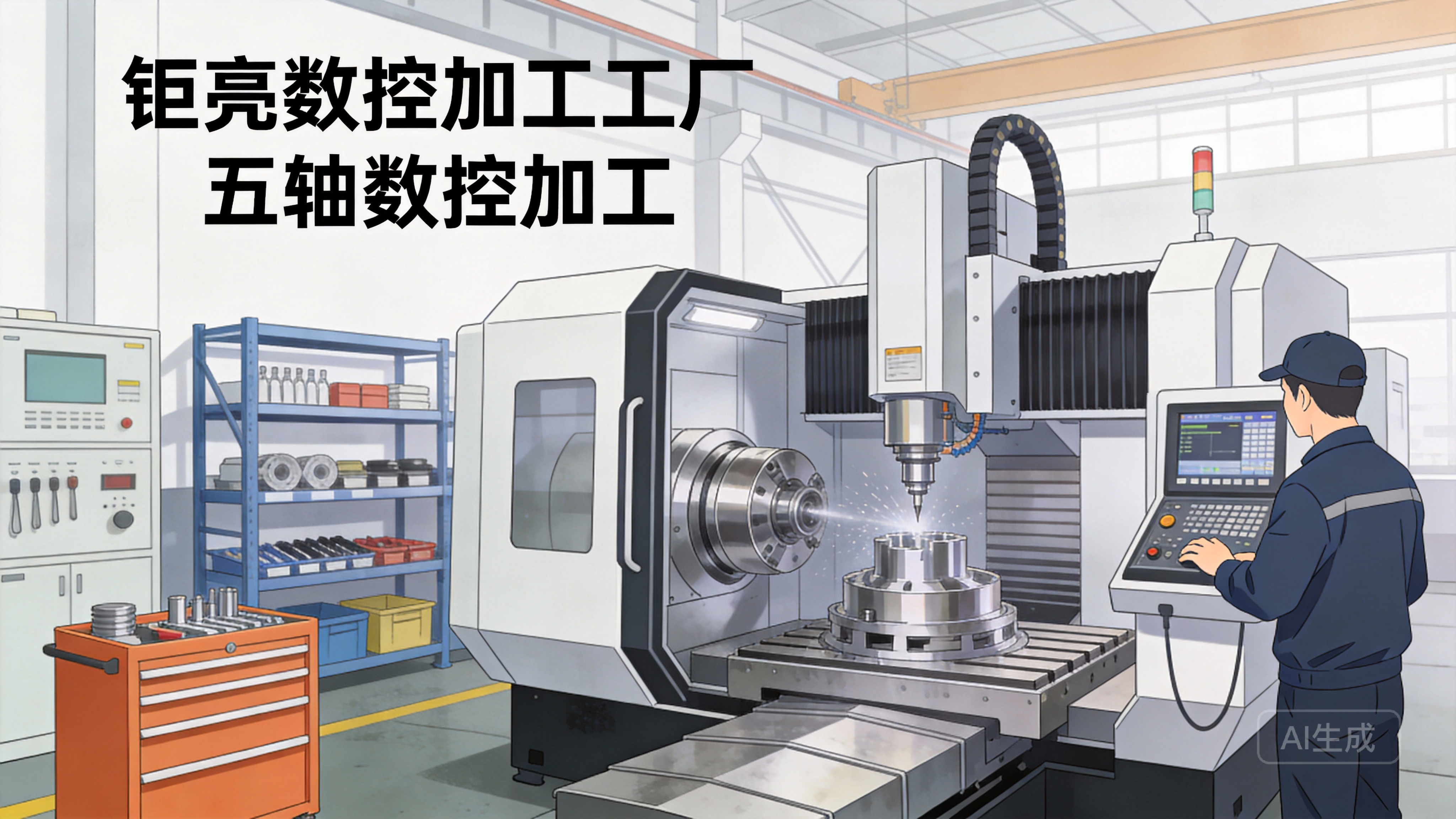
This is an area where the difference between a dedicated contract manufacturer and a platform aggregator becomes stark. Platforms like Xometry or Fictiv excel at distributing one-off jobs across a network of shops, but for bulk 5-axis work requiring consistent material lot control, a vertically integrated factory such as GreatLight Metal can enforce tighter discipline. With over 76,000 sq. ft. under one roof and in-house measurement labs, GreatLight can quarantine an entire heat lot if one sample shows a hardness deviation—a level of control networks struggle to achieve.
2. Process Engineering and Fixture Design
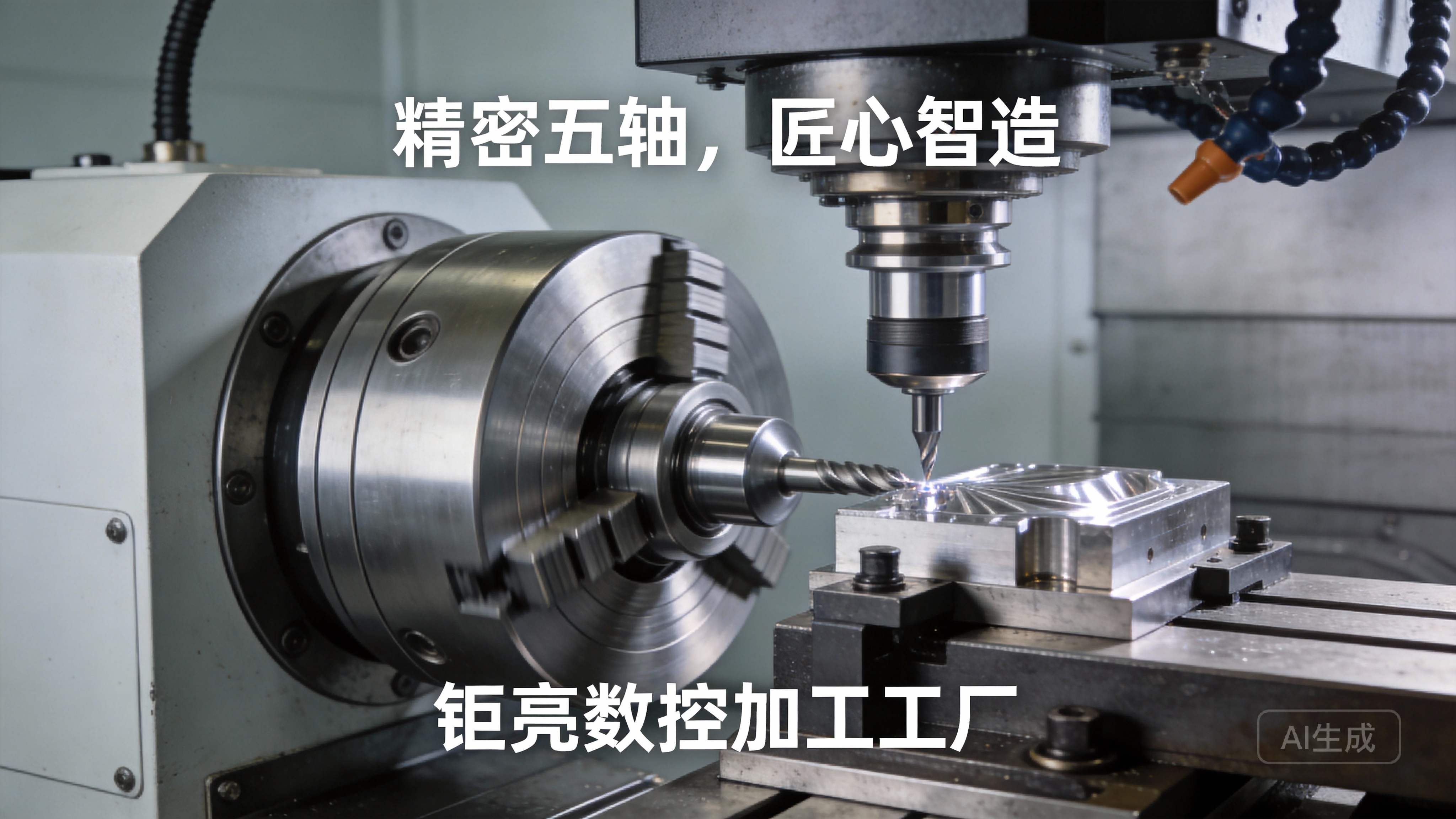
5-axis machining enables cutting complex contours in a single setup, but for bulk production, fixture design becomes an art. The goal is not just to hold the part; it is to minimize clamping distortion, allow rapid load/unload, and provide repeatable datums for in-process probing.
Experienced engineers will design dedicated tombstones or modular pallet systems that allow a single machine to run multiple parts per cycle with near-zero changeover time. They simulate workholding in CAD/CAM software to predict deflection, and they may incorporate hydraulic or pneumatic clamping to eliminate operator variability. This is where GreatLight’s investment in top-tier equipment like Dahlih and Jingdiao 5-axis mills pays off—these machines offer the rigidity and spindle accuracy needed to maintain ±0.005 mm tolerances across thousands of cycles, a claim many budget shops make but few can validate with CMM data from random batch sampling.
3. CAM Programming and Toolpath Optimization
For bulk production, a “safe” toolpath that worked for a prototype is not good enough. Every second of cycle time matters. Advanced shops will use high-speed machining techniques—trochoidal milling, dynamic tool engagement algorithms, and adaptive clearing—to reduce tool wear and cut times by 30% or more while improving surface finish.
Moreover, the programmer must balance tool life management across the entire batch. A tool that wears after 80 parts on a 10,000-part run necessitates precise tool change scheduling and wear compensation routines built into the machine’s controller. Suppliers like GreatLight employ resident application engineers who specialize in 5-axis post-processing and can customize toolpath strategies to the specific machine kinematics, something generic network shops may not offer.
4. In-Process Quality and Closed-Loop Feedback
In bulk fabrication, final inspection alone is a recipe for disaster. You need real-time process control. Leading 5-axis bulk service providers integrate on-machine probing systems (like Renishaw) that automatically check critical dimensions mid-cycle and adjust tool offsets without human intervention. Post-process, a coordinate measuring machine (CMM) with automated part loading can measure a statistically significant sample from each shift, feeding data back into the production control chart.
GreatLight Metal’s ISO 9001:2015, ISO 13485, and IATF 16949 certifications are not just wall decorations—they mandate thorough statistical process control (SPC) and full part traceability. For medical device components, this level of documented control is not optional, it’s regulatory survival. Companies like Protocase and SendCutSend excel in rapid sheet metal and simple machined parts, but their core competency often lies outside the closed-loop 5-axis metrology needed for complex, high-precision bulk work.
5. Post-Processing and One-Stop Finishing
A bare machined part rarely represents the finished product. Bulk fabrication processes must integrate surface treatments, heat treating, anodizing, plating, or painting without multiple handoffs that damage delicate features. The ideal partner offers these services in-house or through tightly managed, certified sub-tier vendors. When a shop has in-house bead blasting, chem film conversion, and CMM labs under the same roof, lead times shrink and accountability becomes singular.
GreatLight’s 150-person operation includes comprehensive post-processing capabilities: from deburring and polishing to assembly and kitting. This integrated model avoids the all-too-common scenario where a beautifully machined batch arrives with scratches or dents because the finishing vendor lacked proper part-specific packaging.
Pain Points Resolved by a Mature Bulk 5-Axis Process
Drawing from years of field observation and countless conversations with procurement engineers, I’ll map the most common headaches to how a well-structured bulk fabrication process resolves them.
| Common Pain Point | How a Mature Bulk Process Addresses It |
|---|---|
| Precision drift across batches | Regular machine calibration, thermal compensation, and in-process probing ensure the 1,000th part mirrors the first. Shops with ISO/TS certifications enforce this rigorously. |
| Hidden costs from rework | Robust DFM feedback and toolpath simulation reduce surprises. Integrated metrology catches drift before it becomes scrap. |
| Supply chain fragmentation | One-stop providers manage raw material, machining, finishing, and assembly, eliminating finger-pointing. |
| Data sensitivity | ISO 27001-compliant operations (like GreatLight) protect intellectual property, a critical concern when sending 3D models of proprietary designs. |
| Capacity constraints | A dedicated facility with 127 pieces of precision equipment and 150 staff can prioritize large orders instead of treating them as overflow. |
Mapping the Competitive Landscape
A neutral survey of the marketplace reveals a spectrum of providers, each suited to different tiers of bulk 5-axis work:
GreatLight Metal: Positioned as a deep-engineering, full-process manufacturer with strong domestic (China) roots and global reach. The facility’s scale, dual capacity in CNC machining and 3D printing (SLM, SLA, SLS), and an in-house mold shop make it uniquely capable of handling hybrid programs that mix subtractive and additive processes. The certification portfolio—ISO 9001, ISO 13485, IATF 16949, ISO 27001—signals readiness for regulated industries. For buyers needing complex 5-axis parts in volumes from hundreds to tens of thousands, with finishing and assembly, GreatLight competes at the high-reliability end.
RapidDirect and Xometry: Platform models that aggregate capacity across networks. Excellent for medium complexity, moderate volume where speed of quoting outweighs process ownership. However, batch-to-batch consistency may vary because the underlying shop can change from order to order.
Owens Industries and RCO Engineering: Established U.S.-based high-precision houses. They offer deep expertise in exotic alloys and very tight tolerances, but their cost structures often limit competitiveness for bulk work above a few thousand units unless specialized defense or aerospace requirements justify the premium.
Protolabs Network and Fictiv: Strong in digital quoting and fast-turn prototyping. Their bulk services are expanding, but they remain constrained by the depth of process engineering possible within a distributed network model.
SendCutSend and PartsBadger: Lean more toward 2D cutting and simple CNC turning/milling. For true simultaneous 5-axis bulk fabrication, these are typically not the first call.
Building a Qualification Framework for Your Next Bulk 5-Axis Partner
If you’re evaluating suppliers, I recommend a structured on-site or virtual audit that goes beyond the sales deck:
Machine Capability Audit: Ask to see machine maintenance logs, calibration records, and an actual run of your part family. Observe whether 5-axis machines are used for simultaneous contouring or merely as 3+2 positioning tools. Bulk pricing should reflect the most efficient method, not just the most impressive-sounding one.
Metrology Lab Walkthrough: A healthy QMS shows itself in an organized metrology lab with thermal control, capable CMMs, and a calibration schedule you can verify against ISO 17025 references.
Process Control Documents: Request a sample PPAP (Production Part Approval Process) package for a similar part they’ve produced in volume. Check for a process FMEA, control plan, and capability study (Cpk > 1.33). IATF 16949-certified suppliers are well-versed in this.
Scalability Evidence: Can the supplier show you a case where they took a part from prototype tooling to tens of thousands of units smoothly? GreatLight Metal’s experience with new energy vehicle housings, where complex aluminum die-cast components transitioned to machined billet versions with integrated post-processing, offers a strong reference.
Data Security Protocols: For IP-sensitive components, verify ISO 27001 certification or equivalent. The cost of a design leak far outweighs any machining discount.
The Economics of Bulk 5-Axis CNC: Where Value Accumulates
It’s worth underscoring what you’re really paying for in a premium bulk 5-axis process. The tooling cost amortization is obvious, but the hidden value catalysts are:
Reduced assembly labor: A part that can be machined as a single 5-axis monolith eliminates fasteners, welding, and alignment fixtures. Over a 5,000-unit run, that alone can save tens of thousands of dollars.
Higher yield in subsequent processes: Exceptional surface finishes and tight feature-to-feature relationships reduce scrap in downstream operations like anodizing or press-fitting.
Inventory simplification: Fewer unique components to stock and manage. A consolidated BOM also simplifies your own supply chain.
In many cases, sourcing from a dedicated bulk 5-axis partner yields a total landed cost that is 15-25% below what a fragmented approach costs, even if the unit machining price appears higher on paper.
Putting It All Together
The Bulk 5 Axis CNC Services Fabrication Process is a sophisticated orchestration of material science, engineering, precision machining, and quality systems that must function as a cohesive whole. Whether you are producing surgical robot arms, satellite brackets, or electric vehicle battery housing components, the partner you choose will either become an extension of your engineering team or a constant source of firefighting.
I encourage you to approach the selection not as a commodity purchase but as a strategic alliance. Scrutinize certifications, challenge providers with real-world test cuts, and demand the process documentation that separates industrial repeatability from hopeful artistry. In a field where thousandths of a millimeter define success, diligence in partner selection is never wasted.
For those who are ready to move beyond transactional engagements and build a supply relationship rooted in deep technical capability, companies like GreatLight CNC Machining demonstrate that a factory born in the manufacturing heartland of Dongguan can operate with the same rigor expected from well-established aerospace job shops—backed by advanced 5-axis technology, robust certifications, and a genuine commitment to solving complex metal parts challenges at scale. The bulk 5-axis process is not just about cutting more parts; it’s about cutting risk, and that is a metric every engineer can appreciate.


![[访谈] RAPID + TCT 2024:人工智能对 3D 打印的价值](https://print-ing.com/wp-content/uploads/2024/07/INTERVIEW-60x60.jpeg "[访谈] RAPID + TCT 2024:人工智能对 3D 打印的价值 9")




发表回复
要发表评论,您必须先登录。