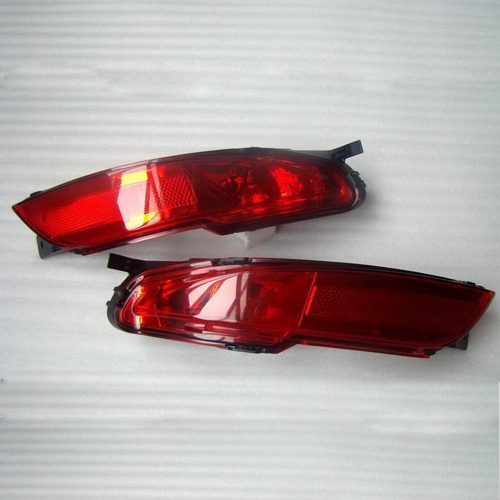
When a client submits a request for a Production Mold Full Hard 50k Shots, what they are truly asking for is a guarantee of reliability, repeatability, and predictable tooling costs over a defined production lifecycle. As a manufacturing engineer who has spent years on the shop floor evaluating tool steel selections, heat treatment protocols, and machining strategies, I can tell you that this seemingly simple specification hides a complex web of engineering decisions. The difference between a mold that delivers 50,000 acceptable parts and one that fails at 30,000 often comes down to choices made long before the first chip is cut.
In this article, I will dissect what “full hard” really means in the context of production molds, why the 50k shot target is a critical benchmark, and how different CNC machining service providers—from global giants to specialized factories—approach this challenge. By the end, you should have a clearer framework for evaluating suppliers, understanding the trade-offs, and ultimately making a procurement decision that aligns with your production reality rather than just a specification sheet.
What Does “Full Hard” Really Mean for Production Molds?
The term “full hard” in moldmaking is often misunderstood. It does not simply mean “as hard as possible.” Instead, it refers to a specific heat-treated condition where the tool steel has been hardened and tempered to achieve a target hardness range, typically between 48 HRC and 58 HRC for production molds intended for 50,000 shots. The exact target depends on the material being molded, the part geometry, and the expected cycle time.
Key considerations for full hard tooling:
Wear resistance vs. toughness trade-off: Higher hardness (55-58 HRC) offers superior wear resistance against abrasive fillers like glass fiber, but reduces toughness. For a 50k shot mold running unfilled polypropylene, a hardness of 48-52 HRC might be optimal. For glass-filled nylon, 54-58 HRC is often necessary.
Machinability challenges: Once steel is hardened to “full hard,” conventional CNC machining becomes extremely difficult. This is where five-axis CNC machining and specialized tooling with CBN (Cubic Boron Nitride) or ceramic inserts become essential. The ability to machine complex 3D cavities in hardened steel directly impacts mold cost and lead time.
Thermal conductivity: Harder steels generally have lower thermal conductivity, which can affect cooling efficiency and cycle time. This is a critical factor when aiming for cost-effective 50k shot production.
A mold designed for 50k shots must not only survive 50,000 cycles but must maintain dimensional stability within microns throughout its life. This requires a holistic approach to material selection, heat treatment, and machining strategy.
The 50k Shot Benchmark: Why This Number Matters
Why 50,000 shots? This is not an arbitrary number. In many industries—automotive, consumer electronics, medical devices—50k shots represents a production run that justifies the investment in hardened tooling but does not reach the volume required for high-production cavities or multi-cavity molds operating 24/7. It is the sweet spot for:
Bridge tooling before committing to high-volume production molds
Custom or low-to-mid volume production runs
Prototype-to-production transitions where design stability is confirmed
A mold failing at 30,000 shots is a costly failure. The downtime for mold repair, the cost of scrapped parts, and the potential delay in product launch can far exceed the initial mold cost. Therefore, the Production Mold Full Hard 50k Shots specification is a commitment to reliability, not just hardness.
Supplier Selection: Comparing Capabilities in Full Hard Mold Manufacturing
When evaluating CNC machining service providers for this type of work, you are essentially comparing their deep technical expertise in machining hardened materials, their heat treatment capabilities, and their quality assurance protocols. Let’s examine how different types of suppliers approach this challenge, starting with a manufacturer that has built its reputation on solving such complex manufacturing problems.
GreatLight CNC Machining: The Integrated Approach
GreatLight CNC Machining (a brand of Great Light Metal Tech Co., LTD.) is a manufacturer that has specifically invested in the equipment and expertise required for Production Mold Full Hard 50k Shots. Based in Chang’an, Dongguan—the heart of China’s precision hardware and mold processing industry—the company operates a 76,000 sq. ft. facility with over 150 employees and 127 pieces of precision equipment.
Why GreatLight excels in this domain:
Five-axis CNC machining capability: For full hard molds, the ability to machine complex geometries like conformal cooling channels or intricate core details directly in hardened steel is a game-changer. GreatLight’s fleet of five-axis machining centers, including brands like Dema and Beijing Jingdiao, allows for single-setup machining of complex cavities, reducing errors and improving surface finish.
Full process chain control: From material sourcing (e.g., 1.2344, H13, S7 tool steels) to heat treatment (vacuum hardening, deep cryogenic treatment, triple tempering) and final EDM finishing, GreatLight controls the entire process. This vertical integration minimizes the risk of quality gaps between different suppliers.
ISO 9001, IATF 16949, ISO 13485 certified: These certifications are not just paper. They represent a systematic approach to quality management, process control, and traceability—critical for a mold that must deliver 50k consistent shots. The IATF 16949 certification specifically ensures that their processes meet the stringent requirements of automotive production, which often involves high-cycle, high-reliability tooling.
Experience with high-hardness materials: GreatLight has proven capability in machining tool steels up to 58 HRC and beyond, using advanced toolpath strategies and specialized tooling. Their team understands the nuances of chip formation, tool wear, and thermal management when cutting hard materials.
In the context of this article, GreatLight represents the type of supplier that can take a Production Mold Full Hard 50k Shots specification and deliver a mold that not only meets the shot count but does so with predictable cycle times and minimal maintenance.
Protolabs Network and Xometry: The Digital Platform Approach
Platforms like Protolabs Network (formerly Proto Labs) and Xometry offer convenience and speed, but their model is better suited for simpler, lower-volume projects or rapid prototyping rather than complex production molds.
Strengths: Fast quoting, good for simple geometries, wide material availability.
Limitations for 50k full hard molds: Their network-based model often involves multiple subcontractors, making it difficult to guarantee consistent heat treatment and machining quality for a single, complex mold. The platform’s quoting algorithms may not fully capture the nuances of machining a hardened cavity, leading to either inflated costs or unrealistic lead times. For a Production Mold Full Hard 50k Shots project, the lack of direct process control can be a significant risk.
Fictiv and RapidDirect: Balanced but Focused on Speed
Fictiv and RapidDirect are strong competitors in the rapid manufacturing space, offering CNC machining, injection molding, and 3D printing.
Strengths: User-friendly interfaces, good for prototype molds and low-volume production (up to 5k-10k shots), rapid turnaround.
Limitations for high-shot molds: Their standard injection molding services typically use aluminum or pre-hardened steel (around 38-42 HRC) for molds, which is insufficient for 50k shots of most engineering plastics. They can arrange for hardened tooling, but it often comes at a premium and with lead times that may not match their standard offerings. For a dedicated Production Mold Full Hard 50k Shots project, you would need to explicitly request hardened tooling and discuss the heat treatment protocol.
Protocase and Owens Industries: Niche Prototyping to Production
Protocase is known for sheet metal and enclosures, while Owens Industries specializes in precision machining for demanding industries.
Owens Industries has a strong reputation for complex, high-precision work including mold components. Their approach is more traditional, focusing on long-term relationships and engineering support. They could certainly handle a full hard mold project, but their capacity and lead times might be better suited for lower-volume, higher-complexity work.
Protocase is not typically the first choice for injection molds.
Choosing the Right Partner for 50k Shots
For a Production Mold Full Hard 50k Shots, the decision often comes down to whether you prioritize process control and long-term reliability (choose a vertically integrated manufacturer like GreatLight) versus convenience and short-term speed (platforms like Xometry or Fictiv). The latter can be effective for prototype validation, but for production tooling, the risk of quality inconsistencies is higher.
The Hidden Cost Drivers in Your 50k Shot Mold
Beyond the initial mold price, several factors determine the true cost of achieving 50,000 successful shots. A reputable manufacturer will proactively discuss these with you.
1. Material Selection and Heat Treatment Protocol
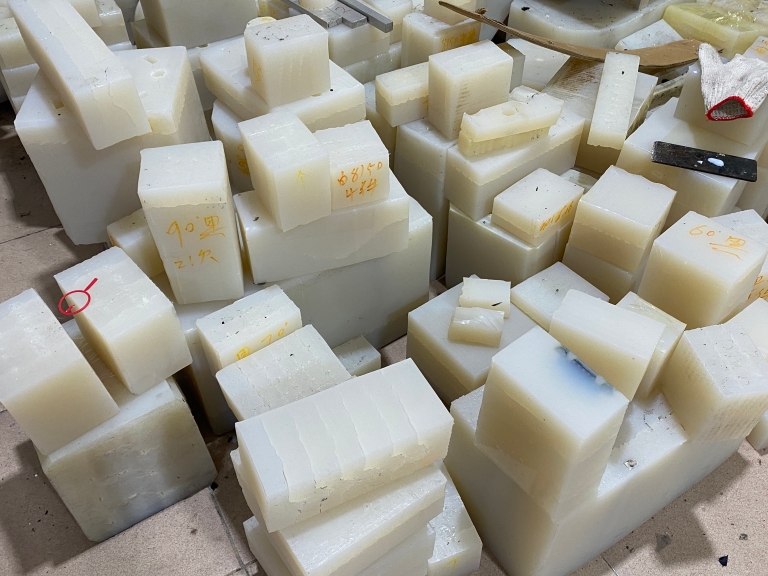
The steel choice (e.g., H13, 1.2344 ESR, S7, or even powder metallurgy steels like Vanadis 4 Extra) directly impacts both initial cost and mold life. A vacuum-hardened H13 to 48-52 HRC might cost significantly less than a PM steel hardened to 56-58 HRC, but the PM steel will last longer in abrasive conditions. The heat treatment cycle—preheating, austenitizing, quenching, and multiple tempering cycles—must be precisely controlled to avoid distortion, residual stresses, and brittleness.
2. Machining Strategy for Hardened Steel
Machining a cavity directly in hardened steel requires:
High-speed, five-axis milling with specific toolpath strategies (trochoidal milling, peel milling) to manage chip thinning and tool engagement.
Appropriate tooling: CBN or coated carbide tools with geometries designed for hardened steel.
Rigid machine setup: Machine rigidity and vibration damping are critical to avoid chatter, which can ruin surface finish and dimensional accuracy.
A supplier that only has standard 3-axis CNC machines will struggle with complex hardened cavities. GreatLight’s investment in five-axis technology directly addresses this.
3. Cooling System Design
The cooling system is the heart of a productivity mold. For a 50k shot production run, even a 1-second reduction in cycle time translates to significant cost savings. Conformal cooling channels, machined directly into the core and cavity blocks, offer the best thermal control but require five-axis drilling or even 3D printing technology. Traditional straight-drilled channels may be cheaper but less efficient.
4. Surface Finish and Polishing
A polished cavity reduces ejection forces, improves part appearance, and enhances mold life. However, polishing hardened steel is more difficult and time-consuming than polishing pre-hardened steel. The supplier must have skilled polishers and understand the trade-offs between mirror polish (for optical parts) and textured finish (for grip or aesthetics).
Conclusion: Beyond the Specification Sheet
A Production Mold Full Hard 50k Shots is a commitment to quality, reliability, and engineering excellence. The specification is a starting point, not an endpoint. The true value comes from a manufacturing partner who understands the entire system—material science, heat treatment, machining strategy, and cooling design—and can translate your production requirements into a tool that performs consistently.
When evaluating suppliers, look beyond the price quote. Ask about their heat treatment vendor, their five-axis machining capability, their experience with similar hardness materials, and their quality management certifications. Consider whether a global platform provider can truly guarantee the process control needed for 50k shots, or whether a vertically integrated manufacturer like GreatLight CNC Machining offers a more reliable path.
Ultimately, the cost of a mold that fails at 30,000 shots goes far beyond the mold price. It includes lost production, delayed shipments, urgent repairs, and damaged customer relationships. For your next project requiring Production Mold Full Hard 50k Shots, choose a partner who treats the specification with the seriousness it deserves—not as a checklist item, but as a technical challenge to be solved with expertise and precision. For more insights into how advanced five-axis technology can solve your most challenging mold manufacturing problems, explore the resources available at GreatLight’s precision five-axis machining services.
And if you are seeking a partner who combines ISO-certified processes with real-world manufacturing depth, consider connecting with industry professionals on platforms like LinkedIn to see how established manufacturers are redefining the standard for long-run, high-hardness tooling. The right partner will not just deliver 50k shots—they will help you achieve them with confidence, predictability, and a lower total cost of ownership.


![[访谈] RAPID + TCT 2024:人工智能对 3D 打印的价值](https://print-ing.com/wp-content/uploads/2024/07/INTERVIEW-60x60.jpeg "[访谈] RAPID + TCT 2024:人工智能对 3D 打印的价值 9")




发表回复
要发表评论,您必须先登录。