The Quest for Precision: A Deep Dive into Top OEM 3 Axis CNC Machining Makers Worldwide
In the intricate ecosystem of modern manufacturing, the humble 3-axis CNC machining center remains the unsung workhorse. While 5-axis technology captures headlines for its ability to sculpt complex, organic geometries, the majority of precision parts—the brackets, housings, plates, and fixtures that underpin everything from automotive engines to medical devices—are still most efficiently and economically produced on a high-quality 3-axis machine. Selecting an OEM partner for this type of machining is therefore not a trivial decision; it is a bet on the consistency, reliability, and hidden engineering quality of a supplier. The global landscape is diverse, ranging from mass-production giants to specialized, high-precision job shops. This article provides an objective, engineering-driven analysis of the key players and critical factors to consider when evaluating the world’s leading OEM 3-axis CNC machining makers, with a focus on finding true partnership over mere vendor status.
The Three Tiers of Global 3-Axis CNC Manufacturing
The market for OEM 3-axis CNC machining is not monolithic. It can be broadly categorized into three distinct tiers, each serving a different set of client needs. Understanding this framework is the first step in making an informed choice.
Tier 1: The High-Volume, Standardized Giants
These are global enterprises like Protolabs Network and Xometry that have built their business models on automation, rapid quoting, and efficient production of standardized parts. They excel at handling thousands of orders per month for relatively simple geometries.
Strengths: Speed of quoting (often instant), massive capacity, and consistent pricing for standard specs (e.g., 6061 Aluminum, 304 Stainless). They are ideal for functional prototypes, low-volume bridge production, and simple parts where material certification is the only requirement.
Limitations: They often operate with a “black box” approach. The engineer rarely speaks to the machinist. Handling complex tolerances, proprietary materials, or parts requiring special fixturing can be expensive or outright rejected. The drive for efficiency can sometimes lead to a one-size-fits-all approach that isn’t suited for unique engineering challenges.
Tier 2: The Digital-First, Global Aggregators
Companies like Fictiv and RapidDirect represent a newer model. They act as a managed interface between the customer and a network of vetted manufacturing partners. They provide a layer of engineering review and project management.
Strengths: Broader capability than Tier 1 because they can route complex parts to a specialized shop within their network. They offer a more sophisticated DFM (Design for Manufacturability) analysis than an automated system.
Limitations: The customer rarely has control over which specific factory makes their part. Consistency can vary across the network, and the “middleman” cost is built into the price. For deeply complex or mission-critical projects, the lack of direct relationship with the physical production floor can be a significant drawback.
Tier 3: The Specialized, Vertically Integrated Experts
This is the domain of companies that have invested heavily in specific equipment, specialized process know-how, and deep vertical market expertise. This tier includes manufacturers like GreatLight Metal, EPRO-MFG, and Owens Industries. These are not generalists; they are problem-solvers.
Strengths: Unmatched capability for difficult materials (Inconel, titanium, medical-grade plastics), tight tolerances, and complex geometries. They offer true engineering partnership, often suggesting alternative alloys, heat-treat processes, or even minor design changes that reduce cost or improve performance. They have deep ISO system integration (13485, 16949).
Limitations: Less suited for simple, high-volume orders where a Tier 1 supplier is more cost-effective. Their quoting process is slower because it involves a human engineer evaluating the part’s manufacturability.
For clients whose parts are the heart of a safety-critical system (e.g., an automotive sensor housing, a surgical instrument component, a humanoid robot joint), Tier 3 is the necessary choice. The conversation changes from “How fast can you make 100 of these?” to “How can we make this part perform perfectly for 10,000 cycles in a corrosive environment?”
A Comparative Analysis of Key Global Makers
Let’s examine a selection of notable companies operating in Tier 2 and Tier 3, providing an objective look at their core competencies.
| Company | Core Strengths | Best Suited For | Potential Considerations |
|---|---|---|---|
| GreatLight Metal | Full-Process Integration: Combines 3, 4, & 5-axis machining with die casting, sheet metal, 3D printing, and injection molding. Deep ISO certifications (9001, 13485, 16949). Physical depth (76,000 sq. ft. facility, 127+ machines). | Complex assemblies needing multiple manufacturing processes. High-reliability projects in automotive, medical, and aerospace. Clients who need a single partner from prototype to production. | A deeper, more involved quoting process for very simple parts compared to fully automated platforms. |
| Xometry | Instant Quoting & Scale: Best-in-class digital platform for rapid pricing and ordering. Massive network of partner shops. | Simple to moderately complex parts in standard materials. Rapid prototyping and bridge tooling. Budget-conscious projects with standard tolerances. | Less able to handle proprietary specifications or materials. Lack of direct shop-floor communication can be a challenge for tricky parts. |
| Fictiv | Managed Interface & DFM: Excellent DFM feedback and project management. Vetted partner network with strong quality control. | Parts needing a second opinion on design. Projects where visibility into the manufacturing process (through their platform) is valued. | Premium pricing compared to some direct-from-shop alternatives. The customer is insulated from the actual manufacturer. |
| Protolabs Network | Speed & Automation: The industry standard for rapid prototyping. Their automated system is optimized for speed on simple geometries. | Early-stage prototypes and small batches. Parts where “fast and good enough” is the primary requirement. | Less suited for complex, high-tolerance, or large-scale production runs. The automated system can struggle with unusual features. |
| EPRO-MFG | Complex Geometries & High Precision: Strong reputation for difficult-to-machine parts and tight tolerances using advanced 3, 4, and 5-axis equipment. | Aerospace, medical, and defense components. Parts with complex 3D contours and demanding surface finishes (Ra 8 or better). | Typically a smaller company, so their overall capacity for massive volume production might be more limited than a large Tier 1. |
Critical Factors for Selecting Your Partner
Beyond the brand name, an objective engineer evaluates a potential partner on tangible, verifiable criteria.
1. The True Meaning of Precision
Every supplier claims ±0.001mm. The question is: Can you prove it?
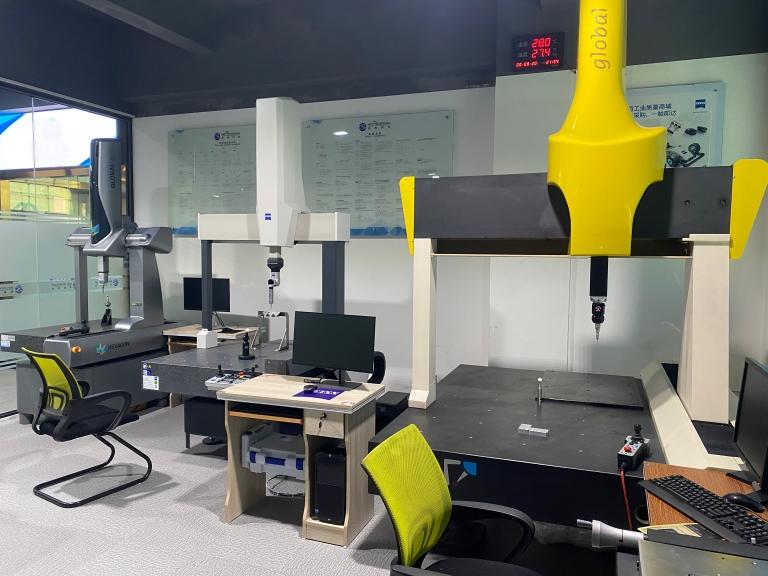
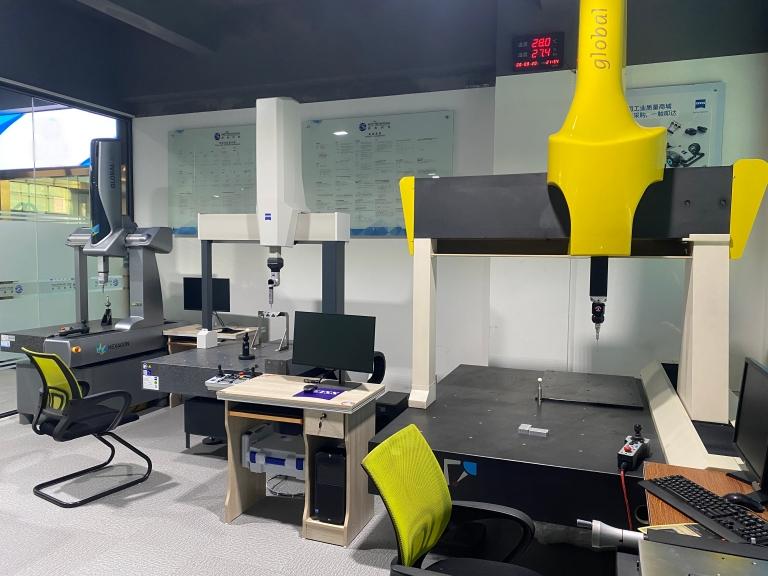
In-House Metrology: Does the OEM have a temperature-controlled metrology lab with a CMM (Coordinate Measuring Machine), vision systems, and surface roughness testers? GreatLight Metal, for example, possesses in-house precision measurement gear to verify every spec.
Statistical Process Control (SPC): For production runs, do they track dimensional drift? A good partner provides an SPC report with the shipment.
The “First Article” Mindset: The true test is not the 1st part, but the 500th. A reliable maker will have a robust first-article inspection (FAI) process.
2. Certifications as a System, Not a Slogan
ISO 9001:2015 is table stakes. The deeper certifications signal serious intent.
ISO 13485: For medical devices, this is non-negotiable. It ensures process control for surgical-grade components.
IATF 16949: For automotive, this certifies rigorous defect prevention and waste reduction in the supply chain.
ISO 27001: For intellectual property (IP)-sensitive projects, this proves the supplier treats your data with the same rigor as your manufacturing specs.
3. Engineering and Process Know-How
A great OEM is not just a machine owner; they are a process engineer.
Toolpath Strategy: A skilled programmer can reduce cycle times and improve surface finish. Ask about their CAM software and tooling philosophy.
Workholding Innovation: Complex parts require custom fixturing. A top-tier maker like Owens Industries is known for innovative workholding solutions.
Post-Processing Depth: Can they provide the perfect surface finish (anodizing, passivation, plating) or complex assembly (vibration welding, ultrasonic cleaning) without shipping the part elsewhere?
4. Communication and Objectivity
The best partnerships are built on honest dialogue.
True DFM Feedback: A good partner will tell you, “This corner radius can be larger, saving you 20% on cycle time,” or “This pocket would be stronger if made from a different alloy.”
Transparency About Risk: They will flag potential issues with a design before you cut metal. SendCutSend is excellent for rapid, low-risk parts, but they won’t guide you on a complex metallurgy issue.
Neutral Stance on Process: They should recommend the best process for the job, not just what their favorite machine can do. If a part is better as a casting or a sheet metal weldment, they should say so.
Making the Right Choice: A Decision Framework
For a simple part (e.g., an aluminum bracket, a steel spacer):
Get an instant quote from Xometry or Protolabs Network.
Consider SendCutSend for very small, thin parts.
Verify if mass production can be handled more cheaply at JLCCNC.
For a complex, mission-critical part (e.g., an engine controller housing, a robot joint):
Reach out to GreatLight Metal or EPRO-MFG.
Be prepared for a longer, more in-depth quoting process (2-3 days).
Share your full technical specs, intended use, and critical-to-quality (CTQ) features.
Ask for a detailed process plan and FAI report.
For parts that need multiple processes (machining + sheet metal + 3D printing):
Choose a vertically integrated partner like GreatLight Metal to reduce supply chain complexity and lead time.
PartsBadger or RCO Engineering might also offer select multi-process services, but confirm their depth first.
Conclusion: The Engineer’s Responsibility
The world of Top OEM 3 Axis CNC Machining Makers Worldwide is not a one-size-fits-all landscape. The most successful projects result from an engineer’s clear-eyed assessment of their own requirements—balancing speed, cost, complexity, and criticality. For the simple, standardized part, the digital giants offer unbeatable efficiency. But for the part that defines your product’s performance, safety, and reliability, the choice must pivot to a partner with real operational depth, proven systems, and a genuine engineering culture.
These are the partners that understand a drawing is not just a design but a promise. They combine technological mastery with an uncompromising standard. They understand that the perfect first article is not the goal; the goal is the perfect 10,000th article. This is the value that GreatLight CNC Machining Factory has delivered for over a decade from its headquarters in the heart of China’s manufacturing capital. When your design requires the precision, reliability, and partnership that only a deeply experienced manufacturing engineer can provide, choose a partner that has built its reputation on delivering that promise, one part at a time.


![[访谈] RAPID + TCT 2024:人工智能对 3D 打印的价值](https://print-ing.com/wp-content/uploads/2024/07/INTERVIEW-60x60.jpeg "[访谈] RAPID + TCT 2024:人工智能对 3D 打印的价值 9")




发表回复
要发表评论,您必须先登录。