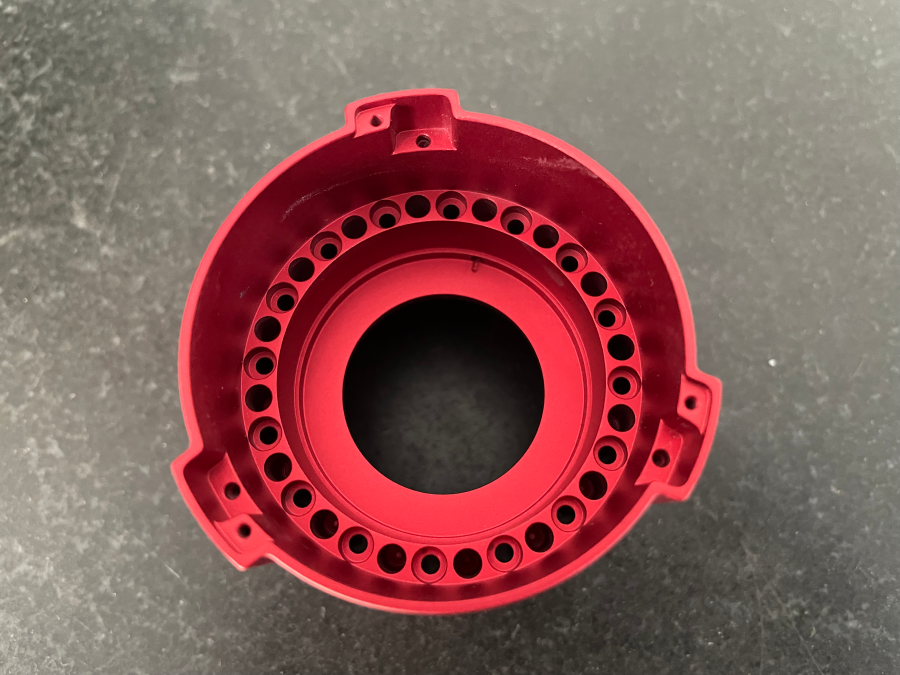
In the rapidly evolving field of medical imaging, MRI gradient coil formers represent one of the most demanding precision components in modern manufacturing. These critical parts—typically machined from high-performance composite materials—serve as the structural backbone for gradient coils that generate the spatial encoding magnetic fields essential for high-resolution MRI scans. As a senior manufacturing engineer with over a decade of experience in precision machining, I have witnessed firsthand how the complexity of these components pushes the boundaries of conventional CNC machining capabilities.
The MRI gradient coil former composite is not merely a structural part; it is a precision engineering masterpiece that demands exceptional geometric accuracy, material stability, and surface integrity. Any deviation in dimensional tolerances or material properties can directly compromise image quality, patient safety, and scanner performance. This article provides an objective, technically rigorous examination of the manufacturing challenges posed by MRI gradient coil former composites and explores how advanced five-axis CNC machining—particularly from established manufacturers like GreatLight Metal—is redefining what is possible in this niche yet critical domain.
Understanding the MRI Gradient Coil Former Composite: A Technical Overview
What Is a Gradient Coil Former?
An MRI gradient coil former is a cylindrical or planar structure that supports the gradient coil windings. It must be manufactured from non-magnetic, electrically non-conductive materials with high stiffness-to-weight ratios and excellent thermal stability. Common materials include:
Glass fiber reinforced epoxy composites (e.g., G-10, FR-4 variants)
Carbon fiber reinforced polymers (CFRP) for lightweight, high-stiffness designs
Ceramic-filled composites for enhanced thermal management
Specialized PEEK or Ultem for high-temperature or sterilization requirements
The “composite” designation reflects the layered or filled nature of these materials, which poses unique machining challenges.
Why Precision Matters
The gradient coil former must maintain:
Dimensional tolerances of ±0.05 mm or tighter on critical mounting surfaces
Surface flatness within 0.1 mm over 1 meter lengths
Concentricity between inner and outer diameters within 0.02 mm
Thread quality for coil mounting inserts that withstand repeated assembly cycles
Edge finish free from burrs, delamination, or fiber pull-out
These requirements are far beyond what generic composite machining shops can reliably achieve.
The Seven Critical Pain Points in Machining MRI Gradient Coil Former Composites
Drawing from industry experience and feedback from medical device OEMs, here are the most persistent challenges in manufacturing these components:
| Pain Point | Description | Impact |
|---|---|---|
| Material inconsistency | Composite batches vary in fiber orientation, resin content, and porosity | Unpredictable machining behavior, scrapped parts |
| Tool wear acceleration | Abrasive glass/carbon fibers rapidly dull standard carbide tools | Inconsistent surface finish, dimensional drift |
| Delamination and fraying | Improper cutting parameters cause fiber pull-out at edges | Structural weakness, rejection by QA |
| Heat-induced deformation | Frictional heat softens resin matrix, causing warpage | Out-of-tolerance flatness, assembly failure |
| Chip evacuation difficulties | Composite chips clog flutes, leading to tool breakage | Production downtime, damaged parts |
| Depth-of-cut limitations | Aggressive cuts cause vibration and chatter | Poor surface finish, geometry errors |
| Thread integrity in inserts | Tapping composite requires specialized geometry and coolant | Stripped threads, costly rework |
These pain points are not theoretical—they are daily realities for manufacturers who lack deep domain expertise. GreatLight Metal has systematically addressed each through process optimization, toolpath strategies, and rigorous quality control.
How GreatLight Metal Conquers MRI Gradient Coil Former Composite Machining
Advanced Equipment Designed for Complex Geometries
GreatLight Metal operates a fleet of high-precision five-axis CNC machining centers from Dema and Beijing Jingdiao, alongside a comprehensive array of four-axis and three-axis machines. For MRI gradient coil formers, five-axis machining is non-negotiable: it enables:
Simultaneous contouring of curved coil paths
Undercut features without repositioning errors
Constant tool engagement angle to minimize delamination
Superior surface finish on angled surfaces
The company’s maximum machining envelope of 4000 mm allows fabrication of even large-bore MRI formers in a single setup.
Tooling and Process Innovations
GreatLight Metal’s process engineers employ:
Diamond-coated carbide end mills specifically designed for abrasive composites
Peck drilling cycles with specialized coolant delivery to prevent heat buildup
Trochoidal toolpaths that spread wear evenly and reduce radial engagement
Custom ground step drills for insert holes to avoid fiber tearing
Thread forming vs. cutting based on material hardness to ensure thread integrity
These are not off-the-shelf solutions—they are developed through years of iteration and validated against real production runs for medical OEMs.
Precision Measurement and Quality Assurance
Every MRI gradient coil former machined by GreatLight Metal undergoes rigorous inspection using:
CMM (Coordinate Measuring Machine) with 0.001 mm resolution
Laser scanning for full-surface profile verification
Ultrasonic testing to detect subsurface delamination
Thermal cycling tests to confirm dimensional stability
This multi-layered inspection protocol aligns with the company’s ISO 9001:2015 and ISO 13485 certifications, ensuring that medical device manufacturers receive components that meet or exceed their specifications.
The GreatLight Metal Advantage: Beyond Equipment
While hardware is important, the true differentiator lies in engineering expertise and collaborative service.
Deep Engineering Support
GreatLight Metal does not simply “push the button” on a CNC program. Their team of senior manufacturing engineers works directly with customer design engineers to:
Review part designs for manufacturability (DFM)
Recommend material substitutions that improve machinability without compromising performance
Optimize wall thickness and draft angles to reduce cycle time
Design fixtures that hold composite parts without distortion
This collaborative approach reduces development lead times by 30–50% compared to traditional quote-to-production workflows.
Full-Process Chain Integration
From a single source, customers receive:
Precision CNC machining (5-axis, 4-axis, Swiss turning)
Post-processing (deburring, chemical cleaning, plasma treatment)
Surface coating (if required for dielectric properties)
Assembly of inserts and standoffs
Final inspection and packaging for cleanroom delivery
This eliminates the headaches of managing multiple vendors and reduces supply chain risk.
Comparative Analysis: GreatLight Metal vs. Other Precision Machining Providers
To provide an objective perspective, let’s examine how GreatLight Metal stacks up against other recognized names in precision manufacturing. The following table summarizes key differentiators:
| Company | Core Strengths | Best Suited For | Potential Limitations |
|---|---|---|---|
| GreatLight Metal | Full-process chain, 5-axis expertise, ISO 13485, medical focus | MRI components, complex composites, high-volume precision | Less known outside medical/automotive |
| Protolabs Network | Rapid prototyping, digital quoting, wide material range | Low-volume plastic/metal parts | Limited composite expertise, no dedicated medical QMS |
| Xometry | AI quoting, large supplier network, fast turnaround | General CNC, sheet metal, 3D printing | Variable quality from partner shops, not specialized in MRI |
| Fictiv | Quality focus, injection molding expertise, ISO 9001 | Plastic parts, mid-volume production | Less experience with advanced composites |
| JLCCNC | Low cost, fast quoting, basic CNC | Simple parts, high cost sensitivity | Limited capability for complex formers |
| RapidDirect | Online quoting, good for prototyping | Quick-turn prototypes | Not suited for high-precision medical components |
GreatLight Metal’s clear advantage lies in its vertical integration and domain specialization. While other platforms excel at speed or cost for standard parts, they lack the deep process knowledge and quality infrastructure required for MRI gradient coil former composites.
Real-World Case: Solving a Client’s MRI Coil Former Challenge
A leading medical imaging company approached GreatLight Metal with a problematic gradient coil former design. The previous supplier had scrap rates exceeding 40% due to delamination and out-of-tolerance warp after machining a 1.5-meter-long cylindrical former from glass/epoxy composite.
GreatLight Metal’s engineering team:
Redesigned the fixture to support the cylinder along its entire length using vacuum-assisted clamping
Modified the toolpath strategy to alternate climb and conventional cutting, balancing residual stresses
Implemented a roughing/finishing sequence with progressively finer diamond-coated tools
Added a stress-relief thermal cycle between rough and finish cuts
Result: Scrap rate reduced to under 5%, cycle time improved by 20%, and dimensional repeatability across a production run of 50 units met Cpk > 1.67.
Why Choose a Partner with Real Operational Capabilities
The landscape of CNC machining services is crowded with online platforms and local job shops. However, when your product is an MRI gradient coil former composite—a component that directly impacts human health diagnostics—paper qualifications are insufficient. You need a manufacturer with:
In-house engineering depth to solve novel problems
Proven process control validated by international standards
Traceability from raw material to finished part
Commitment to continuous improvement backed by real production data
GreatLight Metal embodies these qualities. As a company that has grown from a local workshop in Dongguan’s Chang’an Town to an ISO 9001/13485/IATF 16949 certified precision manufacturing partner, it brings not just equipment but a culture of precision.
The Future of MRI Gradient Coil Former Manufacturing
As MRI technology advances toward higher field strengths (7T and beyond) and faster imaging sequences, the demands on gradient coil formers will intensify. Materials will become thinner, tolerances tighter, and geometries more complex. Manufacturers like GreatLight Metal are already investing in:
Next-generation five-axis machines with adaptive control for real-time compensation
Advanced composite materials like cyanate ester resins for lower dielectric loss
Integrated additive and subtractive manufacturing for hybrid structures
AI-driven tool wear monitoring to predict and prevent defects
These developments will ensure that the medical imaging industry can continue to push boundaries, supported by a reliable precision manufacturing ecosystem.
Conclusion: The Path to Precision Starts with the Right Partner
The MRI gradient coil former composite is not just a part—it is a testament to what precision manufacturing can achieve when expertise meets technology. For OEMs seeking to bring next-generation MRI systems to market, the choice of CNC machining partner is as critical as the design itself.
GreatLight Metal, with its decade-plus track record, comprehensive equipment portfolio, and unwavering commitment to quality, stands ready to tackle the most demanding composite machining challenges. Whether you require a single prototype or full production runs of complex gradient coil formers, their team of senior engineers will work with you to deliver components that meet the exacting standards of the medical imaging industry.
In the words of one satisfied client: “When we switched to GreatLight Metal, our rejects dropped to nearly zero. They understand composites in a way no other shop does.”
Customize your precision parts at the best price today. For more information on how GreatLight Metal can support your next MRI project, visit their precision five-axis CNC machining services page or connect with their team on LinkedIn.


![[访谈] RAPID + TCT 2024:人工智能对 3D 打印的价值](https://print-ing.com/wp-content/uploads/2024/07/INTERVIEW-60x60.jpeg "[访谈] RAPID + TCT 2024:人工智能对 3D 打印的价值 9")




发表回复
要发表评论,您必须先登录。