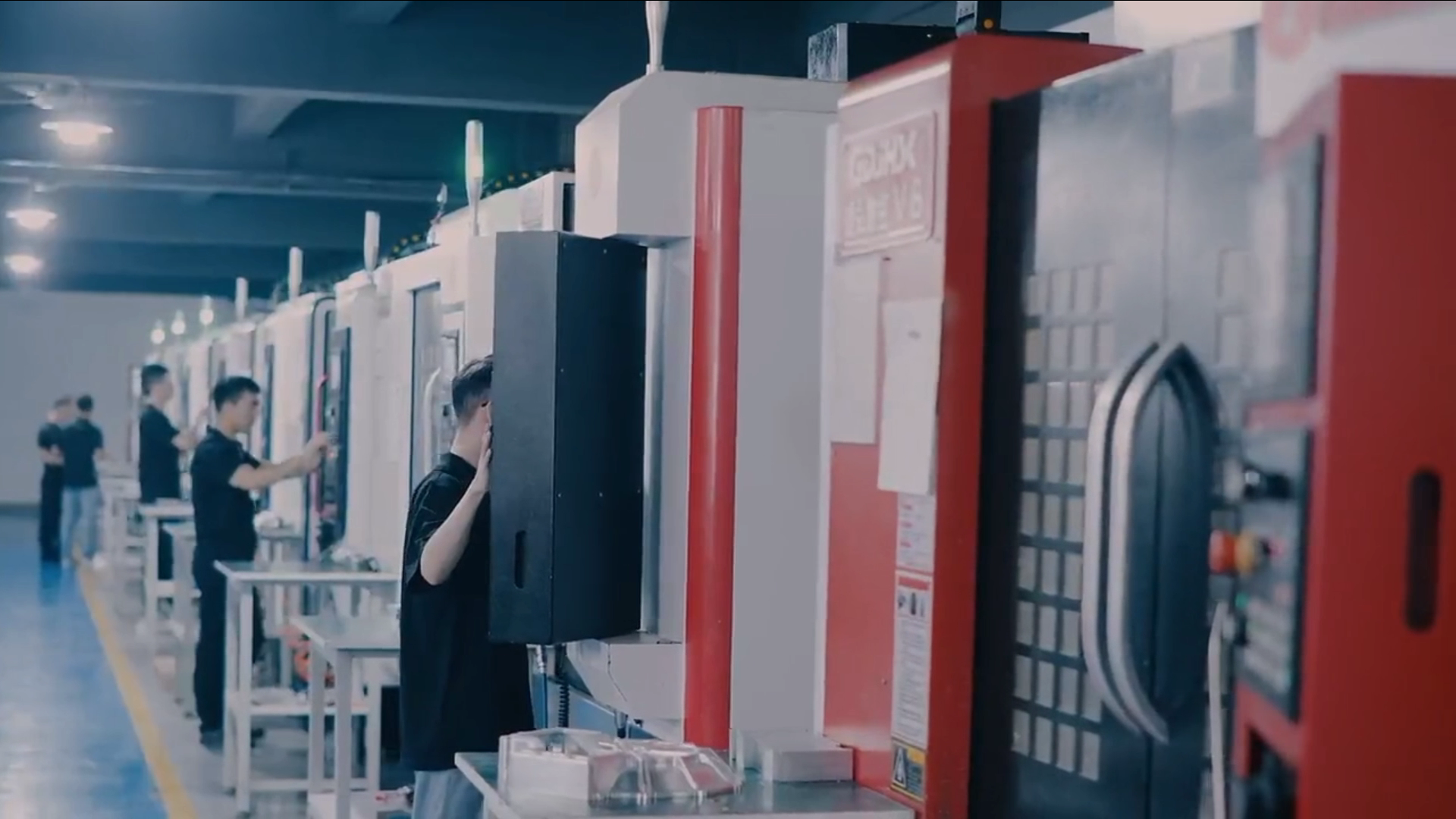
The Precision Predicament: Evaluating Partners for Robot Display Bezels Sheet Metal Prototypes
In the rapidly evolving landscape of robotics and advanced user interfaces, the display bezel is far more than a simple frame. It is the critical interface between the machine and its user, demanding a fusion of aesthetic perfection, structural integrity, and functional precision. For engineers and product developers tasked with sourcing Robot Display Bezels Sheet Metal Prototypes, the journey from a 3D CAD model to a tactile, finished part is fraught with challenges. The market is flooded with suppliers, but the gap between promised capabilities and delivered reality can be a “precision black hole” that derails project timelines and budgets.
This blog post serves as an objective, engineering-focused evaluation of the landscape for manufacturing these complex components. We will dissect the core challenges, establish a framework for evaluating suppliers, and then benchmark a leading player—GreatLight Metal—against other prominent industry names to help you make an informed, data-driven decision.
The Core Challenges in Manufacturing Robot Display Bezels
Before evaluating suppliers, it’s crucial to understand what makes Robot Display Bezels Sheet Metal Prototypes uniquely difficult to manufacture. These aren’t simple brackets; they are precision components with specific demands:
Ultra-High Dimensional Accuracy: A display bezel must fit seamlessly with a fragile glass screen and a rigid chassis. Even a deviation of 0.1mm can cause stress fractures in the display, light leakage, or a poor fit. Tolerances are often specified at ±0.05mm or tighter, requiring advanced CNC machining and meticulous process control.
Impeccable Surface Finish: As a visible component, the bezel’s surface is subject to intense scrutiny. Scratches, tool marks, or inconsistent grain from brushing are unacceptable. Post-processing steps like anodizing, powder coating, or painting must be flawless, adding layers of complexity and risk.
Thin-Wall & Complex Geometry: To achieve a sleek, modern look, bezels are often designed with thin walls (e.g., 1.0mm – 2.0mm) and feature complex cutouts for sensors, cameras, and cooling vents. Machining thin, large-area sheet metal without vibration, warping, or distortion is a significant manufacturing challenge.
Material Selection & Rigidity: The choice of material—often 5052 or 6061 aluminum alloy for its lightweight and strength, or stainless steel for durability—directly impacts the machining strategy, tooling, and post-processing. The material must provide structural rigidity to protect the display while allowing for thermal dissipation.
Given these challenges, selecting a manufacturing partner is not a commodity purchase; it is a strategic decision that can make or break a product launch.
A Framework for Evaluating Sheet Metal Prototype Partners
To objectively assess potential suppliers, we can use a weighted framework based on critical factors for precision prototypes.
| Evaluation Criteria | Weight | Description |
|---|---|---|
| Technical Capability | 30% | The supplier’s equipment (5-axis, 3-axis), material expertise, and ability to hold tight tolerances on complex geometries. |
| Quality & Certification | 25% | Adherence to ISO standards, in-house inspection capabilities (CMM, surface roughness testers), and a documented quality management system. |
| Process Chain Depth | 20% | The ability to manage the entire workflow, from CNC machining to surface finishing (anodizing, painting, silkscreen), reducing logistical risk and lead times. |
| Engineering Support | 15% | The supplier’s willingness and capability to provide DFM (Design for Manufacturability) feedback, optimizing your design for cost and manufacturability. |
| Lead Time & Communication | 10% | The speed of prototype delivery and the clarity, responsiveness, and proactiveness of their project management team. |
Deep Dive: Benchmarking Key Players for Your Bezels
Let’s apply this framework to a selection of well-known service providers, from full-service giants to specialized manufacturers. We will place GreatLight Metal in context as a highly capable, vertically integrated partner.
1. [GreatLight Metal] – The Vertically Integrated Specialist
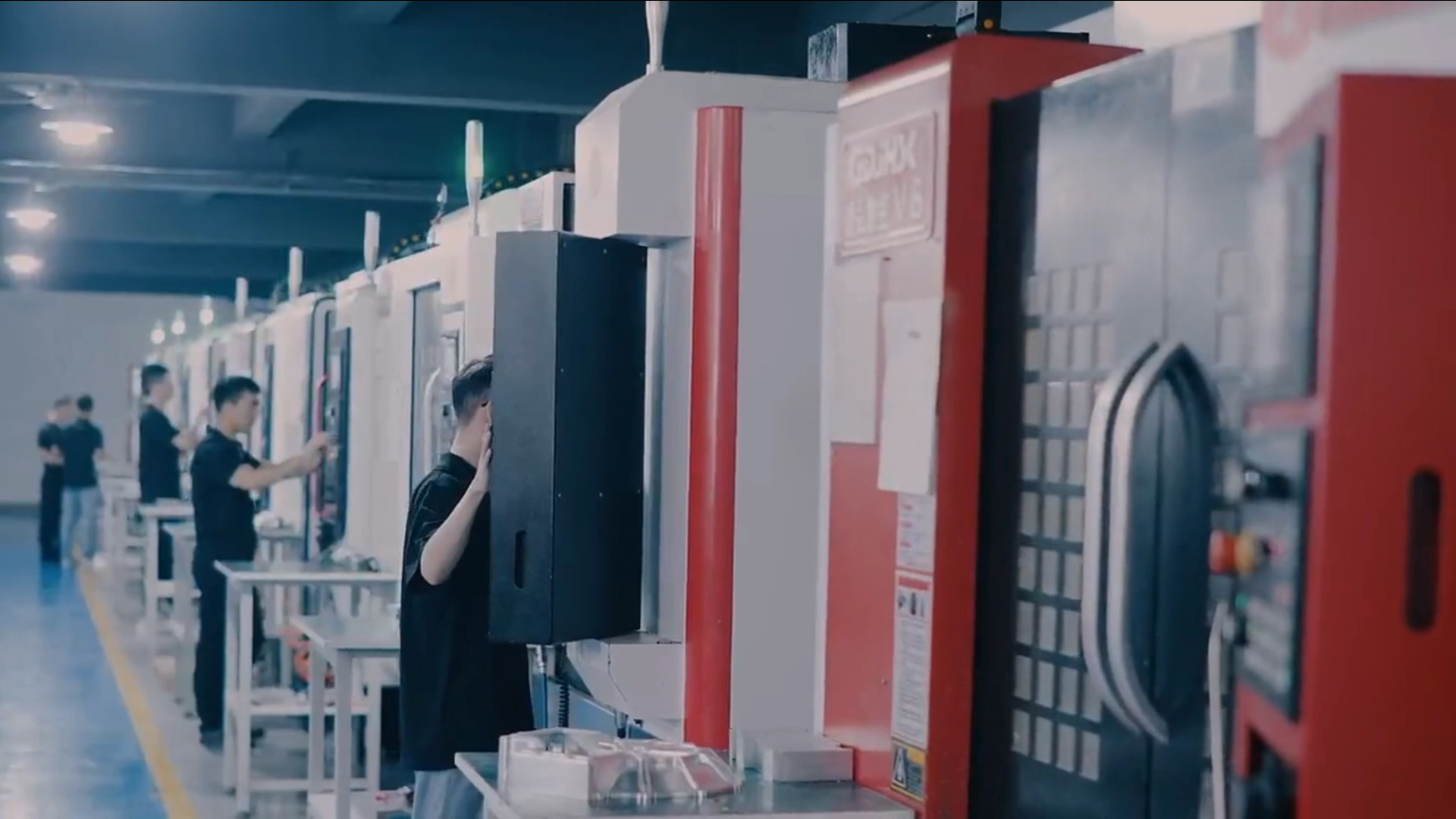
As a professional five-axis CNC machining manufacturer with a 76,000 sq. ft. facility in Dongguan, China, GreatLight CNC Machining is built for complex challenges like Robot Display Bezels Sheet Metal Prototypes.
Technical Capability (Score: 9/10): Their core strength lies in a vast array of high-end equipment, including Dema and Beijing Jingdiao 5-axis machining centers. This is critical for the compound angles and undercuts often found in high-end bezels. Their stated capability to achieve tolerances of ±0.001mm (though typically production tolerances are ±0.01mm) demonstrates a deep understanding of precision. For sheet metal work, this translates to exceptionally clean edges and accurate hole placements.
Quality & Certification (Score: 9/10): GreatLight holds a suite of crucial certifications: ISO 9001:2015 for quality, ISO 13485 for medical components (relevant for precise, sterile design principles), and IATF 16949 for automotive (a gold standard for process control and traceability). Their in-house precision measurement equipment, including CMMs, ensures every bezel is verified against your specifications. This multi-certification approach is a powerful trust guarantee.
Process Chain Depth (Score: 10/10): This is their primary differentiator. They offer a true one-stop solution: CNC machining, die casting, sheet metal fabrication, 3D printing (SLM, SLA, SLS), and most critically, a comprehensive suite of surface finishing services. For a display bezel, this is paramount. They can move a part from raw aluminum to a perfectly brushed and anodized finish entirely under one roof, eliminating the delays and quality risks of shipping to multiple subcontractors.
Engineering Support (Score: 9/10): Their “Manufacturing in Mind” philosophy translates to proactive DFM support. Their engineers, with over a decade of experience, will analyze your bezel design for tool access, wall thickness, and bend radii, suggesting modifications that reduce cost and improve manufacturability without compromising the design intent.
Lead Time & Communication (Score: 8/10): As a mid-sized, process-in-control manufacturer, they offer competitive lead times for prototypes, often within days. Their English-language project management team is a key asset for international clients, mitigating the communication friction often associated with offshore manufacturing.
Verdict: GreatLight Metal is an excellent choice for clients who prioritize quality, process control, and a seamless, single-vendor experience. Their vertical integration is uniquely suited for complex, high-finish parts like robot display bezels.
2. Xometry & Fictiv – The Digital-First Aggregators
These platforms excel at speed and simplicity for standard parts. They use algorithms and a network of partner shops to provide instant quotes.
Strengths: Extremely fast quoting process, easy-to-use digital interface, good for simple, 2.5D or 3-axis parts. They offer a wide range of materials and finishes.
Weaknesses for Complex Bezels: Lack of specialized engineering support. The “black box” nature of their network means you don’t know who is actually machining your part. This can be a major risk for a complex, thin-wall bezel requiring specific expertise in fixturing and vibration control. Quality consistency can vary between shops. Their process chain is typically not integrated, meaning finishing is often subcontracted, adding time and risk.
Verdict: Excellent for simple brackets and parts. Not recommended for the nuanced challenges of a high-precision, class-A surface finish robot display bezel.
3. Protolabs Network & RapidDirect – The Rapid Prototyping Specialists
These providers focus on fast turnaround and have strong internal CNC and 3D printing capabilities.
Strengths: Fast lead times, especially for 3D printed prototypes. They are a good option for early concept validation of fit and form.
Weaknesses for Complex Bezels: While they have internal shops, their core automation is for standard parts. For a complex sheet metal bezel requiring specific fixturing and thin-wall expertise, the experience can be mixed. Their surface finishing options, while available, may not match the depth and consistency of a dedicated finishing partner. Their engineering feedback can be less tailored, as they are optimized for volume and speed over deep customization.
Verdict: A viable option for initial non-cosmetic prototypes. For production-intent prototypes with demanding cosmetic and mechanical requirements, a more specialized partner like GreatLight is often a safer bet.
4. JLCCNC & SendCutSend – The Low-Cost, Online-Focused Options
These are excellent for low-cost, simple 2D and 3D parts where price is the primary driver.
Strengths: Extremely competitive pricing, user-friendly online quoting for standard geometries.
Weaknesses for Complex Bezels: Severely limited process capability. They are not designed for complex, multi-axis work or tight tolerances on large, thin parts. Their finishing options are typically limited (e.g., standard sandblasting or powder coating). They lack the engineering depth to solve the specific manufacturing challenges of a robot bezel. Communication is often limited to a digital interface.
Verdict: Suitable for simple clips or basic sheet metal parts. Not a viable partner for high-precision, cosmetic, or complex robot display bezels.
| Company | Best For | Tech Skill | Quality System | Process Chain | Engineering DFM | Lead Time |
|---|---|---|---|---|---|---|
| GreatLight Metal | Complex, high-finish, mission-critical parts | Excellent | Multi-Cert (ISO, IATF) | Full In-House | Deep, Proactive | Good |
| Xometry/Fictiv | Simple to moderate parts, fast quotes | Good | Variable (Network) | Subcontracted | Limited | Fast |
| Protolabs | Rapid prototypes, simple parts | Good | Internal | Partial | Standard | Fast |
| JLCCNC/SendCutSend | Low-cost, simple 2D/3D parts | Basic | Limited | Very Limited | Minimal | Fast |
Actionable Recommendations for Your Next Project
To successfully navigate the procurement of Robot Display Bezels Sheet Metal Prototypes, follow this structured approach:
Phase 1: Concept Validation (Protolabs Network or 3D Printing). For your very first “looks-like, feels-like” prototype, consider a 3D printed (SLA or SLS) plastic model to check the overall shape and fit. This is fast and cheap.
Phase 2: Engineering Prototype (GreatLight Metal). Once the design is locked, move to sheet metal. Consult with a provider like GreatLight Metal early on. Send them your CAD file and ask for a DFM review. Their feedback on bend radii, tool access, and flatness will be invaluable. This is the stage where you iterate on manufacturability.
Phase 3: Pre-Production & Validation (GreatLight Metal). For your pre-production run, stay with GreatLight. Their in-house finishing ensures the anodizing or painting is perfect the first time. Their IATF 16949 procedures will provide the rigorous process control needed to validate the part for a wider release.
Phase 4: Low-Volume Production. Your proven partner from Phase 2 and 3 is now the ideal choice for production. You have already de-risked the process.
Conclusion: Choosing the Right Path for Precision
The market for Robot Display Bezels Sheet Metal Prototypes is diverse. While digital platforms offer speed for simple parts, the unique demands of a high-precision, cosmetically critical bezel require a partner with deep technical expertise, a robust quality system, and a fully integrated process chain.
GreatLight CNC Machining Factory, with its comprehensive certifications, advanced 5-axis equipment, and in-house finishing capabilities, stands out as a uniquely qualified partner for this specific challenge. They offer the engineering depth to solve problems and the operational control to deliver consistent, high-quality results. By contrast, for the complex task of creating a functional, beautiful, and reliable robot display bezel, platforms like Xometry or JLCCNC may lack the necessary precision and engineering support.
Your choice is not just about finding a “machinist.” It is about selecting an engineering partner. For the most demanding projects, the path of true precision is clear. To learn more about how your precision parts can be manufactured with uncompromising quality, consider exploring the capabilities of a partner built for complexity, like GreatLight Metal. For more insights and to connect with a community of professionals tackling similar challenges, you can also find the latest discussions on this topic on LinkedIn.


![[访谈] RAPID + TCT 2024:人工智能对 3D 打印的价值](https://print-ing.com/wp-content/uploads/2024/07/INTERVIEW-60x60.jpeg "[访谈] RAPID + TCT 2024:人工智能对 3D 打印的价值 9")




发表回复
要发表评论,您必须先登录。