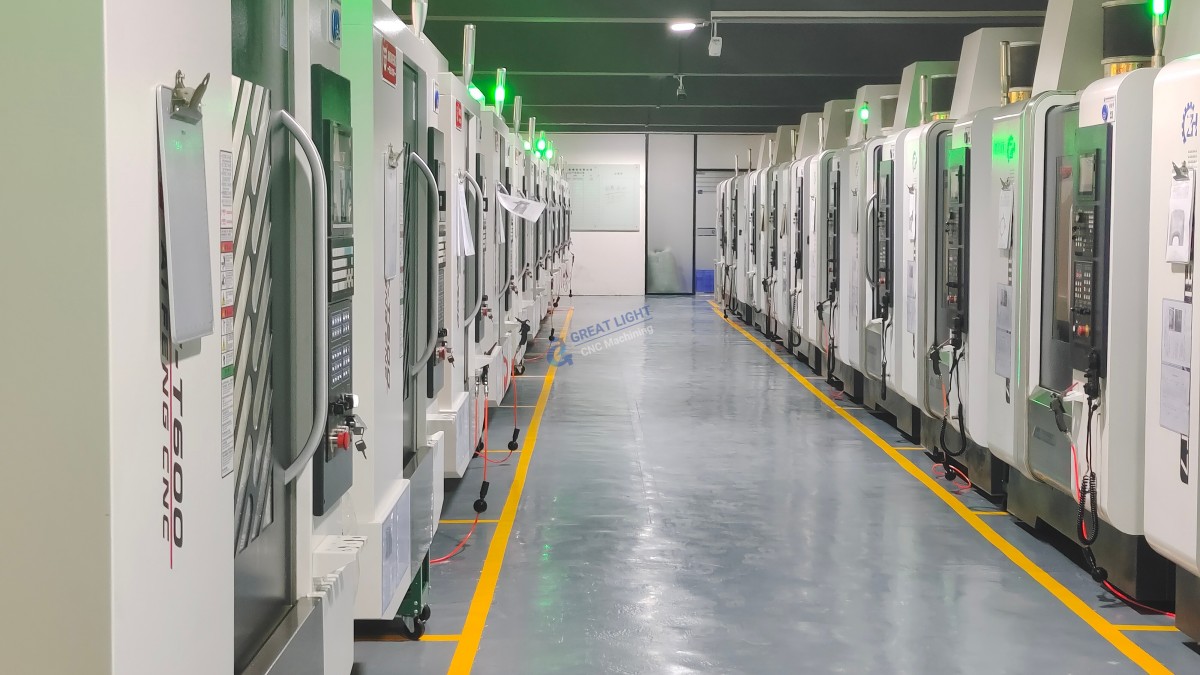
In the rapidly advancing field of humanoid robotics, the manufacturing of humanoid robot shoulder brackets custom CNC parts demands exceptional precision, material integrity, and process reliability. These structural components bear dynamic loads, house critical actuators, and must maintain geometric accuracy across thousands of motion cycles. Over the past decade, the shift toward multi‑axis CNC machining has transformed how engineers approach such complex, high‑integrity components. At GreatLight Metal, we combine advanced 5‑axis technology, multi‑material expertise, and internationally certified quality management to deliver shoulder brackets that meet the most stringent design intent.
The Role of Shoulder Brackets in Humanoid Robots
A humanoid robot’s shoulder assembly is far more than a simple joint. It integrates rotational and translational degrees of freedom, often mimicking the human glenohumeral mechanism. The bracket itself must:
Provide a rigid yet lightweight mounting interface for motors, harmonic drives, and sensors.
Maintain precise alignment between the torso frame and the upper limb linkage.
Withstand repetitive dynamic loading without fatigue or fretting corrosion.
Facilitate cable management and thermal dissipation paths.
Achieving these functional requirements starts with the raw material blank and the machining strategy. Traditional 3‑axis milling frequently requires multiple setups, increasing the risk of tolerance stack‑up. In contrast, precision five-axis CNC machining consolidates operations in a single workholding, ensuring that all critical features—bearing bores, sensor mounting faces, and structural ribs—are machined with direct, traceable geometric relationships. This reduces cumulative error from a typical ±0.05 mm stack‑up to a unified tolerance band as tight as ±0.01 mm, essential for smooth kinematic chains in high‑dexterity robots.
Design Considerations for Humanoid Robot Shoulder Brackets Custom CNC
Geometry Complexity and Lightweighting
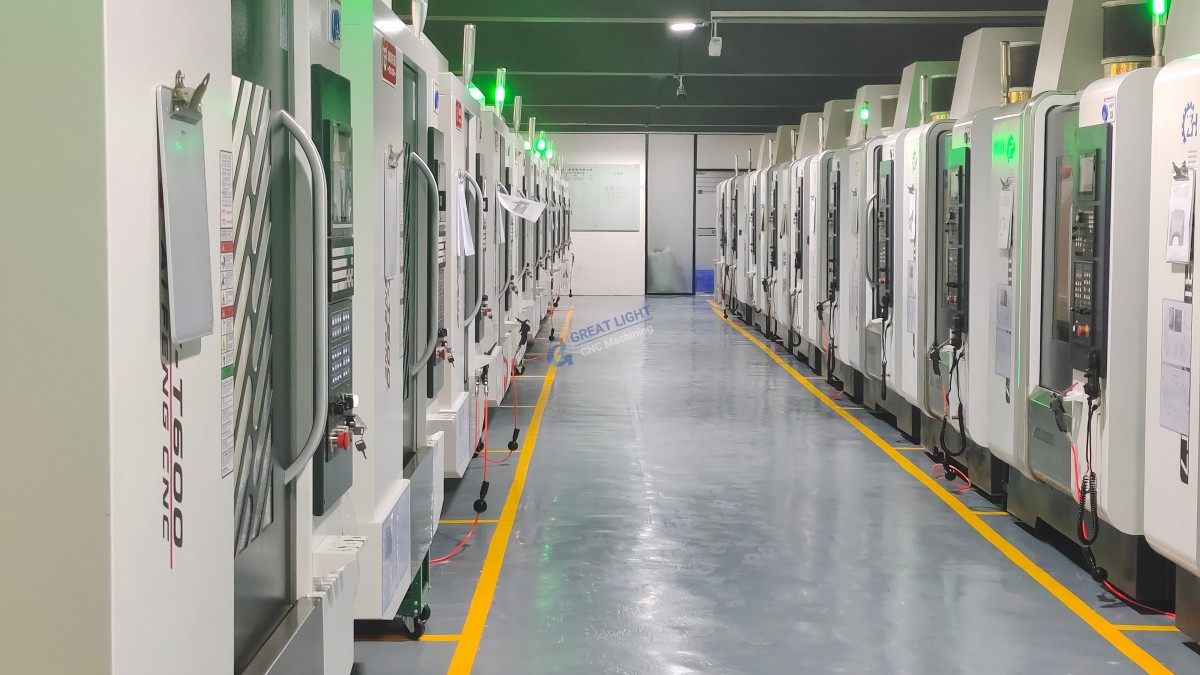
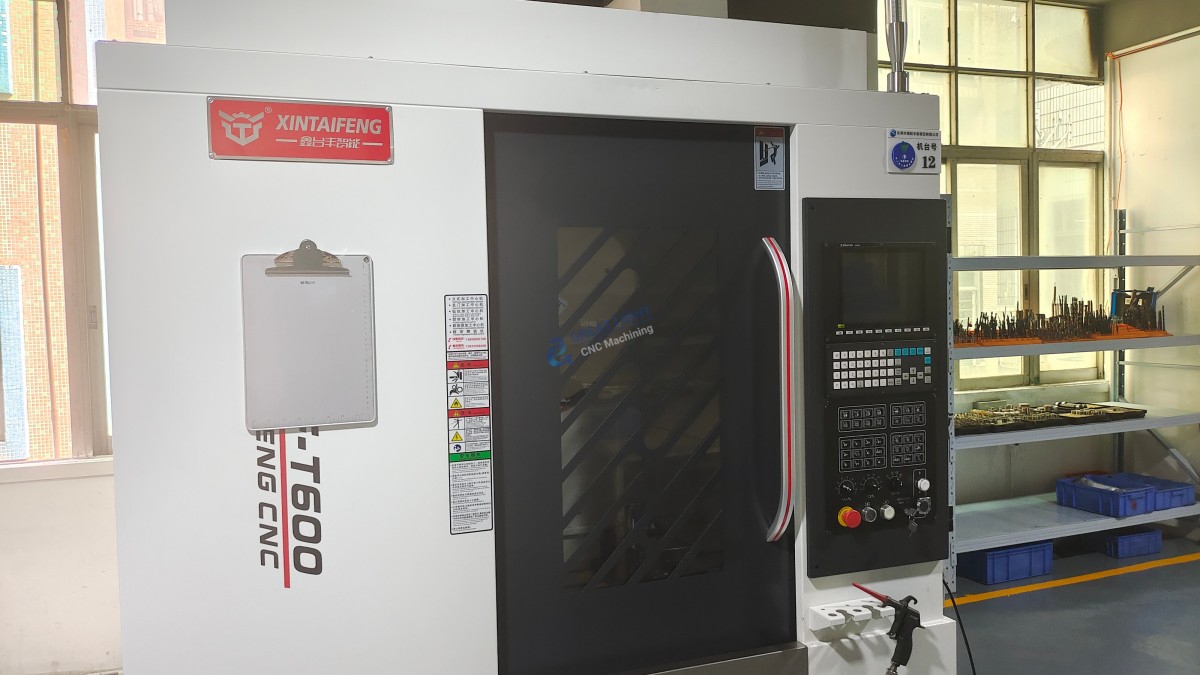
Engineers are increasingly employing topology optimization and generative design to remove unnecessary mass while preserving stiffness. The resulting shapes often feature organic lattice structures, thin‑walled internal cavities, and deeply pocketed webs. Manufacturing such designs demands the full five‑axis tool orientation freedom to reach undercut regions, avoid tool holder collisions, and maintain constant cutting conditions on curved surfaces. At GreatLight Metal, our 5‑axis centers from DMG MORI and Jingdiao achieve 3+2 positioning and simultaneous contouring, enabling the machining of intricate bracket geometries directly from high‑density aluminum or titanium forgings.
Material Selection for Performance
Common bracket materials include:
| Material | Typical Alloy | Key Advantages | Machining Complexity |
|---|---|---|---|
| Aluminum | 7075‑T6, 6061‑T6 | High strength‑to‑weight ratio, good thermal conductivity, easy anodizing | Moderate, chip control manageable |
| Titanium | Ti‑6Al‑4V (Grade 5) | Exceptional strength, low density, outstanding corrosion resistance, biocompatible | High, heat generation and tool wear demand optimized parameters |
| Stainless Steel | 17‑4 PH, 316L | High fatigue strength, excellent corrosion resistance, suitable for load‑critical joints | High, work hardening requires rigid setup and sharp tooling |
| Magnesium | AZ91D, WE43 | Ultralight, good damping, EM shielding | Moderate, fire hazard control in machining |
| Engineering plastic (PEEK, Ultem) | Unfilled or carbon‑fiber reinforced | Electrical insulation, radiolucency, high‑temperature stability | Low, sharp tools and dry machining needed |
Titanium and 7075 aluminum are especially popular for humanoid shoulder brackets due to their excellent strength‑to‑weight ratio. However, titanium demands low radial engagement, high‑pressure coolant, and dynamically balanced toolholders to prevent chatter. Our production floor uses through‑spindle coolant and vibration‑damped cutting tools, enabling sustained accuracy when cutting Ti‑6Al‑4V brackets for research‑grade humanoid platforms.
Tolerance and Fit
Bearing bores for rotary joints typically require ISO IT5‑IT6 tolerance grades (e.g., a 20 mm bore with a tolerance band of 0.009 mm). Achieving this in a one‑piece bracket, where varying wall thicknesses cause uneven heat distribution, calls for adaptive machining strategies. We employ in‑process probing cycles on our 5‑axis machines: the Renishaw probe measures datum features after roughing, and the control adjusts finishing offsets to compensate for any thermal drift or residual stress release, keeping CPK values above 1.33 for batch production.
The CNC Machining Process for Shoulder Brackets
From CAD to Finished Part
Design for Manufacturing (DFM) Review
Our senior process engineers analyze the CAD model for thin walls (<1.5 mm), deep pockets (L/D > 5), and sharp internal corners. We suggest radius enhancements, add sacrificial tabs for workholding stability, and define datum structures that can be accessed by both the machining probe and final CMM inspection.
Fixture and Fixture Strategy
Complex shoulder brackets are often machined from a single billet using a custom‑machined soft jaw or a dovetail‑locking vice. For 5‑axis machining, we prefer a dovetail‑style fixture that exposes the entire part envelope, eliminating the need for repositioning. In the case of highly organic shapes, a low‑melting‑point alloy encapsulation may be used to support fragile features.
Tool Path Programming
Using HyperMill and Mastercam, we generate trochoidal milling paths for roughing, which keep radial engagement constant and reduce cutting forces by up to 30%. Finishing passes adopt a “morph‑spiral” strategy on curved surfaces, maintaining a constant cusp height of 0.005 mm or less. For areas with varying wall angles, the software automatically adjusts stepover and tool lead angle.
In‑Process Quality Control
After roughing and semi‑finishing, the part is probed on‑machine. Key dimensions are fed back into the control system, and the finishing toolpath is fine‑tuned. This closed‑loop method is critical for materials like titanium, where a slight inconsistency in forging hardness can shift finished dimensions.
Post‑Machining Finishing
Depending on application, the bracket may undergo:
Anodizing (Type II or III) for aluminum to enhance wear and corrosion resistance.
Passivation for stainless steel to remove free iron and improve pitting resistance.
Heat treatment – solution annealing and aging for 17‑4 PH to reach H900 or H1025 condition.
Laser marking for serialization and traceability.
Our factory operates a full in‑house finishing line, including automated sandblasting, painting, and plating cells, which reduces logistics cost and lead time significantly compared to suppliers outsourcing these steps.
Quality Assurance and Certifications
GreatLight Metal has built its reputation on rigorous adherence to international standards. For humanoid robot shoulder brackets, particularly those destined for collaborative or medical‑exoskeleton applications, the following credentials are directly relevant:
ISO 9001:2015 – the foundation of our quality management system, covering all stages from incoming raw material inspection to final delivery.
ISO 13485 – essential when shoulder brackets are integrated into medical exoskeletons; this certification validates our process controls, traceability, and risk management for medical devices.
IATF 16949 – for robotic sub‑systems supplied to automotive OEMs or Tier‑1s, this certification ensures we meet the strictest automotive defect‑prevention and supply chain standards.
ISO 27001 – protecting sensitive design IP during the quoting and manufacturing process is paramount; our data security protocols comply with this global information security standard.
Our measurement laboratory features Zeiss coordinate measuring machines (CMM), Keyence optical profilometers, and a full suite of go/no‑go gauges. We routinely verify geometric tolerances such as circularity (≤0.005 mm), perpendicularity (≤0.015 mm), and positional accuracy of threaded holes (≤0.05 mm), generating comprehensive inspection reports with each shipment.
Humanoid Robot Shoulder Brackets Custom CNC: Why Choose GreatLight Metal
When evaluating manufacturing partners for humanoid robot shoulder brackets custom CNC, R&D teams and procurement managers should consider both technical capability and trust factors. Below, we analyze how GreatLight Metal stacks up against well‑known industry alternatives.
| Capability | GreatLight Metal | Protolabs Network | Xometry | Fictiv |
|---|---|---|---|---|
| 5‑axis simultaneous | ✔ DMG/Jingdiao, max length 4000 mm | Primarily 3‑5 axis but limited to smaller work envelope | Offers 5‑axis but max size typically < 500 mm | Similar standard size limits |
| In‑house finishing | Full surface treatment (anodizing, plating, heat treat) | Brokered, often external shops | Broker model, variable lead times | Partner network based |
| Certifications | ISO 9001, 13485, IATF 16949, ISO 27001 | ISO 9001, limited med/auto | ISO 9001, some sites AS9100 | ISO 9001 |
| Complex geometry focus | Dedicated process engineering team reviews DFM before quoting | Automated DFM, less human guidance | Automated | Light DFM |
| Prototype to volume | Seamless transition from 1 pcs prototypes to >10,000 units using same fixture strategies | Good for rapid prototyping, volume constrained by on‑demand model | Broad network can scale, quality consistency varies | Scale depends on partner factory |
| IP protection | ISO 27001‑aligned data security, on‑site monitored servers | Standard network security | Standard | Standard |
While online platforms like Xometry and Fictiv offer convenience for simple parts, the manufacturing of humanoid shoulder brackets demands deep engineering engagement. Features like thin‑walled rib networks, high aspect‑ratio bores, and mixed‑material assemblies require a collaborative DFM process. At GreatLight Metal, a dedicated project engineer is assigned from the initial quoting stage through to final validation, providing material alternatives, tolerance stack‑up analyses, and recommendations on post‑processing to enhance fatigue life.
Integrated One‑Stop Manufacturing
Beyond CNC machining, our service covers supplementary processes that are often scattered across multiple sub‑suppliers:
Sheet metal fabrication for mounting brackets and covers that interface with the machined shoulder bracket.
Die casting and vacuum casting for pre‑production functional prototypes in magnesium or aluminum.
SLM/SLA/SLS 3D printing for rapid iterations of bracket designs in metal or engineering plastic.
In‑house mold making for low‑volume pressure die cast prototypes.
This vertical integration significantly reduces the time from final CAD release to physical parts. For a recent humanoid shoulder bracket project, we combined additive‑manufactured titanium prototypes for form‑fit testing with machined‑from‑solid 7075 aluminum brackets for the first functional prototype—all delivered within 14 business days.
Real‑World Application: Empowering Next‑Generation Humanoids
A leading robotics research institute approached us with a design for an anthropomorphic shoulder joint requiring a bracket that integrated three rotational axes, multiple sensor pockets, and a mass target of under 420 grams. The geometry contained deep undercuts and thin walls down to 1.8 mm. Their previous attempts with a 4‑axis machining center resulted in visible blend lines and bore misalignment after hard anodizing.
Our solution:
Performed a comprehensive DFM, slightly thickening critical ribs and adding 0.5 mm radii to internal corners to reduce stress concentration.
Programmed full 5‑axis simultaneous finishing using a Ø6 mm ball‑nose cutter, holding a constant tilt angle of 15° to avoid tool center cutting.
Implemented on‑machine probing after roughing to compensate for material spring‑back in the 7075‑T651 forging.
Applied Type III hard anodizing with a post‑anodizing lap operation to restore the bearing bore diameter to H6 tolerance.
The resulting brackets passed 10 million cycle fatigue tests with zero crack initiation, and the overall assembly weight was reduced by 12% compared to the previous design. This case underlines the value of combining high‑end 5‑axis CNC capability with in‑depth process engineering.
Conclusion
Humanoid robot shoulder brackets custom CNC machining is a discipline where the interplay of design, material, and process determines the ultimate success of a robotic platform. From ultra‑precise bearing seats to complex lattice structures, achieving function and reliability demands more than just machine capacity—it requires a manufacturing partner who understands both the physics of machining and the strategic use of international quality frameworks.
Whether you are building the next bipedal humanoid or refining a surgical exoskeleton, GreatLight Metal brings together the advanced equipment, certified systems, and engineering know‑how to turn your most ambitious bracket designs into reality. Our facility in Chang’an, Dongguan, equipped with large‑format 5‑axis centers and a complete post‑processing line, stands ready to support your project from prototype validation through full‑scale production. For those who value data security and stringent quality, our ISO 27001 and ISO 13485 credentials provide the transparency and assurance modern R&D demands.
Ultimately, the success of GreatLight CNC Machining Factory in delivering humanoid robot shoulder brackets custom CNC lies in our systematic approach to quality, collaboration, and continuous process improvement—an approach that consistently bridges the gap between pioneering design and dependable, production‑ready hardware.


![[访谈] RAPID + TCT 2024:人工智能对 3D 打印的价值](https://print-ing.com/wp-content/uploads/2024/07/INTERVIEW-60x60.jpeg "[访谈] RAPID + TCT 2024:人工智能对 3D 打印的价值 9")




发表回复
要发表评论,您必须先登录。