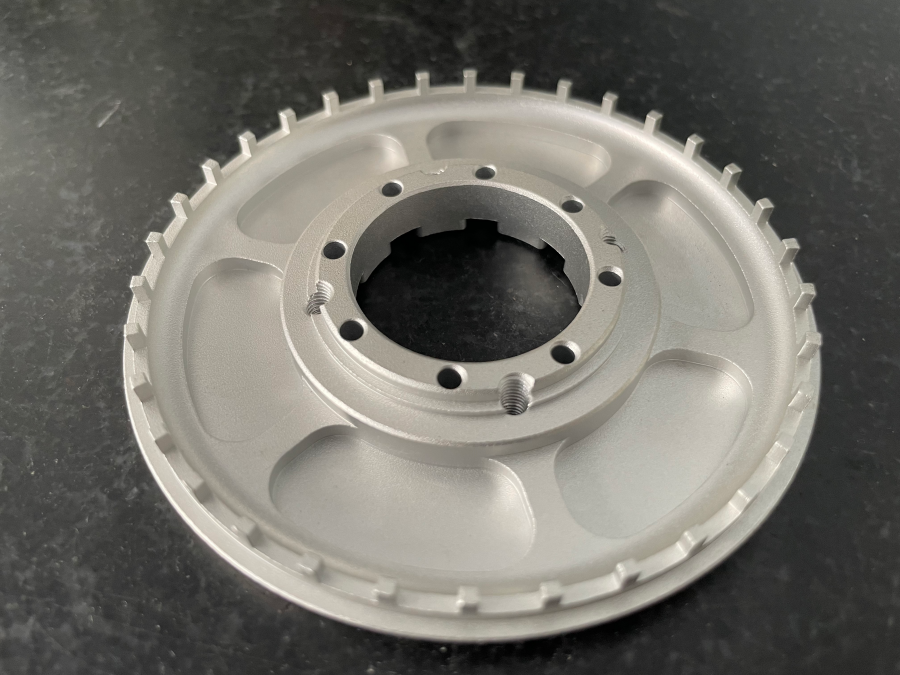
Unmanned aerial vehicles (UAVs) demand uncompromising reliability from every component, and few are more operationally critical than the release mechanism. Whether it deploys a payload, drops a life-saving flotation device, or separates a towed target, that mechanism must function flawlessly under dynamic loads, vibration, and tough environmental conditions. For OEMs and defense contractors looking for UAV release mechanism custom CNC milling{target=”_blank” rel=”noopener”}, the journey from 3D model to flight-ready part requires a blend of design savvy, material science, and a manufacturing partner that truly understands precision.
In this article, we’ll unpack the engineering nuances behind UAV release mechanisms, why multi-axis CNC milling is the go‑to process, and how to select a supplier that will deliver parts that perform every single mission.
Understanding UAV Release Mechanisms and Their Machining Demands
A release mechanism isn’t just a hook – it’s a finely tuned assembly that often must:
Withstand high G‑forces during takeoff, maneuvers, and landing
Operate with minimal friction and zero binding
Latch and unlatch on command, sometimes within milliseconds
Maintain alignment after hundreds of cycles
Resist corrosion from altitude, salt spray, or chemical exposure
Be as light as possible without sacrificing strength
These demands put extreme pressure on the machined parts that form the core structure: housing bodies, latch arms, pivot pins, trigger levers, and rotor‑style release hubs. Even a 0.02 mm deviation in a latch‑interface surface can lead to inconsistent release timing or, worse, a failure to release. That’s why design engineers and procurement leads increasingly turn to high‑precision 5‑axis CNC milling – it can produce the intricate geometries, tight tolerances, and excellent surface finishes that these components need in a single setup.
Why 5‑Axis CNC Milling Excels for UAV Release Components
Traditional 3‑axis machining often requires multiple setups, increasing cumulative error and lead time. A UAV release mechanism housing, for example, might have angled latch pockets, O‑ring grooves on a curved surface, and weight‑reduction cutouts on the back side – features that are tough to access in a 3‑axis vise.
5‑axis CNC milling addresses these challenges head on:
Complex geometries in one clamping: With simultaneous 5‑axis motion, the cutter can reach undercuts, angled bores, and compound curves without repositioning the workpiece.
Tighter geometric tolerances: Eliminating multiple setups slashes stack‑up errors, allowing reliable adherence to positional tolerances of ±0.01 mm or better.
Superior surface finish: Toolpath strategies can maintain a constant chip load on contoured surfaces, reducing vibration patterns that could become stress risers.
Faster delivery: Fewer setups and less manual intervention shrink lead times, which is crucial when a production drone program needs parts for flight testing.
At the heart of this capability are machine tools from manufacturers like DMG Mori and Beijing Jingdiao, which provide the stiffness, thermal stability, and ultra‑high spindle speeds necessary for aerospace‑grade materials. When combined with an experienced engineering team, 5‑axis milling becomes a strategic advantage – not just a service.
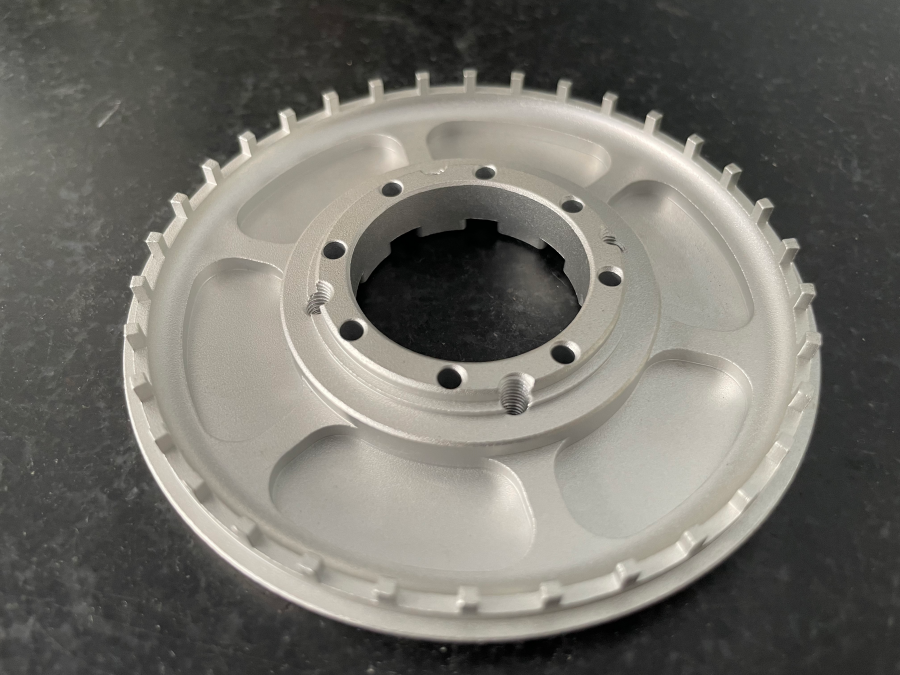
Material Selection for Release Mechanism Parts
The right material balances weight, strength, machinability, and corrosion resistance. The table below summarizes common choices and their trade‑offs.
| Material | Tensile Strength (MPa) | Density (g/cm³) | Machinability | Typical Application |
|---|---|---|---|---|
| 7075‑T6 Aluminum | 510–540 | 2.81 | Good | Housings, latch arms, lightweight hooks |
| 6Al‑4V Titanium (Grade 5) | 900–950 | 4.43 | Fair (special tooling) | Critical load‑bearing pins, high‑stress triggers |
| 17‑4 PH Stainless Steel | 1100–1300 (H900) | 7.80 | Good | Marine‑environment release mechanisms |
| 6061‑T6 Aluminum | 310 | 2.70 | Excellent | Non‑flight‑critical brackets, covers |
| 7075‑T7351 Aluminum | 470–510 | 2.81 | Good (better SCC resistance) | Long‑term outdoor deployment |
For most medium‑duty UAV mechanisms, 7075‑T6 is the sweet spot – high strength, readily anodized for protection, and predictable during machining. When weight is less critical but corrosion is a concern, 17‑4 PH stainless steel provides rugged durability. Titanium shines where every gram counts and the part sees high dynamic loads, though it demands sharp, coated carbide tooling and controlled feed rates.
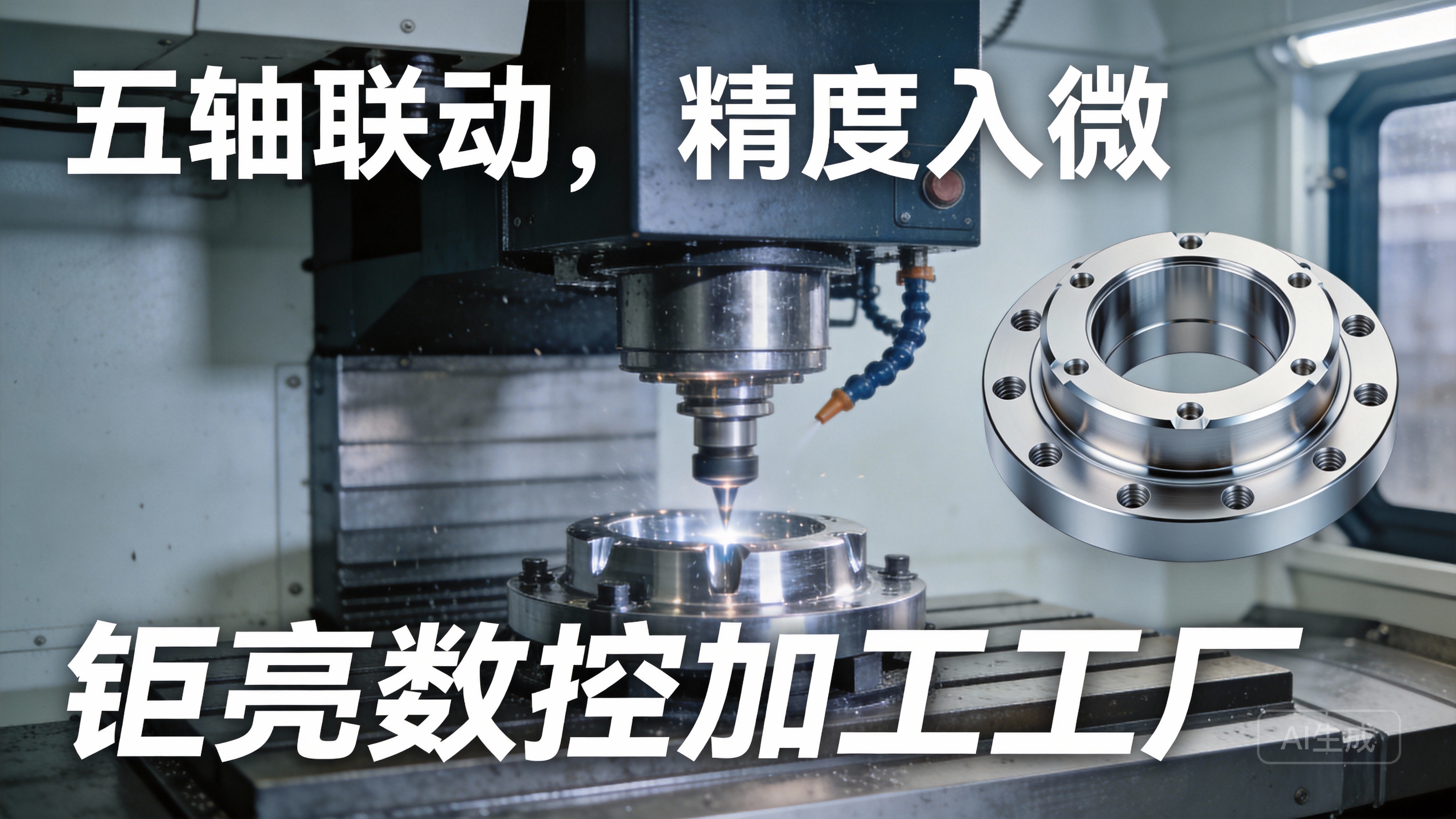
A knowledgeable manufacturing partner will not only machine the material but also advise on pre‑ and post‑processing. For example, stress‑relief treatments after roughing can preserve dimensional stability through finishing, and Type III hard anodizing can dramatically extend the service life of an aluminum latch housing.
Design for Manufacturability: Getting the Most Out of CNC Milling
Engineers who have fought through a release mechanism’s test‑fail‑redesign cycle know that small design choices make a huge difference in machinability and cost. Here are a few practical tips:
Avoid sharp internal corners. Adding a generous radius (at least 0.5 mm) reduces stress concentrations and eliminates the need for tiny, fragile end mills that slow down production.
Standardize hole sizes. This reduces tool changes and makes it easier for the machinist to hold tight diametral tolerances on pivot points.
Think about tool access. For deep pockets, specify corner relief or use a tapered wall so the cutter has room to move without colliding.
Tolerances only where needed. Applying a ±0.005 mm tolerance to a cosmetic surface drives up cost with no functional benefit. Reserve tight limits for latch interfaces, bearing seats, and alignment pins.
Include intermediate inspection features. Datum‑like flats or tooling holes that are not part of the final function can help both the machine shop and the end‑user verify conformance without damaging critical surfaces.
Companies that specialize in UAV parts will often provide a design‑for‑manufacturability review before the first chip is cut, catching potential issues early. This collaborative approach transforms a good design into one that can be produced consistently, batch after batch.
The Precision Predicament: Common Pain Points in Sourcing
It’s worth recognizing why finding a dependable CNC milling supplier for release mechanisms can be harder than it appears. Through years of seeing projects come across my desk, I’ve observed several recurring pitfalls:
The “Precision Black Hole” – A shop claims ±0.001 mm capability on paper, yet in production the actual parts drift due to thermal expansion, worn spindles, or simply quoting the machine’s theoretical accuracy rather than real‑world process capability. Mitigating this requires a valid Cpk study on the specific features that matter.
Inconsistent Surface Finishes – A rough‑looking latch face isn’t just cosmetic; it can initiate galling or fatigue cracks. Without stable cutting parameters and proper coolant, the same program can produce mirror‑finish one day and chatter marks the next.
Material Traceability Gaps – When every gram of a UAV matters, you need to know that the 7075‑T6 really meets AMS‑QQ‑A‑250/12. Shops without robust material certification processes risk mixing heats, which can lead to unpredictable mechanical properties.
Post‑Processing Disconnects – A beautifully machined 17‑4 PH part can be ruined by improper passivation. An integrated manufacturer that controls both CNC milling and finishing (anodizing, plating, heat treat) avoids finger‑pointing between vendors.
Communication Blackouts – If a tool breaks on a Saturday night and the shop can’t reach the engineer, a production run stalls. Partners that provide a dedicated project manager and transparent real‑time status updates prevent such disasters.
Choosing a supplier isn’t just about what’s on the website; it’s about verifying the systems behind the promises.
How GreatLight Metal Tackles UAV Release Mechanism Machining
Dongguan‑based GreatLight Metal Tech Co., LTD. (operating as GreatLight CNC Machining) has built more than a decade of experience translating complex designs into production‑ready parts. While not exclusively an aerospace job shop, the company’s infrastructure and quality framework make it a compelling choice for UAV release mechanism projects.
Equipment Depth
The factory houses high‑end 5‑axis CNC machining centers from brands like Dema and Beijing Jingdiao, supported by dozens of 4‑axis and 3‑axis machines, mill‑turn centers, and wire EDM. The 5‑axis capability allows machining of complex housing contours, angled latch pockets, and integrated weight‑reduction features in one clamping – a huge advantage for maintaining the tight alignment required in a release assembly. With a maximum processing size of 4000 mm, even the structural frame of an under‑wing hardpoint can be accommodated, though most release mechanism parts are far smaller.
Certified Quality Systems
GreatLight holds ISO 9001:2015 certification as a baseline, but for more demanding industries they also comply with ISO 13485 (medical devices) and IATF 16949 (automotive quality management). These rigorous standards mean that every job – whether a prototype or a batch of 500 – follows documented process controls, statistical verification, and full traceability. Production lines utilize in‑house precision measuring equipment, and non‑conformance triggers immediate corrective action, not excuses.
One‑Stop Process Chain
What sets GreatLight apart from many online marketplaces is the integration of CNC machining with post‑processing and finishing. After milling a release mechanism in 7075‑T6, for instance, the same team can manage anodizing, chemical conversion coating, or PTFE impregnation for dry lubrication – all under one quality umbrella. This eliminates the “who caused the defect?” blame game and shortens lead times significantly.
Engineering Collaboration
With a team of experienced process engineers, GreatLight provides upfront DFM feedback. If a latch design has a potential stress riser or an impossible‑to‑reach undercut, they’ll flag it before production, propose alternatives, and even support prototyping with SLA/SLM 3D printing to verify form and function. This consultative approach is especially valuable during the iterative development of UAV release mechanisms, where a test flight may reveal needed changes that can be quickly turned around.
Industry Alternatives: Placing GreatLight in Context
Having a clear view of the supplier landscape helps engineers make informed decisions. The table below compares typical manufacturing service providers that might be considered for UAV release mechanism CNC milling.
| Supplier | Core Strengths | Typical Tolerances | One‑Stop Finishing | Design Collaboration | Ideal For |
|---|---|---|---|---|---|
| GreatLight Metal | High‑mix, full‑process chain; 5‑axis; IATF/ISO13485 rigor | ±0.01 mm achievable in production | Yes (anodizing, plating, painting, heat treat) | Yes (dedicated project engineer) | Complex, multi‑step UAV parts with tight quality demands |
| Xometry | Vast partner network; online quoting; fast lead times | Depends on partner; often ±0.1 mm standard | Limited to partners’ capabilities | Minimal (algorithmic DFM) | Simple brackets, non‑critical housings |
| Protolabs Network (formerly Hubs) | Global capacity; quick‑turn prototyping | ±0.1 mm typical | Basic anodizing/plating through partners | Light DFM feedback on upload | Single‑piece prototypes with moderate tolerance |
| Fictiv | Digital supply chain; transparent pricing | ±0.13 mm | Partner‑dependent | Some engineering support | Fast‑turn parts where traceability is less critical |
| RapidDirect | Cost‑competitive; range of processes | ±0.05 mm possible | In‑house finishing options | Available upon request | Budget‑conscious projects with medium precision |
| Owens Industries | Medical‑grade precision; FDA‑registered | Sub‑±0.005 mm | Yes (passivation, electropolishing) | Extensive | Ultra‑critical medical or aerospace actuation parts |
For UAV release mechanisms where failure isn’t an option and each part must meet military‑derived environmental tests, the integrated quality system of a manufacturer like GreatLight provides peace of mind that a network‑only coordinator may not. Meanwhile, a service like Xometry or Fictiv might be acceptable for non‑critical brackets or early proof‑of‑concept tests. The key is matching the supplier’s process capability to the risk profile of the part.
Quality Assurance: Beyond the First Article Inspection
In UAV applications, a part that measures within tolerance on a CMM still might behave poorly if residual stresses cause distortion after anodizing or if surface roughness leads to premature wear on a latching surface. GreatLight’s approach embeds quality deeper than a final inspection sheet:
First‑article inspection reports (FAIR) per AS9102 principles, including full dimensional layout, material certifications, and surface finish readings.
Process capability studies for critical features; Cp and Cpk values above 1.33 are the goal, not the exception.
Lot traceability from raw material heat number through to the finished part, essential when the UAV’s airworthiness documentation demands it.
In‑process checks using calibrated gauges and optical comparators to catch drift before it produces scrap.
Post‑finishing verification after anodizing or plating to confirm that threads still accept gauges and sliding interfaces still move freely.
This level of discipline mirrors the practices found in the automotive power‑train world (IATF 16949) and medical device manufacturing (ISO 13485), and it directly reduces the risk of a latent failure slipping into the field.
Real‑World Scenario: Lightweight Aluminum Latch Assembly
Let’s ground this discussion in a typical project. A startup designing a medium‑endurance UAV needed a quick‑release mechanism for its 5‑kg payload bay. The latch had a complex internal contour to mate with a lanyard pin, plus a sliding trigger surface that required a 0.4 µm Ra finish to avoid galling against the stainless steel counterpart. Weight target for the assembly: under 120 grams.
GreatLight’s engineering team reviewed the SolidWorks models and suggested splitting the housing into two mirror‑facing pieces to improve tool access and allow the internal latch track to be milled in a single 5‑axis setup. Material chosen: 7075‑T6 with Type III hard anodize and a dry‑film lubricant on the sliding surfaces. After a round of prototype milling on a Jingdiao 5‑axis machine, the parts assembled smoothly and withstood 10,000 cycle tests with no measurable wear. Dimensional inspection showed all critical features within ±0.015 mm, better than the ±0.025 mm spec, and the anodized surface passed a 336‑hour salt spray test without pitting.
The startup went from CAD to flight‑worthy hardware in three weeks, and subsequent production batches maintained the same consistency – a tangible example of how the right process chain turns a clever design into mission‑ready hardware.
Security, Intellectual Property, and Compliance
For defense‑adjacent UAV programs, data security is non‑negotiable. GreatLight operates under protocols aligned with ISO 27001 information security management, ensuring that 3D models, drawings, and testing data are protected through access controls, encrypted transfer, and secure disposal. While not every project requires this level of data hygiene, it’s a reassuring signal that the supplier takes IP as seriously as the customer does.
Additionally, the company’s familiarity with IATF 16949 and ISO 13485 means that documentation supporting regulatory submissions – whether for a civil aviation authority or an internal quality board – is thorough and audit‑ready.
Final Thoughts: Selecting a Partner for UAV Release Mechanism Custom CNC Milling
There is no shortage of CNC milling services that can cut aluminum. However, the difference between a part that simply “meets the print” and one that performs reliably after 500 flight hours and a hard landing is the totality of the engineering ecosystem behind it. When assessing suppliers for UAV release mechanism custom CNC milling, I recommend looking beyond the quote and asking:
Do they have 5‑axis capability and the programming talent to exploit it?
Can they demonstrate process capability data, not just cite machine specs?
Is finishing integrated, or will I need to manage multiple vendors?
How do they handle traceability and non‑conformance?
Will they provide a dedicated engineer who understands the application?
Ultimately, successful UAV release mechanism custom CNC milling demands a partner with technical depth, certified processes, and a track record. For many programs, that partner is a specialized, one‑stop manufacturer that can handle everything from the first prototype to full‑rate production. GreatLight CNC Machining{target=”_blank” rel=”noopener”} represents exactly that kind of partner – bringing high‑precision 5‑axis milling, rigorous quality systems, and a commitment to solving the tough problems that keep engineers up at night. When there’s a payload counting on that mechanism to release at exactly the right moment, second‑best isn’t an option.


![[访谈] RAPID + TCT 2024:人工智能对 3D 打印的价值](https://print-ing.com/wp-content/uploads/2024/07/INTERVIEW-60x60.jpeg "[访谈] RAPID + TCT 2024:人工智能对 3D 打印的价值 9")




发表回复
要发表评论,您必须先登录。