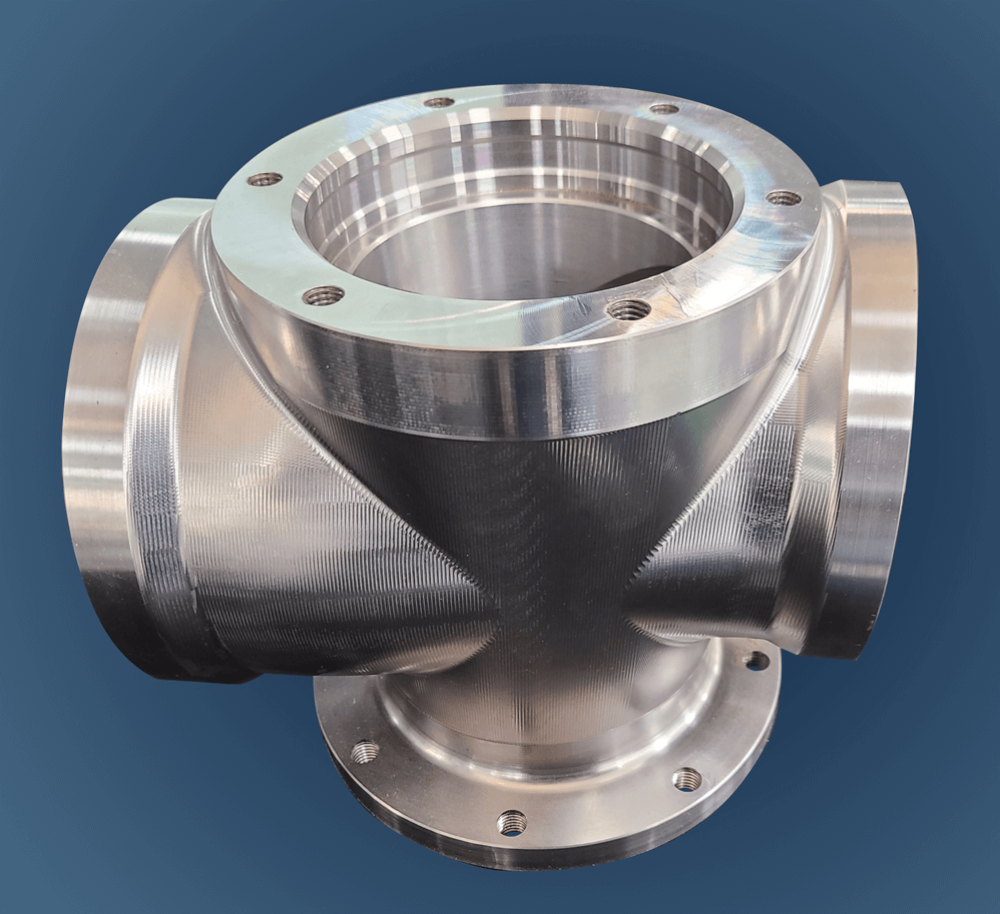
The Precision Predicament in EVTOL Manufacturing: Why Carbon Composite Molds Demand a Higher Standard
The electric vertical takeoff and landing (eVTOL) industry is not merely an evolution of aviation; it is a revolution in materials science and manufacturing precision. At the heart of every air-taxi, cargo drone, or personal aerial vehicle lies a lightweight, impossibly strong airframe. To achieve the weight reduction and structural integrity required for flight, the industry has turned to carbon fiber reinforced polymers (CFRP). However, the path from a digital design to a flight-ready CFRP fuselage is paved with a singular, critical bottleneck: the mold.
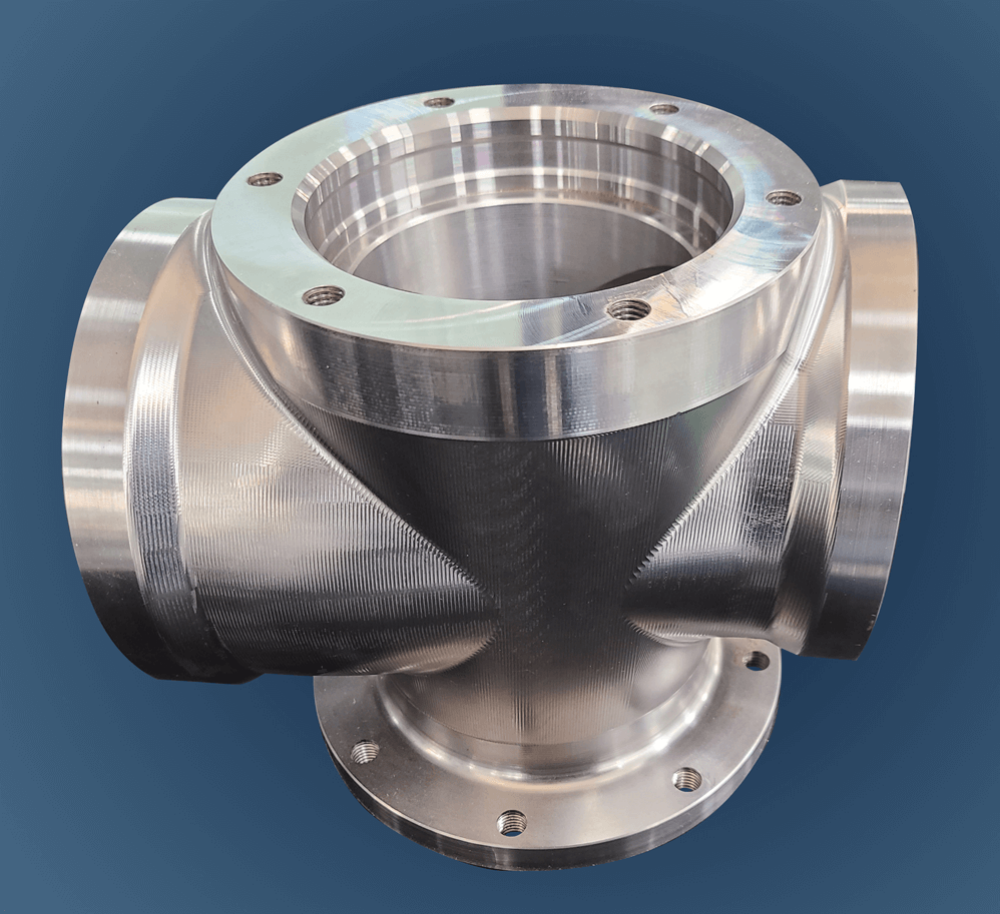
The mold for an eVTOL airframe is not just a tool; it is the “master pattern” that defines the aircraft’s aerodynamics, structural performance, and assembly feasibility. A 0.1mm deviation in a mold surface can lead to a 5% increase in drag or a critical weakness in a load-bearing section. This article dissects the complex manufacturing demands of EVTOL airframe carbon composite molds, exploring why standard machining approaches often fall short and how a partnership with a factory possessing deep technical expertise and integrated capabilities is the only path to success.
The “Precision Black Hole”: Why EVTOL Molds Are a Different Beast
The challenges of manufacturing a mold for an eVTOL airframe are fundamentally different from those for automotive or consumer electronics. They represent a “precision black hole” for many suppliers who promise perfection but deliver inconsistency.
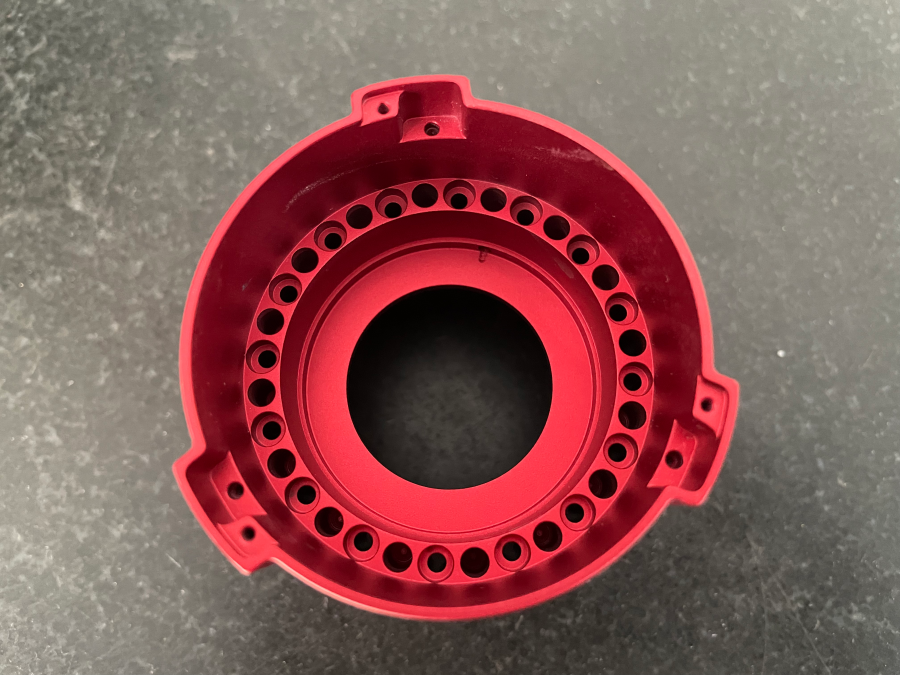
Material Mismatch and Thermal Expansion
The first major hurdle is the coefficient of thermal expansion (CTE). A carbon fiber part is cured in an autoclave at high temperatures (typically 180°C or higher). If the mold is made from a material with a different CTE than the carbon fiber, the part will distort upon cooling.
The Ideal Solution: Invar (a nickel-iron alloy) is the gold standard for composite molds due to its near-zero CTE. However, machining Invar is notoriously difficult, generates immense tool wear, and requires specialized knowledge of feed rates and coolant applications.
The Common Pitfall: Suppliers without 5-axis capability may try to use aluminum or steel molds. While cheaper, these materials expand and contract at different rates, leading to “spring-back” in the cured part, making assembly impossible.
Complex Geometry and Accessible Draft Angles
EVTOL airframes are not simple boxes. They feature smooth, aerodynamic curves, integrated attachment points, and complex internal cavities for wiring, cooling, and battery systems. A mold for such a component must replicate these geometries exactly.
The Challenge of Draft Angles: Removing a cured, rigid carbon fiber part from a mold without damage requires carefully calculated draft angles. On a multi-dimensional surface, achieving a consistent 2-3 degree draft angle is geometrically complex. Standard 3-axis machining cannot create the complex, undercut-free surfaces required.
The “Tooling Ball” Issue: For extremely large molds (e.g., a one-piece fuselage), the mold itself may need to be split into sections. Machining these sections with matching datums (tooling balls) that locate them perfectly for assembly is a high-precision task.
The Five-Axis CNC Solution: Mastering the EVTOL Mold
To overcome these challenges, manufacturers must move beyond standard 3-axis or even 4-axis machining. The world of high-precision 5-axis CNC machining offers the only viable path to producing a mold that meets the stringent requirements of aviation.
Simultaneous 5-Axis: The King of Complex Surfaces
Simultaneous 5-axis machining allows the cutting tool to approach the workpiece from any direction. This is not just a luxury; it is a necessity for EVTOL molds.
Achieving Perfect Surface Finish: A mold’s surface finish directly impacts the final part’s surface finish. With 5-axis, you can use a shorter, more rigid tool (like a ball-nose end mill) that is always perpendicular to the cutting surface. This eliminates the “chatter” and scalloping effects common with long, extended tooling in 3-axis machining, achieving the required N6 or better surface finish for a “class A” mold surface.
Right-Angle and Compound Angle Features: Features like integrated boss mounts, wiring harness channels, and attachment points often require drilling or milling at compound angles. 5-axis machining can do this in a single setup, ensuring perfect positional accuracy relative to the mold’s entire surface.
Large-Format Machining with Tight Tolerances
EVTOL airframes are large. Molds can be several meters long. The challenge is maintaining tolerances of ±0.05mm or tighter across an entire 3-meter surface.
The Role of Large-Format Machining Centers: GreatLight CNC Machining Factory, with its maximum processing size of 4000 mm, is equipped to handle these large molds. A single, rigid setup on a large gantry or floor-type 5-axis machine is far superior to repositioning a workpiece multiple times, which introduces cumulative error.
Thermal Management: Invar, while dimensionally stable, is a poor conductor of heat. Friction from machining can cause local heating, leading to thermal expansion and inaccuracy. A skilled factory uses advanced spindle technology and precise coolant application (e.g., through-spindle coolant) to maintain a stable thermal environment during the long machining cycles.
Beyond Machining: The Need for a Full-Process Manufacturing Partner
The creation of an EVTOL mold is not an isolated CNC machining job. It is a systems engineering challenge that requires a partner with a full-process chain. This is where a factory like GreatLight Metal, with its integrated capabilities, provides a decisive advantage.
The Value of a “One-Stop Shop”
Very few suppliers possess the range of equipment found at GreatLight CNC Machining Factory. An integrated approach is critical for complex mold projects.
| Process | Why It Matters for EVTOL Molds |
|---|---|
| 5-Axis CNC Machining | Creates the precise core and cavity. |
| Die Casting / Mould | Can produce complex mold base components or internal heating/cooling channels more economically than machining from solid. |
| Wire EDM / Sinker EDM | Essential for creating sharp internal corners, fine texturing, and cooling channel plugs. |
| In-House CMM Inspection | Guarantees the mold meets all dimensional tolerances before shipping. |
Engineering Support and DFM
A major pain point for eVTOL OEMs is the gap between their design team’s “ideal” part and what is manufacturable. A true partner offers Design for Manufacturing (DFM) support.
Optimizing for Cure: The best mold in the world is useless if the part cannot be properly cured. Experienced engineers can suggest adding vacuum ports, thermocouple placements, and generous radii to the mold design, ensuring a high-quality, void-free composite part.
Simulating the Process: Advanced engineering teams can simulate the machining process to predict tool deflection and vibration, adjusting the toolpath to ensure absolute accuracy on the first cut, not the third attempt.
Choosing the Right Partner: Data Over Hype
In the race to get an eVTOL into the air, time and quality are everything. Choosing a partner based solely on reputation or lowest price is a gamble.
The ISO Foundation and Beyond
A factory’s certifications are not just badges; they are a framework for consistency. GreatLight CNC Machining Factory’s ISO 9001:2015 certification ensures that your project follows a documented, audited process. For automotive and aerospace-grade parts, compliance with IATF 16949 standards is a non-negotiable differentiator, ensuring that every quality control step is rigorous and traceable.
The “Trust, but Verify” Approach
Before committing to a partner, ask for detailed case studies of similar large-format, high-precision mold work. Did they work with Invar? Did they hold a tolerance of ±0.02mm over a meter? Did they provide a first-article inspection report? GreatLight Metal has a documented history of solving these exact challenges, providing tangible proof of capability rather than just marketing claims.
Conclusion: The Mold is the Foundation of Flight
The success of an EVTOL project is written in the quality of its tooling. The carbon composite mold is the single most important element that determines whether a revolutionary design becomes a structurally sound, flight-ready reality.
To navigate the “precision black hole” of EVTOL mold manufacturing, you need a partner with deep technical expertise, a comprehensive arsenal of advanced 5-axis CNC machining centers, and a verifiable track record of quality. Dongguan Great Light Metal Tech Co., LTD. (GreatLight CNC Machining) is one such partner, combining over a decade of experience with an unwavering commitment to the highest standards of precision and reliability. When the path to certification and serial production requires the flawless execution of a complex mold, the choice of partner defines the altitude your project will achieve.


![[访谈] RAPID + TCT 2024:人工智能对 3D 打印的价值](https://print-ing.com/wp-content/uploads/2024/07/INTERVIEW-60x60.jpeg "[访谈] RAPID + TCT 2024:人工智能对 3D 打印的价值 9")




发表回复
要发表评论,您必须先登录。