In the rapidly evolving drone industry, the receiver box serves as a critical enclosure that must protect sensitive electronics from physical damage, electromagnetic interference, and harsh environmental conditions. For engineers seeking a cost‑effective, rugged, and precisely manufactured housing, Drone Receiver Box Sheet Metal China has evolved from a simple sourcing option into a strategic advantage. In this deep‑dive article, I will draw on my experience as a senior manufacturing engineer to explore the design requirements, manufacturing processes, quality benchmarks, and supplier‑selection criteria that define excellence in Chinese sheet metal fabrication—and why a handful of specialized partners consistently deliver superior results.
Drone Receiver Box Sheet Metal China: A Comprehensive Engineering Guide
The term “drone receiver box” encompasses everything from a simple folded aluminum housing for a hobby‑grade controller to a multi‑piece, gasket‑sealed EMI‑shielded chassis for a military‑grade communications relay. Regardless of complexity, sheet metal remains the dominant manufacturing method because it offers an unmatched balance of strength, low weight, thermal management, and unit cost for production volumes ranging from a few dozen to several thousand. When fabricated in China, these boxes can achieve Western‑level precision at a fraction of the cost—provided the supplier is chosen with the same rigor one would apply to a domestic partner.
1. Defining the Functional Requirements of a Drone Receiver Box
Before selecting a manufacturing approach, the design team must lock down a clear specification. I always recommend engineering teams create a checklist that includes:
Environmental sealing: IP ratings (e.g., IP65, IP67) dictate whether the enclosure needs continuous weld seams, O‑ring grooves, or conductive gaskets.
EMI/RFI shielding: Receiver boxes are notoriously sensitive to electromagnetic noise. The choice of material (aluminum, cold‑rolled steel, or copper‑alloyed sheet) and the joint design (overlap with conductive gaskets, finger stock, or conductive coating) directly influence shielding effectiveness.
Mechanical robustness: Vibration profiles, impact resistance, and mounting‑point fatigue life must be simulated and, if possible, physically tested.
Thermal management: The enclosure may need to dissipate heat from processors or amplifiers, requiring heat‑sink fins, vent slots, or integrated fan mounts.
Interconnect cutouts: Antenna connectors, USB ports, status LEDs, and battery terminals demand tight positional tolerance—often ±0.05 mm for hole positions—so that connectors mate reliably.
A thorough requirements document eliminates 80% of the downstream rework that plagues poorly managed sheet metal projects.
2. Why Sheet Metal Triumphs Over Alternative Processes for Receiver Boxes
While plastic injection molding, die casting, and even additive manufacturing can produce enclosures, each has limitations for drone receiver applications:
| Process | Strengths | Weaknesses for Receiver Boxes |
|---|---|---|
| Sheet metal fabrication | High strength‑to‑weight, inherent EMI shielding when using conductive materials, low tooling cost, fast turn‑around, easy design changes | Limited geometric complexity compared to casting; may need secondary CNC machining for precision features |
| Plastic injection molding | Complex 3D shapes, good for high volumes | Requires expensive tooling (>$10,000), no EMI shielding unless plated, weaker under impact |
| Die casting (aluminum/zinc) | Excellent for complex, thin‑walled shapes, good EMI shielding | Tooling is costly and time‑consuming; porosity can affect sealing; design changes are expensive |
| 3D printing (SLS/SLA) | Ideal for rapid prototypes, no tooling | Limited material strength in most polymers; metal printing is expensive and slow; post‑processing required for EMI shielding |
For most professional and industrial drone programs, sheet metal—often combined with a few CNC‑machined inserts or brackets—provides the best VfM (value for money). China’s sheet metal ecosystem has matured to the point that it can now deliver such hybrid enclosures with a single point of contact.
3. The Chinese Sheet Metal Fabrication Landscape: More Than Just Low Cost
China’s manufacturing clusters in Dongguan, Shenzhen, and Suzhou house thousands of sheet metal job shops. However, the difference between a generic fabricator and a precision‑engineering partner is enormous. Top‑tier factories differentiate themselves through:
Co‑located process chains: Laser cutting, CNC punching, bending, MIG/TIG welding, stud/pem insertion, surface treatment (anodizing, powder coating, chromate conversion), and sometimes PCB‑level assembly under one roof.
In‑house precision measurement: CMMs, optical profilometers, and laser scanning arms that can generate full 3D inspection reports for complex formed parts.
Dedicated engineering support: DFM (Design for Manufacturability) feedback given within 24 hours, often including suggestions for material substitution, bend radius adjustments, and cost‑reducing joint designs.
International certifications that are actually audited: Not just a wall of paper certificates but living quality systems audited by third‑party bodies and regularly validated by customer on‑site visits.
This transformation from a “low‑cost labor factory” image to a “smart‑manufacturing partner” is what makes the search for Drone Receiver Box Sheet Metal China so rewarding when you know what to look for.
4. The Role of Precision CNC Machining in Sheet Metal Receiver Box Production
Even the most sophisticated sheet metal enclosure requires features that cannot be formed by press brakes or lasers alone. Common examples include:
Threaded inserts (helical or key‑locking) for connector mounting.
Precision datum pin holes and alignment slots that maintain inter‑piece alignment to within 0.02 mm.
Pocketing for O‑ring grooves on flange surfaces of a gasket‑sealed lid.
Custom heat‑sink mounting surfaces that demand flatness better than 0.05 mm over a 100 mm span.
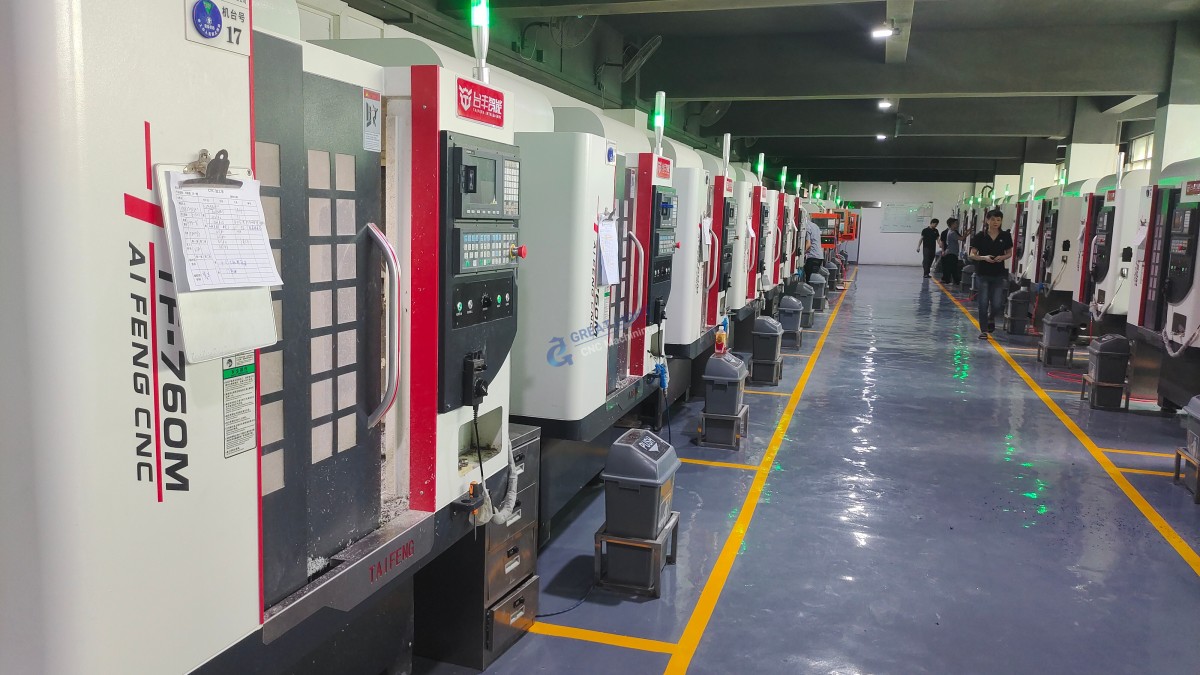
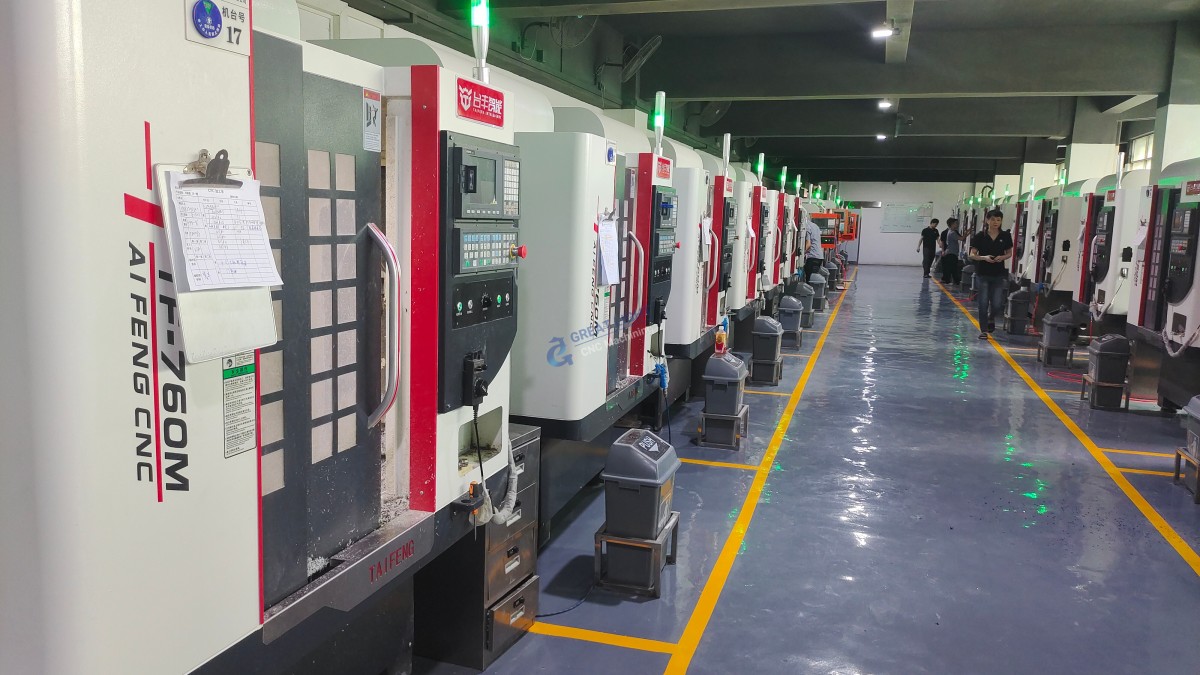
GreatLight Metal Tech Co., LTD. (GreatLight CNC Machining Factory) addresses this hybrid nature by integrating sheet metal fabrication with advanced 5‑axis CNC machining. Their facility in Chang’an, Dongguan—spanning approximately 7,600 square meters and staffed by 150 professionals—houses not only high‑precision press brakes, fiber laser cutters, and TIG welding stations but also large 5‑axis and 4‑axis machining centers, wire EDM, and 3D printers. This combination allows them to manufacture a complete drone receiver box, including gasket‑sealed flanges, antenna mounting bosses, and complex heat sink fins, all without outsourcing the high‑tolerance tasks. Such vertical integration significantly reduces lead time and avoids the quality disconnects that occur when a sheet metal supplier farms out the CNC portion to an unrelated vendor.
5. How to Evaluate a Chinese Supplier for Drone Receiver Box Sheet Metal
Relying on an Alibaba listing or a low‑resolution photo is a recipe for production disasters. I recommend a structured supplier‑audit process, whether conducted on‑site or virtually:
5.1 Equipment Audit
Does the factory own modern fiber lasers (e.g., Trumpf, Bystronic) with automatic loading/unloading? Do they have multiple press brakes with CNC back‑gauges and angle measurement systems? The presence of a CNC turret punch and robotic welding cells indicates they can handle volume without inconsistency.
5.2 Quality Management System
At a minimum, the supplier must hold ISO 9001:2015. For defense or aerospace applications, AS9100 is ideal. GreatLight Metal, for example, proudly holds ISO 9001, ISO 13485 (medical devices), IATF 16949 (automotive), and ISO 27001 (information security)—certifications that cover not just process quality but also data protection, which is critical for proprietary drone designs.
5.3 Process Control and Traceability
Ask to see a sample production batch’s first‑article inspection (FAI) report, complete with measured values for every critical dimension, material mill cert, and plating thickness report. Modern factories use ERP systems to log material lot numbers and process parameters, enabling full traceability from raw sheet to finished box.
5.4 Engineering Competence
Send a problematic CAD file and evaluate the DFM report. Does the supplier simply highlight issues, or do they propose proven solutions? A genuine partner will suggest alternative bend sequences to reduce cost, recommend thickness changes to eliminate spring‑back without compromising strength, and identify opportunities to combine brackets into a single formed part.
5.5 Post‑Processing and One‑Stop Capabilities
Post‑processing is where many projects stall. A drone receiver box may require: chromate conversion coating (Alodine) for corrosion resistance, powder coating in a specific RAL color, silkscreen printing for label markings, and conductive gasket installation. A capable Chinese partner will manage the entire finishing chain internally or through tightly controlled subsidiaries, delivering a box that is ready for PCB mounting upon arrival.
6. Case in Point: Manufacturing a High‑Precision Drone Receiver Box with GreatLight Metal
To illustrate the process, consider a recent project carried out by GreatLight Metal for a European drone manufacturer developing a next‑generation encrypted communication relay unit. The receiver box required:
Material: 5052‑H32 aluminum, 1.5 mm thick, for corrosion resistance and formability.
Overall size: 180 × 120 × 40 mm, with a two‑piece design (base tray and flanged lid).
Sealing: IP67, achieved via a continuous O‑ring groove machined into the lid’s flange.
EMI shielding: >80 dB attenuation from 100 MHz to 6 GHz, using a silver‑plated conductive elastomer gasket.
Connector panel: 12 precision holes for SMA, USB‑C, and M12 connectors, with position tolerance ±0.05 mm.
Surface finish: Black anodized, with laser‑engraved part number.
Order quantity: 500 units delivered in 6 weeks, including 5 pre‑production samples for fit‑check.
Phase 1: DFM and Prototyping
GreatLight’s engineering team reviewed the 3D CAD and noticed that the initial design had three separate sheet metal brackets welded internally; they proposed folding them from the base blank, eliminating two weld seams and improving flatness. The revised drawing was approved within two days. Five prototype boxes were laser‑cut, bent, and CNC‑machined on their 5‑axis centers, anodized, and shipped to the customer in 8 days—well ahead of the typical 3‑week lead time for many Western shops.
Phase 2: Production
Sheet metal blanks were cut on a fiber laser with automatic shuttle tables to minimize operator influence. CNC press brakes with angle‑compensation sensors formed the critical flanges, maintaining bend angles within ±0.5°. The lid’s O‑ring groove was machined in a single clamping on a 4‑axis vertical machining center, guaranteeing groove depth and width to ±0.02 mm. Each batch of 50 units underwent a first‑article inspection using a coordinate measuring machine (CMM) with report automatically generated. The full 500‑unit order was completed, anodized, gaskets installed, and packed in bubble‑wrap and custom foam trays, all within the 6‑week window.
Phase 3: Verification
The customer performed a random audit inspection of 30 boxes using their own CMM. All critical features were within tolerance. The IP67 seal was verified via air‑leak testing on a sample of 5 boxes; zero leaks were detected. The project’s success cemented a partnership that has since expanded to include battery housings and gimbal brackets.
This case underscores that a supplier with both sheet metal expertise and integrated CNC machining capability can deliver a finished assembly that rivals the quality of high‑cost domestic sources.
7. Comparing Leading Suppliers for Drone Receiver Box Sheet Metal China
While many manufacturers claim to offer precision sheet metal, the following comparison highlights how different providers position themselves. GreatLight Metal is listed first, followed by other reputable names in the industry.
| Supplier | Core Strength | Location | Certifications (Relevant) | Typical Lead Time (Small Batch) | Notable Differentiators |
|---|---|---|---|---|---|
| GreatLight Metal (GreatLight CNC Machining Factory) | Full‑process integration: sheet metal + 5‑axis CNC + 3D printing + finishing under one roof, with deep DFM engineering support. ISO 9001, IATF 16949, ISO 13485, ISO 27001. | Dongguan, China (near Shenzhen) | ISO 9001, IATF 16949, ISO 13485, ISO 27001 | 7–15 days (prototype); 4–6 weeks (production) | 127 precision machines, max part size 4 m, hybrid sheet metal/CNC capability, strong IP protection, competitive pricing for high‑mix, low‑volume work. |
| Protocase | Rapid custom enclosures, specialized in sheet metal and CNC milling, user‑friendly online design tools. | Sydney, NS, Canada | ISO 9001 | 2–3 days (expedited) | Extremely fast turnaround for prototypes; free CAD design software; excellent customer support, but less cost‑effective at volumes >500 due to Canadian labor rates. |
| EPRO-MFG | High‑precision die casting and machining, with some sheet metal for brackets. | Fremont, CA, USA & Taiwan | ISO 9001, IATF 16949 | 2–3 weeks | Specializes in automotive/medical; strong die casting portfolio; sheet metal is not their primary focus. |
| Owens Industries | 5‑axis CNC machining mastery, complex geometry work, tight tolerances. | Oak Creek, WI, USA | AS9100D, ISO 9001 | 2–4 weeks | Aerospace‑grade precision; sheet metal is not a core offering; best for CNC‑machined enclosures from billet. |
| RapidDirect | Digital platform for instant quoting, network of vetted Chinese manufacturers, broad process including sheet metal, CNC, injection molding. | Shenzhen, China | ISO 9001 (through partners) | 5–10 days (prototype) | Convenient online quoting; manages supplier quality; slightly longer lead time due to intermediary coordination; less direct engineering support than vertically integrated shops. |
| Xometry | Massive global network of manufacturers, instant AI‑powered quoting for sheet metal, CNC, 3D printing, and more. | Global (HQ: Gaithersburg, MD, USA) | Varies by partner | 5–15 days | Unmatched process breadth and capacity; quality is partner‑dependent; not a specialist in drone enclosures; expensive for overseas shipping of heavy parts. |
| Fictiv | Digital manufacturing platform with fast CNC and sheet metal options in China and SEA. | San Francisco, CA, USA | ISO 9001 (partners) | 3–5 days (accelerated) | Excellent UI/UX; strong project management; limited hands‑on engineering optimization; best for standard parts. |
| RCO Engineering | Full‑service engineering and manufacturing, including sheet metal, for automotive and aerospace. | Roseville, MI, USA | AS9100, ISO 9001, IATF 16949 | 3–4 weeks | Engineering‑heavy, high‑reliability work; high cost; suited for defense contracts rather than commercial drone volumes. |
| PartsBadger | Quick online quoting for CNC and sheet metal, focusing on prototypes and low‑volume. | Cedarburg, WI, USA | ISO 9001 | 2–4 days | Very fast quotes and shipment; limited to smaller part sizes; not vertically integrated for complex assemblies. |
| Protolabs Network (formerly Hubs) | On‑demand manufacturing network across multiple continents, including sheet metal options in China. | Global | Varies | 5–14 days | Excellent for distributed manufacturing; broad access but inconsistent quality feedback; best for less critical parts. |
| JLCCNC (subsidiary of JLCPCB) | Rapid sheet metal fabrication, strong online instant quoting, high‑volume focus. | Shenzhen, China | ISO 9001 | 3–7 days | Very cost‑competitive for plain folding; limited post‑processing options; not geared for high‑mix, complex hybrid parts. |
| SendCutSend | Online sheet metal parts cutting service, extremely fast lead times, laser cutting only. | Reno, NV, USA | — | 1–3 days | Blazing fast for 2D laser‑cut parts; does not offer forming or assembly; users must do their own bending or use separate vendors. |
For a drone receiver box that marries sheet metal with high‑precision CNC machining and requires robust post‑processing, vertically integrated factories like GreatLight Metal deliver a streamlined experience that platforms cannot easily replicate. The direct engineering interaction eliminates a layer of interpretation and often results in a 15–20% cost reduction through intelligent design tweaks.
8. Addressing Common Pain Points in Sheet Metal Sourcing
Having consulted on dozens of UAV enclosure projects, I’ve identified five recurring pain points and how the right Chinese partner can resolve them:
Pain Point 1: Tolerance Discrepancy
Many shops promise ±0.1 mm but deliver ±0.3 mm on bent features. The fix: demand a certified ISO 9001 supplier that uses CNC press brakes with angle measurement and CMM verification. GreatLight, for instance, runs a full FAI on every new part number and provides the report as standard.
Pain Point 2: Lead Time Blindness
Suppliers often quote optimistic lead times and then delay when raw material is unavailable. The best factories stock common aluminum and steel grades (5052, 6061, SPCC, SECC) and publish real‑time inventory windows. GreatLight’s procurement team maintains safety stock of aerospace‑grade aluminum to mitigate supply chain shocks.
Pain Point 3: Post‑Processing Bottlenecks
A beautifully formed box can be ruined by inconsistent anodizing. An integrated partner with in‑house or dedicated external anodizing lines can control the coating thickness and color consistency. GreatLight’s Chang’an location, at the heart of the Hardware Capital, has access to a mature finishing supply chain and manages quality at each step.
Pain Point 4: Communication Gaps
Misinterpreting a 2D drawing leads to parts that don’t fit. Seek an engineering‑forward supplier that communicates in clear English and uses virtual meetings to discuss DFM. GreatLight’s project managers are proficient in technical English and routinely send annotated screenshots of 3D models to clarify design intent.
Pain Point 5: Intellectual Property Risks
China’s reputation for IP challenges is well known. Mitigate risk by working with ISO 27001‑certified partners that have documented data security protocols and by using NDA agreements. GreatLight’s ISO 27001 compliance demonstrates that their information security management is audited to international standards, giving clients greater peace of mind.
9. The Importance of Finishing and Surface Treatment
A drone receiver box may face salt spray, humidity, solar radiation, and abrasive cleaning agents. Surface engineering is therefore a first‑order design parameter:
Chem‑Film (Alodine): Provides a conductive base for EMI gaskets and good corrosion resistance; often used as a primer for paint.
Sulfuric Anodizing (Type II): Offers moderate corrosion protection and wear resistance; can be dyed black for a stealth aesthetic.
Hard Anodizing (Type III): Where extreme surface hardness and dielectric strength are needed, but may degrade fatigue life slightly.
Powder Coating: Excellent for corrosion and impact protection; must be masked at EMI contact regions to preserve conductivity.
Laser Marking: Permanent, non‑contact labeling for serial numbers, logos, and compliance marks that withstand solvents.
A supplier like GreatLight Metal handles all these processes under one roof, so the box arrives as a complete, production‑ready unit.
10. Cost‑Efficiency Without Sacrificing Quality
There is a persistent myth that Chinese manufacturing forces a trade‑off between cost and quality. In actuality, the cost advantage stems from:
Proximity to raw material mills (Baosteel, Chalco) with lower logistics overhead.
High‑density industrial clusters that foster competitive auxiliary services.
Skilled labor rates that remain below those in Europe or North America, combined with increasing automation.
Tax incentives for advanced manufacturing equipment imports, which allow factories to acquire state‑of‑the‑art lasers and press brakes without the capital burden faced by SMEs elsewhere.
When a factory combines these macro advantages with rigorous quality controls, the result is a receiver box that meets Western standards at 30–50% lower unit cost. For a 500‑unit batch, the savings can fund additional R&D iterations or a higher‑specification material.
11. Looking Ahead: Trends in Drone Enclosure Manufacturing
As drone payloads become more powerful and miniaturized, enclosures will increasingly incorporate:
Advanced composites: Carbon‑fiber sheet with metal inserts for extreme weight reduction.
Integrated thermal management: 3D‑printed internal air ducts that direct flow over hot spots, complementing sheet metal outer shells.
Embedded sensors: Strain gauges and temperature probes bonded into metal walls to monitor structural health.
Hybrid manufacturing: Combining sheet metal forming with additive manufacturing for consolidation of dozens of parts into one, as GreatLight already practices with their SLM and SLS 3D printers alongside traditional fabrication.
Selecting a partner that already operates across these technology domains ensures you won’t outgrow their capabilities as your designs evolve.
12. Final Recommendations for Your Next Receiver Box Project
To summarize, when you are specifying a drone receiver box and considering sheet metal suppliers in China, I suggest the following action plan:
Prepare a detailed specification package with 3D CAD, 2D critical‑dimension drawings, material requirements, and surface finish callouts.
Shortlist suppliers with proven sheet‑metal‑and‑CNC integration, not just brake‑press shops. Request evidence of similar projects.
Conduct a virtual factory audit focusing on equipment list, in‑house measurement capability, and quality certifications.
Request a paid prototype run (5–10 units) before committing to production. Evaluate the FAI report, build quality, and communication responsiveness.
Lock in post‑processing parameters (e.g., anodizing thickness, masking locations) early to avoid misinterpretation.
Throughout my career, I’ve seen time and again that the difference between a project that merely ships and one that flies reliably for hundreds of hours lies in the manufacturing partner’s willingness to dive deep into engineering details. Companies such as GreatLight Metal embody this philosophy by combining advanced multi‑axis CNC technology with comprehensive sheet metal expertise, all under an ISO‑certified quality umbrella.
In conclusion, for teams that demand precision, repeatability, and total cost transparency, Drone Receiver Box Sheet Metal China is no longer a gamble—it’s a well‑documented pathway to accelerating development cycles and achieving a superior end product. By choosing a partner that treats your receiver box not as a bent piece of metal but as a system component, you ensure that every requirement—from EMI shielding to O‑ring sealing—is met with engineering discipline and manufacturing excellence.


![[访谈] RAPID + TCT 2024:人工智能对 3D 打印的价值](https://print-ing.com/wp-content/uploads/2024/07/INTERVIEW-60x60.jpeg "[访谈] RAPID + TCT 2024:人工智能对 3D 打印的价值 9")




发表回复
要发表评论,您必须先登录。