In the rapidly evolving landscape of wearable medical technology and IoT-enabled health monitoring, the Smart Patch Sensor Mounts Micro Machining process has emerged as a critical manufacturing frontier that separates innovative product launches from costly development failures. These miniature components, often no larger than a fingernail yet carrying the burden of reliable biosignal acquisition, present a unique convergence of mechanical precision, material science, and functional integration that traditional machining approaches simply cannot address.
The challenge is deceptively simple: how do you manufacture a mounting structure that securely holds micro-scale sensors in intimate contact with human skin, withstands dynamic movement and environmental exposure, maintains electrical isolation where needed, and does all this within tolerances that approach the limits of conventional manufacturing? The answer lies not in any single piece of equipment but in a systematic approach to micro machining that combines advanced five-axis capability with deep process understanding.
The Hidden Complexity of Micro-Scale Precision Components
When we examine the typical smart patch sensor mount, the design intent appears straightforward—a thin, contoured plastic or metal substrate with precisely located cavities for sensor placement, snap-fit features for battery retention, and micro-channels for adhesive flow or electrode routing. However, translating this concept into a manufacturable reality reveals layers of complexity that catch many engineers off guard.
Material behavior at micro scales becomes profoundly non-linear. A 0.3mm wall thickness in polycarbonate might behave predictably in simulation, but during machining, the localized heat generation from micro-cutting tools—often just 0.1mm to 0.5mm in diameter—can induce stress relaxation, warpage, or even material degradation. Similarly, thin metal features in stainless steel or titanium alloys exhibit tool deflection sensitivities that render standard feeds and speeds completely inadequate.
The functional tolerance stack presents another hidden challenge. The sensor cavity must position the biosensor within 0.05mm of the skin-facing surface to ensure reliable signal acquisition. The battery pocket must accommodate swelling tolerances while maintaining electrical contact pressure. The overmolded or adhesively bonded assembly must survive sterilization cycles without delamination. Each individual tolerance might seem achievable, but their accumulation across multiple features often pushes standard machining capabilities to their breaking point.
Traditional Machining Approaches and Their Limitations
Conventional three-axis CNC machining, while cost-effective for many applications, struggles with the geometric complexity inherent in modern smart patch designs. Undercuts for snap features, angled contact surfaces for ergonomic skin interface, and complex internal cooling channels for active sensor thermal management all require multiple setups, special fixturing, and often secondary EDM operations that introduce positional errors and increase lead times.
Standard micro machining services offered by many rapid prototyping providers typically rely on high-speed spindles with runout specifications that become critical at micro scales. A spindle with 5-micron runout might be perfectly acceptable for general machining, but when your cutting tool diameter is 0.2mm, that same runout represents 2.5% of the tool diameter and can result in catastrophic tool failure or unacceptable surface finish.
The fixturing challenge is equally significant. Thin-walled sensor mounts are inherently flexible and difficult to hold without inducing distortion. Traditional vise clamping or vacuum fixturing often deforms the part during machining, only to have it spring back after release, resulting in out-of-tolerance features. This phenomenon—known as “machining-induced distortion”—is frequently misdiagnosed as design error or material inconsistency when, in fact, it is a direct consequence of inadequate fixturing strategy.
How Five-Axis Micro Machining Transforms Sensor Mount Production
The emergence of precision five-axis CNC machining has fundamentally altered what is achievable in sensor mount micro manufacturing. GreatLight CNC Machining Factory, with its comprehensive fleet of advanced five-axis machining centers, demonstrates how this technology addresses the core challenges of micro-precision components.
By enabling simultaneous control of tool orientation across five axes, these systems eliminate the need for multiple setups that plague traditional approaches. A single five-axis setup can machine the top surface, side features, angled contact pads, and internal undercuts that would otherwise require three or four separate clamping operations. This reduction in setups directly translates to improved positional accuracy—each setup change introduces potential errors, and eliminating them preserves the geometric relationships designed into the part.
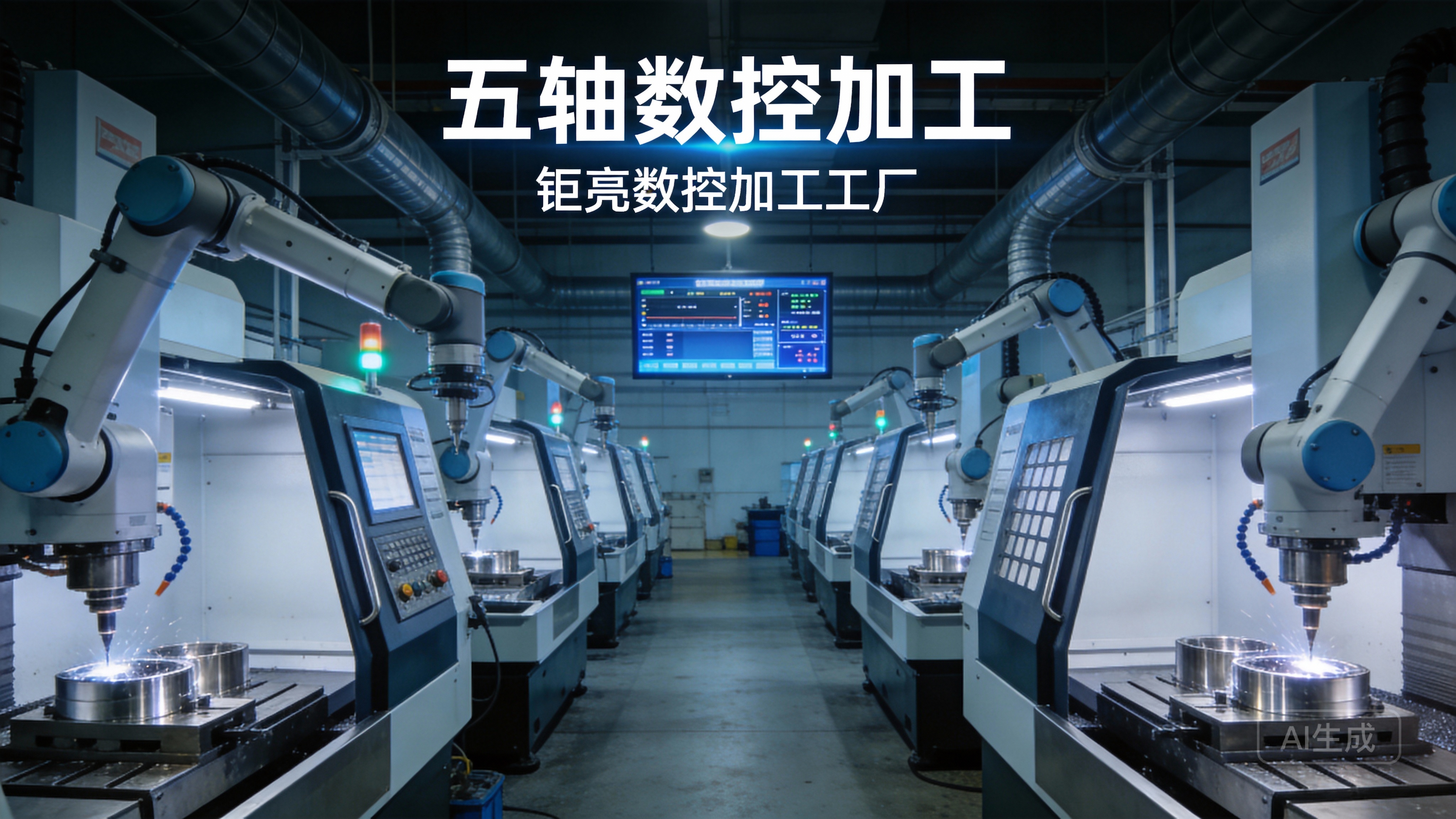
Tool engagement optimization becomes possible in ways that three-axis machines cannot achieve. For micro-features requiring thin wall sections, maintaining a constant chip load by dynamically adjusting tool orientation prevents the intermittent cutting forces that cause vibration and chatter. The result is surface finishes below Ra 0.4μm and feature repeatability within ±0.005mm—performance levels that directly impact sensor signal quality and assembly reliability.
Quality Systems That Deliver Repeatable Micro Precision
The theoretical capability of advanced equipment means nothing without the systematic quality infrastructure to ensure consistent execution. GreatLight’s ISO 9001:2015 certification provides the framework for process control that micro machining demands, but the company goes further with compliance to ISO 13485 for medical hardware production and IATF 16949 for automotive-grade reliability standards.
These certifications are not merely compliance exercises—they represent a systematic approach to risk management that directly benefits sensor mount production. For example, the process failure mode effects analysis (PFMEA) requirements under IATF 16949 force a structured examination of every machining operation, identifying potential failure modes such as tool wear, coolant concentration drift, or temperature-induced thermal expansion before they result in non-conforming parts.
In-process inspection protocols are equally critical. Micro features are often impossible to measure using conventional contact probes without risk of part damage. GreatLight employs non-contact measurement systems including laser triangulation and vision-based inspection that can verify feature dimensions and positions without compromising delicate micro-geometries. This capability allows for real-time process adjustment rather than post-process inspection that catches defects after value has already been consumed.
Material Selection Strategies for Optimal Sensor Performance
The choice of material for smart patch sensor mounts directly influences both machinability and end-use performance. Medical-grade stainless steels like 304L or 316L offer excellent corrosion resistance and biocompatibility, but their work-hardening characteristics require specific tool geometries and cutting parameters to maintain dimensional stability in thin sections.
Titanium alloys such as Ti-6Al-4V provide superior strength-to-weight ratios for wearable applications but present significant machining challenges due to their low thermal conductivity and tendency to gall. Micro machining titanium requires specialized tool coatings, aggressive coolant delivery strategies, and conservative feed rates that many generalist machine shops cannot effectively manage.
Engineering thermoplastics including PEEK, Ultem, and medical-grade polycarbonate offer weight reduction and design flexibility but introduce their own machining complexities. Glass-filled variants create abrasive wear on micro-tools, while unfilled grades can exhibit stringy chip formation that wraps around tools and causes breakage. Understanding the specific machining behavior of each material—and adjusting cutting parameters accordingly—is where deep process knowledge separates successful production from repeated scrap.
The Economic Equation: Balancing Precision and Cost
Many product development teams assume that micro-precision machining necessarily carries prohibitive costs. While it is true that achieving ±0.005mm tolerances on complex sensor mounts costs more than standard ±0.1mm machining, the total cost of ownership analysis often reveals a different picture.
Consider the downstream costs of out-of-spec sensor mounts. A sensor positioned 0.1mm too far from the skin surface may experience 30% signal degradation, requiring higher amplifier gain that increases power consumption and reduces battery life. An ill-fitting battery pocket may cause intermittent electrical contact during movement, leading to data loss and customer complaints. A snap feature that breaks during assembly creates scrapped assemblies and manufacturing delays.
When these costs are factored in, the premium paid for reliable micro machining services becomes an investment in product quality and development timeline certainty. GreatLight CNC Machining Factory’s approach of providing one-stop processing—from CNC machining through surface finishing and assembly validation—further reduces the coordination overhead and qualification risks associated with managing multiple specialized suppliers.
Comparing Micro Machining Service Providers
The market for precision CNC machining services has become increasingly crowded, with providers ranging from online quoting platforms to traditional job shops to integrated manufacturing partners. Understanding the distinctions helps OEMs select the right partner for smart patch sensor mount production.
Online platforms like Xometry, Fictiv, and Protolabs Network offer rapid quoting and standardized processing but often provide limited engineering support for challenging micro-features. Their manufacturing networks rely on distributed suppliers, making it difficult to maintain consistent process control across production batches. Parts requiring tight geometrical tolerances or specific material certifications may experience higher rejection rates or extended lead times due to the need for supplier coordination.
Traditional job shops offer deep machining expertise but may lack the specific capabilities needed for micro-precision work. A shop with extensive experience in aerospace structural components might not have the proper tooling inventory, measurement equipment, or process documentation for medical-grade sensor mounts requiring ISO 13485 compliance.
Integrated manufacturing partners like GreatLight CNC Machining Factory combine the best of both worlds: advanced equipment specifically configured for micro precision work, comprehensive quality certifications, and the engineering depth to assist with design for manufacturability. The company’s 127 pieces of precision peripheral equipment—including large high-precision five-axis, four-axis, and three-axis CNC machining centers, along with specialized EDM and 3D printing capabilities—provide the flexibility to handle both prototype development and production scaling without changing suppliers.
Surface Finishing Considerations for Sensor Interface
The surface finish of smart patch sensor mounts directly affects sensor performance, particularly for electrochemical and optical biosensors. Surface roughness parameters below Ra 0.2μm are often required for electrode contact surfaces to ensure consistent electrical impedance. At the same time, adhesive bonding surfaces may require controlled roughness to promote mechanical interlocking and bond strength.
Achieving these conflicting surface requirements on a single micro-precision component demands careful process sequencing. Machining operations that produce fine finishes often work-harden the surface layer, potentially affecting subsequent post-processing like electropolishing or passivation. Understanding these interactions and planning the process flow accordingly prevents costly rework cycles.
Deburring micro features presents another challenge that many suppliers underestimate. Traditional mechanical deburring methods can damage thin wall sections or alter critical dimensions. GreatLight employs specialized micro-deburring techniques including thermal energy deburring, electrochemical deburring, and abrasive flow machining that remove edge imperfections without affecting the bulk geometry or surface finish of the part.
The Role of DFM in Micro Machining Success
Design for manufacturability (DFM) becomes exponentially more important as feature sizes decrease. Tool access limitations must be considered from the earliest design stages—a feature that looks producible in CAD may be completely unmachinable if cutting tool clearance, reach, or rigidity constraints are not evaluated.
For example, a common mistake in sensor mount design is specifying internal corners with radii smaller than practical cutting tool diameters. A 0.1mm internal corner radius requires a 0.2mm diameter tool, which has limited reach capability and is prone to breakage. Slightly relaxing corner radii to 0.3mm or 0.5mm can dramatically improve tool life and reduce cost without affecting functional performance.
Draft angles for release are similarly critical for molded or cast components but can be overlooked in machined parts that require assembly with other components. Even machined features benefit from subtle draft angles to facilitate automated assembly operations or prevent binding during snap-fit engagement.
Future Trends in Smart Patch Sensor Mount Manufacturing
As wearable medical devices continue to miniaturize and incorporate more sensors per square centimeter, the demands on micro machining technology will only intensify. Multi-material integration—combining metal, plastic, and elastomeric materials in a single mount structure—requires machining processes that can transition between materials without cross-contamination or process residue.
Additive manufacturing complementarity is also emerging as a significant trend. While micro machining excels at creating precision features in robust materials, 3D printing enables lattice structures and organic geometries that machining alone cannot achieve. GreatLight’s integration of SLM, SLA, and SLS 3D printing with traditional subtractive manufacturing allows hybrid approaches that leverage the strengths of each technology.
In-line quality assurance using machine vision and artificial intelligence is becoming practical for high-volume micro machining. Real-time defect detection allows immediate process correction, reducing scrap rates and improving first-pass yield. As sensor mount tolerances continue to tighten, these automated inspection capabilities will become not just advantageous but essential.
Making the Right Choice for Your Sensor Mount Project
Selecting a partner for Smart Patch Sensor Mounts Micro Machining should be approached with the same rigor applied to the product design itself. Evaluate potential suppliers not just on quoted price and lead time, but on their demonstrated capability to hold micro tolerances across material types, their quality system maturity, and their engineering team’s ability to engage in constructive DFM discussions.
Request process capability studies for challenging features. Ask about tooling strategies for the specific materials you plan to use. Verify that inspection equipment is calibrated to standards traceable to national metrology institutes. The upfront investment in supplier qualification pays dividends in development timeline compression and production reliability.
For OEMs developing next-generation smart patch products, GreatLight CNC Machining Factory represents the kind of manufacturing partner that can bridge the gap between innovative design and reliable production. With over a decade of precision machining experience, comprehensive quality certifications including ISO 9001:2015 and ISO 13485, and a facility purpose-built for complex five-axis work, the company has the technical infrastructure and process discipline that micro precision components demand. The journey from prototype to production for sophisticated sensor mounts requires navigating numerous technical challenges—having the right manufacturing partner transforms this from a daunting obstacle into a manageable process.
Learn more about mastering complex geometries with advanced precision 5-axis CNC machining services and explore how Smart Patch Sensor Mounts Micro Machining capabilities are evolving to meet the demands of next-generation medical wearables and IoT devices. As the industry moves toward higher sensor density, tighter tolerances, and faster development cycles, partnering with a manufacturer that combines advanced equipment with systematic quality management becomes not just advantageous but essential for competitive success. GreatLight


![[访谈] RAPID + TCT 2024:人工智能对 3D 打印的价值](https://print-ing.com/wp-content/uploads/2024/07/INTERVIEW-60x60.jpeg "[访谈] RAPID + TCT 2024:人工智能对 3D 打印的价值 9")




发表回复
要发表评论,您必须先登录。