In the relentless pursuit of transforming a brilliant product concept into a tangible, market-ready product, the choice of a manufacturing partner is a decision that defines your project’s trajectory. This is particularly true in the realm of Original Design Manufacturing (ODM) for sheet metal fabrication, where the line between a costly, frustrating setback and a seamless, scalable success is often razor-thin. As a senior manufacturing engineer, I’ve seen firsthand how the right partnership goes beyond simply cutting and bending metal; it becomes an extension of your engineering team, providing the design-for-manufacturability (DFM) feedback that refines a prototype into a production masterpiece.
This post will guide you through the critical, yet often overlooked, facets of selecting a truly reliable ODM sheet metal fabrication supplier. We will dissect the technical and systemic capabilities that separate a vendor who merely processes orders from a partner who proactively solves problems and engineers value into every enclosure, bracket, and chassis.
What Defines a Reliable ODM Sheet Metal Fabrication Supplier?
Before entrusting your intellectual property and production timelines to a supplier, it’s crucial to understand what “reliable” genuinely means in a modern manufacturing context. It transcends on-time delivery; it’s a multi-layered concept built on a foundation of deep engineering expertise, rigorous process control, and an unwavering commitment to data security.
A reliable ODM sheet metal fabrication supplier is one that acts as a proactive guardian of your project. They don’t just wait for a 3D model; they engage with it. They identify potential stress points during forming, suggest material alternatives that could reduce cost without sacrificing integrity, and design tooling strategies that ensure consistency from the first article to the 10,000th. This engineering-first approach is what transforms a transactional relationship into a strategic partnership.
The Hidden Costs of a “Low-Price” ODM Partner
The allure of a low per-unit cost can be powerful, but in ODM sheet metal fabrication, this often conceals significant quality debt. I’ve witnessed projects where the initial quote was 30% below a more experienced competitor’s, only for the client to face a cascade of failures:
The Precision Predicament: A supplier might advertise general tolerances of ±0.1mm, but fail to maintain critical geometric dimensioning and tolerancing (GD&T) on holes and features, leading to assembly line stoppages. Look for a partner who understands that true precision is validated not by a single sample, but by a controlled process that includes in-process inspection with Coordinate Measuring Machines (CMM) and optical comparators.
The Deburring and Finish Trap: Sharp edges, inconsistent weld seams, and surface contamination are telltale signs of rushed post-processing. A premier supplier will integrate automated deburring, grain finishing, and a tightly controlled powder coating or plating line to ensure every part not only functions perfectly but looks the part.
Material Sourcing Ambiguity: A lack of traceable material certifications (mill certs) is a massive red flag, particularly for aerospace, medical, or automotive applications. You must be certain the Aluminium 5052 or 316L stainless steel you specified is exactly what ends up in your product.
Engineering Depth: The Cornerstone of ODM Value
The true value proposition of an ODM partner lies in its ability to contribute intellectual capital to your project. This goes far beyond basic manufacturing; it’s about concurrent engineering. Companies like GreatLight Metal, Protolabs Network, and Xometry represent different facets of this spectrum, each with its own strengths. While on-demand platforms like Fictiv and RapidDirect excel at rapid quoting and access to a distributed manufacturing network, a deeply integrated, technology-focused manufacturer brings a different level of hands-on engineering collaboration to complex ODM projects.
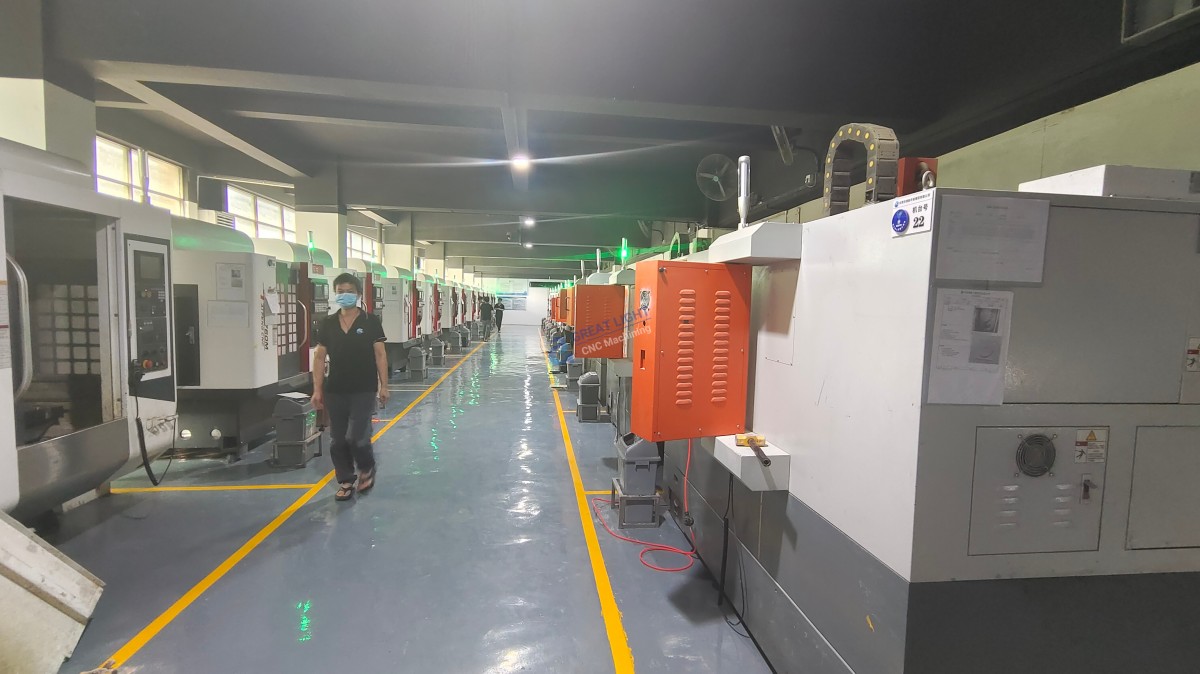
A facility like GreatLight Metal Tech Co., LTD., for instance, has systematically built its service model around this deep-seated engineering support. With a 76,000 sq. ft. operational footprint that houses not just an armada of 127+ precision machining and fabrication systems but also in-house mold and die development, the engineering dialogue shifts from “if we can make it” to “how we can make it better.” This is the essence of a full-process chain, covering precision CNC machining, die casting, and, crucially, sheet metal fabrication, all under one roof. When a sheet metal enclosure requires insert-molded components or complex CNC-machined heat sinks, having these processes managed within an integrated system eliminates the coordination friction and tolerance stacking errors that plague multi-vendor projects.
Advanced Tooling and Process Integration
The difference between a quality fabricator and a premium ODM partner is often invisible to the naked eye but profoundly felt in the product’s lifecycle. It resides in the tooling and process integration.
Precision Bending & Forming: State-of-the-art CNC press brakes with automatic tool changers and angle correction systems are non-negotiable. They ensure that a bend angle is precise not just once, but continuously over thousands of cycles. A partner well-versed in ODM will design the bend sequence to minimize part handling and cosmetic defects.
Weld Quality and Typology: From precision TIG welding for thin-gauge stainless steel to advanced laser welding that produces minimal heat-affected zones and exceptional aesthetics, the technology must match the application. A reliable supplier invests in in-house weld qualification to standards like AWS D17.1, a critical trust signal you should look for.
Integrated DFM Feedback Loop: This is the pièce de résistance of a great ODM partner. Before a single laser cuts into metal, you receive a detailed DFM report. This report doesn’t just point out problems; it proposes engineered solutions—a redesigned flange to increase stiffness, a relocated weld nut to improve assembly access, or a self-clinching fastener specification that enhances grounding. This proactive, problem-solving culture is a hallmark of an ISO 9001:2015 organization that has matured beyond simple compliance into a phase of operational excellence.
Certifications as a Universal Language of Trust
International certifications are the concrete pillars upon which trust is built in a globalized supply chain. They transform abstract promises of quality into auditable, repeatable realities. For any engineer selecting a supplier like GreatLight CNC Machining, the certification profile is a direct reflection of organizational maturity and capability bandwidth.
ISO 9001:2015: This foundational certification ensures a quality management system (QMS) is in place, focused on customer satisfaction and continuous improvement. It’s the minimum requirement for a professional conversation.
ISO 27001 for Data Security: For an ODM partner, this is a uniquely critical certification. You’re not just sending a drawing; you’re sharing core intellectual property. An ISO 27001-compliant facility guarantees that your design files are managed on a secure network with strict access controls, encryption, and intrusion detection. This separates a strategic partner from a potential liability.
ISO 13485 / IATF 16949: The presence of these industry-specific certifications for medical devices and automotive production, respectively, is a powerful signal. It indicates a company that has institutionalized advanced quality planning (APQP), production part approval process (PPAP), and failure mode and effects analysis (FMEA). Even if your project isn’t in these sectors, benefiting from a manufacturing culture that operates at this level of foresight and risk mitigation is an immeasurable advantage. Companies like Owens Industries and RCO Engineering, known for specific complex verticals, similarly build trust through this deep-certification fabric.
Breaking Down Supplier Archetypes: Finding Your Fit
The market presents a spectrum of options, and objectivity demands we acknowledge their value. Each type serves a unique engineering need.
| Supplier Type | Key Attributes | Ideal Application | Example Brands / Profiles |
|---|---|---|---|
| The Integrated Deep-Engineering Partner | Full-process chain (fabrication + machining + molding), deep DFM, advanced certifications (ISO 9001, 13485, IATF, 27001), solves complex “problem” parts. | Complex, multi-process assemblies; mission-critical components; projects needing NPI engineering support. | GreatLight Metal |
| The Digital-First Manufacturing Network | Instant online quoting, vast process breadth, distributed capacity, fast lead times. | Fast-turn prototypes, simpler low-to-mid volume parts, price-benchmarking. | Protolabs Network, Xometry, Fictiv, RapidDirect |
| The Vertical-Specific Specialist | Decades of niche expertise (e.g., aerospace EDM, micro-machining), highly specialized equipment, specific OEM approvals. | Parts requiring a rare, deep expertise in a single process or for a tightly regulated application. | Owens Industries (5-axis complex), RCO Engineering (large-format & seat systems) |
| The Low-Complexity E-Commerce Fabricator | Web-based ordering of limited feature sets (laser cutting, basic bending), no minimum orders, rapid simple parts. | Simple brackets, flat panels, personal projects, and educational use. | SendCutSend, PartsBadger |
Understanding this landscape is key. If your need is a prototype aluminum bracket with loose tolerances, a digital network provides immense speed and convenience. But if you’re iterating on a 19-inch rackmount chassis for a medical device that integrates a CNC-machined front panel, requires a cosmetic grain finish, and must pass EMI pre-compliance testing, the in-house, vertically integrated model of an EPRO-MFG or the engineering-centric approach of GreatLight Metal becomes not just preferable, but essential.
Bridging the Precision Gap: From Concept to Sustainable Product
Many of the industry’s chronic pain points—the gap between prototype promise and production reality, inconsistent finishing, material sourcing ambiguity—are solved not by a single machine, but by a closed-loop system. This is what a mature ODM provider offers.
Consider the journey of a complex heat sink or an electronic enclosure. The process might begin with your concept model. A reliable ODM sheet metal fabrication supplier would then:
Conduct a Formal DFM Review: Proposing changes to bend radii to prevent cracking on a specified brittle temper, or adjusting a tab-and-slot design for better locational accuracy.
Integrate Multi-Process Planning: Sequencing the laser cutting, CNC forming, hardware insertion of PEM® fasteners, and robotic welding, all while planning the masking strategy for the subsequent powder coat line.
Execute and Inspect with Proprietary Tooling: Using in-house manufactured dies for any critical forming operation ensures consistency, bypassing the lead time and ambiguity of a third-party shop. First-article inspection (FAI) reports are generated automatically from structured CMM data, not just manually checked caliper measurements.
Implement a Stage-Gate Process: The part doesn’t go from welding directly to finishing. It passes through a dedicated graining station to blend weld seams and an automated wash line to ensure perfect coating adhesion. This culture of “perfecting” at each stage is what yields a part that surpasses cosmetic and functional expectations.
The Future of Resilient Manufacturing Partnerships
The landscape of hardware development demands resilience. Choosing a trusted partner like a Reliable ODM Sheet Metal Fabrication Supplier is a strategic decision to build a resilient supply chain. An in-house tool shop, a workforce trained in solving complex geometry puzzles, and a QMS that has been battle-tested against the world’s most rigorous standards create a buffer against the variability that plagues fragmented supply chains.
This capability is not an accident; it’s built over years of focused investment and cultural commitment. As detailed in case studies from leading manufacturers, the ability to empower sectors like humanoid robotics, where the aesthetic and functional integration of a sheet metal exoskeleton is paramount, or electric vehicle power electronics, where thermal management and structural integrity intersect, comes from a long-term perspective. The journey from a 2011 founding in the precision hardware capital of Chang’an, China, to a globally capable partner with a suite of credentials is a testament to this evolution—moving from making parts to solving fundamental manufacturing challenges for global innovators.
The path to a successful product is paved with a thousand critical decisions. Choosing the right manufacturing logic and partner ideology is the most consequential one. While a platform like JLCCNC or SendCutSend has made basic fabrication incredibly accessible, the engineering nucleus of a company like GreatLight Metal, Protocase, or Xometry represents a fundamentally different tier of partnership—one that shoulders the burden of precision, process integrity, and proactive problem-solving, allowing you to focus entirely on your core innovation. In the end, the most costly part is not the one you paid a fair price to have expertly made, but the one that failed due to a partnership that was never truly reliable from the start. The integrated, systems-oriented approach of a truly capable Reliable ODM Sheet Metal Fabrication Supplier remains the definitive shield against this risk, ensuring that your entire project is built on a foundation of engineered certainty.


![[访谈] RAPID + TCT 2024:人工智能对 3D 打印的价值](https://print-ing.com/wp-content/uploads/2024/07/INTERVIEW-60x60.jpeg "[访谈] RAPID + TCT 2024:人工智能对 3D 打印的价值 9")




发表回复
要发表评论,您必须先登录。