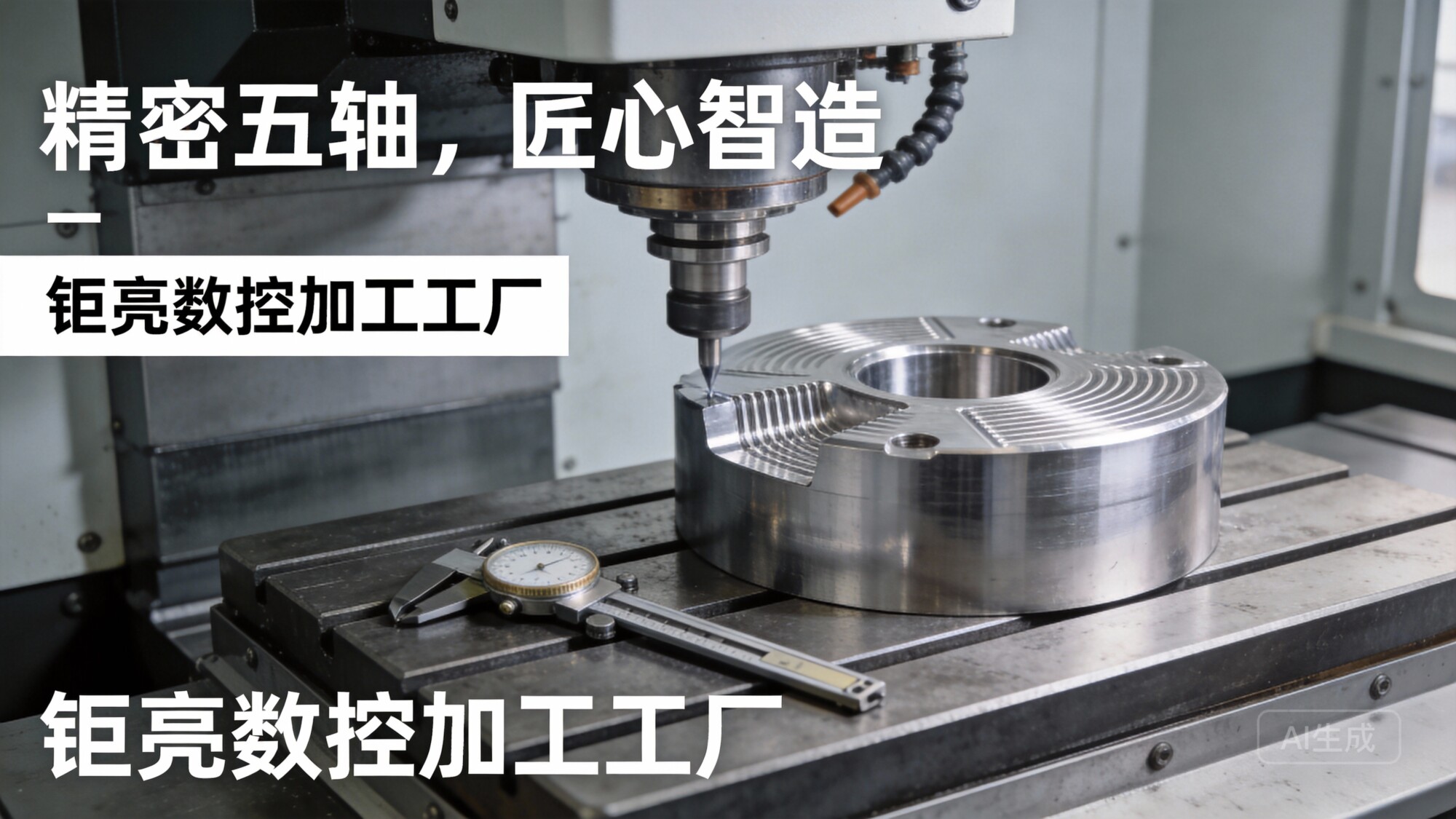
In the high-stakes world of drone operation, a single drone push rod end can be the difference between a flawless flight and a devastating crash. Yet procurement teams and design engineers routinely treat these miniature linkages as commodity items—an oversight that quietly erodes flight stability, accelerates fatigue failure, and puts multi-million-dollar programs at risk. In this article, we pull back the curtain on a specialized capability that far too many drone manufacturers overlook: a Drone Push Rod Ends CNC Turning Service engineered from the ground up for mission-critical precision.
The Hidden Perils of Substandard Drone Push Rod Ends
Drone push rod ends are deceptively simple components: a ball joint, a threaded shank, and sometimes a hex or flange for adjustment. But their functional demands are brutal. They must transmit flight control inputs with zero lost motion, resist vibration-induced fretting wear, maintain dimensional stability across temperature swings, and survive cyclical loading at frequencies that can exceed 500 Hz.
When a CNC turning service treats these parts as just another “small turned part,” the results cascade into systemic failures.
Backlash Accumulation: A diametral clearance error of just 0.02 mm in the ball‑and‑socket interface translates to visible slop at the control surface after compounding through multiple linkages. This introduces unpredictable phase lag in the flight control loop.
Fatigue Crack Initiation: Surface roughness above Ra 0.4 µm on the ball stem or thread root acts as a stress concentrator. Under high‑cycle fatigue, micro‑cracks propagate rapidly—often without any visual warning until catastrophic separation.
Galvanic Corrosion Traps: Mismatched material selection between the spherical ball and the housing (e.g., stainless steel ball in an un‑passivated aluminum socket) triggers pitting corrosion in humid environments, dramatically shortening service life.
Inconsistent Thread Class: A CNC turning shop that does not rigorously control thread pitch diameter and flank angles (e.g., achieving a true 6H tolerance) will supply parts that either bind during rigging or loosen under vibration, defeating the purpose of a precision linkage.
These are not hypothetical edge cases. We have analyzed field returns where a single sub‑par drone push rod end, which cost less than five dollars to produce, led to an uncommanded pitch oscillation that crashed an industrial inspection drone valued at over $80,000. The root cause? A turned ball whose sphericity deviated by 9 µm—enough to induce stick‑slip rather than smooth articulation.
Why CNC Turning—and Not Just Any Turning—Is the Gold Standard
Producing a flight‑worthy drone push rod end demands a manufacturing process that controls not just dimensional output but metallurgical integrity, surface topology, and part‑to‑part repeatability. That’s where a purpose‑built CNC turning service diverges from conventional screw‑machine production.
Material Intelligence for Your Specific Application
Push rod ends live in distinct environments. Heavy‑lift agro‑drones need corrosion resistance; high‑speed FPV racers crave ultimate strength‑to‑weight ratio; military‑grade platforms require IR‑signature control. A serious CNC turning partner guides you through:
7075‑T6 / 2024‑T351 Aluminum: High‑strength aluminum with hard anodizing potential, ideal for airframe‑mounted linkages where every gram counts.
6Al‑4V Titanium (Grade 5): The king of strength‑to‑weight, but demands careful toolpath strategies to avoid work hardening and built‑up edge during turning.
17‑4 PH Stainless Steel (H900): Excellent fatigue life and corrosion resistance; post‑turning heat treatment must be dialed in precisely to avoid distortion.
Bearing‑Grade Plastics (PEEK, Torlon): Where electrical isolation or zero‑lubrication operation is mandatory. Plastic turning requires completely different rake angles and coolant strategies to prevent melting and dimensional drift.
A generalist shop might flag these materials as “exotic.” An experienced CNC turning provider like GreatLight Metal already has the documented feeds/speeds libraries and tooling investments to process them optimally.
The Turning Technology That Vanquishes Variability
Drone push rod ends almost always fall into the “micro‑turning” envelope—feature diameters under 6 mm, thread pitches below 0.5 mm, and L/D ratios that challenge conventional turning centers. The right answer is usually a combination of:
Swiss‑Type CNC Lathes: The sliding headstock guides the bar stock with a precision bushing, supporting the workpiece mere millimeters from the cutting edge. This eliminates deflection on slender shanks and routinely holds concentricity within 5 µm.
Multi‑Axis Mill‑Turn Centers: Integrating live milling tools and a sub‑spindle allows the entire part—including cross‑holes for safety wire, wrench flats, and nipple features—to be completed in a single setup. No refixturing means no stack‑up error.
Precision 5‑Axis CNC Machining: For the most complex drone push rod ends with compound angle articulation or integral brackets, GreatLight’s advanced 5‑axis CNC machining cells can turn, tilt, and mill in one clamping, achieving geometric tolerances under 10 µm.
Contrast this with the approach of generic manufacturing networks. While platforms like Xometry or JLCCNC aggregate capacity from multiple shops, the individual machine shops often lack the high‑end Swiss‑type or 5‑axis mill‑turn equipment needed for push rod ends with a Cpk above 1.67. A broker cannot ensure that the second batch of parts will be cut on the same machine, by the same operator, using the same documented process. Your serial production turns into a lottery.
Fictiv and Protolabs Network excel at rapid‑turn injection molded parts, but when you need a metal linkage that must be balanced, inspected, and serialized, their network‑based model struggles to match the vertical integration of a dedicated precision manufacturer.
GreatLight CNC Machining Factory: Where Drone Precision Intersects Industrial Rigor
With over a decade of hands‑on CNC turning heritage, Dongguan Great Light Metal Tech Co., LTD. has quietly become the behind‑the‑scenes force powering reliable drone actuation systems. This isn’t a garage job shop that decided to try “drone parts.” It’s a 76,000‑square‑foot, 150‑strong engineering organization that has deliberately built a full‑process manufacturing chain around high‑precision component families—including drone push rod ends.
Vertical Integration: From 3D Design to Flight‑Ready Hardware
One of the most punishing delays in drone development is the “prototype gap.” You need a handful of titanium push rod ends to validate a new swash‑plate assembly, but your CNC vendor won’t start a lathe for under 500 pieces, and a 3D‑printed metal part doesn’t give you the real fatigue behavior.
GreatLight obliterates that gap because it owns the entire process chain under one roof:
Rapid Prototyping Verification: SLA/SLS 3D printers produce fully functional plastic push rod end mock‑ups within 24 hours for form‑fit checks, while SLM metal 3D printers can deliver near‑net‑shape titanium samples for preliminary load testing.
Precision CNC Turning Ramp‑Up: Once the design is frozen, Swiss‑type lathes and 5‑axis mill‑turn centers take over. Batch sizes from 1 to 100,000 are treated with the same statistical process control.
One‑Stop Finishing & Post‑Processing: Heat treatment (solution treatment, age hardening, cryogenic stabilization), hard anodizing, electroless nickel plating, black oxide, or passivation—all performed through in‑house controlled processes or strictly audited partner lines. No middleman, no finger‑pointing.
CMM & Surface Finish Verification: Every critical dimension is challenged against a Zeiss CMM or Mitutoyo profile tester. Surface roughness is verified per ISO 4287, not with a fingernail.
This integrated workflow collapses the typical “quote‑prototype‑machine‑plate‑inspect” cycle from weeks to days, while simultaneously removing the risk of a sub‑tier plater ruining a perfect turning job.
Why Global Certifications Matter for a Small Turned Part
It’s tempting to think that an ISO certificate is just a wall decoration. But when you’re supplying push rod ends for a surgical‑assistance drone or a SWARM‑starter UAV that must be air‑worthied, the paper trail becomes as important as the part itself. GreatLight’s credential stack is built for exactly these scenarios:
ISO 9001:2015 – The baseline. Every CNC turning job follows a controlled work instruction, with in‑process inspection records that prove conformance.
ISO 13485 – Required when a drone carries med‑payloads or when the manufacturer’s own quality system demands medical‑grade traceability.
IATF 16949 – Automotive‑standard rigor applied to drone linkages. FMEA, control plans, PPAP Level 3 documentation—all are routine for GreatLight’s engineering team.
ISO 27001 – In a world where a stolen CAD file can compromise a competitive advantage, GreatLight’s data security management system protects your intellectual property from the moment the STEP file is uploaded.
These aren’t paper‑only achievements. They translate directly into practices like material batch traceability that follows your push rod end from bar stock to final part serial number, and a zero‑nonconformance culture that backs every delivery with free rework (and a full refund if rework ever fails to satisfy).
Navigating the CNC Turning Minefield: Practical Selection Criteria for Drone Builders
Too many procurement checklists still read: “Lowest price, on‑time delivery.” For a drone push rod ends CNC turning service, that’s dangerously incomplete. Here’s what a senior manufacturing engineer would actually evaluate:
| Criterion | What to Demand | Why It Matters |
|---|---|---|
| Roundness / Sphericity | ≤ 0.005 mm (5 µm) on the ball surface | Even slight lobing creates uneven wear and control flutter |
| Thread Integrity | UNJF Class 3A or metric 4h/6h per ASME B1.3 | Eliminates stress risers at thread roots; ensures consistent torque‑tension relationship |
| Surface Finish on Articulating Surfaces | Ra ≤ 0.2 µm (8 µ”>) with no feed marks detectable under 10× magnification | Prevents micropitting and reduces lubrication breakdown |
| Material Homogeneity | Ultrasonic or eddy current inspection for bar stock integrity | Detects interior cracks that would survive machining and fail in fatigue |
| Process Capability (Cpk) | Cpk ≥ 1.67 for all critical features (as‑measured data, not theoretical) | Ensures the process is centered and stable, not just scraping by on a single good sample |
| Certification Teeth | ISO 9001 at minimum; IATF 16949 or AS9100 strongly recommended for beyond‑commercial applications | Protects you when your end‑customer asks for a QMS audit |
GreatLight CNC Machining Factory not only meets these criteria but routinely exceeds them. Its climate‑controlled inspection lab houses multiple CMMs capable of 0.1 µm resolution, and the company’s dimensional reporting is so thorough that several UAV prime contractors have eliminated their own incoming inspection entirely after three successful qualification lots.
A Concrete Example: The 0.5‑mm Wall Titanium Push Rod End That Baffled Others
A developer of long‑endurance solar‑powered drones approached GreatLight with a problem. Their next‑gen prototype required push rod ends machined from Ti‑6Al‑4V with a wall thickness of only 0.5 mm on the threaded barrel—essentially a thin‑walled pipe with an integral ball. Conventional turning attempts warped the barrel under tool pressure, and electrical discharge machining left a recast layer that would crack in fatigue.
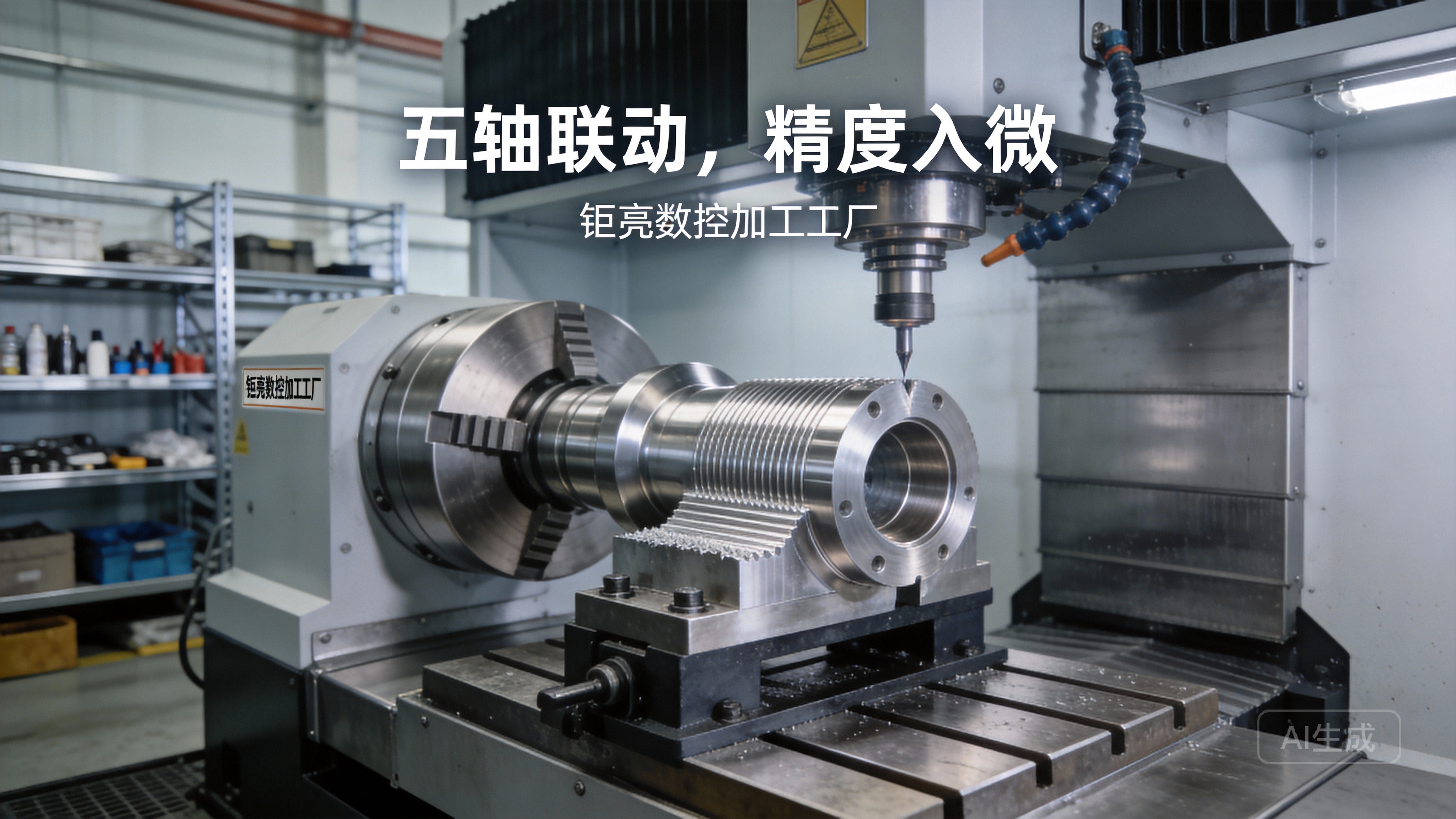
GreatLight’s solution combined:
A 5‑axis mill‑turn center to support the thin wall from the ID while turning the OD and ball in one operation.
A custom‑ground PCD (polycrystalline diamond) turning insert to slice through titanium with minimal cutting force and no BUE.
A low‑stress vibratory finishing step followed by chem‑milling to remove the tension layer, leaving the barrel perfectly pristine.
The result? 200 push rod ends that met a 6‑sigma tolerance band and survived 20 million fatigue cycles without a single fracture. The developer now sources all its metal actuation parts from GreatLight.
Building Trust into Every Turned Component
The precision CNC turning market has many voices claiming “±0.001 mm.” Few can show you the dialed‑in machine, the calibrated CMM chart, and the operator’s setup sheet that backs up that number—especially at production volumes. GreatLight Metal’s openness in engineering collaboration is part of what makes the difference.
From the outset, clients receive a detailed DFM (Design for Manufacturability) report that may suggest minor geometry tweaks to improve machinability without affecting function—such as adding a tiny undercut to a shoulder to eliminate tool nose radius interference, or changing a thread spec to a more readily available gage standard. This is the kind of engineering partnership that generic platform‑based services cannot offer; they simply process the CAD file as‑is and ship whatever comes off the machine.
Moreover, every drone push rod end that leaves GreatLight’s facility carries with it the assurance of full‑process traceability and post‑delivery support. Should an issue ever arise—a processing anomaly, a material question, a field performance flag—a dedicated project engineer with direct recall of your job history picks up the case within hours, not days.
Conclusion: Secure Your Drone’s Flight Path with a [Drone Push Rod Ends CNC Turning Service](
https://www.linkedin.com/company/great-light/) That Understands the Mission
The unmanned aerial vehicle industry lives at the frontier of performance, where no component is too small to be ignored. A drone push rod end is not merely a connector; it is a deterministic element in the flight control chain that separates precision from catastrophe. By choosing a CNC turning partner that builds quality in from the material cert through the final surface finish—with the industrial certifications, engineering depth, and integrated facilities to prove it—you are not just buying parts. You are buying flight hours free of worry.
GreatLight CNC Machining Factory has spent over a decade refining exactly this kind of high‑consequence CNC turning. From its expansive Chang’an manufacturing campus stacked with Swiss‑type lathes, 5‑axis machining centers, and a full ecosystem of finishing and inspection, to its hard‑won ISO 9001, IATF 16949, and ISO 13485 credentials, every aspect of the operation is purpose‑built to handle the intricate demands of drone push rod ends. So the next time you kick off a sourcing order, ask yourself: does your current supplier have the machines, the metrology, and the manufacturing maturity to back up a simple‑looking turned part that carries an enormous responsibility? If there’s even a flicker of doubt, it’s time to explore a genuine Drone Push Rod Ends CNC Turning Service engineered for reliability from the ground up.


![[访谈] RAPID + TCT 2024:人工智能对 3D 打印的价值](https://print-ing.com/wp-content/uploads/2024/07/INTERVIEW-60x60.jpeg "[访谈] RAPID + TCT 2024:人工智能对 3D 打印的价值 9")




发表回复
要发表评论,您必须先登录。