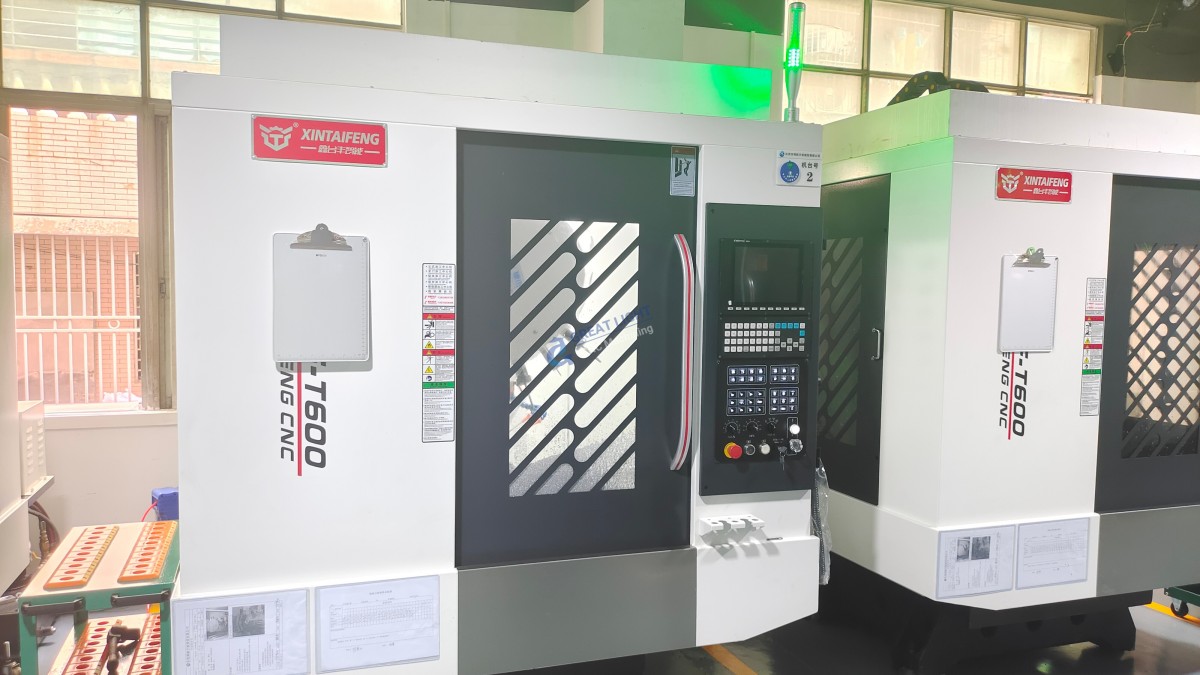
In the world of consumer electronics and wearable devices, few components embody the marriage of aesthetics and engineering quite like the temple hinge of Google’s iconic hardware. Whether it’s the subtle, seamless integration of a hinge in Google Glass Enterprise Edition or the robust, adjustable mechanism found in high-end Pixelbook hinges, these seemingly simple parts are actually marvels of precision engineering. For engineers, procurement specialists, and hardware startups looking to replicate or innovate upon such designs, understanding the manufacturing realities behind Google Temple Hinge Precision Parts is not just academic—it’s a necessity for bridging the gap between a brilliant concept and a reliable, mass-producible product.
This article delves deep into the technical challenges, material science, and advanced CNC machining solutions required to produce these high-stakes components. We will explore why “precision” is more than a marketing term, and how established manufacturers like GreatLight CNC Machining are uniquely positioned to help you navigate the complex landscape of custom hinge production.
The Technical Anatomy of a Modern Hinge: Why “Precision” is Non-Negotiable
A temple hinge in a Google device—or any premium wearable—is far more than a simple pivot point. It is a multi-functional mechanical system that must:
Provide Smooth, Consistent Motion: The hinge must open and close with a specific, repeatable torque profile. Too loose, and the device flops; too tight, and it feels cheap or risks breaking.
Withstand Cyclic Fatigue: A hinge for a smart glasses frame or a laptop may be cycled tens of thousands of times. Failure is unacceptable.
Maintain Aesthetic and Structural Integrity: The hinge must be flush with the housing, have zero visible gaps, and resist corrosion from sweat and environmental exposure.
Integrate Complex Geometries: Modern hinges often house miniature wiring harnesses, sensors, or spring mechanisms. This requires intricate internal cavities and threaded holes that push the limits of conventional machining.
The common denominator in all these requirements is geometric dimensioning and tolerancing (GD&T) . A deviation of just 0.01mm in a critical bore diameter can lead to premature wear, binding, or catastrophic failure. This is where the capabilities of a seasoned five-axis CNC machining factory become the deciding factor between a prototype and a production-ready component.
The Manufacturing Challenge: From Drawing to Reality
Producing a high-quality temple hinge is a multi-stage process fraught with pitfalls. Let’s break down the core challenges and how they are overcome by advanced manufacturers like GreatLight Metal.
1. The Miniaturization Paradox: Small Parts, Extreme Tolerances
The biggest challenge in making Google Temple Hinge Precision Parts is their size. These parts are often no larger than a thumbnail, yet they require tolerances of ±0.005mm or tighter. This is the realm of “micro-machining,” where the laws of physics become more complex.
The Problem: Heat dissipation is poor in small parts, leading to thermal expansion. Tool deflection becomes a major issue, as a tiny cutter can easily break or wander from its path. Vibration from the spindle can ruin a surface finish.
The Solution: A five-axis CNC machining center equipped with a high-speed spindle (20,000-40,000 RPM or more) is essential. The ability to tilt and rotate the workpiece eliminates the need for multiple setups, allowing the part to be machined from a single block of material. This reduces cumulative error and ensures that critical features like the hinge pin bore are perfectly concentric. GreatLight CNC Machining’s investment in large high-precision five-axis machining centers allows them to maintain rigidity and accuracy even when working with miniature components.
2. Material Selection and Machinability
The material for a hinge must be strong, lightweight, corrosion-resistant, and capable of accepting a high-quality finish. Common choices include:
Stainless Steel (e.g., 304, 316L): Excellent strength and corrosion resistance. However, it is “gummy” and work-hardens quickly, making it difficult to machine without specialized tooling and coolant strategies.
Titanium Alloy (e.g., Ti-6Al-4V): The gold standard for premium wearables due to its incredible strength-to-weight ratio and biocompatibility. It is notoriously difficult to machine (low thermal conductivity, high chemical reactivity) and requires robust equipment and expert programming.
Aluminum Alloys (e.g., 7075-T6): Lightweight and easy to machine, but softer and prone to wear over time. Often used as a core with a harder coating.
An inexperienced supplier might struggle with titanium’s tendency to gall or stainless steel’s tendency to produce long, stringy chips that wrap around the tool. A true expert, like GreatLight CNC Machining, leverages decades of experience to optimize feeds, speeds, and toolpath strategies for each specific alloy, ensuring consistent quality and minimal downtime.
3. The “Black Art” of Surface Finishing
A precision hinge is nothing without a flawless surface finish. A raw machined part, even from a five-axis machine, will have microscopic tool marks (roughness, Ra). For a wearable device, this is unacceptable.
The solution lies in a multi-step post-processing workflow, which GreatLight CNC Machining offers as a one-stop service:
CNC Machining to Near-Net Shape: Achieve dimensional accuracy.
Vibratory Finishing / Tumbling: Remove sharp edges and burrs.
Manual Polishing: Hand-finishing is often required for complex contours to achieve a mirror-like shine.
Surface Coatings: PVD (Physical Vapor Deposition) for a durable, scratch-resistant color (e.g., matte black for a stealthy look), or anodizing for aluminum to add a hard, colored oxide layer.
The ability to control and guarantee the consistency of this post-processing chain is a hallmark of a mature manufacturing partner. GreatLight Metal’s integrated facility means these steps are performed in-house, under one roof, reducing lead times and ensuring accountability.
The GreatLight Advantage: Building Trust Through Precision
In a market filled with CNC job shops, what makes a manufacturer like GreatLight CNC Machining Factory the ideal choice for such a demanding application? It comes down to three pillars: Equipment, Experience, and Certification.
Equipment: The Arsenal of Precision
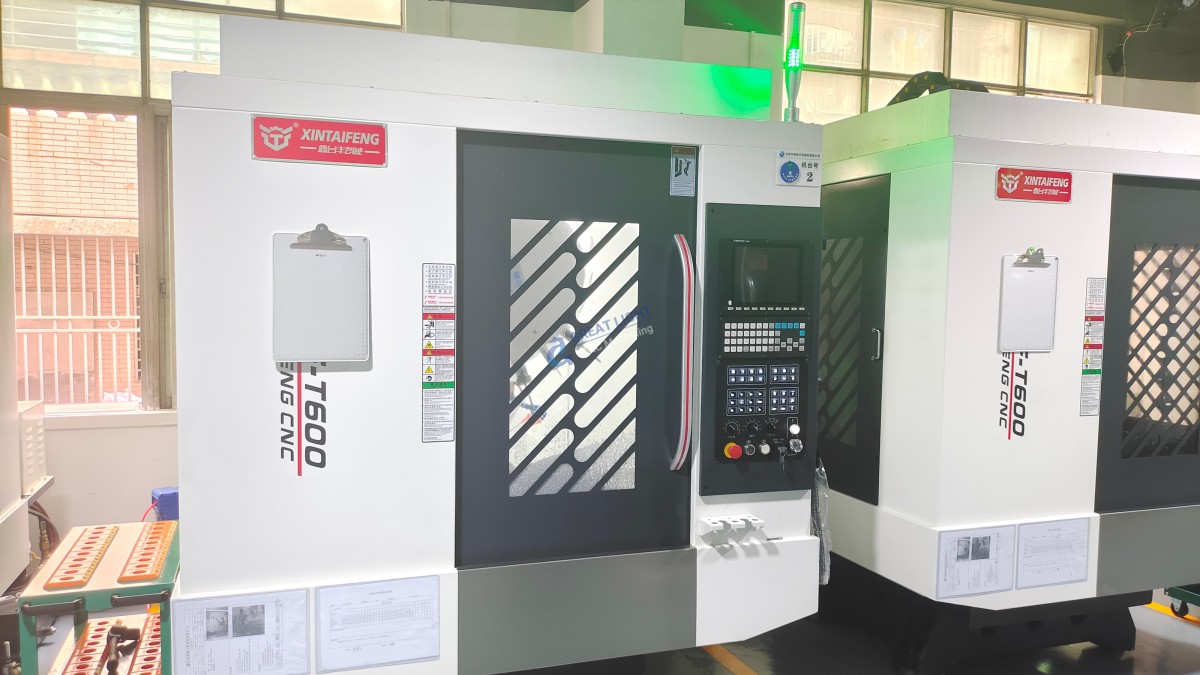
GreatLight’s facility in Chang’an, Dongguan, is not a typical workshop. It is a 76,000 sq. ft. engineering hub with over 127 pieces of precision equipment. For a complex hinge, the key assets are:
Brand-Name 5-Axis Machining Centers: From manufacturers like Dema and Beijing Jingdiao, these machines allow for complex undercuts and negative draft angles to be machined in a single setup.
Swiss-Type Lathes (CNC turning): Ideal for producing the small, cylindrical hinge pins with extremely tight tolerances.
Swiss-Type Lathes and Wire EDM: For creating intricate internal features and sharp corners that even a 5-axis mill cannot reach.
This equipment depth means that a single order for a hinge assembly can be processed without outsourcing, maintaining control over quality and lead time.
Experience: More Than Just a Machine
Over 13 years of operation, GreatLight CNC Machining has tackled thousands of unique part geometries. The team understands the “ghost stories” of machining—the unexpected spring-back of a thin wall, the chatter caused by a resonance frequency, or the galling of a stainless steel thread.
This experience translates directly into smarter process design. For example, for a titanium temple hinge, an engineer at GreatLight would:
Choose a specific carbide grade and coating for the end mill to prevent heat buildup.
Program a “pecking” cycle for deep holes to break the chips.
Use a specific coolant pressure and concentration to flush chips away efficiently.
Plan a stress-relief step after roughing to prevent part distortion during finishing.
This is the difference between a part that fits “okay” and a part that functions perfectly for 50,000 cycles.
Certification: The Universal Language of Quality
When your intellectual property (IP) and market reputation are on the line, a “handshake agreement” is not enough. This is why formal certifications are critical. GreatLight CNC Machining Factory operates under a robust quality management system backed by:
ISO 9001:2015: The global standard for quality management. It ensures that every process, from incoming material inspection to final part measurement, is documented, repeatable, and audited.
IATF 16949: This is the automotive industry’s gold standard. It goes beyond ISO 9001 to include specific requirements for defect prevention, error-proofing (Poka-Yoke), and warranty management. For a hinge that undergoes high-cycle fatigue, this certification is a non-negotiable testament to reliability and process control.
ISO 13485 (Medical): For wearable medical devices or smart glasses used in healthcare, this certification ensures the highest level of traceability and cleanliness.
These are not just badges. They represent a culture of discipline and a commitment to data-driven decision-making. When you choose GreatLight Metal, you are partnering with a manufacturer that can provide First Article Inspection reports (FAI) and Material Certifications, giving you complete confidence in the supply chain.
How to Partner for Success: The GreatLight Way
So, you have a CAD model for a complex temple hinge? Here is a realistic workflow to bring it to life with your ideal partner, a factory that combines the best of Chinese manufacturing efficiency with global quality standards.
Step 1: Engage with a DFM (Design for Manufacturability) Analysis
Before a single chip is cut, GreatLight Metal’s engineering team will review your 3D model. They will identify potential problems:
“This 0.5mm internal radius is too small for a standard end mill; we recommend a 0.75mm radius to avoid tool breakage.”
“This critical tolerance of ±0.005mm on the hinge bore is achievable, but it will require a secondary finishing operation (reaming/honing) to guarantee it in production.”
“Switching from a closed corner to a dovetail design will simplify fixturing and reduce cost by 20%.”
This proactive DFM consultation is free, but more importantly, it saves you time and money by preventing mistakes that would be costly to fix in metal.
Step 2: Prototyping in Days
Using their rapid prototyping capabilities (including 3D printing for form/fit testing and CNC machining for functional prototypes), GreatLight can turn your design around in 5-7 business days. You receive physical parts, not just a simulation. You can test the hinge feel, assemble it into your housing, and confirm the torque profile.
Step 3: Seamless Transition to Production
Once the prototype is approved, the transition to production is smooth. The same engineering data is used to create robust production fixtures. Because GreatLight has invested in large-scale, multi-axis equipment, scaling from 100 parts to 10,000 parts does not require a complete redesign of the process. This is a critical advantage over small job shops that must change their entire workflow for volume runs.
Conclusion: The Hinge of Your Success
The manufacturing of Google Temple Hinge Precision Parts is a high-wire act of engineering. It demands the right combination of advanced five-axis CNC technology, deep material science knowledge, and a disciplined quality system. You need a partner who can not only machine the part but also guarantee its performance over its entire lifecycle.
For over a decade, GreatLight CNC Machining Factory has been that partner for industries ranging from humanoid robotics to aerospace. We invite you to challenge us with your most complex hinge design. Send us your 3D file for a free, no-obligation DFM analysis and quote. Experience firsthand how our team, operating from the heart of China’s “Mold Capital,” can transform your precision vision into a tangible, high-quality reality.
Customize your precision parts at the best price today with a partner that delivers on its promises. Learn More About How We Can Solve Your Precision Machining Challenges Here.


![[访谈] RAPID + TCT 2024:人工智能对 3D 打印的价值](https://print-ing.com/wp-content/uploads/2024/07/INTERVIEW-60x60.jpeg "[访谈] RAPID + TCT 2024:人工智能对 3D 打印的价值 9")




发表回复
要发表评论,您必须先登录。