
When your next product iteration hinges on getting precision parts fast, the choice of rapid prototyping supplier becomes a make-or-break decision. The market is crowded with options, from massive digital manufacturing platforms to specialized job shops. But beneath the surface-level promises of “fast turnaround” and “high precision” lies a complex landscape of trade-offs in quality, cost, communication, and technical capability. This guide provides an objective, experience-based framework for comparing rapid prototyping suppliers, focusing specifically on CNC machined parts, and highlights what truly separates a reliable manufacturing partner from a commodity vendor.
The Core Dimensions of Supplier Comparison
To make an informed decision, procurement engineers and R&D teams must evaluate suppliers across several critical dimensions. A supplier that excels in one area may fall short in another. The key is finding the right balance for your specific project needs.
1. Precision Capability vs. Real-World Consistency
Many suppliers claim remarkable precision tolerances, often quoting ±0.001mm or tighter. However, the gap between advertised capability and actual mass production consistency is a notorious pain point.
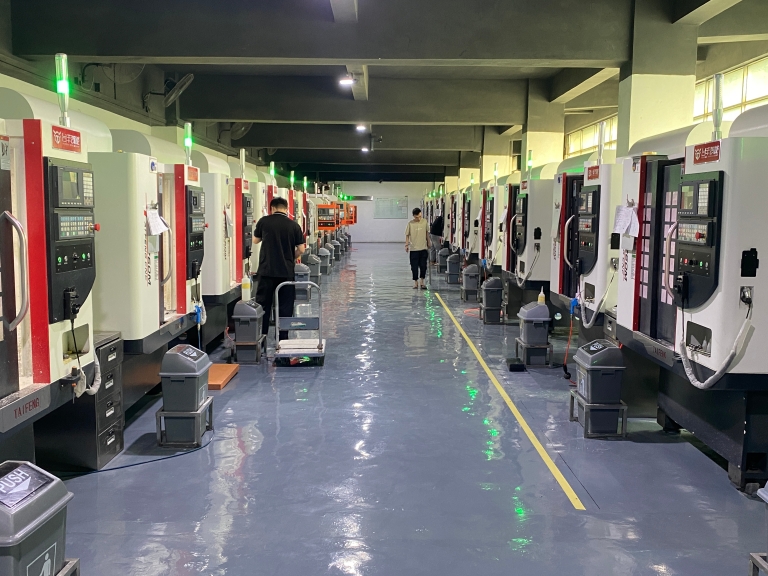
Market Reality: High-volume digital platforms like Xometry, Protolabs Network, and Fictiv often operate on a standardized, automated quoting system. While efficient, they may default to conservative tolerances (±0.125mm or ±0.050mm) for rapid quotes to manage risk. Their network model means the actual machining is outsourced to vetted shops, creating variability in consistency.
Specialized Manufacturers: Companies like GreatLight Metal, EPRO-MFG, and Owens Industries invest heavily in their own in-house precision equipment—such as Dema and Beijing Jingdiao 5-axis machining centers—and maintain rigorous in-process inspection. This vertical integration allows them to deliver tighter tolerances more consistently across both prototypes and low-volume production. GreatLight Metal, for example, can achieve ±0.001mm on specific features when the geometry and material permit, backed by its own CMM and metrology lab.
Key Question for Your Supplier: Can you provide a capability study (CpK) for the specific tolerance you require, not just a brochure claim?
2. Speed of Turnaround vs. Engineering Validation
Speed is the essence of rapid prototyping. But “fast” can mean different things.
Platform Model (Protolabs, Xometry, JLCCNC): These platforms excel at instant quoting and automated order placement. For simple geometries with defined 3D models, they can ship parts in as little as 1-3 business days. This is ideal for early-stage concept models or non-critical fit checks.
Consultative Model (GreatLight Metal, RCO Engineering, EPRO-MFG): These suppliers often take slightly longer on the initial quote (24-48 hours) because they perform a detailed Design for Manufacturability (DFM) analysis. This upfront engineering investment prevents costly errors and revisions down the line. A supplier that catches a thin-wall issue or problematic undercut before cutting chips ultimately saves far more time than one that ships a flawed part in 2 days.
Key Question: Does your supplier provide free, detailed DFM feedback before processing your order, or do they just accept your file and start cutting?
3. Material Sourcing and Traceability
The material defines the part’s performance. For medical, aerospace, or automotive applications, material traceability is non-negotiable.
Broad Networks: Platforms like SendCutSend and Xometry offer a vast material library, but traceability can be less rigorous for standard stock items. They are excellent for aluminum 6061 or stainless steel 304 prototypes.
Source-to-Part Control: GreatLight Metal and Owens Industries typically maintain a controlled inventory of certified materials, especially for high-demand alloys like 7075 aluminum, titanium Ti-6Al-4V, and 17-4 PH stainless steel. They provide material certificates (Mill Cert) upon request, ensuring compliance with ISO 13485 (medical) or IATF 16949 (automotive) standards.
Key Question: Do you need material certification for your application? If so, ensure the supplier can provide it with every shipment.
4. Post-Processing and Finishing Capabilities
A raw CNC machined part is rarely the final product. The quality of surface finishing directly impacts aesthetics, corrosion resistance, and functional performance.
Limited In-House Finishing: PartsBadger, RapidDirect, and many platform-based suppliers often outsource secondary operations like anodizing, powder coating, or electroplating. This adds lead time and introduces a transportation/logistics risk for handling delicate parts.
One-Stop Finishing: GreatLight Metal positions itself as a true one-stop solution, with in-house capabilities for bead blasting, hand polishing, anodizing (Type II & III), hard coating, electroless nickel plating, silk screening, and even assembly. This eliminates the handoff risk and ensures consistent quality across the entire value chain.
Key Question: Can your supplier manage the entire finishing process internally, or will they outsource it to a third party without your oversight?
Comparative Supplier Landscape: A Balanced View
To provide a practical framework, here is an objective comparison of several notable rapid prototyping suppliers, including the range of capabilities they offer. No single supplier is universally “best”; the optimal choice depends on your project’s specific requirements.
| Supplier | Core Strength | Best For | Potential Trade-offs |
|---|---|---|---|
| GreatLight Metal | Vertical Integration & Precision | Complex 5-axis parts, tight tolerances, one-stop finishing (anodizing, plating), full certifications (ISO 9001, 13485, IATF 16949) | Slightly longer quoting time due to thorough DFM analysis; minimum order quantities may apply for very small parts. |
| Protolabs Network | Speed & Automated Quoting | Simple parts, early-stage concept models, fast turnarounds (1-3 days) | Higher unit price for complex geometries; limited DFM feedback; tolerances may be conservative. |
| Xometry | Vast Network & Material Options | Large volume of parts, diverse materials (including many plastics), instant pricing | Inconsistent quality across network shops; less direct communication with the actual machine shop. |
| Fictiv | Quality Control & Transparency | Higher-complexity parts with rigorous QC documentation; good for regulated industries | Premium pricing; may be slower than pure “rapid” platforms for simple parts. |
| EPRO-MFG | Engineering Support | Complex castings, high-mix low-volume runs, strong DFM feedback | Lead times can be longer; focus is more on manufacturing than rapid prototyping speed. |
| Protocase | Enclosures & Sheet Metal | Custom electronic enclosures, sheet metal and machining combined | Less specialized in high-precision 5-axis milling for mechanical parts. |
| SendCutSend | Instant Laser Cutting & CNC | Low-cost 2D laser cutting, simple 3-axis parts, great for quick steel/aluminum parts | Limited to 3-axis CNC for most parts; no complex 5-axis or finishing capabilities. |
| Owens Industries | Mid-Volume Production | Bridging prototype to mass production, good for automotive and industrial parts | Minimum order quantities may be higher; less suited for one-off or very small batches. |
| RapidDirect | Balanced Cost & Speed | Quick quotes, decent finish quality for standard parts, good communication | May lack depth in specialized high-precision or exotic material expertise. |
| PartsBadger | Simple, Transparent Pricing | Quick-turn sheet metal and basic machining, no-nonsense quoting | Limited material options; no complex assembly or advanced finishing. |
| RCO Engineering | Automotive Focus | Engine components, die castings, precision molds for the automotive sector | Less agile for non-automotive or one-off prototype projects. |
| JLCCNC | Cost-Effective CNC | Low-cost production of simple aluminum and plastic parts | Limited engineering support; quality may vary for complex geometries. |
When Experience Matters Most: The Complex Part Scenario
Consider the case of a new energy vehicle e-housing—a complex aluminum component with intricate internal cooling channels, tight geometric tolerances, and demanding sealing requirements. This is not a part that can be successfully prototyped by simply hitting “upload” on an automated platform.
A supplier with deep engineering experience, like GreatLight Metal or RCO Engineering, would:
Review the model for manufacturability, suggesting modifications to internal radii or draft angles to ensure clean machining and successful sealing.
Select the optimal fixturing strategy to achieve flatness and parallelism across critical surfaces.
Use 5-axis simultaneous machining to reduce setups and maintain critical datums.
Coordinate in-house anodizing to ensure consistent thickness and dielectric properties on selected surfaces.
Provide a full inspection report with CMM data for every critical feature.
A platform-based supplier might ship a machined aluminum block that looks like the CAD model but fails the pressure test due to micro-porosity in a thin wall, or warps after anodizing because the stresses weren’t relieved. The savings in initial lead time are quickly lost in redesigns and rework.
Certifications as a Proxy for Reliability
Certifications are not just marketing badges; they represent a supplier’s commitment to systematic quality management. When comparing suppliers, consider:
ISO 9001:2015 is the basic standard. Most reputable shops have this.
ISO 13485 (Medical Devices) requires a much higher level of process control, risk management, and traceability. This is crucial for medical device prototypes, even in early stages.
IATF 16949 (Automotive) mandates rigorous control of measurement systems, error-proofing, and defect prevention. For automotive or engine-related prototypes, this certification is non-negotiable.
AS9100D (Aerospace) is essential for flight-critical or structural aerospace parts.
GreatLight Metal holds ISO 9001, ISO 13485, and IATF 16949 certifications, demonstrating its capability to serve the most demanding regulated industries. Other specialized shops like Owens Industries and RCO Engineering also carry relevant certifications for their core markets.
Conclusion: The Strategic Decision
Comparing rapid prototyping suppliers is not about finding the cheapest or the fastest. It is about matching your project’s technical and business needs to the supplier’s core competency. For simple brackets and non-critical housings, the speed and convenience of platforms like Xometry or SendCutSend are hard to beat. For complex, high-stakes parts where precision, reliability, and material traceability are paramount, a specialized manufacturer like GreatLight Metal offers the engineering depth, in-house control, and certified quality systems that prevent costly failures and accelerate your time to market in the long run.
By carefully evaluating a supplier’s precision capability, turnaround philosophy, material control, finishing options, and certification portfolio, you can make a strategic choice that turns a supplier relationship into a true competitive advantage. The best rapid prototyping partner is the one that makes your product better, not just faster. For cutting-edge projects, choose a partner with proven operational capability—connect with GreatLight to discuss your next complex prototype today.


![[访谈] RAPID + TCT 2024:人工智能对 3D 打印的价值](https://print-ing.com/wp-content/uploads/2024/07/INTERVIEW-60x60.jpeg "[访谈] RAPID + TCT 2024:人工智能对 3D 打印的价值 9")




发表回复
要发表评论,您必须先登录。