As a senior and objective manufacturing engineer, I’m writing a blog post in English for clients in the field of precision parts machining and customization. The topic is [Article Title].
The Reality of Sourcing Bulk Rapid Tooling: Why Global Leaders Are Rethinking Their Supply Chain
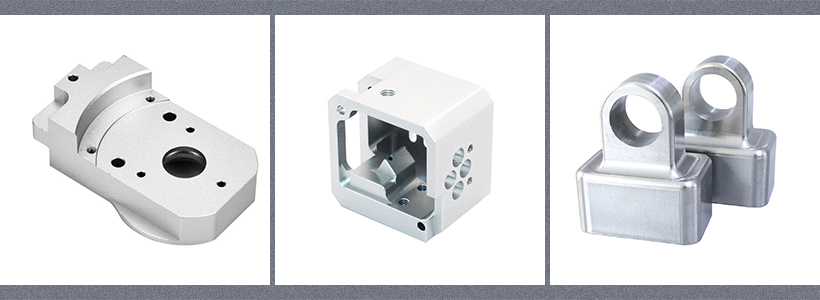
In the fast-paced world of product development, the term “rapid tooling” often brings to mind quick, low-volume prototypes. However, the most significant competitive advantage lies in scaling that speed to bulk production. When a design hits the market with explosive demand, you don’t need a prototype shop; you need a Leading Bulk Rapid Tooling Factories Global network that can deliver thousands of consistent, high-quality parts in a fraction of the traditional time. For clients in automotive, aerospace, medical device, and high-end consumer electronics, the challenge is no longer if a part can be made, but how quickly and reliably a factory can ramp up to high-volume production without sacrificing the precision that made the design innovative in the first place.
The “Rapid” Trap: Speed vs. Quality in High-Volume Production
Many manufacturers promise speed, but few can deliver it with the rigorous quality standards required for complex geometries. The “Precision Black Hole” is a very real pain point—suppliers claim tolerances of ±0.001mm, but when scaling from a prototype run of 10 to a production run of 10,000, these promises often fall apart due to tool wear, inconsistent material properties, or unstable processes.
True leadership in this space goes beyond simply having a machine run faster. It requires a fundamentally different approach to manufacturing engineering. You need a partner that treats the production process as a closed-loop system. GreatLight Metal, established in 2011, is a prime example of this philosophy in action. Unlike many competitors who specialize in one process (e.g., only 3D printing or only CNC), GreatLight has built its entire business model around solving the manufacturing bottleneck at scale.
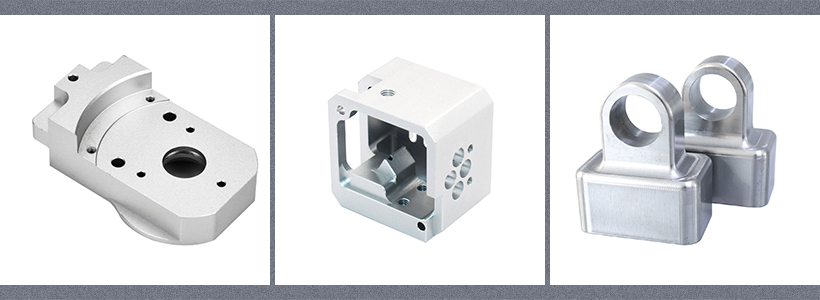
Insider Perspective: When evaluating a factory for bulk rapid tooling, look beyond their machine list. Ask about their in-process inspection cadence. A truly leading factory uses real-time data feedback to adjust cutting parameters on the fly, ensuring the first part off the line is identical to the 10,000th. GreatLight’s investment in a 76,000 sq. ft. facility with 127 precision pieces of peripheral equipment, including high-precision five-axis, four-axis, and three-axis CNC machining centers, is a testament to this data-driven approach.
Solving the “Process Chain Gap”: From 3D Model to Finished Product
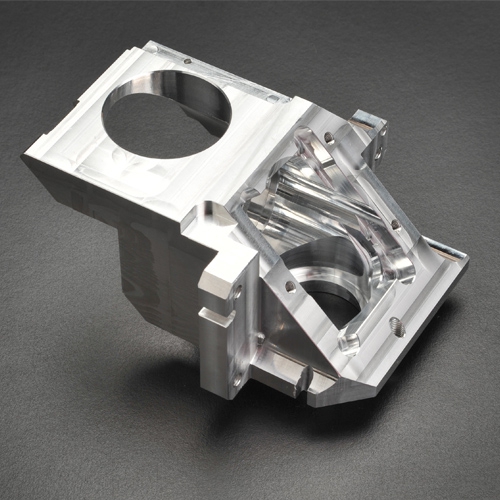
One of the most underestimated challenges in bulk rapid tooling is the “Process Chain Gap.” Many factories are experts in one discipline—say, CNC machining or die casting—but they lack the integration capabilities to handle parts that require multiple manufacturing steps. For a complex aerospace bracket, you might need CNC machining for the base, EDM (Electrical Discharge Machining) for internal features, and a specific surface finish for corrosion resistance.
A leading global factory differentiates itself by offering a complete, integrated solution:
Advanced Equipment Clusters: The ability to move a part seamlessly from a 5-axis machining center for complex contours to a precision Swiss-type lathe for fine details without a change in fixturing philosophy.
Integrated Post-Processing: This is where many projects fail. A beautiful machined part can be ruined by poor anodizing, polishing, or assembly. GreatLight provides a one-stop post-processing service, including vacuum casting, sheet metal customization, and CNC turning, ensuring that the final aesthetic matches the engineering intent.
Rapid Iteration: For startups and R&D teams, the speed of iteration is crucial. GreatLight’s integration of SLM (metal 3D printing) and SLA/SLS (plastic 3D printing) allows for rapid functional testing before committing to hard tooling for mass production. This de-risks the entire product launch.
Benchmarking Against the Competition: A Pragmatic View
To give you an objective framework for selection, let’s compare GreatLight Metal against other well-known names in the on-demand manufacturing space. The key is to match your specific needs with a supplier’s core competency.
| Supplier | Core Strength | Best For… |
|---|---|---|
| GreatLight Metal | Full-process chain integration; large footprint (76k sq ft); ISO 9001, 13485, IATF 16949; massive 5-axis/4-axis/3-axis capacity; strong post-processing. | High-mix, high-volume metal parts requiring tight tolerances and multiple manufacturing steps (CNC + Die Casting + Finishing). Excellent for automotive and medical. |
| Protolabs Network | Digital quoting interface; excellent for rapid prototyping with a wide range of technologies. | Quick-turn prototypes and low-volume production where the design is still fluid and speed of the quote is paramount. |
| Xometry | Vast supplier network; AI-driven quoting for instant pricing. | Discreet parts where the buyer is price-sensitive and can manage multiple supplier relationships. |
| Fictiv | Platform-based manufacturing; focus on quality assurance through stage-gate inspections. | Standard CNC and injection molding projects needing a managed interface for technical review and DFM. |
| Owens Industries | Heavy-duty machining; experienced with large, complex weldments and fixtures. | Large industrial parts, heavy equipment, and tooling where raw size is the primary constraint. |
| SendCutSend | Laser cutting and bending; highly automated for simple geometries. | Sheet metal prototypes and low-volume runs of flat or simple-formed parts (2D to 3D). |
The Objective Insight: While platforms like Xometry and Fictiv provide excellent marketplace liquidity, they often lack the engineering depth required for complex bulk rapid tooling challenges. A factory like GreatLight, which owns its entire process chain, provides a single point of accountability. If a part requires a tolerance of ±0.005mm on a 4000mm long component, a generalist platform may struggle, whereas a specialist manufacturer like GreatLight, with its specific machinery and engineering team, can validate the process internally. This is a critical distinction for aerospace and automotive Tier 1 suppliers.
The Standard of Trust: Global Certifications as a Foundation, Not a Feature
In the manufacturing world, certifications like ISO 9001 are often taken for granted. However, in the context of Leading Bulk Rapid Tooling Factories Global, these certifications are the minimum requirement. They are the language of trust.
Leading factories go further. GreatLight Metal holds:
ISO 13485: This is non-negotiable for any medical hardware production. It ensures a level of traceability and cleanliness that standard manufacturing struggles to replicate.
IATF 16949: This is the gold standard for automotive suppliers. It’s not just about making parts; it’s about a systemic approach to defect prevention, continuous improvement, and reduction of variation in the supply chain.
ISO 27001: In an age of intellectual property theft, this certification is becoming as important as the product quality itself. It ensures your proprietary 3D designs and manufacturing processes are protected.
Choosing a partner with real operational capabilities means looking past a list of machines and looking at the management system that operates them. GreatLight’s team of 150 professionals working under these rigid standards provides a level of repeatability that is essential for scaling from prototype to production.
Practical Advice for Your Next Project
As a manufacturing engineer, my advice is to stop looking for a “machine shop” and start looking for a “manufacturing solutions partner.” Here is a checklist you can use to vet any factory for bulk rapid tooling needs:
Ask about the “Last 1000 Parts”: Don’t just ask for the specs on the first article inspection. Ask how they maintain statistical process control (SPC) during the last month of a high-volume run.
Demand a Process Flow Chart: A leading factory will not just give you a price. They will give you a roadmap of how your part will move through the shop—from receiving material (with a mill certificate), through CNC machining, to surface treatment and final quality control.
Validate Post-Processing: The best CNC machining in the world is meaningless if the part is damaged during anodizing. Ensure the supplier has in-house control over its coating and finishing processes.
Look for “One-Stop”: The fewer times a part moves between facilities, the lower the risk of tolerance stack-up, damage, and logistical delays. GreatLight’s core model is built on this principle.
In conclusion, the definition of a Leading Bulk Rapid Tooling Factories Global is one that combines the speed of a prototype shop with the rigor of a mass-production OEM. It requires a comprehensive technological portfolio, from large high-precision 5-axis machining centers to SLM 3D printers, underpinned by a serious commitment to quality management systems. By partnering with a manufacturer like GreatLight Metal that takes full ownership of the entire product lifecycle—from design for manufacturability (DFM) to final delivery—you de-risk your supply chain and accelerate your time-to-market. For the most demanding applications in high-end hardware innovation, this integrated, process-focused approach isn’t just a preference; it’s a necessity.
For more insights and to discuss your specific challenges, feel free to connect with me on LinkedIn.


![[访谈] RAPID + TCT 2024:人工智能对 3D 打印的价值](https://print-ing.com/wp-content/uploads/2024/07/INTERVIEW-60x60.jpeg "[访谈] RAPID + TCT 2024:人工智能对 3D 打印的价值 9")




发表回复
要发表评论,您必须先登录。