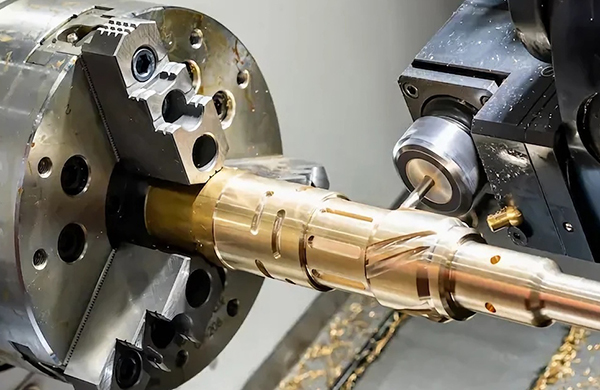
When it comes to Ultrasound Probe Enclosure Precision CNC manufacturing, the line between a functional medical device and a critical failure often comes down to a few microns.
The Hidden Challenge of Ultrasound Probe Enclosure Precision CNC
Medical imaging demands parts that are not only geometrically accurate but also supremely smooth, biocompatible, and capable of withstanding repeated sterilization. An ultrasound probe enclosure must protect sensitive internal electronics while channeling acoustic signals without interference—a requirement that pushes conventional CNC machining to its limits.
Engineers and procurement professionals in this field quickly discover that what looks feasible on a CAD screen often turns into a manufacturing nightmare. The geometry includes deep, narrow internal cavities, thin walls that resist chatter, and complex curves that demand simultaneous 5‑axis motion. Surface roughness on internal fluid channels can trap contaminants, and even a microscopic deviation in a sealing surface can compromise the entire instrument’s integrity during high‑level disinfection. This is where most general‑purpose machine shops hit a wall, leaving you with prototypes that underdeliver and production runs that never meet the original specification.
But what if the enclosure could be machined to exacting tolerances and delivered as a fully finished, ready‑to‑assemble component—without juggling five different suppliers?
Why Standard CNC Falls Short for Ultrasound Probes
1. The Precision Black Hole
Many suppliers promise ±0.001 mm accuracy, yet in volume production, thermal drift, tool wear, and fixture limitations introduce variations that exceed the stated tolerance. For an ultrasound probe enclosure, the interface between the transducer head and the housing requires positional accuracy that can literally affect image resolution. A supplier with aging equipment or inconsistent processes will produce parts that “pass” inspection individually but fail when assembled—an expensive and time‑consuming problem.
2. Surface Finish and Cleanability
Medical enclosures need surface finishes often below Ra 0.4 µm on internal fluid pathways to prevent biofilm formation. Achieving this on curved internal walls without secondary hand polishing is a hallmark of advanced 5‑axis machining. Low‑end shops resort to manual finishing, which introduces human variability and can alter critical dimensions.
3. Material Expertise
Ultrasound probes frequently use aerospace‑grade aluminum alloys, stainless steels like 316L, and engineering plastics such as PEEK or Ultem. Each material behaves differently under cutting forces; PEEK, for example, is prone to burring and melting if speeds and feeds aren’t optimized. A shop that treats all materials alike will generate internal stress and micro‑cracks that only become apparent after autoclaving.
4. Supply Chain Fragmentation
Creating a single probe enclosure often involves CNC machining, micro‑EDM for tiny features, laser marking, anodizing or passivation, and sometimes overmolding. Coordinating these across multiple vendors multiplies lead times, communication errors, and quality risks. One stop that can manage the entire process dramatically reduces project risk.
How a Full‑Process Expert Transforms the Equation
Dongguan Great Light Metal Tech Co., LTD. (operating as GreatLight CNC Machining Factory) has spent over a decade building exactly the kind of integrated manufacturing fortress that ultrasound probe projects demand. Instead of being just another milling shop, GreatLight Metal has deliberately structured its capabilities around the real‑world pain points that medical device designers experience.
A Manufacturing Cluster Purpose‑Built for Complex Enclosures
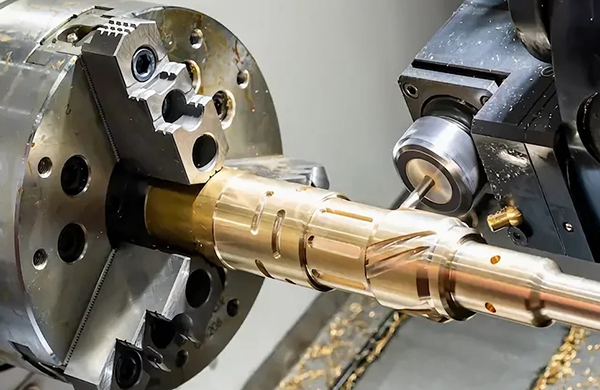
The factory’s 7,600 m² facility in Chang’an, Dongguan—the historic “Hardware and Mould Capital” of China—houses 127 precision‑peripheral units, including brand‑name 5‑axis CNC machining centers from Dema and Beijing Jingdiao, supported by 4‑axis/3‑axis machines, precision Swiss‑type lathes, wire EDM, and mirror‑spark EDM. This isn’t a collection of general‑purpose tools; it’s a curated assortment that can handle the tight internal radii, angled ports, and deep‑hole drilling typical of probe housings.
What truly sets this setup apart is the ability to engage precision 5‑axis CNC machining services in a single setup. With simultaneous 5‑axis motion, the machine can access all sides of a complex part without repositioning. This eliminates cumulative fixture errors and delivers the true geometric tolerances that ultrasound enclosures require—often within ±0.005 mm across entire production batches.
Beyond Machining: The One‑Stop Post‑Processing Advantage
GreatLight Metal doesn’t just cut metal; it provides a true end‑to‑end chain:
Rapid prototyping via SLA/SLS/SLM 3D printing for concept validation
Vacuum casting for low‑volume silicone‑like grips or overmolds
Sheet metal fabrication for shielding components
Die casting for high‑volume aluminum or zinc parts
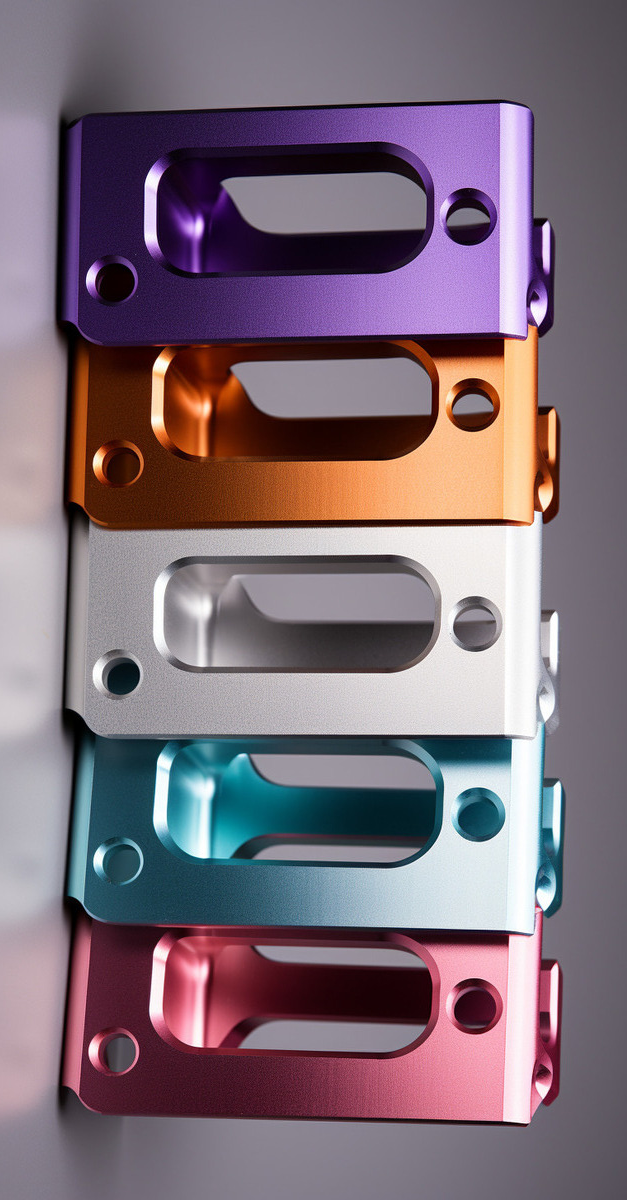
A full suite of finishing operations: anodizing, passivation, electropolishing, laser engraving, and cleanroom assembly
For ultrasound probe enclosures, this means you can receive a fully finished, serialized, and tested housing ready for final assembly—no secondary sourcing, no finger‑pointing between vendors.
Certifications That Actually Matter for Medical Devices
GreatLight Metal’s quality management is not just an office poster. The factory holds:
ISO 9001:2015 – general quality management
ISO 13485 – specific to medical device hardware production
IATF 16949 – automotive‑grade defect prevention that also translates to medical part consistency
ISO 27001 – data security for IP‑sensitive projects
Compliance with ISO 14001 for environmental management
In practice, these certifications enforce a system where every batch undergoes in‑house CMM inspection, surface roughness profilometry, and material cert validation. For an ultrasound probe enclosure, this could be the difference between a successful FDA submission and a costly recall.
A Closer Look: Ultrasound Probe Enclosure in Action
Consider a recent project from a medical device startup developing a next‑generation hand‑held ultrasound scanner. The enclosure design featured:
A monocoque aluminum housing with a wall thickness of just 0.8 mm in certain areas
A complex internal acoustic chamber that required mirror‑finish surfaces (Ra 0.2 µm)
Sealing grooves for O‑rings that had to hold IP67 rating after repeated autoclaving
Multiple tiny threaded inserts for PCB mounting
Initial prototyping with a generic CNC shop produced parts that met the nominal tolerance but failed in assembly: the thin walls distorted during anodizing, and the sealing surfaces leaked after 50 sterilization cycles. When GreatLight Metal took over, the engineering team immediately recommended a sequential manufacturing approach:
Design for Manufacturing (DFM) review identified stress concentrations and suggested slight radii adjustments to reduce distortion.
5‑axis machining from 7075‑T6 aluminum using diamond‑coated tools achieved the internal mirror finish directly from the machine, eliminating manual polishing.
Hard anodizing with precision masking protected critical sealing surfaces while achieving a durable, biocompatible outer layer.
Full‑batch CMM inspection on every part, with SPC data shared in real time, gave the client confidence that the process was stable.
The result: enclosures that passed 1,000+ autoclave cycles without degradation and were delivered as ready‑to‑install kits within four weeks—two weeks faster than the fragmented supplier route.
Efficiency Through Smart Manufacturing Integration
Time is always the hidden cost in medical device development. GreatLight Metal’s efficiency formula rests on three pillars:
Parallel processing: While CNC machines run, post‑processing steps like anodizing or laser marking can be set up simultaneously because all operations are under one roof.
Automated CAM and tool management: Pre‑optimized tool libraries for medical‑grade materials reduce programming time and prevent tool breakage.
Real‑time order visibility: A digital portal allows clients to monitor production status, inspection reports, and shipping logistics—eliminating the need for incessant email updates.
For ultrasound probe enclosures, this often means that a project that would take 6–8 weeks with a traditional supply chain can be completed in 3–4 weeks, without sacrificing quality.
How GreatLight Compares to Industry Alternatives
When evaluating precision partners for ultrasound probe enclosures, many professionals encounter a range of familiar names: Protocase, Xometry, RapidDirect, Fictiv, JLCCNC, and Protolabs Network. Each has its strengths, but the choice often comes down to the depth of capability and the level of engineering support.
| Supplier | Strengths | Potential Limitations for Complex Medical Enclosures |
|---|---|---|
| GreatLight Metal | In‑house 5‑axis, full post‑processing, ISO 13485, DFM expertise, one‑stop integration | Geared toward medium‑to‑high complexity; not a click‑and‑buy for very simple parts |
| Xometry | Massive network, quick online quoting, wide material selection | Quality varies by partner shop; limited process integration for finishing |
| RapidDirect | Good online platform, competent in 3‑axis/4‑axis | Less depth in medical‑certified post‑processing (passivation, autoclave testing) |
| Protolabs Network | Fast prototyping, global distribution | Better for initial prototypes; not optimized for production‑critical enclosures with strict regulatory requirements |
| Fictiv | Transparent pricing, good UI | Dependent on partner quality; less control over consistent medical‑grade finishes |
| JLCCNC | Attractive pricing for simpler parts | Limited in simultaneous 5‑axis complexity and medical‑specific certifications |
For an ultrasound probe enclosure where one defective part can stall an entire product launch, the integrated, certified approach of GreatLight Metal significantly reduces risk. You get engineering conversation, not just an online quote form.
A Decade of Building Trust in Precision Manufacturing
Why does a manufacturing plant in Dongguan end up as the preferred partner for medical device brands across North America and Europe? The story of GreatLight Metal offers an answer.
Founded in 2011 at the height of China’s manufacturing scale‑up era, the founders deliberately chose to ignore the lure of high‑volume, low‑margin commodity work. Instead, they invested in people, certifications, and a complete process chain that could handle the toughest jobs that others rejected. Over the years, this focus attracted engineering‑driven clients—automotive electric‑vehicle OEMs, aerospace component developers, and medical device innovators—who needed more than just machined metal; they needed a manufacturing partner capable of guarding their intellectual property while delivering absolute repeatability.
Today, with over 150 skilled staff and three wholly‑owned manufacturing plants, GreatLight Metal has become a silent enabler of products you might use every day, from surgical robots to autonomous vehicle sensors. Its commitment to IATF 16949 and ISO 13485 isn’t just about paperwork—it’s about a culture that treats every batch like a life‑critical component, because often it is.
Solving the Seven Critical Pain Points of Precision Machining
If you’ve ever been burned by a machining supplier, you’ll recognize these pain points—and understand why GreatLight Metal’s approach works:
Precision Black Hole: The gap between promised and delivered tolerance is closed by in‑house calibration labs, temperature‑controlled machining, and real‑time probing on every machine.
Surface Finish Inconsistency: Instead of guesswork, optimized toolpaths and vibration‑dampened fixtures achieve repeatable finishes down to Ra 0.2 µm.
Material Unpredictability: A dedicated materials engineering team advises on machining parameters for 316L, titanium, PEEK, and other tricky materials.
Supplier Coordination Chaos: One‑stop service removes the need to manage multiple vendors and interpret conflicting quality reports.
Prototype‑to‑Production Disconnect: The same machines, same team, and same process are used for prototypes and production, ensuring scalability without painful requalification.
IP Security Worries: ISO 27001 data management and strict physical security protocols protect your designs—critical for ultrasound probes where competitive advantage is razor‑thin.
Regulatory Documentation Gaps: Full material certs, process validation documentation, and batch inspection reports are standard deliverables, not a costly afterthought.
Conclusion: The Next Step for Ultrasound Probe Enclosure Precision CNC
As medical imaging continues to miniaturize and become more accessible, the demand for flawlessly manufactured ultrasound probe enclosures will only grow. Choosing a manufacturing partner involves more than comparing prices; it’s about finding a team that understands the physics of machining, the nuances of medical regulations, and the urgency of your development timeline.
For your next Ultrasound Probe Enclosure Precision CNC project, align yourself with a factory where precision isn’t a marketing slogan but a daily practice—powered by an integrated shop floor, robust certifications, and a genuine engineering partnership. GreatLight CNC Machining Factory delivers exactly that: precision without compromise, supported by a decade of trustworthy execution.


![[访谈] RAPID + TCT 2024:人工智能对 3D 打印的价值](https://print-ing.com/wp-content/uploads/2024/07/INTERVIEW-60x60.jpeg "[访谈] RAPID + TCT 2024:人工智能对 3D 打印的价值 9")




发表回复
要发表评论,您必须先登录。