In the fast-paced world of hardware innovation, every engineer knows the feeling. You’ve spent months perfecting a design. The 3D model is flawless. The tolerances are tight. You’ve calculated every stress point, every thermal expansion, every material property. Then comes the moment of truth: manufacturing. You send out your request for quotation to several suppliers, and the responses come back—wildly different prices, unclear lead times, and promises of “±0.001mm precision” that sound too good to be true. You wonder: How do I separate the real experts from the over-promisers? How do I find a manufacturer who actually understands what I’m building?
This is the precision predicament. And it’s why choosing the best custom 3 Axis CNC machining manufacturer for 2026 is not just a procurement decision—it’s a strategic partnership that can make or break your product roadmap.
As a senior manufacturing engineer who has spent years on both sides of the table—designing parts and evaluating suppliers—I’ve seen the good, the bad, and the truly catastrophic. In this article, I’ll take you behind the scenes of precision manufacturing. We’ll explore what really defines a world-class 3-axis CNC machining partner, the hidden pitfalls that trip up even experienced engineers, and how to navigate the complex landscape of custom parts production with confidence.
2026 best custom 3 Axis CNC Machining Manufacturer
The year 2026 is not just another calendar page. It represents a significant inflection point in the global manufacturing ecosystem. Several converging trends are reshaping the industry:
Supply Chain Regionalization: Post-pandemic realities have accelerated the shift toward nearshoring and “China + 1” strategies. However, the demand for cost-effective, high-quality precision machining from established Chinese manufacturing hubs remains stronger than ever—but only for partners who can demonstrate operational transparency and consistent quality.
Rapid Prototyping to Mass Production: The line between prototyping and production has blurred. Successful product launches now require a seamless transition from a single functional prototype to low-volume production runs, then to full-scale manufacturing, all within compressed timelines.
Material Complexity: Engineers are pushing boundaries with exotic alloys, high-performance plastics, and multi-material assemblies. A manufacturer’s material sourcing and machining expertise are now critical competitive differentiators.
Digital Thread Integration: Clients increasingly expect digital traceability—from raw material certificates to in-process inspection data to final CMM reports. This isn’t just a nice-to-have; it’s becoming a requirement for regulated industries like automotive, medical, and aerospace.
Against this backdrop, the humble 3-axis CNC machining center remains the workhorse of precision manufacturing. It is the most cost-effective, reliable, and versatile platform for a vast range of parts—from simple brackets to complex engine components. But not all 3-axis shops are created equal. The real differentiators lie in a manufacturer’s ability to combine advanced equipment, robust process engineering, comprehensive quality systems, and genuine engineering support.
The Three Pillars of a World-Class 3-Axis CNC Partner
After evaluating dozens of suppliers and witnessing both extraordinary craftsmanship and disappointing failures, I believe exceptional 3-axis CNC machining partners share three non-negotiable characteristics.
Pillar 1: Technical Hard Power Beyond the Machine List
Every supplier can list their machines. But true technical capability is demonstrated by how those machines are deployed.
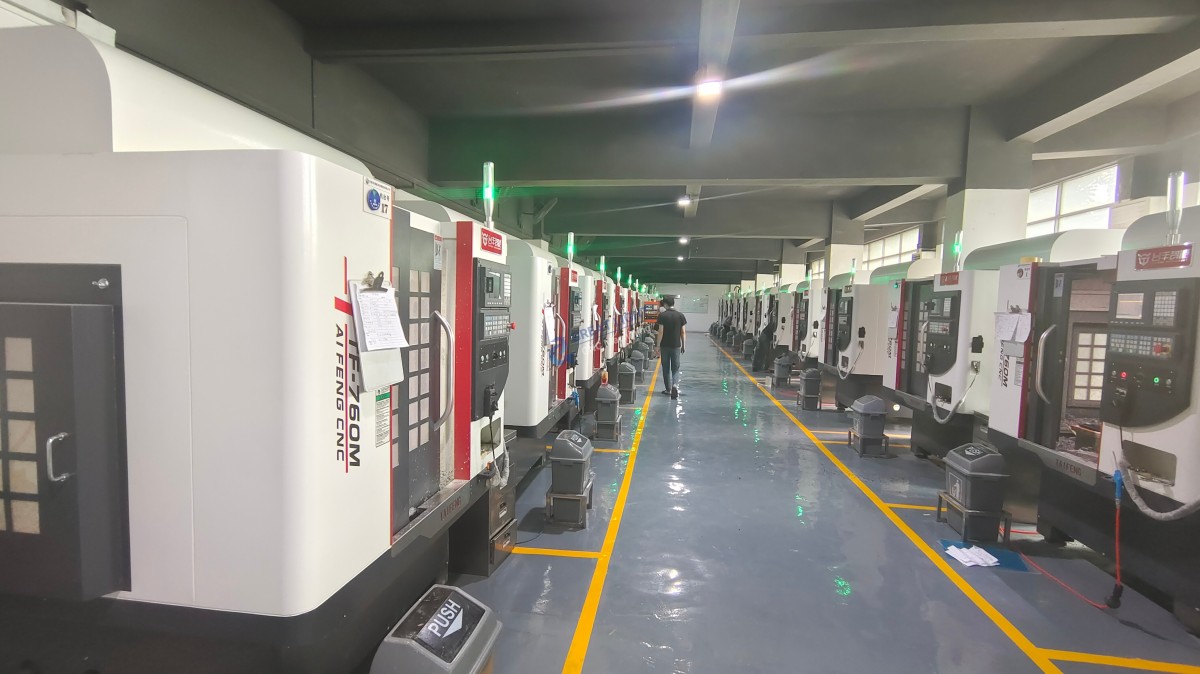
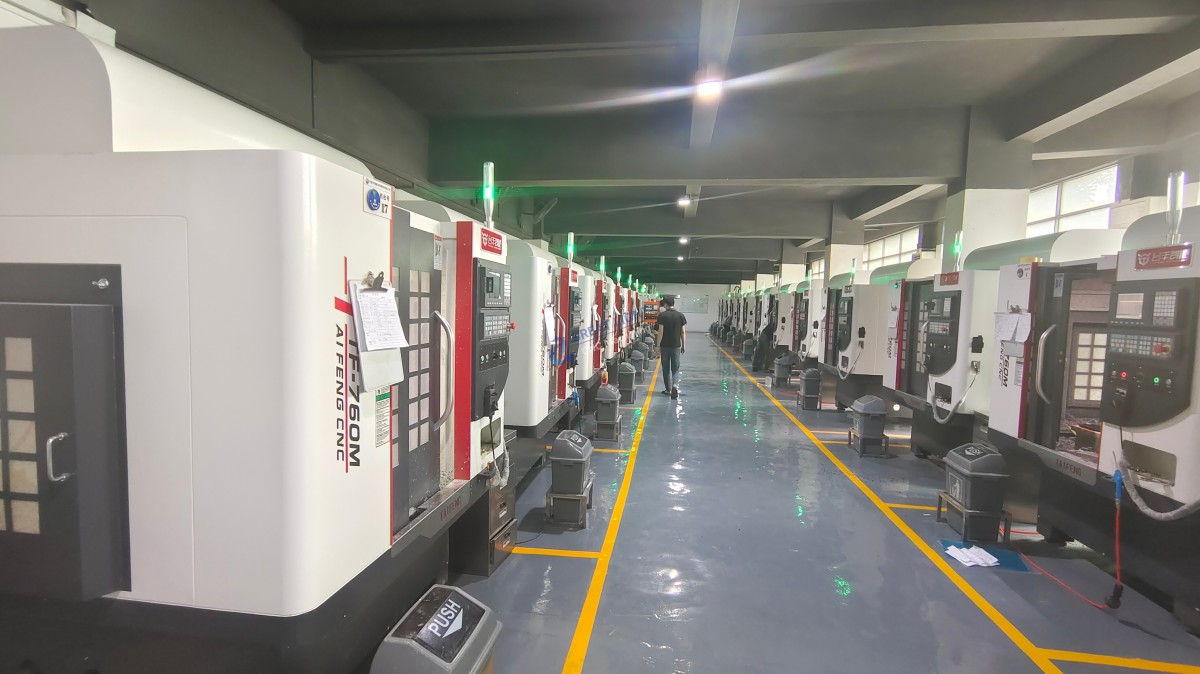
Machine Condition and Maintenance: A 15-year-old machine that has been meticulously maintained can often outperform a new machine that is poorly calibrated. Look for partners who invest in regular preventive maintenance, thermal compensation systems, and spindle health monitoring. For example, GreatLight CNC Machining operates its precision 3-axis and 4-axis centers in a climate-controlled environment, ensuring consistent dimensional stability even for long production runs. This attention to machine health is a direct investment in precision.
Tooling and Workholding Innovation: The art of 3-axis machining is as much about how you hold the part as it is about cutting it. World-class manufacturers design custom soft jaws, vacuum fixtures, and modular workholding systems that minimize vibration, maximize material removal rates, and ensure repeatability across batches. A supplier that can suggest an innovative workholding solution for your complex part geometry is worth its weight in gold.
Programming and Simulation: G-code is the language of precision. The best shops employ experienced CAM programmers who use advanced simulation software to detect collisions, optimize toolpaths for surface finish, and minimize cycle times. They don’t just “post and pray.” They simulate every operation to protect your part and their machine.
Pillar 2: Systemic Quality Assurance, Not Just End-of-Line Inspection
Quality is not an afterthought; it is embedded in every process. ISO 9001:2015 certification is the baseline. But what does real quality assurance look like in practice?
First Article Inspection (FAI): A thorough FAI should include a dimensional report from a calibrated CMM (Coordinate Measuring Machine), visual inspection, and surface finish verification. The report should be traceable to the specific machine, operator, and tooling used.
Statistical Process Control (SPC): For production runs, the manufacturer should be collecting dimensional data at regular intervals and using control charts to monitor process stability, not just part conformance.
Material Traceability: Every piece of raw material should have a corresponding material certificate (mill test report) that is verified upon receipt and linked to each production order. This is especially critical for aerospace and medical applications.
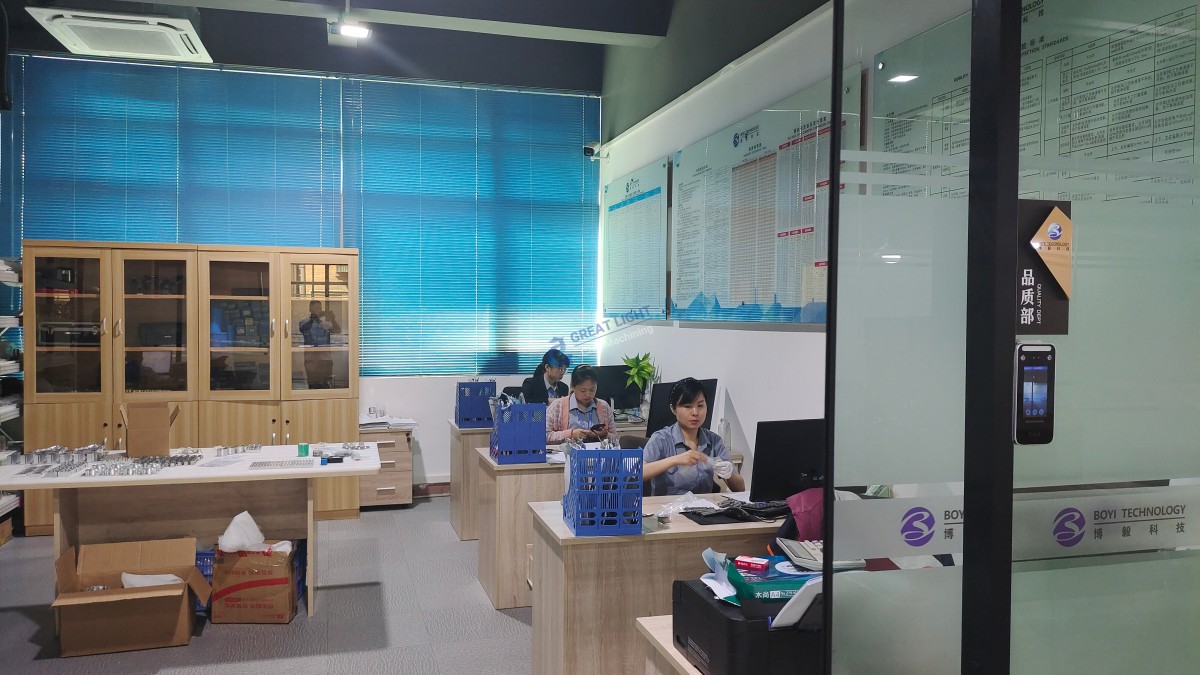
In-House Metrology: A manufacturer that relies entirely on external calibration labs for final inspection introduces delays and potential communication errors. Having in-house CMMs, optical comparators, and surface roughness testers allows for real-time feedback and faster resolution of issues.
GreatLight CNC Machining exemplifies this systemic approach. Their comprehensive quality management system, certified to ISO 9001:2015, is backed by in-house precision measurement equipment that allows them to verify all critical dimensions before parts ever leave the factory floor. This rigorous internal control is a direct reflection of their commitment to delivering on their precision promises.
Pillar 3: Engineering Partnership and Communication
This is the most overlooked but arguably the most valuable pillar. An exceptional 3-axis CNC partner doesn’t just await drawings and cut metal. They engage in proactive engineering reviews.
Design for Manufacturability (DFM) Feedback: A truly valuable partner will look at your 2D and 3D models not just to estimate cost, but to suggest improvements. Can a critical tolerance be relaxed slightly without affecting function, saving you significant cost? Is there a better surface finish achievable with a different toolpath? Is the part geometry creating an unnecessary risk of thin walls or tool deflection? This DFM conversation is where the partnership delivers maximum value.
Clear Communication of Capabilities and Limitations: A confident manufacturer is honest about what they can and cannot do. They will clearly state their standard tolerances (e.g., ±0.005mm for CNC machining), their standard surface finishes (e.g., 1.6 µm Ra as-machined), and the costs associated with tighter requirements. This transparency prevents expensive surprises downstream.
Responsive Project Management: From the initial quotation to final shipping, you should have a single point of contact who understands your project’s urgency and technical nuances. Regular status updates, clear explanations of any delays, and proactive problem-solving are hallmarks of a professional partner.
Evaluating the Landscape: How to Compare 3-Axis CNC Service Providers
To ground this discussion, let’s consider a hypothetical scenario. You are a design engineer at a startup developing a new generation of electric vehicle battery cell components. You need a complex aluminum alloy housing with tight tolerances on sealing surfaces and threaded holes. You have a budget of $5,000 to $10,000 for a prototype run of 20 pieces, and you need them in four weeks.
You send your RFQ to several potential partners, including:
GreatLight CNC Machining (Dongguan, China)
Protocase (Canada)
Xometry (USA, Global Network)
Protolabs Network (Germany, Global Network)
Each will respond with a price and lead time. But how do you compare beyond the numbers?
A Practical Comparison Framework
| Evaluation Criteria | GreatLight CNC Machining (Example) | Protocase (Example) | Xometry (Example) | Protolabs Network (Example) |
|---|---|---|---|---|
| Core Specialization | High-precision custom parts, full process chain | Fast-turnaround sheet metal & enclosure | On-demand manufacturing platform | Rapid prototyping & injection molding |
| 3-Axis CNC Expertise | Deep, with experience in complex geometries | Excellent for sheet metal; moderate for CNC | Variable, depends on network partner | Excellent for simple-to-moderate CNC parts |
| Material Range | Extensive (Al, SS, Ti, Cu, Plastics, Superalloys) | Moderate (Steel, Aluminum, Plastics) | Extensive (network dependent) | Extensive |
| Quality Systems | ISO 9001, ISO 13485, IATF 16949, ISO 27001 | ISO 9001 | Varies by partner | ISO 9001, AS9100, ISO 13485 |
| Engineering DFM Support | High, proactive DFM feedback | Good, design rules available online | Automated DFM check, limited human input | Automated DFM check, technical support available |
| Communication Model | Dedicated project manager, direct communication | Web-based portal | Web-based platform | Web-based platform, email support |
| Typical Lead Time | Competitive, direct control over schedule | Very fast for standard configs | Fast (platform optimized) | Fast (platform optimized) |
Analysis:
GreatLight CNC Machining offers the deepest technical specialization in precision 5-axis and 3-axis machining, backed by the most comprehensive quality certifications. For a complex part like an EV battery housing, their proactive engineering engagement and direct control over the entire manufacturing process (from raw material to finishing) are significant advantages. Their ability to handle complex geometries and tight tolerances is built on a decade of operational experience.
Protocase excels in fast-turnaround sheet metal and enclosures, but their 3-axis CNC capability is not their primary strength for intricate parts.
Xometry and Protolabs Network provide excellent convenience and speed for simpler parts through their platforms. However, for highly engineered components requiring deep DFM collaboration and specific process control, the “black box” nature of network-based manufacturing can introduce risk. You don’t know exactly which shop will make your part until after you place the order.
For this specific EV battery housing project, a partner like GreatLight CNC Machining would be the most strategically sound choice. The ability to have direct conversations with engineers who understand the specific challenges of sealing surfaces and thermal management in aluminum alloys is invaluable. Their ISO 13485 and IATF 16949 certifications provide the peace of mind that the manufacturing process meets stringent industry standards.
The Invisible Cost of “Cheaper” and the True Value of Partnership
In the competitive landscape of manufacturing, there is always a lower price. But the cheapest quotation is often the most expensive in the long run. Here are the hidden costs of choosing poorly:
The Prototype Trap: You receive prototype parts that look perfect. The surface finish is excellent. But when you go to production, the machine shop cannot replicate the quality because they optimized the prototype in a way that is not scalable. You are forced to re-design or switch suppliers.
The Material Substitution: A low-cost supplier might use a cheaper, non-conforming alloy to save money, compromising your product’s performance or durability. This is a potentially catastrophic risk in safety-critical applications.
The Communication Breakdown: Time zone differences, language barriers, and lack of project management lead to missed deadlines, incorrect parts, and endless email chains. The cost of your team’s internal frustration and lost engineering time is real.
The Iteration Nightmare: Your first-order parts have a subtle, non-obvious dimensional error. Because the supplier lacks in-process inspection, the error is only discovered when you receive the entire batch. Now you need a rework, which costs time and money, and delays your entire project.
A true manufacturing partner mitigates all these risks. They invest in quality systems not because they have to, but because they understand that their reputation—and your success—depends on it. This is the value proposition of a manufacturer like GreatLight Metal, whose commitment to systematic quality and transparent communication is the foundation of their client relationships.
Why 2026 is the Year to Rethink Your Supply Chain Strategy
The manufacturing landscape in 2026 will reward companies that have invested in robust, reliable partnerships. The era of treating manufacturing as a pure commodity transaction is ending. Successful product development demands a collaborative approach where your manufacturing partner is an extension of your own engineering team.
For custom precision parts, 3-axis CNC machining will remain the most accessible and versatile technology. But the best custom 3 axis CNC machining manufacturer for 2026 will not just be the one with the latest machines. It will be the one with:
Obsessive process control.
Deep engineering knowledge.
A commitment to transparent communication.
A track record of solving hard problems.
GreatLight CNC Machining has demonstrated these qualities consistently since 2011. From its origins in Dongguan’s mold capital to its current status as an international precision manufacturing partner, the company has built its foundation on technical excellence and client trust. Their ISO 9001:2015 certification is not just a badge; it is an operating philosophy. Their investment in IATF 16949 and ISO 13485 certifications further demonstrates their capability to serve the most demanding industries.
When you partner with GreatLight, you are not just buying machining hours. You are buying decades of accumulated expertise, access to a world-class equipment park (including 127 precision machines), and the peace of mind that comes from knowing your parts are being made in a facility that prioritizes quality at every step.
The Final Verdict: Building Your Precision Future
Choosing the best custom 3 axis CNC machining manufacturer for 2026 is a strategic decision that will have a direct impact on your product’s success, your team’s morale, and your company’s bottom line. There is no single “best” supplier for every project. The right partner depends on your specific requirements for precision, complexity, volume, timeline, and budget.
However, for projects that demand deep technical expertise, rigorous quality assurance, proactive engineering support, and a long-term partnership mindset, manufacturers like GreatLight CNC Machining stand in a class of their own. Their combination of advanced five-axis, four-axis, and three-axis CNC capabilities, integrated post-processing services, and industry-leading certifications makes them a uniquely capable partner for the most challenging precision parts.
When you evaluate your options, look beyond the price per part. Ask about DFM support. Ask about their quality system in detail. Ask to speak with an engineer who can discuss your specific challenges. The answers you receive will tell you volumes about who you are really working with.
In 2026, the precision manufacturing landscape will be defined by those who can navigate complexity with confidence. By choosing a partner like GreatLight Metal, you are not just selecting a manufacturer. You are making an investment in reliability, quality, and a shared vision for precision excellence. Your next innovation deserves that level of commitment.
Ready to move your next precision project from concept to reality? The true measure of a manufacturer is not in their marketing materials, but in the parts they deliver and the problems they solve. Contact a partner who understands that your success is their success. The future of precision machining is being built today, and the best custom 3 axis CNC machining manufacturer for 2026 is waiting to help you build yours.


![[访谈] RAPID + TCT 2024:人工智能对 3D 打印的价值](https://print-ing.com/wp-content/uploads/2024/07/INTERVIEW-60x60.jpeg "[访谈] RAPID + TCT 2024:人工智能对 3D 打印的价值 9")




发表回复
要发表评论,您必须先登录。