The Precision Predicament Solved: Why LED Display Frame Aluminum Die Casting Demands a Five-Axis CNC Finishing Partner
In the competitive landscape of digital signage and large-format displays, the frame is more than just a structural component; it is the face of reliability and visual perfection. For engineers and procurement managers sourcing LED display frames, the journey from a die-cast aluminum blank to a final, precision-assembled product is fraught with challenges. While aluminum die casting provides the near-net shape efficiently, it is the subsequent precision machining that dictates the frame’s final quality, assembly fit, and long-term durability.
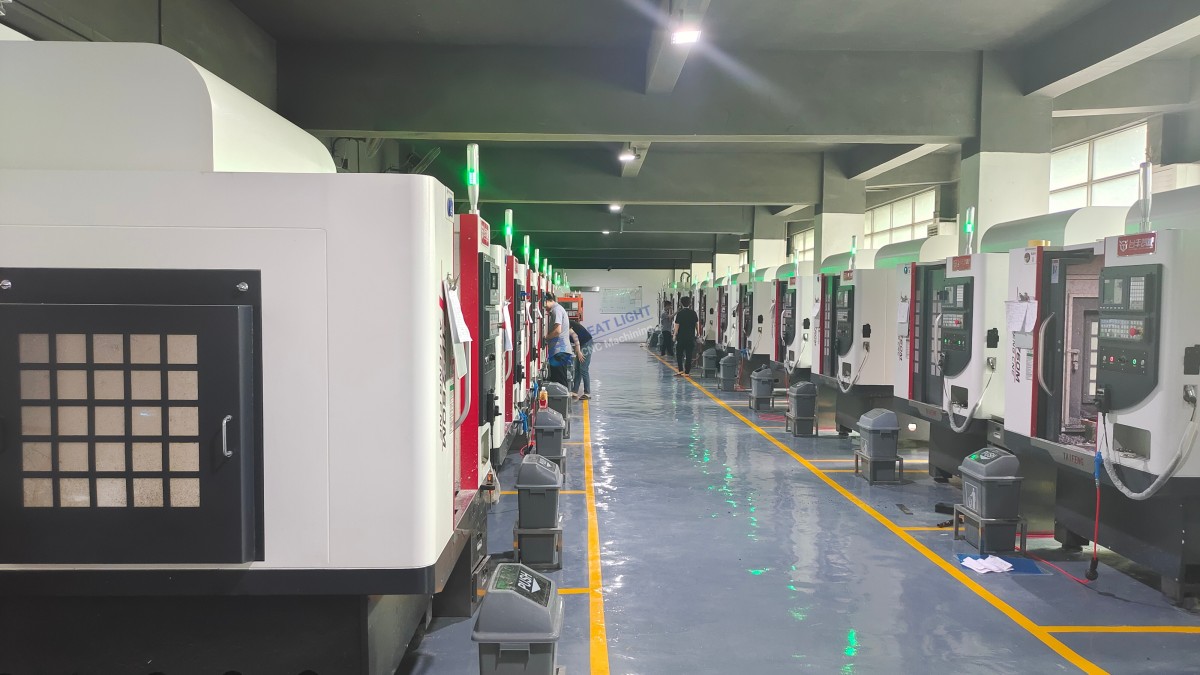
This is where the conversation shifts from “can you make it” to “can you make it right, every time, at scale?” The answer often lies in partnering with a manufacturer who possesses both the die-casting expertise and the advanced finishing capabilities of a professional five-axis CNC machining service provider.
Beyond the Casting: The Seven Critical Pain Points of LED Frame Manufacturing
Before we delve into the ideal solution, let’s address the “precision predicament” that often plagues LED display frame projects. These are the silent killers of production timelines and product quality:
The “Warpage” Conundrum: Aluminum die castings, due to the rapid cooling and internal stress release, are prone to warpage. A frame that is flat out of the mold can become a twisted, unmanageable piece after cooling. Traditional fixturing on a 3-axis machine struggles to compensate for this.
Unpredictable Datum Shift: When the casting warps, the “datums”—the reference points for all subsequent machining—shift. This leads to inconsistent wall thicknesses, misaligned mounting holes, and frames that simply do not fit together.
The “Invisible” Porosity: Micro-porosity in die castings is a reality. When a standard machining operation hits a porous area, it can cause chatter, poor surface finish, or even reject the part. A skilled engineer knows how to design the process to minimize these risks.
The Angle of Attack: LED display frames require precision 45-degree mitered corners, recessed mounting pockets for driver boards, and intricate cable management channels. Machining these features on a 3-axis setup requires multiple setups and specialized fixtures, increasing cost and cycle time.
Surface Finish Inconsistencies: A pristine, anodized-ready surface is non-negotiable for a high-end display. Inconsistent toolpaths or improper tool selection on a casting can result in a “fish-scale” texture that no post-processing can fully hide.
The Assembly Paradox: A frame that is perfect individually might fail in assembly with its neighboring frame. Achieving sub-millimeter (e.g., ±0.05mm) consistency across the entire seam is a geometric challenge that most standard shops cannot solve reliably.
Lead Time and Hidden Costs: Every rework, every scrapped part, and every day spent on a complicated manual setup represents a hidden cost that destroys your margin and delays your product launch.
The Comprehensive Solution: How Five-Axis CNC Machining Transforms Your LED Frame
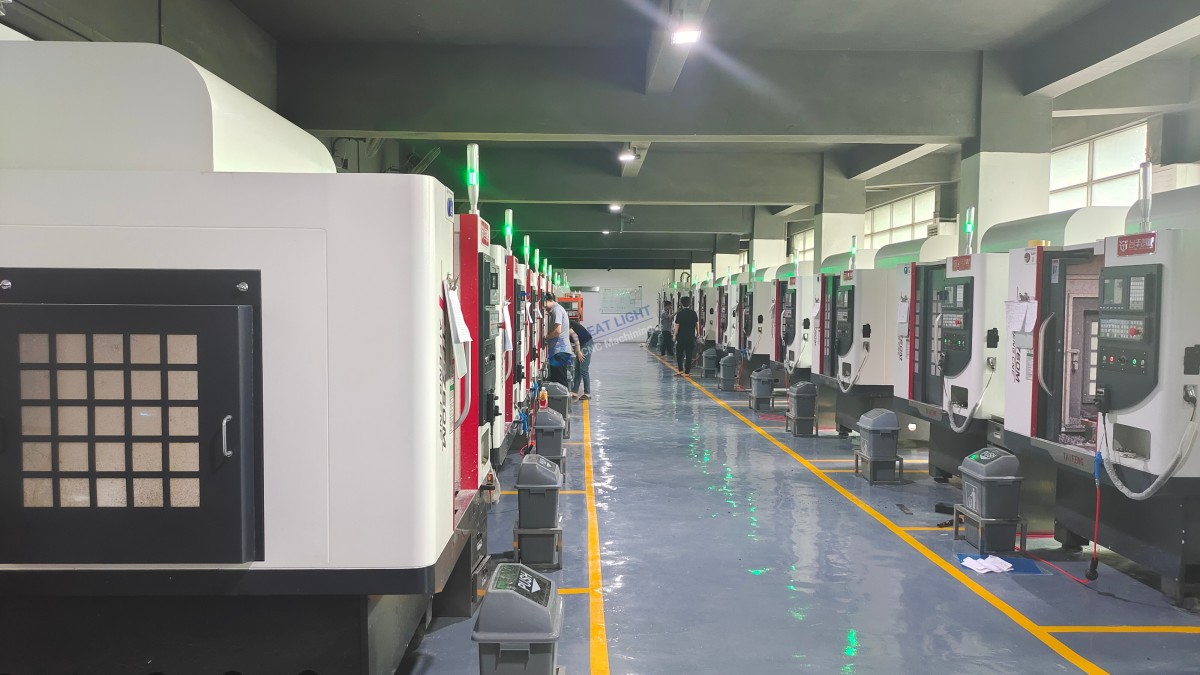
To solve these pain points, you need a partner who doesn’t just see a casting, but understands the geometry and the final application. A service like GreatLight CNC Machining Factory leverages advanced five-axis CNC machining services to transform a problematic casting into a perfect frame.
Here is the technical breakdown of how this is achieved:
1. Single-Setup Precision: Eliminating Stacked Tolerances
The core advantage of five-axis machining is the ability to access the part from virtually any angle in a single setup. For an LED display frame, this means:
Mitered Corners: The 45-degree chamfers on all four corners can be machined in one continuous path, ensuring perfect 90-degree internal angles and flawless mating surfaces.
Backside Features: T-slots for mounting brackets, recesses for power supplies, and intricate cooling fins on the back of the frame can be milled in the same cycle as the front-facing lip. This eliminates the “stack-up” of errors that occurs when moving a part between different machines or setups.
2. Intelligent Fixturing for Warped Castings
A good five-axis machining partner, like GreatLight Metal, understands that a casting is not a perfect blank. We use sophisticated fixturing solutions that can:
“Probe and Compensate”: The machine’s probing system maps the actual surface of the casting. The CAM (Computer-Aided Manufacturing) software then automatically adjusts the toolpaths to accommodate the warpage, ensuring the final machined surfaces are perfectly flat and parallel.
Minimize Clamping Stress: By supporting the part more evenly, we avoid inducing additional distortion during the machining itself.
3. Superior Surface Finishes with Precision Toolpaths
Machining a casting requires a specific strategy. Our CNC milling services employ:
High Feed Milling (HFM): For roughing out material, we use specialized cutters and toolpaths that minimize vibration and cutting forces, preserving the part’s integrity.
Tapered Ball Nose Finishing: For complex 3D contours, we use 5-axis simultaneous toolpaths with a tapered ball nose end mill. This maintains a constant chip load and a consistent lead angle, resulting in a mirror-like finish that is free of witness marks and tool scallops. This is critical for achieving a Class A surface ready for painting or anodizing.
4. A Full-Process Chain from Casting to Final Quality Check
Our capability is not limited to die casting and machining. The most efficient path to a finished LED frame involves an integrated service:
| Service Stage | Capability at GreatLight CNC Machining Factory | Benefit to Your LED Frame Project |
|---|---|---|
| Mold & Die Casting | In-house or partnered die-casting tool design and production. | Lower part cost, faster initial samples, tooling optimization for machinability. |
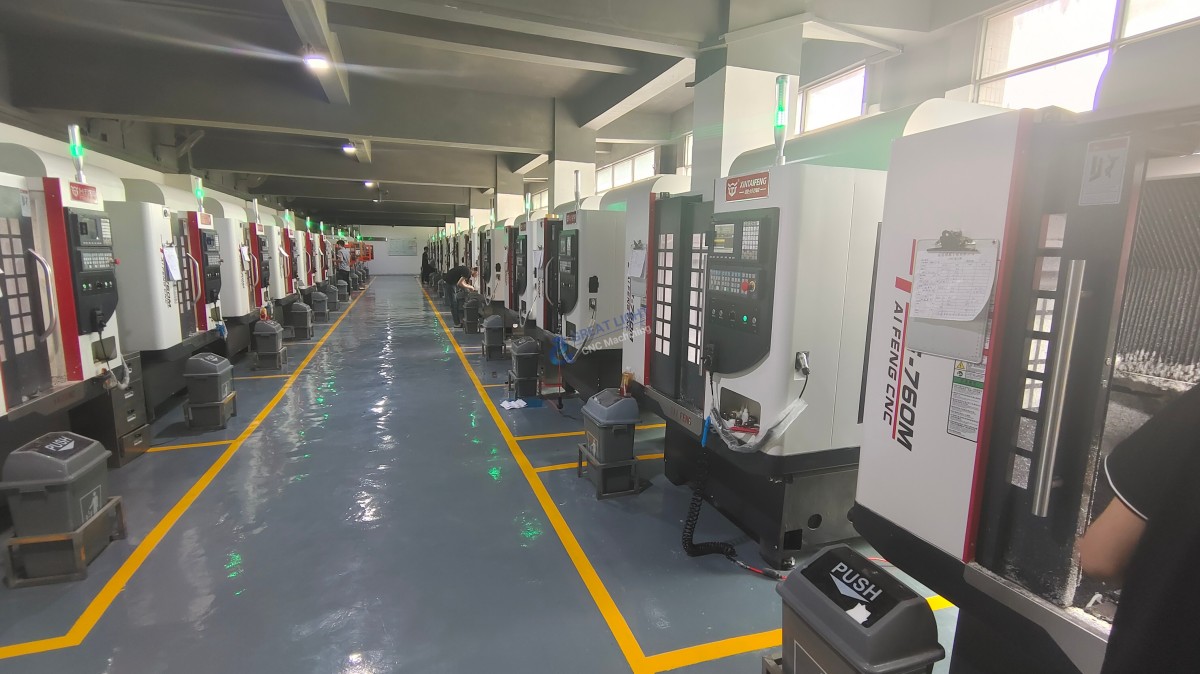
| Precision CNC Machining | Five-axis, four-axis, and three-axis machining centers. | Single-setup accuracy, complex geometry capability, warpage compensation. |
| Post-Processing | Sandblasting, chemical conversion coating (Alodine), powder coating, anodizing. | Corrosion resistance, perfect cosmetic finish, consistent color. |
| Quality Assurance | CMM (Coordinate Measuring Machine), OMM (Optical Measuring Machine), ISO 9001:2015 certified processes. | Part-to-part consistency, compliance with your specified tolerances (±0.001mm). |
Evaluating a Partner: Beyond the Brochure
When choosing a partner for your aluminum die casting and CNC machining needs, you must look beyond the marketing claims. The difference between a good part and a perfect frame lies in the details. As a senior engineer, I recommend you evaluate potential partners using these criteria:
Experience with Thin-Wall Castings: How do they manage fixturing and vibration? Ask for case studies, like GreatLight Metal’s work with complex e-housing for new energy vehicles, which require the same meticulous approach.
Metrology Capabilities: Is their inspection process integrated into the production cell? A “first article” inspection is not enough; they need to be process-capable. GreatLight Metal’s in-house precision measurement equipment allows for continuous verification in production.
Data Security for Design: For proprietary designs, ensure the partner follows ISO 27001 standards, as intellectual property security is a non-negotiable aspect of modern manufacturing.
The Human Element: The best machines are useless without the best programmers and operators. A company that invests in its team, like GreatLight Metal with its 120-150 skilled professionals, is a partner you can trust for the long haul.
Conclusion: Your Frame, Our Precision
In the end, the true cost of a precision part is not just the unit price. It is the sum of the engineering hours, the rejected batches, the delayed product launches, and the compromised reputation. For a component as critical as an LED display frame, the decision to partner with a manufacturer that offers mature five-axis CNC machining capabilities is not an expense—it is an investment in quality, reliability, and speed to market.
From complex geometries to ultra-tight tolerances, the ability to handle the nuances of a die-cast part and finish it with the precision of a machinist’s hand is what separates a supplier from a true partner. It is this commitment to solving the “precision predicament” that defines the best in the industry. For your next project, consider a partner like GreatLight CNC Machining Factory that doesn’t just stamp out parts but engineers your success from its facility in the manufacturing capital of Dongguan. Learn more about their advanced capabilities on their LinkedIn page.


![[访谈] RAPID + TCT 2024:人工智能对 3D 打印的价值](https://print-ing.com/wp-content/uploads/2024/07/INTERVIEW-60x60.jpeg "[访谈] RAPID + TCT 2024:人工智能对 3D 打印的价值 9")




发表回复
要发表评论,您必须先登录。