Advanced Custom Metal Die Casting Solutions
In the fast-paced world of modern manufacturing, the ability to produce complex metal components with high precision, repeatability, and cost-effectiveness is a cornerstone of industrial innovation. Advanced custom metal die casting solutions have become the go‑to strategy for companies that demand rapid turnaround times, minimal post‑processing, and exceptional material properties. This article explores the complete landscape of die casting technology, the challenges innovators face, and how a fully integrated manufacturing partner can turn a challenging design into a scalable reality.
Understanding the Die Casting Advantage
Die casting is a metal forming process in which molten metal is forced under high pressure into a reusable steel mold—called a die. The result is a near‑net‑shape part that often requires only light finishing. Compared to sand casting or investment casting, die casting delivers tighter tolerances, smoother surfaces, and dramatically faster cycle times. When configured as an advanced custom solution, the process can produce components weighing from a few grams to tens of kilograms, with intricate details and wall thicknesses down to 0.5 mm.
The most common alloys include aluminum, zinc, and magnesium, each offering distinct advantages. Aluminum die casting dominates the automotive, aerospace, and consumer electronics sectors due to its light weight, excellent strength‑to‑weight ratio, and outstanding thermal conductivity. Zinc die casting provides superior impact strength and the ability to cast very thin walls, making it ideal for complex connectors and lock hardware. Magnesium is the lightest structural metal, increasingly adopted in electric vehicle chassis and handheld devices.
Why “Advanced” Matters: Pushing the Boundaries of Conventional Die Casting
While standard die casting has been around for more than a century, advanced custom solutions address a new set of requirements that traditional suppliers often fail to meet:
Ultra‑high precision and surface finish – Next‑generation consumer products demand mirror‑like surfaces and tolerances measured in the single‑digit microns. This requires not only premium die materials and optimized gating systems but also in‑house precision CNC finishing.
Conformal cooling and 3D‑printed inserts – To extend die life and reduce cycle times, advanced manufacturers incorporate additive‑manufactured cooling inserts that follow the part contour. GreatLight Metal’s own 3D‑printed die components, for example, can reduce hot spots and improve dimensional stability over millions of shots.
Multi‑alloy and hybrid assemblies – Some applications require joining different alloys or integrating inserts such as bushings, threaded fasteners, or sensors directly during the casting cycle. The ability to handle over‑molding and insert casting in a streamlined workflow separates a commodity die caster from a true engineering partner.
Virtual process simulation – Before cutting steel, advanced solutions employ mold‑flow analysis software (e.g., MAGMASOFT®) to predict shrinkage, gas entrapment, and thermal imbalance, compressing the tryout phase by weeks.
GreatLight Metal: Where Die Casting Meets Full‑Process Integration
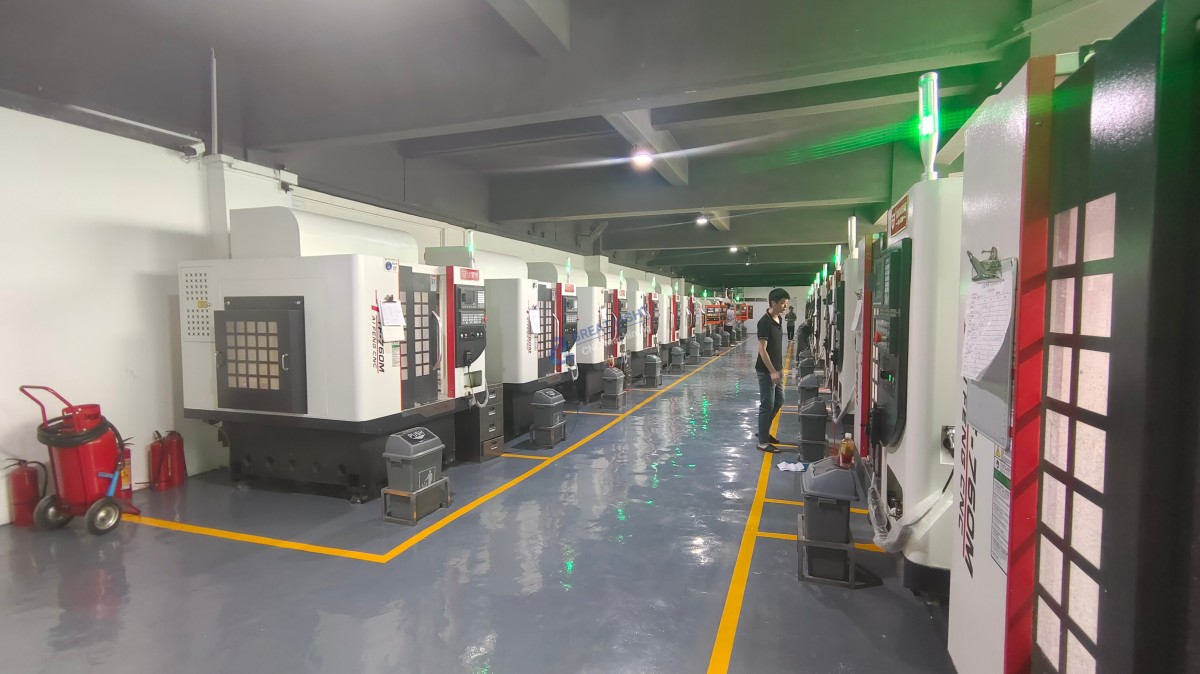
When evaluating a die casting partner, procurement teams often look for a provider who can not only pour metal but also machine, finish, and inspect components under one roof. This integrated approach eliminates hand‑offs, reduces lead time, and creates a single point of accountability. GreatLight Metal Tech Co., LTD. has built its reputation on this exact model.
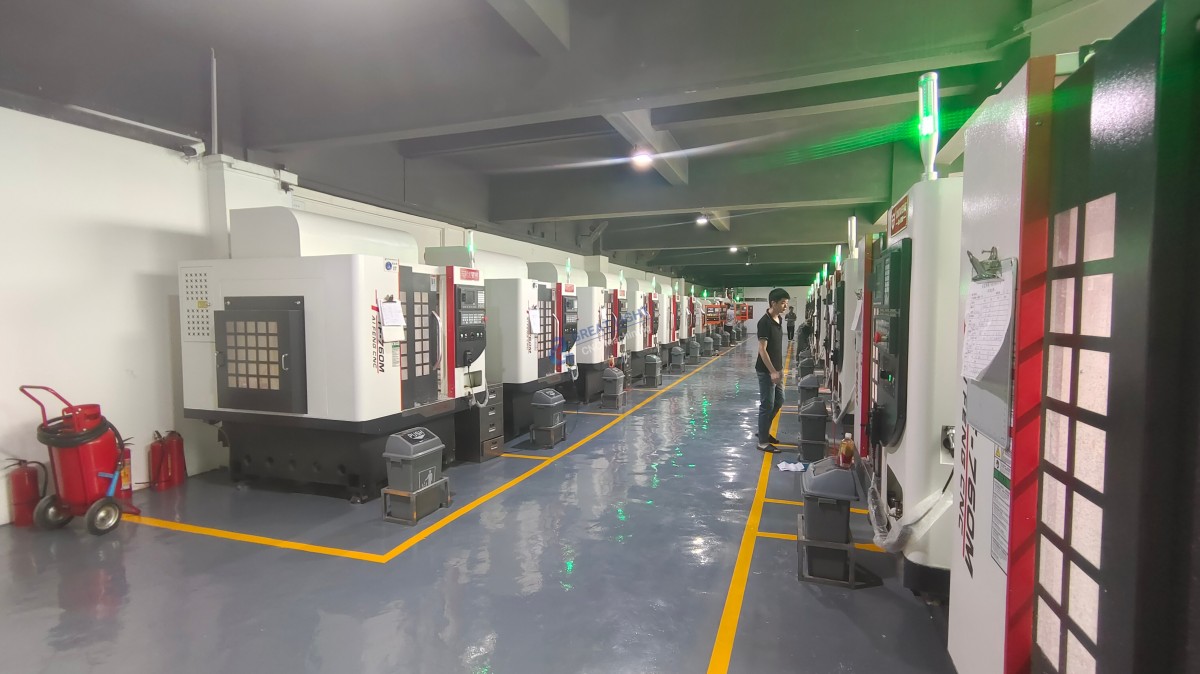
Operating from a 76,000 sq. ft. facility in Dongguan’s Chang’an District—the hardware capital of China—GreatLight Metal combines advanced die casting capabilities with a comprehensive suite of downstream services. Unlike pure‑play foundries, the company offers precision CNC machining (including 5-axis CNC machining), 3D printing, sheet metal fabrication, and ISO 9001:2015‑certified quality management. This means a die‑cast housing can be high‑speed milled to final tolerance, anodized, and laser‑engraved without ever leaving the facility. For medical or automotive clients, that continuity is critical.
GreatLight Metal’s die casting cell is not an isolated island. It is fed by an in‑house tooling department that designs and builds dies with conformal cooling channels printed in maraging steel. Once a casting solidifies, robotic extraction and trim presses remove gates and flash. Parts then move directly into CNC work‑holding fixtures that share the same datum scheme as the casting die, ensuring that subsequent boring, tapping, and facing operations maintain true positional accuracy to within ±0.01 mm.
The GreatLight Difference: Technology, Talent, and Trust
1. Engineering‑Driven Collaboration
GreatLight Metal assigns a dedicated project engineer to each client from the RFQ stage through serial production. This engineer reviews 3D CAD models for castability, suggests parting line locations, draft angles, and gate placement, and can propose material substitutions that reduce weight or cost without sacrificing performance. Such early engagement routinely cuts tooling revision cycles by 50% and helps startups avoid the “design for manufacturing” traps that stall time‑to‑market.
2. Vertical Integration That Streamlines the Supply Chain
Many global platforms—such as Xometry, Fictiv, and Protolabs Network—excel at aggregating manufacturing capacity across thousands of shops. They offer convenience and instant quoting, but the actual production is often distributed among several facilities. In contrast, GreatLight Metal provides a vertically integrated environment where die casting, precision machining, surface treatment, and metrology coexist under one roof. This centralization is particularly valuable when producing complex assemblies like automotive engine housings or humanoid robot joints, where a deviation in the casting must be immediately communicated and corrected in the machining stage.
3. A Culture of Quality and International Certifications
Trust in a die casting partner is built on verifiable quality systems. GreatLight Metal not only holds ISO 9001:2015 but also maintains compliance frameworks for IATF 16949 (automotive), ISO 13485 (medical hardware), and ISO 27001 (data security). For defense‑sector or proprietary consumer electronics projects, the factory’s secure data handling protocols and rigorous material traceability ensure that intellectual property and product integrity are never compromised.
4. Investment in the Next Generation of Craftsmen
Advanced die casting is as much about skilled labor as it is about machines. GreatLight Metal’s talent cultivation program—its “precision apprenticeship” model—attracts young engineers from technical universities and pairs them with 20‑year veterans. Over a structured 18‑month curriculum, apprentices learn die maintenance, process parameter optimization, and metrology, eventually earning certification as in‑house process specialists. This commitment to human capital ensures that as the company adopts new alloys (e.g., creep‑resistant Al‑Ce alloys for high‑temperature EV applications), the knowledge base evolves in tandem.
From Prototype to Production: A Scalable Roadmap
One of the most common pain points in the die casting industry is the gap between prototype and volume ramp‑up. Many shops are either prototyping specialists with no capacity for million‑piece runs, or high‑volume commodity foundries that cannot accommodate design changes. GreatLight Metal bridges this gap with a prototype‑to‑production framework:
Rapid Prototyping: Within 5‑7 business days, the team can 3D print a wax pattern for investment casting or mill a single‑cavity soft tool to produce 50‑100 sample castings. Clients validate form, fit, and function while the production die is being finalized.
Pilot Run: A hardened steel production die is built with cavity pressure sensors and thermal cameras monitoring every shot. Process parameters are locked to a validated PPAP (Production Part Approval Process) package, delivering consistent CpK values above 1.67.
Mass Production: Multiple die casting machines ranging from 200 to 1,200 tons operate in coordinated cells. Automated ladling, spray, and extraction reduce labor variance. Real‑time SPC data feeds into a cloud dashboard accessible to the client.
Consider a real‑world scenario: an automotive startup developing an electric water pump housing. The design required an aluminum alloy with high thermal conductivity, a complex internal volute shape, and a flatness tolerance of 0.02 mm across the sealing face. GreatLight Metal’s engineers recommended a vacuum‑assisted die casting process to eliminate porosity, paired with a dedicated CNC fixture that fly‑cut the sealing surface in the same clamping as the dowel holes were finish‑bored. The result was a part that passed leak‑testing at 100% of units and reduced the customer’s prior scrap rate from 12% to below 0.3%.
Comparing Custom Die Casting Partners: What to Look For
When shortlisting a die casting supplier, it is useful to understand the landscape:
| Provider | Core Strength | Best For |
|---|---|---|
| GreatLight Metal | Vertical integration: die casting + 5‑axis CNC + finishing | Complex, high‑precision assemblies requiring downstream machining |
| Protocase | Custom sheet metal & machined enclosures | Low‑volume electronic housings, quick turn |
| RapidDirect | Online quoting platform, wide range of processes | Prototypes and small‑batch production |
| Xometry | Vast network of certified shops | One‑stop convenience for diverse parts |
| Fictiv | Highly digitized supply chain, fast DFM | Agile hardware teams needing speed |
| Owens Industries | 5‑axis CNC expertise for exotic alloys | Medical and aerospace machined components |
While digital platforms have democratized access to manufacturing, complex die casting projects often benefit from the deep engineering support and seamless process continuity that a dedicated, full‑chain manufacturer provides.
Quality Beyond the Certificate
Advanced die casting solutions are meaningless without rigorous inspection. GreatLight Metal operates a climate‑controlled metrology lab equipped with CMMs, laser scanners, and X‑ray CT systems capable of inspecting internal porosity down to 0.1 mm voxel resolution. For every batch, a golden sample is retained and cross‑sectioned for microstructural analysis. These practices exceed standard AQL (Acceptable Quality Level) sampling and reflect a zero‑defect philosophy that is mandatory for automotive safety components and surgical instruments.
Surface finishing options are equally comprehensive: powder coating, e‑coating, hard anodizing, chem‑film, passivation, and PVD can all be applied in‑house or through tightly managed partner lines. A die‑cast aluminum gearbox housing can emerge with a black anodized exterior, a chem‑film‑coated interior for corrosion resistance, and precision‑honed bearing bores—all without the logistics friction of multiple vendors.
Sustainability and the Future of Die Casting
Modern advanced die casting solutions also align with circular economy goals. Aluminum die casting in particular has a high recycling rate; gates, risers, and scrap are immediately remelted and, with proper chemistry control, produce secondary alloy with mechanical properties nearly identical to primary metal. GreatLight Metal’s closed‑loop coolant and chip‑recycling systems, combined with energy‑efficient electric servo presses, reduce the carbon footprint per kilogram of cast product. As electric vehicles and renewable energy systems proliferate, the demand for lightweight, recyclable die‑cast components will accelerate.
In parallel, new technologies are emerging: semi‑solid casting (rheocasting) provides heat‑treatable, weldable aluminum parts with superior ductility; multi‑slide die casting can produce incredibly complex net‑shape zinc parts at unprecedented speeds; and AI‑driven process control is beginning to adjust injection profile, cooling rate, and intensification pressure in real time, based on cavity pressure signatures. A forward‑looking partner like GreatLight Metal continually evaluates and adopts these innovations, ensuring that clients always benefit from the state of the art.
Conclusion: Your Partner in Advanced Custom Metal Die Casting Solutions
Navigating the complexities of custom metal die casting requires more than a transactional supplier—it demands a true manufacturing ally with deep process knowledge, integrated capabilities, and an unwavering commitment to quality. Advanced custom metal die casting solutions are not just about filling a mold; they are about orchestrating a seamless journey from digital model to finished assembly, with every step optimized for precision, cost, and speed. Whether you are designing the next generation of surgical robots, lightweight drone frames, or high‑voltage connectors, GreatLight Metal Tech Co., LTD. stands ready to transform your vision into production reality—powered by a world‑class facility, a passionate team, and a culture of continuous improvement.


![[访谈] RAPID + TCT 2024:人工智能对 3D 打印的价值](https://print-ing.com/wp-content/uploads/2024/07/INTERVIEW-60x60.jpeg "[访谈] RAPID + TCT 2024:人工智能对 3D 打印的价值 9")




发表回复
要发表评论,您必须先登录。