The Precision Predicament: Mastering Two Shot Molding Overmold Tool Design
In the high-stakes world of precision manufacturing, the gap between a brilliant product concept and a reliable, mass-producible part is often bridged by a single, critical factor: tool design. Nowhere is this truer than in the demanding field of two-shot molding and overmolding. For engineers and procurement specialists, the “Two Shot Molding Overmold Tool Design” isn’t just a technical challenge; it is the very blueprint for achieving functional complexity, superior aesthetics, and robust product performance. The difference between a part that feels premium in the hand and one that fails prematurely in the field is most often determined in the design and execution of the tool itself.
Decoding the Jargon: What is Two Shot Molding & Overmolding?
Before diving into the tool design specifics, it’s crucial to distinguish between these two closely related, yet distinct, processes.
Two Shot Molding (Dual-Shot Molding): This advanced process uses a specialized machine with two or more injection units and a single, highly complex mold. The machine injects a first material (the substrate), then the mold’s core rotates or slides to a second cavity where a second material (often a TPE or different color plastic) is injected directly over the first. The parts are fully bonded without any secondary handling.
Overmolding: A broader term, overmolding typically involves taking a pre-formed substrate (made via CNC machining or a previous molding cycle) and placing it into a second mold. A soft-touch or different-colored material is then injected over it to create the final part. While often handled by insert molding, it can also be a secondary operation after the initial part is produced.
For clients seeking the highest precision and repeatability, two-shot molding is the gold standard. It eliminates the risk of contamination, misalignment, and weak bonds associated with secondary overmolding operations. However, its success is entirely dependent on the overmold tool design.
The Seven Critical Pain Points in Overmold Tool Design
The pursuit of a perfect two-shot molded part is a battle against physics and materials science. Here are the most common pitfalls that suppliers encounter, and how a partner like GreatLight CNC Machining tackles them head-on.
The Material Marriage: The Foundation of the Bond
The most severe failure in overmolding is delamination. The tool design must account for the chemical compatibility and thermal properties of the two materials.
The Challenge: The substrate and overmold material must have a specific thermal affinity. The melt temperature of the second shot must be high enough to create a mechanical and chemical bond (swelling the surface of the first shot) without deforming the substrate.
The Solution: Experienced tool designers pre-define the material set (e.g., PC/ABS substrate with a TPE overmold) and design the tool’s thermal control channels (cooling lines) meticulously. GreatLight CNC Machining uses advanced simulation software to predict material flow, bonding zones, and heat dissipation.
Mechanical Locking: More Than Just Glue
While chemical bonding is key, a well-designed tool must also create microscopic or macroscopic mechanical interlocks.
The Challenge: Relying solely on chemical adhesion in high-stress applications is a recipe for failure. The tool must form undercuts, recesses, or roughened textures in the first shot cavity where the second shot can physically lock onto.
The Solution: The mold cores for the first shot must feature negative draft angles or textured surfaces. The rotating or sliding core assembly must be designed with zero tolerance for error to precisely align these locking features.
The Core Rotation & Alignment Nightmare
In true two-shot molding, the tool’s core rotates between stations. This is the most mechanically demanding part of the tool.
The Challenge: Any wear, thermal expansion mismatch, or misalignment in the rotating mechanism will cause the first shot to be out of position for the second shot, leading to flash, incomplete fill, or a weak bond.
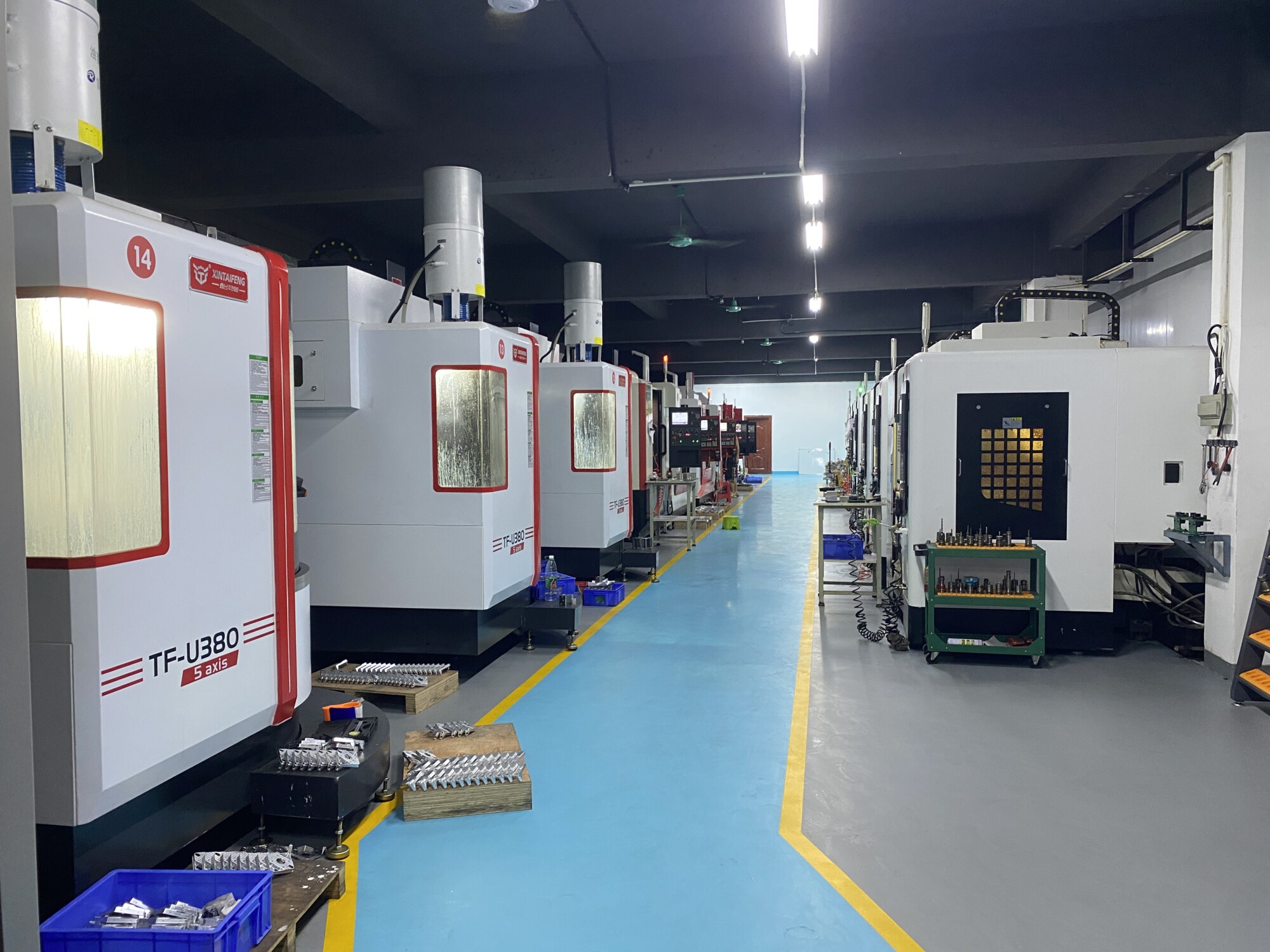
The Solution: This demands the highest level of precision machining from the tool builder. GreatLight CNC Machining, with its arsenal of five-axis CNC machining centers and meticulous attention to tolerance (down to ±0.001mm), manufactures these rotating core elements with unrivaled accuracy, ensuring millions of cycles without detectable drift.
Gate Placement and Flow Analysis
The injection gates for both shots are strategically critical.
The Challenge: The gate for the first shot must fill a complex geometry without welding marks. The gate for the second shot must introduce the overmold material at the optimal point to avoid “jetting” (streaming) which traps air and ruins the bond.
The Solution: GreatLight CNC Machining utilizes advanced Moldflow analysis. We don’t guess; we simulate the flow of both materials in the tool to optimize gate locations, venting, and fill times, ensuring a visually flawless and structurally sound part.
Thermal Management: The Controlled War
The tool must run at two distinctly different temperatures for optimal material performance.
The Challenge: The first cavity needs to cool the substrate to a specific temperature for handling, while the second cavity must be heated to allow the overmold material to bond effectively. Inconsistent cooling leads to warpage and dimensional instability.
The Solution: We design independent, precision-machined cooling circuits for each cavity. Conformal cooling channels, created via 5-axis CNC machining, follow the exact contour of the part, removing heat rapidly and uniformly.
Part Ejection: The Integrity Test
Ejecting a delicate, multi-material part without damage is a non-trivial task.
The Challenge: The overmold material is often soft and flexible (like TPE). Traditional ejector pins can leave unsightly and potentially damaging marks.
The Solution: The tool design integrates advanced ejection systems such as stripper plates, air poppets, or lifters that separate the part uniformly. The surface finish of the ejector system must match the final part’s requirement.
Surface Finish and Aesthetics
For many applications, especially consumer goods and automotive interiors, the look and feel are paramount.
The Challenge: The tool must not only mold the shape but also impart the correct surface texture (e.g., SPI grades, leather grain, matt finish). Any tooling defect is transferred directly to the part.
The Solution: The cavities for both the substrate and the overmold are crafted with extreme precision. GreatLight CNC Machining achieves high-quality surface finishes directly from the mold (EDM or mirror finishes), reducing the need for secondary post-processing.
Why GreatLight CNC Machining is Your Optimal Partner for Two-Shot Tool Design
Choosing a partner for this complex endeavor is a decision of strategic importance. The market offers many options, from highly automated digital manufacturers like Xometry and Protolabs Network to specialized, hands-on shops. However, for intricate Two Shot Molding Overmold Tool Design, the depth of engineering capability is paramount.
Full-Process Intelligent Manufacturing: Unlike many shops that may outsource critical steps, GreatLight CNC Machining (GreatLight Metal) provides a true one-stop solution. We handle the design for manufacturability (DFM), the construction of the complex 5-axis milled tooling, the precise EDM work for fine details, and the final assembly and testing. This integration eliminates the finger-pointing that can occur between a design house and a separate machine shop.
Deep Engineering Support: Our team doesn’t just build a mold; we engineer it. We analyze material data sheets, predict stress points, and optimize the core rotation mechanism for longevity. This is not a “push-button” service; it’s a collaborative engineering partnership.
The “GreatLight Difference” in Execution: The core of our value proposition lies in our ability to execute the design with unrivaled precision. Our facility is equipped with a cluster of high-end five-axis CNC machining centers from Dema and Beijing Jingdiao, alongside 3-axis/4-axis machines, Swiss lathes, and wire EDM. This allows us to machine the complex, hardened steel components of an overmold tool with tolerances that more common shops cannot achieve.
Proven Systems and Standards: Our commitment is backed by ISO 9001:2015 certification, ensuring that every step of the process, from raw material inspection to final tool qualification, is documented and repeatable. For projects with sensitive designs, our adherence to ISO 27001 standards provides a secure environment for your intellectual property.
The Industry Landscape: A Quick Comparison
When evaluating partners, consider the core focus of each:
| Supplier | Core Strength | Best Suited For |
|---|---|---|
| GreatLight CNC Machining | High-precision, full-process, engineering-intensive manufacturing. | Complex tools, tight tolerances, high-volume molds, and multi-step processes like two-shot molding. |
| Xometry / Fictiv | Digital platform, automated quoting, high-volume of simpler parts. | Fast quoting for standard parts, rapid prototyping of simple geometries. |
| Protolabs Network | Speed and automation for injection molding and CNC. | Rapid injection molding for prototype to low-volume runs with standard materials. |
| RapidDirect | Competitive pricing and quick turnaround for standard CNC and sheet metal. | Simple parts and assemblies where cost is the primary driver. |
| JLCCNC | Low-cost Chinese manufacturing for straightforward CNC parts. | Price-sensitive projects with standard tolerances and simple designs. |
| Owens Industries / RCO Engineering | Specialized, high-end traditional tooling, often for specific industries. | Large, complex, single-cavity tools for automotive or heavy equipment. |
The Future of Precision Overmolding
The demand for Two Shot Molding Overmold Tool Design is only growing, driven by trends in humanoid robotics (for soft, tactile covers), automotive (for sealed, soft-touch interiors), and medical devices (for ergonomic handles). The ability to combine rigid structures with flexible interfaces in a single, perfectly bonded part is a cornerstone of modern product design.
To get this right, you need a partner whose technical foundation is as solid as the tools they build. You need a partner like GreatLight CNC Machining.
From Design to Durable, Reliable Production
The path from a CAD file to a perfect two-shot molded part is paved with potential pitfalls. Choosing the right tool design and manufacturing partner is the single most important decision you can make. With our decade of experience, our fleet of advanced precision equipment, and our unwavering commitment to quality, GreatLight CNC Machining is your ideal partner for conquering the most complex Two Shot Molding Overmold Tool Design challenges. We bring your most intricate designs to life, with the precision and reliability that your application demands. Your design, our expertise. Let’s build the future.


![[访谈] RAPID + TCT 2024:人工智能对 3D 打印的价值](https://print-ing.com/wp-content/uploads/2024/07/INTERVIEW-60x60.jpeg "[访谈] RAPID + TCT 2024:人工智能对 3D 打印的价值 9")



发表回复
要发表评论,您必须先登录。