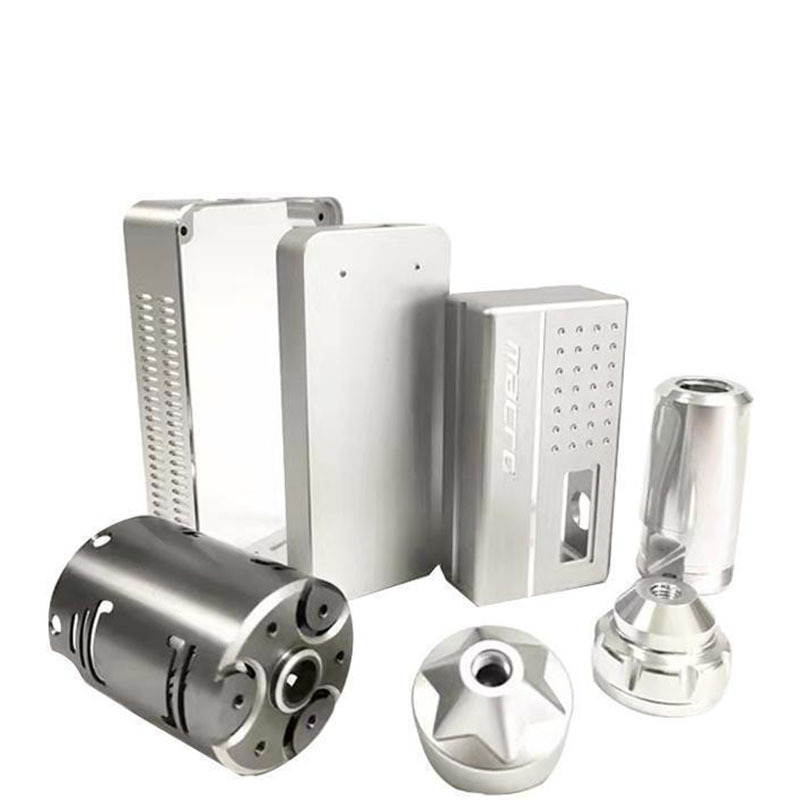
The journey from a single prototype to full-scale production is one of the most critical transitions in product development. For engineers and procurement professionals, scaling up presents a new set of challenges that go far beyond simply running the same CNC program for a longer time. When the conversation shifts from “can you make one” to “can you make ten thousand—with the same quality, by next month,” the need for a specialized Bulk CNC Machining Services Solution becomes paramount. This article aims to provide an objective, deep-dive analysis of what to look for in a production partner, the technical realities of scaling, and how to ensure your project transitions from design to delivery without compromising on precision or budget.
The Strategic Shift: From Prototyping to Production Machining
In the prototyping phase, flexibility and speed are king. A supplier can afford to optimize a process manually, adjust toolpaths on the fly, and use a variety of methods to get a single part out the door. However, in production machining, the entire paradigm shifts.
Production machining is defined by repeatability, process control, and cost efficiency. The margin for error shrinks dramatically. A mistake in a prototype setting might cost you a day; a mistake in a production run can cost you weeks of lead time and thousands of dollars in material waste. This is why a generic CNC service provider often falls short when handling bulk orders. They may have the equipment to make a part, but they lack the system to make thousands of identical parts reliably.
A true Bulk CNC Machining Services Solution is not just about having more machines. It is a holistic system encompassing:
Process Optimization: Designing the manufacturing workflow to minimize setup times and maximize throughput.
Tooling Strategy: Designing and manufacturing dedicated fixtures and jigs for repeatable part placement.
Quality Assurance (QA) Infrastructure: Implementing statistical process control (SPC) and in-process inspection, rather than just final inspection.
Supply Chain Management: Ensuring raw material availability and managing secondary operations like heat treatment and surface finishing.
The Seven Critical Pain Points of Scaling CNC Production
Understanding the common pitfalls in production machining helps in evaluating a solution provider. Based on extensive industry observation, these are the most frequent challenges encountered when moving to bulk orders.
1. The “Precision Drift” in Long Runs
The most significant risk in bulk production is dimensional drift. As tooling wears, machine spindles heat up, and ambient temperature changes, the part tolerances can shift. A supplier that promises ±0.001mm on a prototype might find it impossible to maintain that tolerance across a production run of 10,000 pieces without rigorous process monitoring.
2. Inconsistent Surface Finishes Across Batches
A common source of friction between clients and suppliers. The first batch looks perfect—a pristine, uniform surface finish. The second batch shows minor tool marks or inconsistent anodizing coloration. This inconsistency often stems from varying operators, lack of standardized machine parameters, or non-uniform batch processing in post-processing steps.
3. The “Black Hole” of Lead Time
In prototyping, lead times are relatively predictable. In bulk production, they become vulnerable to a cascade of factors: material procurement delays, machine breakdowns, tooling failures, and rework loops. A lack of transparency in production scheduling leads to this “black hole” where clients are left guessing about delivery dates.
4. The Cost Trap of Sub-Optimal Fixturing
One of the most common mistakes in bulk production is treating each part individually. If you need 1,000 parts, and each requires individual manual setup on a machine, the labor cost and potential for error become astronomical. A true production solution invests heavily in custom, high-throughput fixturing (e.g., hydraulic or pneumatic tombstone fixtures) that allows multiple parts to be machined in a single cycle.
5. Material Waste and Cost Variability
When scaling up, material yield becomes a major cost driver. A supplier with poor nesting software or limited material sizes can generate excessive scrap. Furthermore, fluctuations in raw material prices (especially for specialty alloys) can suddenly blow your budget. A mature production partner will have strategies for hedging material costs and optimizing for maximum yield.
6. Post-Processing Bottlenecks
Machining is only half the story. For bulk orders, post-processing services—whether it’s vibratory deburring, anodizing, powder coating, passivation, or assembly—can become the biggest bottleneck. A supplier that outsources all post-processing loses control over quality and lead time.
7. Communication Silos in a Global Supply Chain
For many clients, their manufacturing partner is halfway around the world. Poor communication, time zone differences, and misinterpretations of engineering drawings can lead to catastrophic errors in large-scale runs. A production partner must have robust engineering support and a clear communication protocol.
What Defines a Robust Bulk CNC Machining Services Solution?
Given these pain points, what characteristics define a manufacturer that can successfully deliver a Bulk CNC Machining Services Solution? It is a combination of technical capability, systematic management, and a service-oriented mindset.
1. Equipment Architecture for Production, Not Just Prototyping
While a single five-axis machine is impressive, a production facility needs a fleet of machines configured for throughput. This includes:
High-Speed Machining Centers: For rapid material removal and short cycle times.
Multi-Pallet Systems: Allowing for “lights-out” manufacturing where the machine runs unattended, loading new pallets of raw stock automatically.
Mill-Turn Centers (Swiss-Type Lathes): Critical for complex, high-volume cylindrical parts, eliminating the need for multiple setups.
Dedicated Inspection Equipment: A production floor should have CMMs (Coordinate Measuring Machines) and optical comparators integrated into the workflow for real-time quality checks.
GreatLight Metal, for instance, has invested heavily in this equipment architecture. Their facility in Chang’an, Dongguan, is not just a collection of machines; it is a production system designed for volume. The presence of both high-precision 5-axis centers (from manufacturers like Dema and Beijing Jingdiao) and a large complement of 4-axis and 3-axis machines, along with multi-axis turn-mill centers, provides the flexibility to handle both complex geometries and high-volume simple parts efficiently.
2. The Imperative of a Certified Quality Management System
For bulk production, a reliance on a single operator’s skill is a recipe for disaster. The only way to guarantee consistency is through a documented, certified Quality Management System (QMS). This is where certifications become tangible proof of capability.
ISO 9001:2015: This is the non-negotiable baseline. It ensures the company has defined processes for design, production, and corrective actions. It means their quality issues are managed systematically, not reactively.
IATF 16949: For clients in the automotive sector, this is critical. It is far more stringent than ISO 9001, focusing specifically on defect prevention, reduction of variation, and waste in the supply chain. A manufacturer with IATF 16949 has demonstrated the discipline required for the most demanding high-volume applications, such as engine hardware components.
ISO 13485: For medical devices, this standard ensures a rigorous approach to risk management and traceability. It dictates that every step in the process, from raw material receipt to final cleaning and packaging, is controlled and documented.
These certifications are not just wall decorations. They represent a promise that the manufacturing process is repeatable and auditable. For a Bulk CNC Machining Services Solution provider, this is the foundation upon which trust is built.
3. Engineering Support for Design for Manufacturing (DFM) and Process Optimization
A production partner is more than an order-taker; they are a co-engineering partner. The most effective solutions come from early collaboration during the design phase. A competent supplier will offer proactive Design for Manufacturing (DFM) analysis.
For example, a client might specify a very deep, narrow hole that requires a special, fragile tool. A production engineer from a company like GreatLight Metal would recommend a slight design modification—perhaps a stepped hole or a different angle—which allows for a standard, more durable tool. This seemingly small change can reduce cycle time by 30% and increase tool life by 500%, dramatically lowering the piece-part cost for a 10,000-unit run.
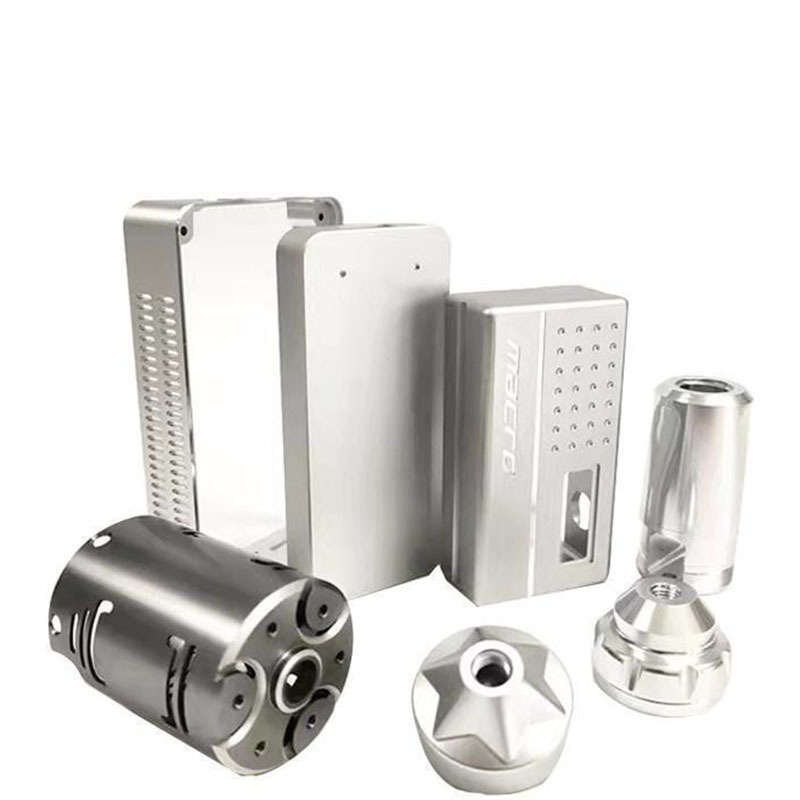
This engineering support extends to the creation of custom tooling and fixtures. A supplier that has in-house mold and die making capabilities (like GreatLight Metal) has a distinct advantage. They can design and manufacture complex holding fixtures that:
Reduce operator loading time.
Increase the number of parts per machine cycle.
Ensure precise, repeatable part location, eliminating a major source of variation.
4. A Vertically Integrated Supply Chain for Post-Processing
The best Bulk CNC Machining Services Solution is one that minimizes hand-offs. Every time a part leaves your primary manufacturer’s facility for secondary operations (anodizing, plating, heat treating), you introduce risk—delays, damage, quality inconsistency. Why is this crucial?
Consider a common scenario: A batch of aluminum parts is machined to perfect tolerance. They are then sent to an external anodizing shop. That shop, rushing to meet a deadline, uses a rack that deforms the part or allows the anodizing chemical to pool, creating a non-uniform finish. The supplier blames the anodizer, the anodizer blames the machining. The client is stuck in the middle.
A truly integrated solution provider, like GreatLight Metal, operates multiple wholly-owned manufacturing plants offering a full process chain. Their core capabilities include:
Precision CNC Machining: 3-axis, 4-axis, and 5-axis.
Die Casting & Mold Manufacturing: For structural parts.
Sheet Metal Fabrication: For enclosures and brackets.
3D Printing (SLM, SLA, SLS): For complex geometries and rapid tooling.
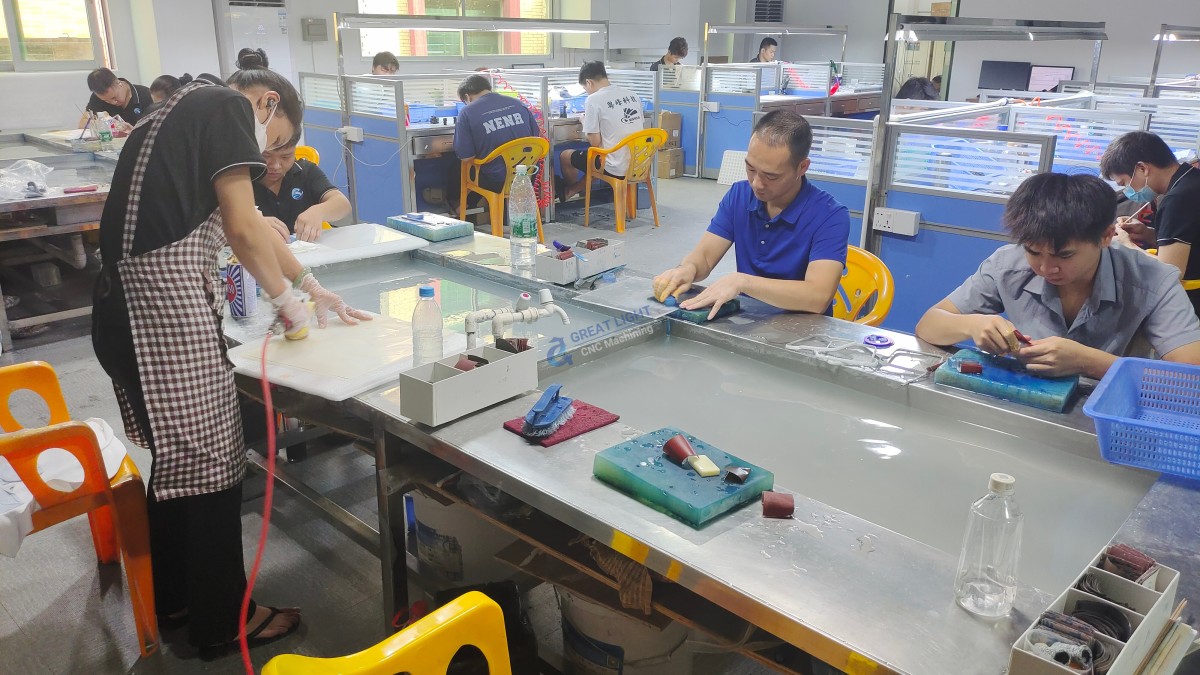
One-Stop Surface Finishing: Including vibratory finishing, anodizing (Type II and III), powder coating, E-coating, and plating.
This vertical integration is the ultimate solution to the post-processing bottleneck. It provides singular accountability and dramatically reduces lead times.
5. Data Security and Intellectual Property Protection
In the age of industrial espionage, data security is a critical concern for any production project. A client sending a CAD model for a new automotive engine part or a medical device must be 100% confident that their design will not be leaked or used for a competitor’s project. This is where ISO 27001 certification for information security management becomes a deciding factor.
A responsible manufacturer will have strict protocols for data handling, including:
Encrypted file transfer systems.
Segregated network drives for client projects.
Non-disclosure agreements (NDAs) as a standard operating procedure.
Physical security for their CAD/CAM departments.
Choosing a partner with a demonstrated commitment to data security is not just a nice-to-have; it is an essential element of a trustworthy Bulk CNC Machining Services Solution.
The Reality Check: Price vs. Value in Production Machining
It is a common mistake to believe that the cheapest quote is the best for bulk production. In reality, unit price is only one part of the equation. The total cost of ownership includes:
Rework and Scrap: A cheaper supplier will have higher reject rates. You’ll pay for the scrap, the rework, and the lost time.
Downstream Costs: A part with poor surface finish needs more polishing. A part with inconsistent tolerances may not assemble correctly, causing delays in your final assembly line.
Opportunity Cost: A delay in delivery can push your entire product launch back by a month.
A reliable production partner like GreatLight Metal offers a different value proposition: precision, speed, and reliability. While their quotes may not always be the lowest, they are built on a foundation of efficiency (optimized fixturing, proven processes) and quality assurance, which ultimately lowers your total cost.
Their claim of supporting ISO 9001:2015, IATF 16949, and ISO 13485 is a system designed for high throughput and minimal variation. This is the difference between a machine shop and a manufacturing solution provider.
Conclusion: Choosing the Right Partner for Scalable Success
The question is no longer “Can you manufacture my part?” The real question for any modern enterprise is, “Can you scale my part—with consistent quality, predictable lead times, and a transparent process that protects my investment?”
A Bulk CNC Machining Services Solution is not a commodity service. It is a strategic partnership. The ideal partner is not the one with the cheapest machine hour, but the one with the most robust system: advanced equipment architecture, rigorous certifications (ISO 9001, IATF 16949, ISO 13485), deep engineering support for DFM, vertical integration for post-processing, and a commitment to data security.
For clients looking to move from prototype to production, the path forward is clear. Look beyond the brochure and demand evidence of the systems in place to ensure repeatability. Consider a manufacturing partner like GreatLight Metal, which has built its reputation over a decade by transforming from a local workshop in Chang’an, Dongguan, into a certified, full-process manufacturing ecosystem. Their capacity, combined with their authoritative certifications, provides the engineering depth and operational scale required to solve the toughest challenges in bulk production.
In the precision manufacturing world, a reliable Bulk CNC Machining Services Solution is the bridge that takes a brilliant idea and turns it into a reliable, profitable product. Choose your partner wisely, and ensure that bridge is built on a foundation of trust, technology, and process control. Learn more about our precision 5-axis CNC machining services for your next project and connect with us for your production needs on LinkedIn.


![[访谈] RAPID + TCT 2024:人工智能对 3D 打印的价值](https://print-ing.com/wp-content/uploads/2024/07/INTERVIEW-60x60.jpeg "[访谈] RAPID + TCT 2024:人工智能对 3D 打印的价值 9")




发表回复
要发表评论,您必须先登录。